 Tata Titiana
Long before it officially attained municipality status within West Java on April 27, 1999, and decades prior to the proclamation of Indonesian independence, the city of Depok held a status that sounds almost like fiction: it was once a self-governing private territory operating effectively as an independent microstate. Complete with its own constitution, democratic elections, administrative apparatus, and a head of state holding the title of "President," the historical trajectory of Depok remains one of the most intriguing yet overlooked chapters in the archipelago’s colonial past.
Today, millions recognize Depok as a bustling satellite city flanking Indonesia’s capital, Jakarta, known largely for housing the prestigious Universitas Indonesia and serving as a residential hub for commuters. However, a deep dive into the archives of the late 17th to the mid-20th century reveals an astonishing socio-political experiment initiated by a wealthy Dutch merchant, shaped by emancipated enslaved laborers, and ultimately integrated into the modern Republic of Indonesia.
The Genesis of a Private Domain: Cornelis Chastelein and the Purchase of Depok
The history of Depok as a distinct entity began in the final decades of the 17th century. In 1696, a wealthy VOC (Dutch East India Company) official and devout Catholic merchant named Cornelis Chastelein purchased a vast expanse of land spanning 12.44 square kilometers for the sum of 2.4 million guilders. Crucially, this land acquisition operated under a private, freehold status (particuliere landerijen), meaning it fell outside the direct administrative jurisdiction of the Dutch colonial government in Batavia.
At the time of purchase, the territory of Depok was largely dense, untamed jungle. Recognizing the economic potential of the fertile soil, Chastelein set out to transform the wilderness into productive agricultural plantations, focusing on commodities such as pepper, coffee, and fruit orchards. To achieve this, he brought in a workforce consisting of enslaved people originating from various islands across the archipelago, including Bali, Sulawesi, Timor, and parts of Java, alongside individuals of South Asian descent.
Chastelein’s approach to his workforce was uncharacteristic of the brutal exploitation typical of the colonial plantation system. Influenced by his religious convictions, which emphasized paternalism and moral duty, he provided his laborers with housing, sustenance, and religious instruction. Over the decades, these diverse groups of people worked the land, intermarried, and developed a unique, cohesive community identity distinct from both the surrounding indigenous populations and the Dutch colonial elite.
From Last Will to Liberation: The Birth of a Community
As Chastelein approached the end of his life, he made a decision that would permanently alter the destiny of the land and its inhabitants. On June 28, 1714, shortly before his death, Chastelein drafted a progressive and radical last will and testament. He declared that all his enslaved workers would be granted their freedom upon his passing. Furthermore, he bequeathed the entirety of his vast Depok estate—comprising land, residential quarters, livestock, and agricultural equipment—to these newly emancipated individuals.

To ensure the community would not fracture or fall victim to external exploitation after his death, Chastelein entrusted a local leader named Jarong van Bali with the initial responsibility of organizing and overseeing the populace. The freed community, often referred to historically as the "Deccani" or the "Belanda Depok" (Depok Dutch, owing to their adoption of Dutch surnames, Christian faith, and European-style administrative structures), suddenly found themselves landowners and masters of their own economic destiny.
However, as generations shifted and the early leadership structure began to face succession challenges, the community recognized the need for a robust, formalized governance model to protect their collective autonomy within the turbulent landscape of the Dutch East Indies.
The Rise of the Republic: Depok’s Democratic Presidential Era
By the early 20th century, the socio-political framework of Depok evolved into something unprecedented for the region. In 1913, the community established a formal municipal government officially styled as Het Gemeente Bestuur van Het Particuliere Land Depok (The Municipal Government of the Private Land of Depok).
Rather than adopting a monarchical or purely autocratic colonial system, the community, under the guidance of legal minds from Batavia, instituted a democratic republic. At the helm of this microstate was a president, who served simultaneously as the head of state and head of government. Demonstrating a remarkably progressive civic model for the era, these presidents were chosen through direct, democratic elections held every three years by the eligible citizens of Depok. The administration operated without a vice president, relying instead on a dedicated secretary to assist the executive in daily governance.
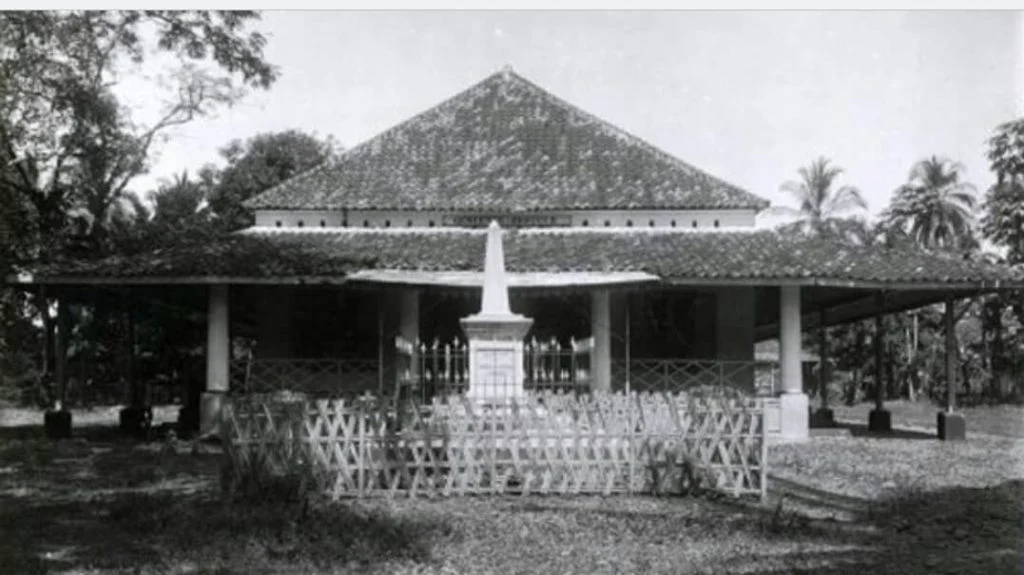
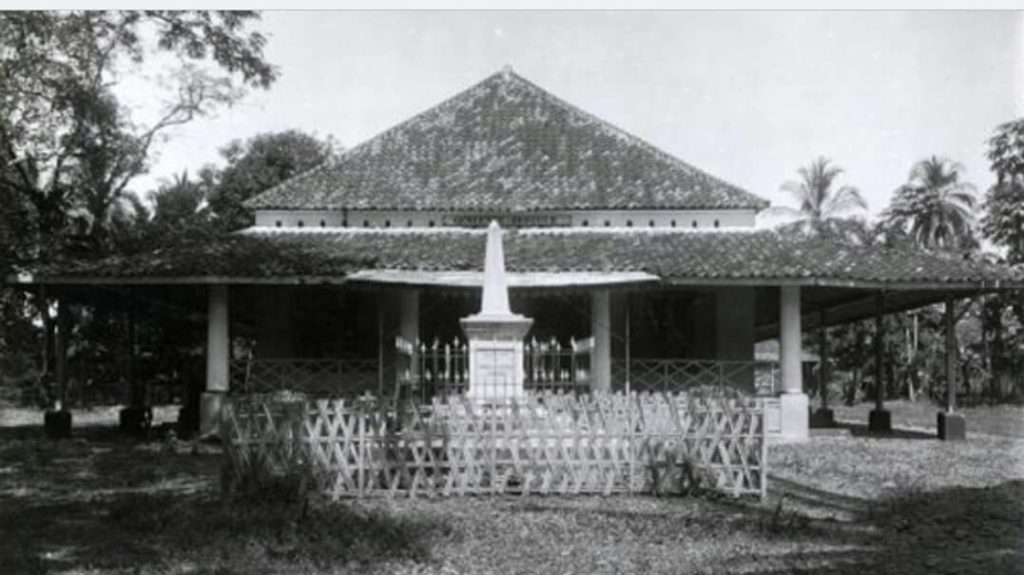
The heart of this diminutive republic was anchored around what is now known as Kilometer 0 of Depok, marked historically by the Depok Monument. Adjacent to the administrative center stood the primary government building, a structure that has survived the decades and is recognized today as the RS Harapan (Harapan Hospital).
Chronology of the Presidents of Depok
While historical documentation from this micro-repertory period is regrettably sparse, archival records preserve the names of four individuals who held the office of President of Depok across its distinct operational phases:
- 1913–1921 (Multiple terms): Gerrit Jonathans – Recognized as the inaugural president, Jonathans laid the foundational administrative practices of the municipality during the early years of formalization under Dutch colonial observation.
- 1921–1930: Martinus Laurens – Assumed leadership during the interwar period, navigating the community through economic shifts and growing regional nationalist sentiments in nearby Batavia.
- 1930–1952: Leonardus Leander – Presided over Depok through the profound disruptions of the Great Depression and the tumultuous years of World War II, including the Japanese occupation of the Dutch East Indies.
- 1952: Johannes Matjis Jonathans – The final president of Depok, whose administration oversaw the dissolution of the private land status and the formal handover of sovereignty to the newly born Republic of Indonesia.
Socio-Political Implications and the Transition to Modern Indonesia
The existence of an independent, self-governing enclave led by democratically elected presidents presented a unique legal and social anomaly within the colonial framework of the Dutch East Indies. While the colonial government held overarching sovereignty over the archipelago, the private land status (particuliere landerijen) granted Depok a high degree of internal autonomy, tax management rights, and local legislative freedom.
The community developed a distinct cultural identity. The "Belanda Depok" adopted European dress codes, worshipped in Protestant churches, spoke a creolized form of Malay and Dutch, and maintained distinct social boundaries from both the surrounding indigenous Sundanese/Betawi populations and the Dutch colonial administrators. This insular lifestyle occasionally generated social friction with neighboring regions, particularly as Indonesian nationalism surged following the 1928 Youth Pledge and the 1945 Declaration of Independence.
Following the recognition of Indonesian sovereignty by the Netherlands in 1949, the special administrative privileges held by private landowners and autonomous enclaves became untenable within a centralized, unitary republic. The unique sociopolitical experiment of the Depok Republic officially drew to a close in 1952.
In that year, the final president, Johannes Matjis Jonathans, signed the official act of surrender, formally transferring the private lands and administrative powers of Depok to the central government of the Republic of Indonesia. The territory was subsequently integrated into the administrative structure of the Kabupaten (Regency) of Bogor, before eventually breaking away to achieve independent kotamadya (city municipality) status on April 27, 1999.
Legacy and Historical Significance
Today, physical reminders of Depok’s presidential past are subtle, preserved primarily in local heritage architecture, historical archives, and the oral histories of descendant families. The former administrative buildings, colonial-era churches, and historical landmarks serve as silent witnesses to a time when a community of emancipated individuals forged a democratic republic within the heart of colonial Java.
While modern Depok is best known as a dynamic urban center and educational nexus, its origins offer a fascinating lens through which to examine the complexities of Southeast Asian colonial history, land rights, and early democratic experimentation. Long before the flag of independent Indonesia flew over the region, the citizens of Depok had already demonstrated a unique capacity for self-governance, leaving behind a legacy that continues to captivate historians and researchers alike.