Nila Kartika Wati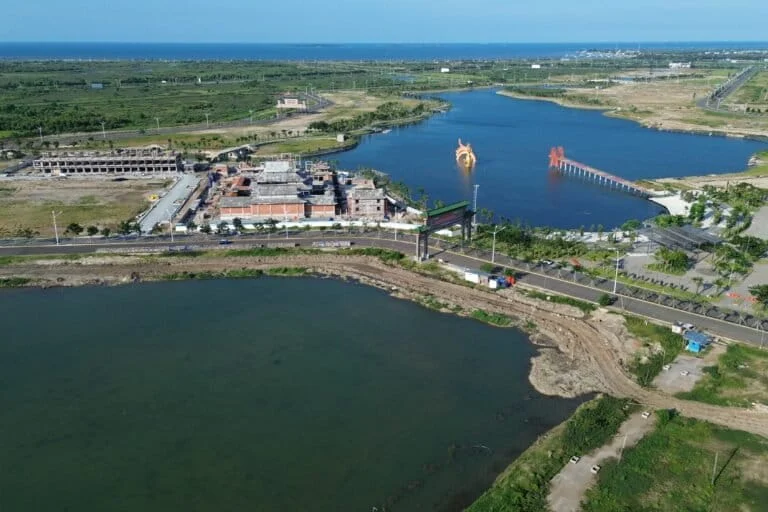
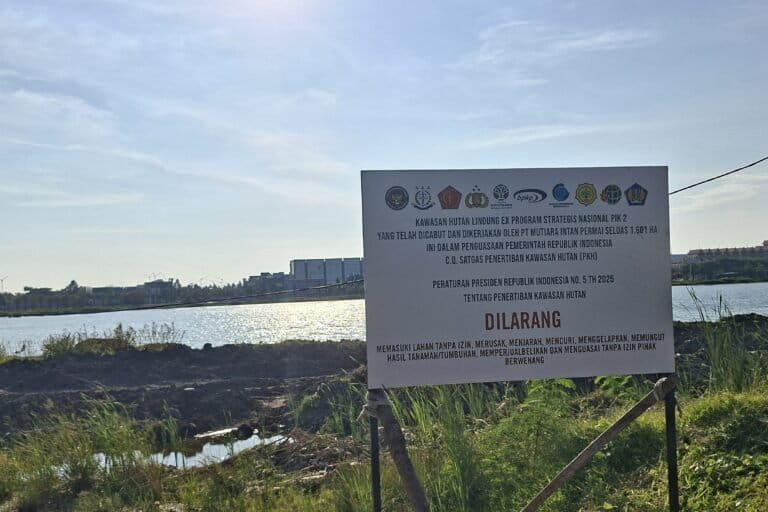
The Indonesian government, through the Forest Area Enforcement Task Force (Satgas PKH), has officially seized and placed under state supervision 1,601 hectares of protected forest in the Pakuhaji District of Tangerang Regency, Banten. The land, which was previously managed and developed by PT Mutiara Intan Permai (PIM) as part of the Pantai Indah Kapuk 2 (PIK 2) National Strategic Project (PSN), was formally cordoned off following findings of significant regulatory breaches. This enforcement action is grounded in Presidential Regulation No. 5 of 2025 concerning the Enforcement of Forest Areas, signaling a shift in the central government’s oversight of large-scale coastal developments that encroach upon conservation zones.
On March 13, authorities erected signage across the vast coastal stretch, declaring that the area is now under the direct control of the Republic of Indonesia. The seizure marks a critical juncture in the ongoing tension between rapid urban expansion and environmental preservation. Febrie Adriansah, the Executive Chairman of Satgas PKH—who also serves as the Junior Attorney General for Special Crimes (Jampidsus) at the Attorney General’s Office—confirmed that the state is currently conducting a comprehensive evaluation to ensure future land management aligns strictly with statutory requirements. Adriansah emphasized that the land has "officially and fully returned to the hands of the state," and vowed that the administration would no longer tolerate land acquisition processes that bypass or violate established legal frameworks.
The Chronology of Encroachment and the Push for Status Reclassification
The dispute over the 1,601-hectare plot in Pakuhaji is not a recent development but the culmination of several years of administrative maneuvering. Records indicate that local government officials played a pivotal role in attempting to facilitate the developer’s use of the protected forest. Ahmed Zaki Iskandar, during his tenure as the Regent of Tangerang, and the Acting Governor of Banten, Al Muktabar, were instrumental in proposing a downgrade of the forest’s status.
The effort to reclassify the land from "Protected Forest" (Hutan Lindung) to "Production Forest" (Hutan Produksi) was formalized in a letter signed by the Governor of Banten on December 18, 2023. This correspondence, addressed to the President Director of Perum Perhutani (the state-owned forestry enterprise), argued that the North Tangerang coastline had seen its ecological function diminish. The provincial government claimed that much of the area had already been converted into fish ponds, abandoned land, or had suffered from severe abrasion, with only small patches of mangrove remaining.
A secondary justification cited by the local administration was a letter from the Tangerang Regency Government (No. 650/2243-DTRB) dated July 3, 2023. This letter urged the adjustment of spatial functions to align with Banten Provincial Regulation No. 1 of 2023 regarding the Spatial Planning Plan (RTRW) for 2023–2043. The local authorities argued that by reclassifying the land as production forest, it could be utilized more "productively" to support the PIK 2 National Strategic Project, specifically as an integrated tourism and luxury residential hub. This push for reclassification has been viewed by critics as an attempt to retroactively legalize the developer’s activities on land that was legally off-limits for commercial construction.
Environmental Implications and Local Disruption
The coastal area of Pakuhaji serves as a vital ecological buffer for the northern coast of Java. Protected forests, particularly those containing mangroves, are essential for preventing coastal erosion, mitigating the impact of tidal flooding, and maintaining local biodiversity. The conversion of 1,601 hectares of such land into a massive urban development like PIK 2 has sparked outcry from environmentalists and local communities alike.
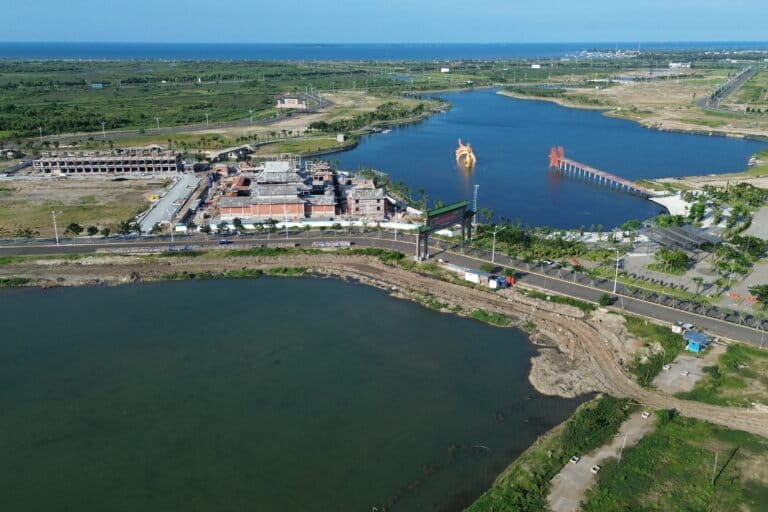
Gufroni, the Head of Research and Public Advocacy/Litigation at LBH PP Muhammadiyah, who has been a vocal advocate for the residents of Tangerang’s northern coast, warned that the government’s recent seizure must be followed by tangible restoration efforts. He noted that despite the "Protected Forest" designation, significant infrastructure—including roads and preliminary building foundations—has already been constructed by PT Mutiara Intan Permai.
"The signage is only the first step," Gufroni stated. "Large sections of the forest have already been built upon. The government must ensure that this land is restored to its original function as a mangrove forest. This cannot simply be a room for negotiation or a temporary pause before the project resumes under a different guise." He further suggested that the developer should face heavy sanctions and fines for the destruction of protected forest areas, arguing that the ecological damage to the marine and coastal ecosystem was only made possible through the complicity of local government officials.
Civil Society Skepticism: Enforcement or Political Gimmick?
While the seizure is a significant legal move, several prominent Non-Governmental Organizations (NGOs) have expressed skepticism regarding the central government’s ultimate intentions. Susan Herawati, Secretary General of the People’s Coalition for Fisheries Justice (KIARA), questioned why the enforcement action came so late. She argued that the government should have mitigated these risks during the initial permit issuance or when the spatial planning changes were first proposed.
"If there is no follow-up action to restore the forest, the task force’s move is essentially a ‘gimmick,’" Herawati remarked. She highlighted the plight of local fishermen and residents who have seen their access to the sea restricted and their livelihoods threatened by the developer’s "arrogant" land acquisition tactics. For Herawati and KIARA, the true test of the government’s sincerity will be whether the land is replanted with mangroves and returned to a state that supports the local ecosystem and the community’s traditional economy.
Echoing these concerns, Uli Arta Siagian, Head of the National Executive Campaign Division at WALHI (The Indonesian Forum for Environment), pointed out the inherent contradictions in the National Strategic Project (PSN) framework. She noted that PSN status often grants projects "special privileges" that allow them to override local spatial planning regulations. "The irony is that instead of the project following the spatial plan, the spatial plan is often changed to accommodate the project," Siagian explained.
Siagian expressed fear that the 1,601 hectares might not be restored but instead transferred to another entity, such as a state-owned enterprise (BUMN), for a different commercial purpose. She argued that if the land remains under "state control" but is eventually developed anyway, it proves that the government’s primary goal was simply to consolidate control over the land rather than to protect the environment.
Potential for Corruption and Procedural Irregularities
The involvement of the Junior Attorney General for Special Crimes (Jampidsus) in the Satgas PKH suggests that the government is looking beyond mere administrative violations. Legal experts suggest there is strong potential for a corruption investigation into how a protected forest area was integrated into a National Strategic Project in the first place.
The process of changing the Banten Spatial Planning Plan (RTRW) to accommodate PIK 2 is under intense scrutiny. There are allegations that the procedural steps taken by the Tangerang Regency and Banten Provincial governments may have bypassed environmental impact assessments (AMDAL) or ignored the primary protective functions mandated by national forestry laws (Law No. 41 of 1999).
The Satgas PKH is expected to investigate whether there was any "illicit coordination" between the developers and government officials to facilitate the illegal use of forest land. If the Attorney General’s Office finds evidence of financial loss to the state—specifically through the destruction of state-owned environmental assets—criminal charges could follow for both corporate executives and the government officials who signed off on the reclassification requests.
Broader Impact on National Development Policy
The PIK 2 case serves as a landmark example of the friction between Indonesia’s ambitious infrastructure goals and its international environmental commitments. As a signatory to various climate accords, Indonesia has pledged to restore mangroves and protect its remaining forests to sequester carbon and protect coastal regions from the effects of climate change.
The seizure of 1,601 hectares in Tangerang sends a message to other developers involved in National Strategic Projects: PSN status is not a "blank check" to ignore environmental regulations. However, the government faces the challenge of balancing this enforcement with the economic momentum generated by multi-trillion rupiah projects like PIK 2.
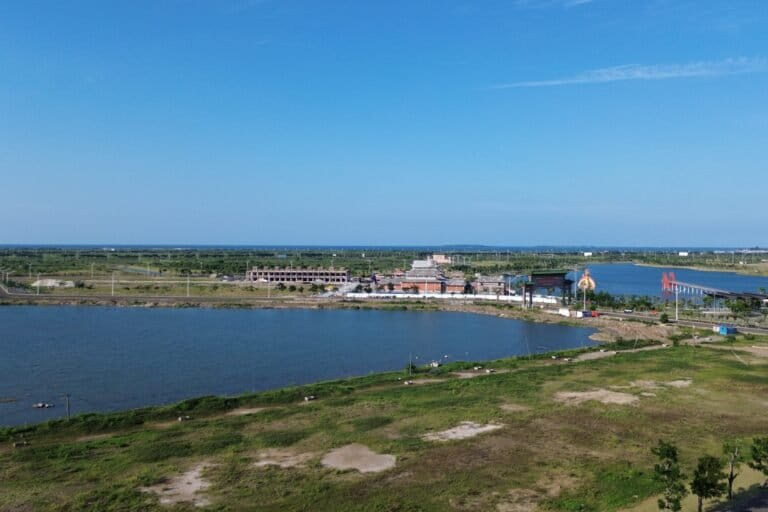
Industry analysts suggest that this enforcement action could lead to a tightening of the permit process for coastal developments across the archipelago. Developers may now face more rigorous "ground-truthing" of their land banks to ensure that they do not overlap with protected zones. For the residents of Pakuhaji, however, the immediate concern remains the physical state of their coastline. They await to see if the heavy machinery of the developer will be replaced by the planting of mangrove seedlings, or if the "State Supervision" sign is merely a placeholder for the next phase of industrialization.
Conclusion and Future Outlook
The return of 1,601 hectares of the Pakuhaji protected forest to state control is a victory for environmental advocates in the short term, but the long-term resolution of the case remains uncertain. The Satgas PKH’s evaluation will determine whether the land can be rehabilitated or if the damage is irreversible.
As the government moves forward with the implementation of Presidential Regulation No. 5 of 2025, the PIK 2 enforcement will be watched closely as a precedent. If the state successfully restores the forest and holds violators accountable, it could mark a new era of environmental rule of law in Indonesia. If the land is eventually repurposed for commercial use, it will likely confirm the fears of civil society that the "seizure" was a tactical maneuver rather than a conservationist triumph. For now, the 1,601 hectares stand silent under the watch of the Satgas PKH, a vast expanse of disputed territory at the center of a battle for the future of Indonesia’s coastlines.