Bambang Pamungkas
The Indonesian government has officially set July 1, 2026, as the nationwide implementation date for the mandatory B50 biodiesel program across all sectors. This landmark policy is a pivotal component of the nation’s strategy to fortify its energy sovereignty while concurrently championing the widespread adoption of more sustainable energy sources. In anticipation of this sweeping directive, PT Kereta Api Indonesia (Persero), the state-owned railway operator and a cornerstone of the national transportation system, is actively preparing its infrastructure and operations. The company’s focus is on ensuring a seamless transition for its diesel-powered locomotives, meticulously safeguarding the consistent quality of service and the paramount safety of all rail journeys.
A Strategic Shift Towards Energy Independence
Indonesia’s journey towards higher biodiesel blends is a long-term strategic endeavor, driven by a confluence of economic, environmental, and geopolitical factors. As the world’s largest producer of palm oil, the nation possesses a significant competitive advantage in leveraging this abundant domestic resource for biofuel production. The B50 mandate, which stipulates a blend of 50% fatty acid methyl ester (FAME) derived from palm oil with 50% conventional diesel fuel, marks a substantial escalation from previous mandates like B20, B30, and the recently implemented B40. This progressive increase in the biodiesel blend ratio is designed to reduce the country’s reliance on imported fossil fuels, thereby enhancing energy security and stabilizing its balance of payments. Beyond the immediate economic benefits, the initiative underscores Indonesia’s commitment to mitigating greenhouse gas emissions and contributing to global climate action goals, aligning with the nation’s Nationally Determined Contribution (NDC) under the Paris Agreement. The timeline for this transition reflects a carefully phased approach, allowing industries and infrastructure providers sufficient time to adapt, test, and implement the necessary changes without disrupting critical economic activities.
KAI’s Proactive Stance and Historical Commitment to Green Mobility
PT Kereta Api Indonesia (KAI) has been at the forefront of adopting greener fuel alternatives within the transportation sector, demonstrating a consistent commitment to environmental stewardship. Anne Purba, Vice President of Corporate Communication at KAI, emphasized that the upcoming B50 implementation is a natural progression of the company’s existing biodiesel utilization efforts. "KAI remains dedicated to advancing the use of more environmentally friendly energy sources through biodiesel. Throughout every stage of this transition, the safety of our journeys and the quality of service provided to our customers remain our utmost priorities," Anne stated. This statement reflects KAI’s proactive approach, having already integrated lower biodiesel blends into its operations. The company’s strategic planning encompasses thorough technical assessments, operational adjustments, and comprehensive training for its personnel to ensure that the transition to B50 is executed flawlessly, maintaining the high standards of safety and efficiency that passengers expect. This commitment positions KAI as a leading example of a state-owned enterprise actively contributing to national sustainability goals.
Quantifiable Environmental Impact and Emission Reduction
The positive environmental impact of KAI’s shift to biodiesel is already demonstrably significant and continues to grow. In 2025, the utilization of B40 biodiesel in long-distance train services alone led to a total carbon emission reduction of approximately 127,315,192 kg CO2e, or about 127.3 thousand metric tons, serving 47.4 million passengers. This figure highlights the substantial contribution of rail transport to national decarbonization efforts. The trend of sustainability continued into 2026, with long-distance train services recording 14,515,350 passengers in the first quarter, accompanied by an estimated emission footprint of approximately 38.9 thousand tons of CO2e. These figures underscore the consistent emission reduction achieved through the steady application of biodiesel-based fuels.
A crucial comparison further illuminates the environmental advantages of rail travel. For similar mobility distances, private vehicle usage has the potential to generate substantially higher emissions. On average, a medium-distance journey by private vehicle can produce approximately 36-45 kg of CO2e per passenger. In stark contrast, rail travel using KAI’s services emits around 2.7 kg of CO2e per passenger. This data unequivocally demonstrates that rail transport can reduce emissions by approximately 90 percent per journey compared to individual car travel. Based on the aggregated passenger volume, KAI’s services are estimated to have contributed to a potential emission reduction of between 480,000 to 610,000 tons of CO2e, which would otherwise have been generated if these passengers had opted for private vehicles. These statistics not only affirm KAI’s role in mitigating climate change but also advocate for rail as a cornerstone of sustainable urban and intercity mobility solutions, contributing to cleaner air and healthier communities.
Rigorous Operational Readiness and Testing Protocols
Ensuring the seamless and safe implementation of B50 requires meticulous preparation and exhaustive testing. KAI is collaborating closely with governmental bodies, specifically the Ministry of Energy and Mineral Resources (ESDM) and LEMIGAS (Lembaga Minyak dan Gas Bumi – the Oil and Gas Institute), on a series of phased and comprehensive tests. This collaborative approach ensures that the transition is underpinned by robust scientific validation and practical operational assessments.
The testing regimen commenced in mid-April 2026 with the initial process of fuel blending. This critical first step ensures that the B50 mixture meets the required specifications and stability standards. Following successful blending, a thorough inspection of the railway rolling stock and infrastructure is conducted to identify any potential incompatibilities or necessary modifications. Subsequently, the actual performance testing of the B50 fuel in locomotives began at the Depo Sidotopo, a key operational hub for KAI.
Simultaneously, extensive testing is being conducted on power cars at the Depo Kereta Yogyakarta. This involves a multi-stage process:
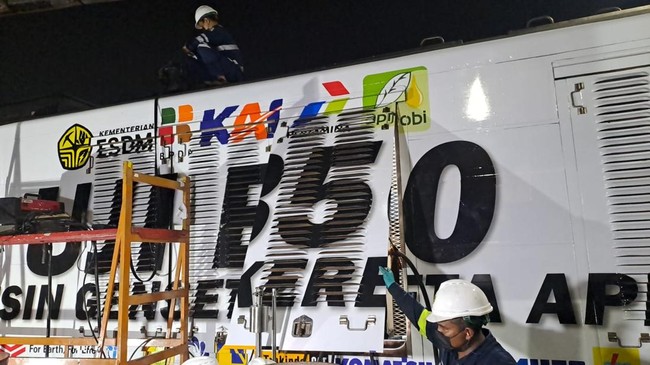
- Initial Examination: A baseline assessment of the power car’s existing condition and performance parameters.
- B40 Comparison: Testing with the previously mandated B40 blend to establish a comparative performance benchmark.
- B50 Performance Evaluation: Direct application of B50 fuel to observe and record its performance characteristics, including fuel efficiency, power output, and engine response.
- High-Load Endurance Testing: Subjecting the power cars to sustained high-load conditions to evaluate the B50 fuel’s long-term reliability and the system’s resilience under demanding operational scenarios.
Beyond these initial performance tests, KAI has also scheduled a more extended duration of testing. This long-term evaluation is crucial for monitoring the sustained performance of the rolling stock under daily operational conditions, assessing potential wear and tear, and identifying any long-term maintenance implications associated with the higher biodiesel blend. As of now, all test results are undergoing rigorous evaluation and continuous monitoring to ensure full compliance and suitability for prolonged use. This meticulous and phased testing approach is critical to guaranteeing that the shift to B50 does not compromise the safety, reliability, or operational efficiency of KAI’s extensive railway network.
Economic Implications and Supply Chain Dynamics
The B50 mandate carries significant economic implications for Indonesia, particularly for its vibrant palm oil industry. The increased demand for palm oil-derived FAME will provide a substantial boost to domestic palm oil producers, offering price stability and potentially increasing the incomes of millions of smallholder farmers who form the backbone of the industry. This policy also serves as a strategic tool to manage the country’s palm oil surplus, reducing its vulnerability to volatile international commodity markets and protectionist trade policies.
From a national economic perspective, the B50 program is expected to yield considerable foreign exchange savings by reducing the volume of crude oil imports. This decrease in import dependency strengthens the national currency and improves the country’s trade balance. While there might be initial costs associated with infrastructure upgrades and potential subsidies to bridge any price differential between biodiesel and conventional diesel, the long-term benefits in terms of energy security and economic stability are projected to outweigh these investments. The expansion of the biofuel sector is also anticipated to stimulate job creation across the entire supply chain, from palm oil cultivation and processing to biofuel production, distribution, and vehicle maintenance. This localized economic activity contributes to national economic resilience and fosters innovation within the domestic energy sector.
Challenges and the Path Forward
While the B50 mandate presents numerous advantages, its implementation is not without potential challenges. Ensuring a consistent and high-quality supply of B50 across the vast Indonesian archipelago will require robust logistics and supply chain management. Infrastructure upgrades for fuel storage and distribution networks are essential to accommodate the higher blend ratios and prevent contamination. Technically, higher biodiesel blends can pose challenges such as potential impacts on engine components, fuel system compatibility, and cold flow properties, especially in certain climates or operational conditions. While KAI’s rigorous testing addresses many of these, widespread adoption across diverse sectors will necessitate broader industry-wide adaptations and potentially specific engine modifications.
Furthermore, discussions around palm oil expansion often raise concerns about environmental sustainability, including deforestation and land-use change. The Indonesian government and industry stakeholders are actively promoting sustainable palm oil practices through certifications like the Indonesian Sustainable Palm Oil (ISPO) system and the Roundtable on Sustainable Palm Oil (RSPO) to mitigate these impacts. The success of B50 and future higher blends will heavily depend on the continued commitment to environmentally responsible sourcing.
Looking ahead, the B50 mandate is another stepping stone in Indonesia’s ambitious energy transition roadmap. The country has expressed aspirations to eventually move towards even higher blends, including B100 (pure biodiesel), once the technology and supply chain are fully mature. This long-term vision positions Indonesia as a global leader in biofuel integration, demonstrating a viable pathway for other resource-rich nations to leverage domestic agricultural products for cleaner energy production.
Official Perspectives and Broader Implications
Anne Purba’s concluding remarks encapsulate KAI’s dedication to this national initiative: "KAI is ensuring that the acceleration of this implementation aligns seamlessly with our operational readiness on the ground. Through our collaboration with the government and the phased testing we are undertaking, we are committed to delivering safe, reliable, and sustainable transportation services." This statement reflects a strong sense of corporate responsibility and alignment with national strategic objectives.
From the government’s perspective, the Ministry of Energy and Mineral Resources likely views the B50 mandate as a critical milestone. An official, if quoted, might state, "This mandate underscores Indonesia’s unwavering commitment to achieving energy independence and fostering a greener economy. It is a testament to our resolve to harness domestic resources for a sustainable future, creating economic opportunities while addressing climate change." Experts from LEMIGAS would similarly emphasize the scientific rigor, perhaps noting, "Our comprehensive testing protocols are designed to ensure the seamless integration of B50 across various applications without compromising safety, performance, or durability. The data collected will be instrumental in optimizing its widespread deployment."
The broader implications of the B50 mandate extend beyond immediate energy and environmental benefits. It reinforces Indonesia’s position as a significant player in the global renewable energy landscape, influencing international biofuel policies and showcasing a scalable model for other developing economies. The success of this transition will not only secure a greener future for Indonesia but also provide valuable lessons and benchmarks for the global community striving for energy security and environmental sustainability. This comprehensive national effort signifies a profound commitment to a future powered by cleaner, domestically sourced energy, with KAI playing a crucial role in paving the way for sustainable mobility.