Nila Kartika Wati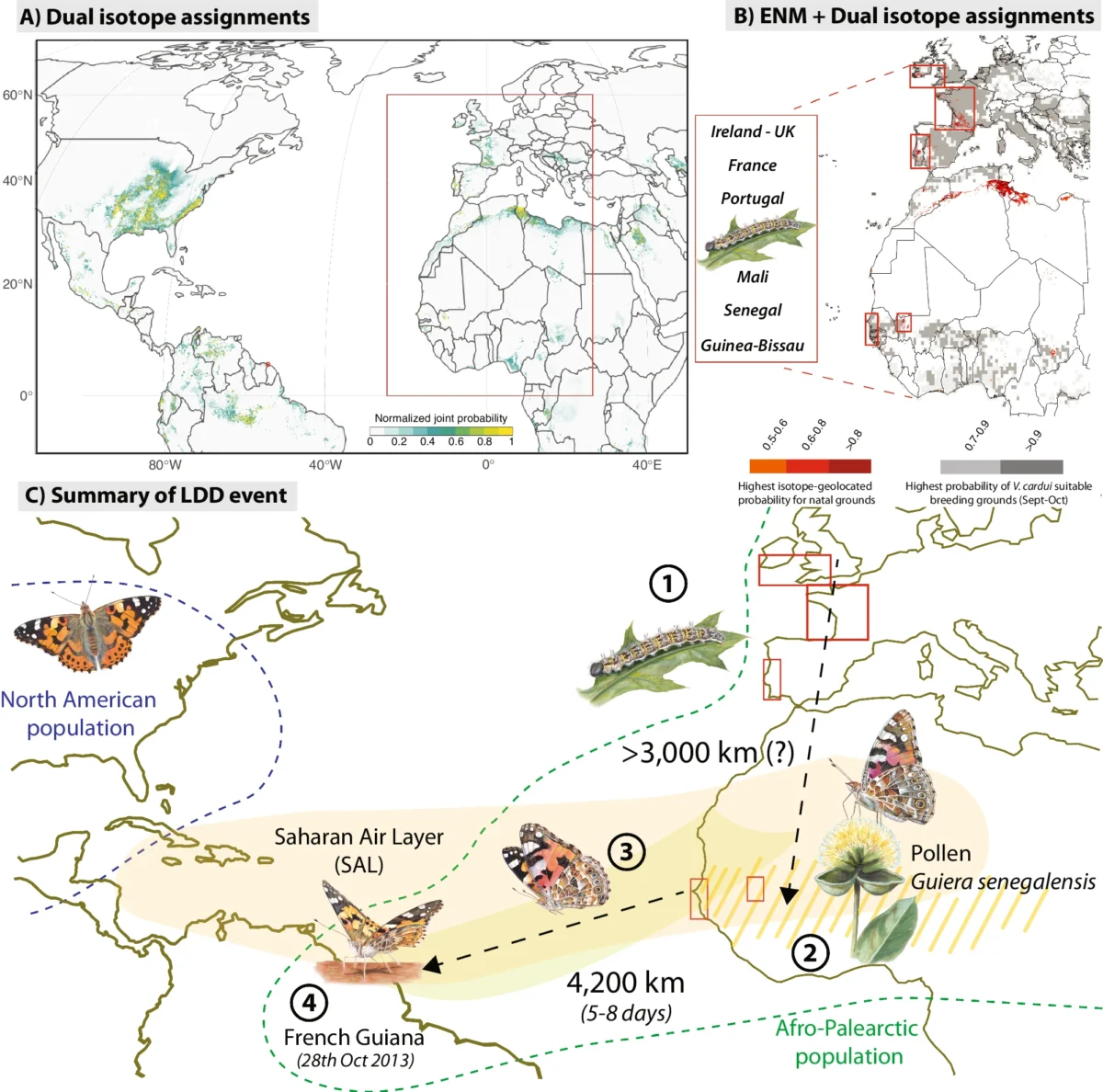
In October 2013, Gerard Talavera, an evolutionary biologist from the Botanical Institute of Barcelona and a National Geographic Explorer, encountered a sight that defied the established laws of entomology. While conducting fieldwork on the Atlantic coast of French Guiana, Talavera discovered a group of Painted Lady butterflies (Vanessa cardui) resting on the sand. Their wings were tattered, their bodies showed signs of extreme physiological stress, and they were thousands of miles away from any known habitat for their specific population. The Painted Lady is a cosmopolitan species, found on nearly every continent, but it is not native to South America. This anomaly sparked a decade-long scientific investigation that has recently culminated in a groundbreaking study published in the journal Nature Communications, revealing the first documented non-stop transoceanic flight of an insect.
The discovery was immediately recognized as a biological impossibility by traditional standards. The Painted Lady populations found in Europe and Africa were known to migrate, but a journey across the Atlantic Ocean was considered beyond the physical capabilities of a creature weighing less than a gram. To solve this mystery, Talavera assembled an international team of researchers from institutions including the University of Ottawa and the Institute of Evolutionary Biology in Barcelona. Because butterflies are too small and delicate to carry traditional GPS tracking devices, the team had to employ a suite of "molecular detective" techniques to reconstruct the butterflies’ journey.
The Forensic Reconstruction of a Record-Breaking Flight
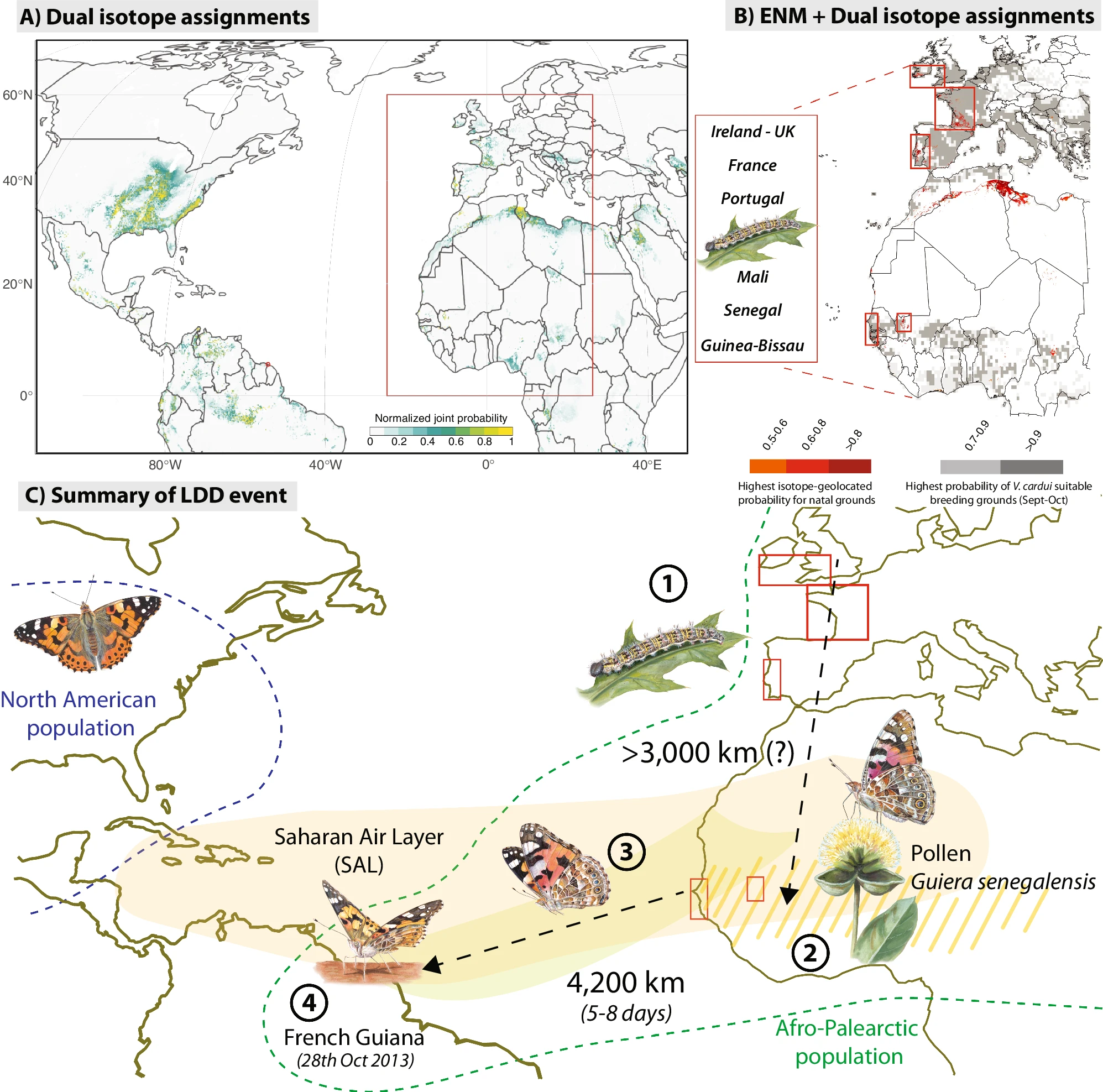
The research team began their investigation by analyzing the genetic material of the specimens found in French Guiana. By sequencing the DNA of these butterflies, they were able to rule out the possibility that the insects had drifted south from North America, which would have been a much shorter and more plausible route. Instead, the genetic data pointed directly to populations residing in Europe and Africa. This finding suggested a much more ambitious and perilous path than anyone had previously dared to hypothesize.
To confirm this trans-Atlantic origin, the researchers turned to palynology—the study of pollen. Using a technique called pollen metabarcoding, the team identified the DNA of plant species from the pollen grains stuck to the butterflies’ bodies. They found traces of Guiera senegalensis and Ziziphus spina-christi, two plants that are endemic to the Sahel and Sudan regions of Africa. Crucially, these plants only flower at the end of the rainy season in West Africa. This provided definitive forensic evidence that the butterflies had been in Africa shortly before appearing on the shores of South America.

Further evidence was gathered through stable isotope analysis of the butterflies’ wings. Isotopes of hydrogen and strontium found in the environment are incorporated into a butterfly’s tissues when it is a caterpillar, based on the local water and soil chemistry of its birthplace. By analyzing these "chemical fingerprints," the researchers determined that the butterflies were likely born in Western Europe—potentially as far north as the United Kingdom or Scandinavia—migrated to West Africa, and then embarked on their trans-Atlantic crossing.
The Atmospheric Highway: The Saharan Air Layer
The central question remained: how did a small insect survive a 4,200-kilometer journey over open water? Biologically, the Painted Lady is not built for such endurance. Under normal conditions, a Painted Lady can fly for about 780 kilometers before its fat reserves are entirely depleted. Without the ability to land and feed on nectar, a 4,200-kilometer flight across the ocean should have been a death sentence.
The research team turned to meteorological data to find the answer. They discovered that during the period leading up to the butterflies’ arrival in French Guiana, a specific atmospheric phenomenon known as the Saharan Air Layer (SAL) was particularly active. The SAL is a mass of very dry, dusty, and fast-moving air that forms over the Sahara Desert and moves westward across the Atlantic toward the Caribbean and South America.
These winds acted as a high-altitude "conveyor belt." By hitching a ride on these trade winds, the butterflies were able to maintain a much higher ground speed than they could achieve through flapping alone. The researchers calculated that with the assistance of these winds, the butterflies could have completed the crossing in just five to eight days. The wind provided up to 40% of the energy required for the flight, allowing the insects to conserve enough fat to reach land alive, albeit in a state of near-total exhaustion.
Redefining the Limits of Insect Resilience
This discovery shatters the long-held perception of butterflies as fragile creatures limited to localized ecosystems or short-distance overland migrations. While the Monarch butterfly of North America is famous for its 4,000-kilometer migration, that journey occurs over land, allowing for frequent stops to rest and refuel. The Painted Lady’s flight represents a different category of endurance: a sustained, non-stop crossing of an oceanic barrier.
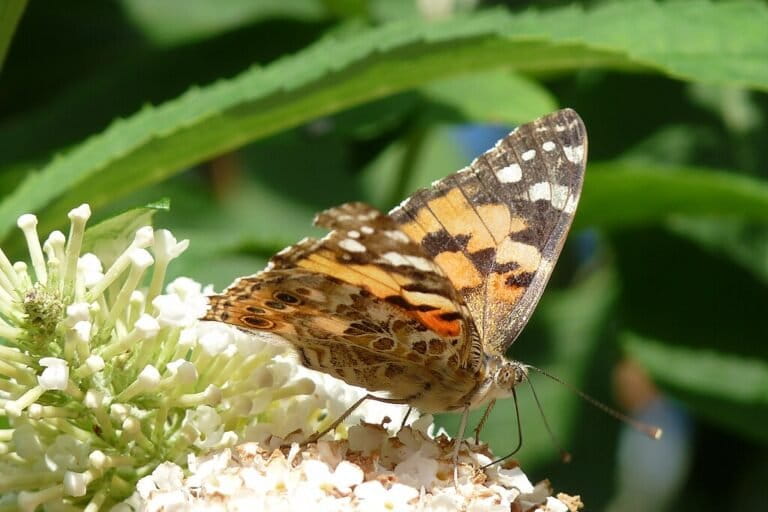
"We tend to see butterflies as symbols of fragility, but science is showing us they possess an incredible resilience," said Talavera in a statement following the publication. "This journey shows that the world is much more connected for small insects than we previously thought. They are not just passive drifters; they are strategic navigators that can exploit global wind patterns to cross entire oceans."
The study highlights the importance of "long-distance dispersal events" in biology. While such transoceanic crossings may be rare or "accidental" in the sense that they depend on specific weather windows, they play a crucial role in the distribution of species across the planet. This phenomenon explains how similar species can be found on widely separated continents and how islands are colonized by terrestrial insects.
Implications for Global Biodiversity and Climate Change
The findings have significant implications for our understanding of global biodiversity and the potential impacts of climate change. As global warming alters atmospheric currents and the frequency of extreme weather events, the "highways in the sky" used by migratory insects may shift. This could lead to more frequent "accidental" migrations or the establishment of invasive species in new territories.
Furthermore, the study underscores the interconnectedness of distant ecosystems. The butterflies that landed in South America were carrying African pollen, effectively acting as long-distance pollinators across an entire ocean. While the Painted Ladies did not establish a permanent population in French Guiana—likely due to the lack of suitable host plants or different seasonal cues—the potential for such events to alter local ecologies is a new frontier for research.
The use of advanced techniques like isotope geolocation and pollen metabarcoding has set a new standard for entomological research. These tools allow scientists to track the movements of tiny organisms that were previously "invisible" to traditional tracking methods. This "molecular detective" approach is now being applied to other migratory insects, such as dragonflies and moths, which are suspected of similar long-distance feats.
A New Chapter in Migration Science
The scientific community has reacted to the study with a mix of awe and renewed curiosity. Dr. Clement Bataille, a co-author from the University of Ottawa, noted that the multidisciplinary nature of the research—combining genetics, botany, isotopes, and meteorology—was essential to proving what initially seemed like a tall tale. "It is a testament to the power of modern science that we can reconstruct the journey of a single butterfly across the vast Atlantic Ocean," Bataille remarked.
As researchers continue to study the Painted Lady, which is known to have a multi-generational migration cycle spanning up to 12,000 miles from the Arctic Circle to tropical Africa, this South American detour stands as a testament to the extraordinary capabilities of life. The 4,200-kilometer flight from Africa to the Americas is now officially recorded as one of the longest non-stop flights by any insect in history.
This discovery serves as a reminder that the natural world still holds profound mysteries. The image of a tattered butterfly on a beach in French Guiana, having survived a week-long battle with the Atlantic winds, challenges our understanding of what is possible. It moves the Painted Lady from the category of a garden beauty to that of a global marathoner, proving that even the smallest creatures can conquer the largest obstacles when the winds of the earth are in their favor.
The study, titled "A trans-oceanic flight of over 4,200 km by painted lady butterflies," serves as a cornerstone for future research into how the atmosphere facilitates the movement of life. It reminds us that the borders we draw on maps are non-existent for the inhabitants of the air, and that the health of an ecosystem in Africa can be intimately tied to the arrival of a few weary travelers on the shores of South America.