Nila Kartika Wati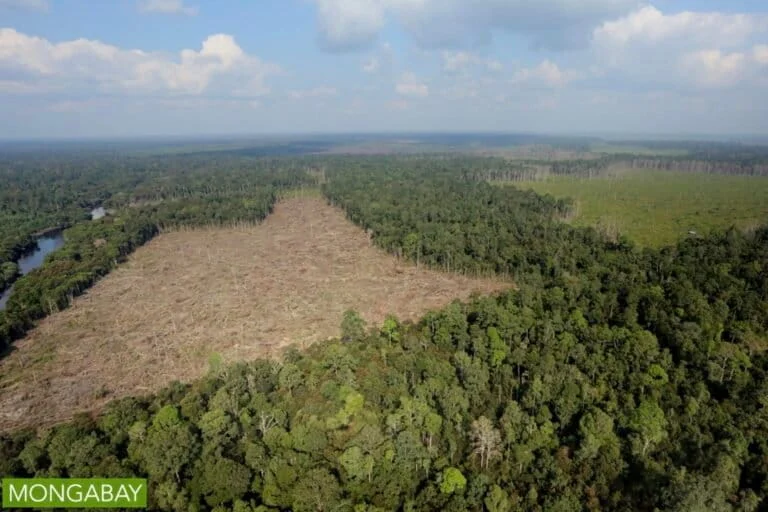
Every year on April 22, the global community observes Earth Day, a day established in 1970 to demonstrate support for environmental protection. In Indonesia, this observance is traditionally marked by ceremonial tree planting, the display of advocacy banners, and high-level pledges from both public and private sectors. However, as the celebrations conclude, the underlying ecological reality remains stark. From the rapidly thinning rainforests of Kalimantan to the eroding coastlines of Makassar and the flood-prone regions of West Nusa Tenggara (NTB), the Indonesian archipelago faces a multifaceted environmental crisis. While international reports often quantify these issues in abstract percentages, for millions of Indonesians living in coastal villages and forest peripheries, the degradation of the environment is an existential threat.
The Historical Context of Earth Day in Indonesia
Earth Day was born out of a burgeoning environmental consciousness in the United States during the late 1960s, eventually evolving into a global movement coordinated by the Earth Day Network. Indonesia’s involvement in global environmental discourse accelerated following the 1992 Rio Earth Summit, leading to the ratification of various international treaties regarding biodiversity and climate change. Over the decades, Indonesia has positioned itself as a "climate superpower" due to its massive tropical forests and peatlands, which serve as critical carbon sinks for the planet.
Despite this status, the chronology of Indonesia’s environmental health shows a concerning trend. The 1990s and early 2000s saw a massive expansion of the logging and palm oil industries, particularly in Sumatra and Kalimantan. By the 2010s, the focus shifted toward mining and large-scale infrastructure projects. In 2024, the theme of Earth Day, "Planet vs. Plastics," highlights a specific urgency for Indonesia, which remains one of the world’s largest contributors to marine plastic debris. The disconnect between annual commemorative events and the long-term trajectory of ecological health suggests a need for a deeper analysis of regional crises across the Nusantara.
Kalimantan: The Systematic Thinning of the Heart of Borneo
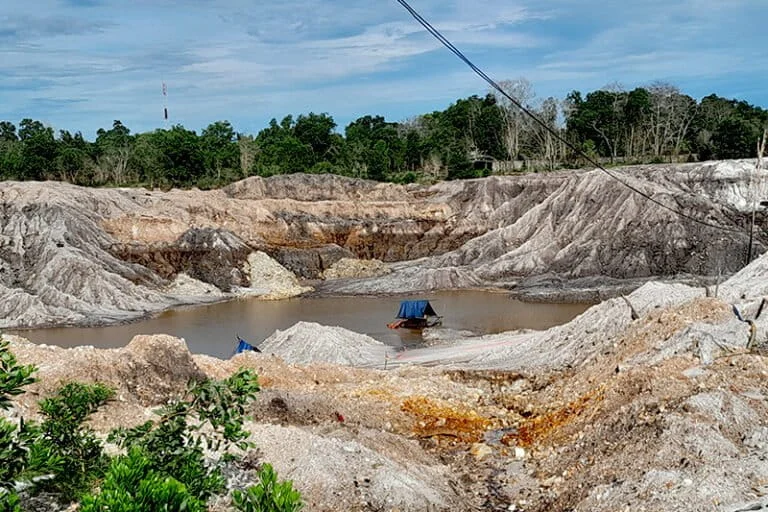
Kalimantan, home to some of the world’s oldest rainforests, continues to be the primary theater for Indonesia’s struggle with deforestation. For decades, the region has been exploited for timber, coal, and palm oil. Data from Global Forest Watch indicates that Indonesia lost approximately 10.2 million hectares of primary forest between 2002 and 2023, with a significant portion of that loss occurring in Kalimantan.
The current pressure on Kalimantan’s ecosystem is further compounded by the development of the new capital city, Nusantara (IKN), in East Kalimantan. While the government has promised a "forest city" concept that prioritizes sustainability, environmental NGOs express concern over the fragmentation of wildlife corridors and the displacement of indigenous communities. The loss of forest cover has direct implications for regional biodiversity, including the endangered orangutan and the clouded leopard, while also reducing the land’s capacity to absorb rainwater, leading to more frequent and severe flooding in downstream areas.
Coastal Vulnerability: Makassar and West Nusa Tenggara
The environmental crisis extends beyond the forests to the vast coastlines of the archipelago. In Makassar, South Sulawesi, the intersection of urban expansion and climate change has led to significant coastal erosion. Large-scale reclamation projects, such as the Centre Point of Indonesia (CPI), have been criticized by local fishing communities and environmentalists for altering ocean currents and destroying traditional fishing grounds. As sea levels rise, the "blue economy" of Makassar faces a precarious future, with traditional fishers forced to travel further out to sea, facing higher risks and lower yields.
Further east, in West Nusa Tenggara (NTB), the impact of climate change is felt through erratic weather patterns and extreme hydrological events. Regions like Bima and Sumbawa have seen a rise in flash floods, often attributed to upstream land-use changes and the conversion of forests into agricultural land for corn and other commodities. In NTB, the climate crisis is not a future projection but a present-day reality that disrupts food security and destroys local infrastructure. The provincial government has struggled to balance the economic benefits of the mining sector—specifically the massive copper and gold operations—with the need for watershed protection and disaster mitigation.
Marine Biodiversity and the Silent Extinction of the Sawfish
One of the most harrowing indicators of Indonesia’s environmental decline is the state of its marine life. The source content notes the plight of the sawfish (Pristidae), a unique ray characterized by its long, tooth-lined snout. Once common in the coastal waters and estuaries of Indonesia, particularly around Papua and the Java Sea, the sawfish is now on the brink of extinction. Most Indonesians are unaware that these "living fossils" ever existed in their waters, as their populations have been decimated by habitat loss and accidental entanglement in fishing nets (bycatch).
The sawfish’s decline is a microcosm of a broader biodiversity crisis. Indonesia’s waters are also choked with plastic waste. Research suggests that millions of metric tons of plastic enter the Indonesian archipelago’s waters annually. This pollution has a devastating effect on marine avifauna; seabirds frequently mistake plastic fragments for food, leading to starvation as their stomachs fill with indigestible debris. The "Planet vs. Plastics" theme of 2024 is particularly relevant here, as Indonesia seeks to meet its goal of reducing marine plastic waste by 70% by 2025.
Supporting Data: Quantifying the Crisis
To understand the scale of the challenge, it is necessary to examine the data points that define Indonesia’s current environmental standing:
- Deforestation Rates: While the Ministry of Environment and Forestry (KLHK) reported a significant slowdown in deforestation in recent years—reaching a historic low in 2021-2022—independent monitors like the University of Maryland suggest that forest loss remains high in areas designated for "food estates" and industrial mining.
- Plastic Waste: Indonesia produces approximately 6.8 million tons of plastic waste per year, only a fraction of which is recycled. Approximately 620,000 tons of this waste ends up in the ocean.
- Climate Risk: The World Bank’s Climate Risk Country Profile for Indonesia warns that by 2050, the country could experience a temperature increase of 0.8°C to 1.2°C, which would significantly increase the frequency of heatwaves and extreme precipitation events.
- Endangered Species: According to the IUCN Red List, over 1,200 species in Indonesia are currently threatened with extinction, including the Sumatran tiger, the Javan rhino, and multiple species of rays and sharks.
Stakeholder Responses and Policy Analysis
The Indonesian government, through the Ministry of Environment and Forestry, has defended its record by highlighting the success of the permanent moratorium on primary forest and peatland conversion. Environment Minister Siti Nurbaya Bakar has frequently stated that Indonesia is on track to meet its "FoLU Net Sink 2030" goals, which aim to ensure that the forestry and land-use sector absorbs more carbon than it emits by the end of the decade.
However, civil society organizations such as WALHI (The Indonesian Forum for Environment) and Greenpeace Indonesia offer a more critical perspective. They argue that regulatory changes, such as the Omnibus Law on Job Creation, have weakened environmental protections by streamlining the process for Environmental Impact Assessments (AMDAL) and making it easier for corporations to operate in sensitive areas.
"Merely planting trees on Earth Day is a performative gesture if the state simultaneously facilitates the clearing of thousands of hectares for mining and monoculture plantations," a representative from WALHI stated in a recent symposium. The consensus among activists is that environmental policy must move beyond "greenwashing" and address the root causes of ecological destruction: land tenure inequality, lack of enforcement against illegal logging, and an economic model heavily dependent on extractive industries.
Broader Implications: The Human Cost of Ecological Failure
The implications of these environmental trends are not limited to the loss of flora and fauna; they have profound socio-economic consequences. For the millions of Indonesians living in poverty, the environment is their primary safety net. When forests are cleared, indigenous communities lose their livelihoods and their cultural heritage. When coasts erode, fishing villages are displaced, leading to urban migration and increased pressure on city infrastructure.
Furthermore, the economic cost of environmental disasters is staggering. The National Disaster Management Agency (BNPB) reports that over 90% of disasters in Indonesia are hydrometeorological (floods, landslides, and droughts), which are exacerbated by environmental degradation. These disasters cost the Indonesian economy billions of rupiah annually in damaged infrastructure and lost productivity.
Conclusion: The Choice to Care Daily
As the source text poignantly notes, amidst the systemic destruction, there are "hands that do not give up." These are the local activists, the indigenous elders, and the youth volunteers who choose to plant when others cut, and to clean when others litter. Their efforts are a reminder that while Earth Day serves as a necessary annual focal point, the stewardship of the archipelago is a commitment that must be renewed every day.
The survival of Indonesia’s unique biodiversity—from the sawfish of Papua to the orangutans of Kalimantan—and the protection of its vulnerable human populations depend on a fundamental shift in how the nation values its natural capital. As the world moves toward more stringent climate targets, Indonesia stands at a crossroads: it can continue with a business-as-usual approach that prioritizes short-term extraction, or it can lead the way in demonstrating how a developing nation can achieve economic prosperity without sacrificing the very earth that sustains it. The "wounds" of the earth described in Kalimantan, Makassar, and NTB are not yet terminal, but they require more than just a day of awareness to heal. They require a systemic, transparent, and sustained effort to protect the Nusantara for generations to come.