Nila Kartika Wati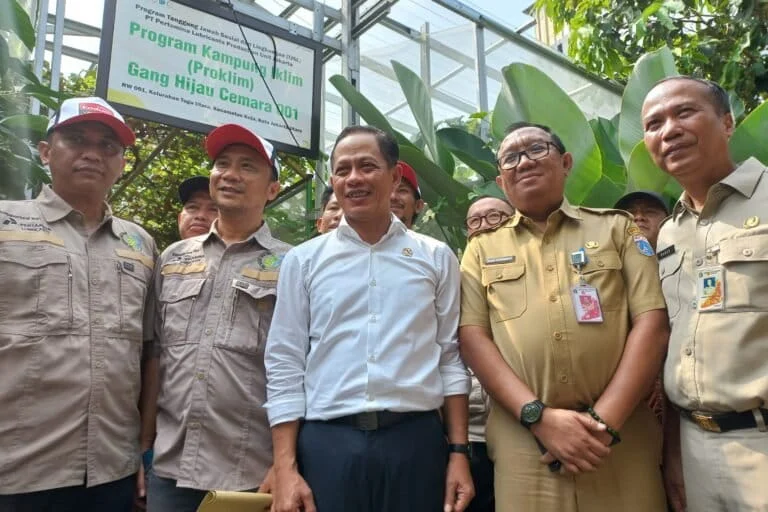
The Indonesian Ministry of Environment has officially named Asep Kuswanto, the former Head of the Jakarta Environmental Service (DLH), a suspect in a criminal investigation regarding the catastrophic landslide at the Bantargebang Integrated Waste Treatment Site (TPST) in March 2026. The incident, which resulted in the deaths of seven individuals, has sparked a massive legal and administrative inquiry into the systemic failures of waste management in the capital. While Kuswanto is the first high-ranking official to be targeted, civil society organizations and legal experts are now intensifying their calls for the investigation to extend to the highest levels of regional leadership, citing national laws that place ultimate responsibility for waste management on regional heads.
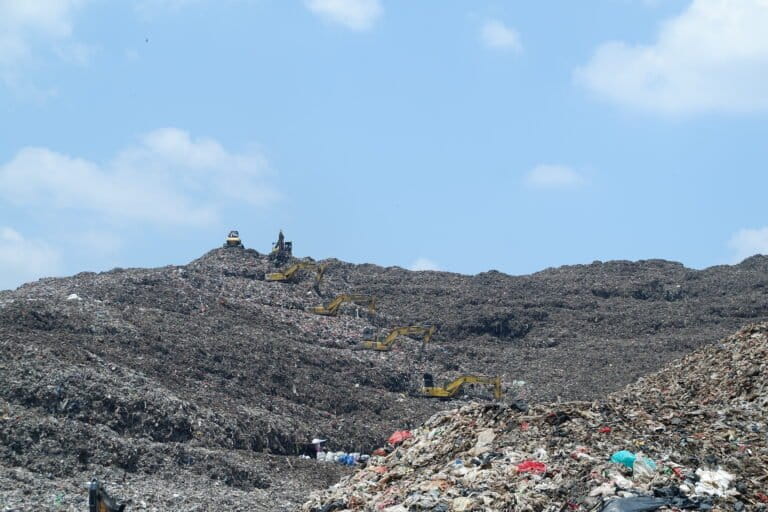
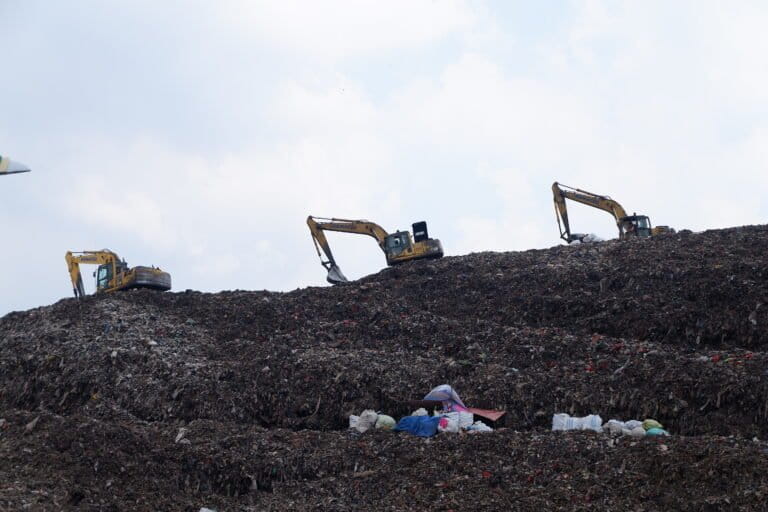
The tragedy at Bantargebang, one of the largest landfill sites in the world, occurred following a period of heavy rainfall that destabilized a massive mountain of waste. According to Hanif Faisol Nurofiq, the Minister of Environment, the disaster was not merely a natural occurrence but the direct result of gross negligence and the violation of established environmental protocols. Specifically, the Minister noted that the management at Bantargebang had reverted to "open dumping" practices—a method strictly prohibited by Indonesian law due to its environmental and safety risks—and had consistently failed to maintain functional wastewater treatment installations (IPAL).
The Legal Foundation and Allegations of Negligence
The designation of Asep Kuswanto as a suspect follows a rigorous, multi-year oversight process conducted by the Ministry of Environment (KLH). Minister Hanif clarified that the legal action was a measure of last resort after the Jakarta Environmental Service failed to respond to a series of administrative sanctions and corrective orders. Between 2024 and 2025, the Ministry conducted several audits and evaluations of the Bantargebang facility, all of which pointed toward a persistent state of non-compliance.
"The determination of suspect status was not done arbitrarily," Minister Hanif stated during an interview in Jakarta. "We provided guidance, conducted oversight, and issued administrative sanctions first. We even requested that the Jakarta Environmental Service improve the governance of the Bantargebang TPST. Based on our evaluation, none of these requirements were met. We eventually conducted an environmental audit, and it revealed that all the mandated safety and management standards were ignored."
The March landslide served as the tipping point for environmental law enforcement. Investigators from the Ministry’s Law Enforcement Division (Gakkum) utilized the tragedy as evidence of the lethal consequences of regulatory non-compliance. Under Law No. 18 of 2008 on Waste Management, officials who intentionally ignore management standards can face up to five years in prison. However, because the negligence at Bantargebang resulted in the loss of human life, the potential penalties have escalated significantly. Under the current charges, the suspect faces a maximum of 15 years in prison and fines ranging from IDR 5 billion to IDR 15 billion.
A Comprehensive Chronology of Regulatory Failure
The path to the current criminal investigation was marked by a series of warnings and failed interventions by the central government. Rizal Irawan, the Deputy for Environmental Law Enforcement at the Ministry of Environment, detailed a timeline of events that suggests a systemic disregard for environmental safety within the Jakarta provincial government’s waste management apparatus.
The administrative trail began on December 31, 2024, when the Ministry issued Administrative Sanction No. 13646 against the management of TPST Bantargebang. Following this, the first official oversight inspection was conducted on April 12, 2025. The results categorized the facility as "Non-Compliant." Ten days later, on April 22, the Ministry issued a formal warning letter, demanding immediate improvements to the site’s stability and leachate management systems.
Despite these warnings, a second oversight inspection on May 9, 2025, confirmed that no significant changes had been made, and the facility remained in a state of non-compliance. In response, the central government escalated the pressure by issuing Decision No. 920 on September 4, 2025, which mandated a comprehensive environmental audit. This audit eventually confirmed the worst fears of environmentalists: the site was a "ticking time bomb" of unstable waste mounds and hazardous runoff.
The transition from administrative oversight to criminal investigation was formalized during a series of case briefings (gelar perkara) held between February 24 and 27, 2026. These meetings involved the Ministry of Environment, the Criminal Investigation Agency of the National Police (Bareskrim Polri), and the Attorney General’s Office. The consensus reached during these briefings led to the official naming of Asep Kuswanto as a suspect on April 20, 2026.
Political Fallout and Institutional Responsibility
The timing of the legal proceedings has coincided with significant shifts in the Jakarta provincial administration. Just one week before the Ministry of Environment announced the suspect status, the Governor of Jakarta, Pramono Anung, removed Asep Kuswanto from his position as Head of the Environmental Service. Kuswanto was subsequently reassigned as the Assistant Deputy Governor for Spatial Planning, while Dudi Gardesi Asikin was appointed to lead the DLH.
The removal of Kuswanto is seen by some as an attempt by the provincial government to distance itself from the Bantargebang disaster. However, Minister Hanif has signaled that the investigation is unlikely to stop with the former department head. "It is impossible for the Head of the Service to work alone," the Minister remarked. "There is naturally a chain of command—both above and below—that is organized within the execution of the Jakarta government’s waste management governance."
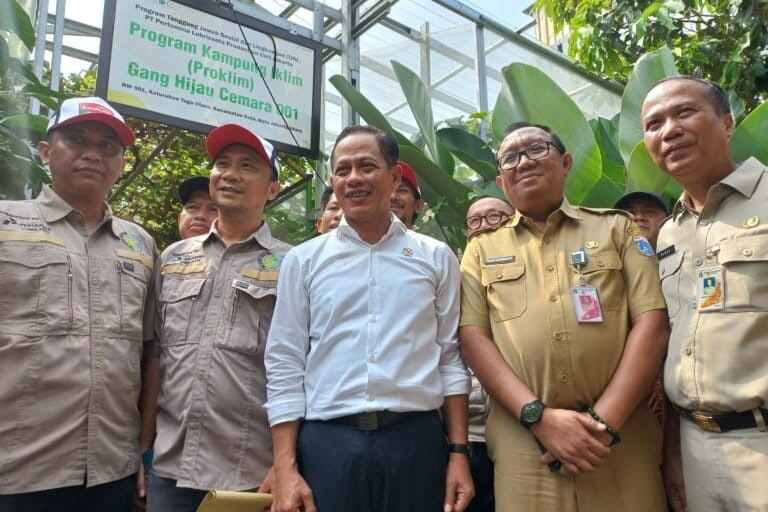
This sentiment is echoed by Bagong Suyoto, Chairman of the National Waste Coalition (KPNas), who has emerged as a vocal critic of the current legal scope. Suyoto argues that the investigation must include Governor Pramono Anung, citing Law No. 18 of 2008, which explicitly identifies the regional head (Governor/Mayor) as the party ultimately responsible for waste management within their jurisdiction.
"In previous cases of poor waste management leading to death, such as the TPA Burangkeng case in Bekasi, we have seen department heads take the fall. But the law is clear: the regional head holds the mandate," Suyoto explained. He further urged the Ministry to name the specific Manager of the Bantargebang TPST as a suspect, labeling the site management as "stubbornly defiant" of national regulations.
Technical Analysis of the Bantargebang Crisis
The Bantargebang facility has long been a symbol of Indonesia’s waste management crisis. Spanning over 110 hectares, the site receives upwards of 7,500 to 8,000 tons of waste from Jakarta daily. For years, experts have warned that the landfill had reached its maximum capacity. The shift toward "open dumping"—where waste is simply piled up without soil cover or proper compaction—is a direct violation of the 2008 Waste Management Law, which mandated that all open dumps be converted to sanitary landfills by 2013.
The failure to maintain the IPAL (wastewater treatment) system at Bantargebang exacerbated the instability of the waste mounds. Without proper drainage, leachate (the liquid produced by decomposing waste) saturates the piles, increasing internal pressure and acting as a lubricant that makes landslides more likely. Furthermore, the buildup of methane gas within unmanaged waste mounds creates a high risk of internal fires and explosions, which can further destabilize the structure.
Muhammad Aminullah, a campaigner for Walhi Jakarta (The Indonesian Forum for Environment), emphasized that while criminal prosecution is necessary, it does not solve the underlying crisis. "The government must evaluate where the failure occurred. Is it a lack of budget, a lack of technology, or a lack of political will? If we only change the people in charge without fixing the root cause of how Jakarta processes its waste, another Bantargebang will happen elsewhere," Aminullah warned.
Broader Implications for Environmental Governance
The prosecution of Asep Kuswanto marks a significant moment in Indonesian environmental law enforcement. Historically, administrative failures in public services rarely resulted in criminal charges against high-ranking officials. However, the use of Law No. 32 of 2009 on Environmental Protection and Management, in conjunction with the Waste Management Law, suggests a new era of "strict liability" and accountability for civil servants.
Kuswanto is currently facing charges under Article 41, Paragraph (2) of Law 18/2008 and Article 114 of Law 32/2009. These articles specifically target officials who fail to perform their oversight duties, leading to environmental pollution or disasters. If the investigation proves that there was a systemic "organized" failure, it could pave the way for a landmark case involving corporate or institutional criminal liability within a government framework.
As of the time of publication, Asep Kuswanto has not responded to requests for comment regarding his suspect status. Similarly, Yogi Ikhwan, the spokesperson for the Jakarta Environmental Service, has remained silent on the specific allegations of non-compliance and the future of the Bantargebang facility.
The eyes of the public remain on the Ministry of Environment and the Attorney General’s Office as they prepare the case for trial. The outcome will likely set a precedent for how waste management is handled across Indonesia’s rapidly urbanizing provinces. For the families of the seven victims who perished in the March landslide, the pursuit of justice is not just about holding one man accountable, but about ensuring that a tragedy of this magnitude never occurs again in the heart of the nation’s capital.