Tyo Susilo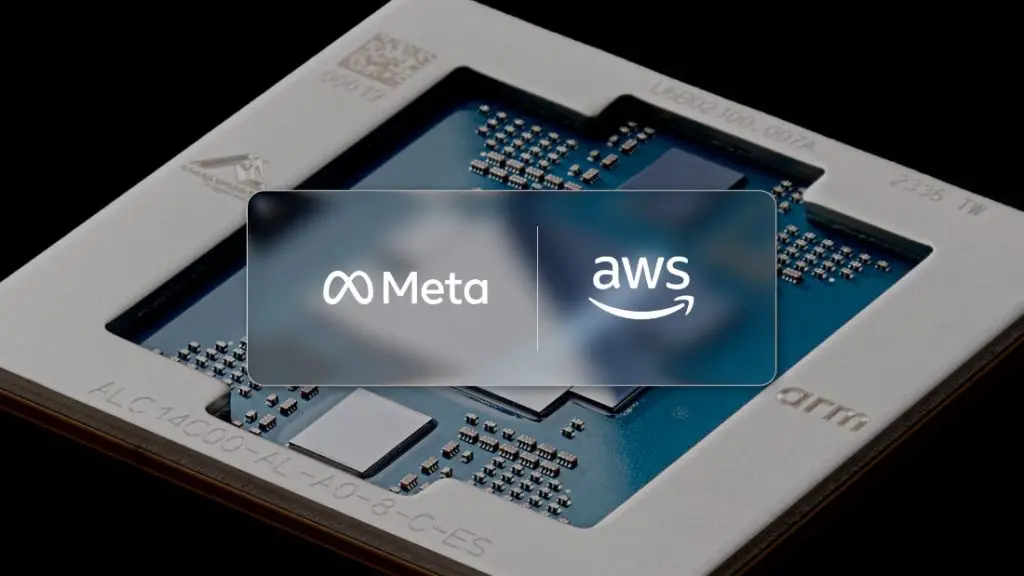
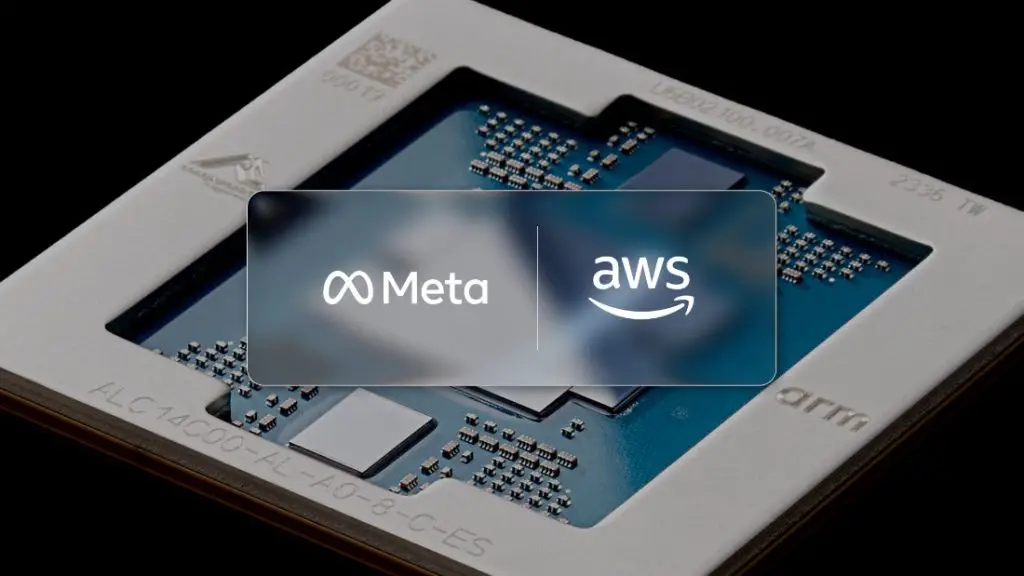
Meta Platforms has finalized a significant agreement with Amazon Web Services (AWS) to deploy AWS Graviton processors at a massive scale, marking a substantial expansion of its long-standing collaboration with the cloud computing giant. This strategic move signals Meta’s commitment to leveraging advanced CPU architecture to power its burgeoning artificial intelligence initiatives, particularly those involving complex autonomous systems.
The initial phase of this expanded partnership is set to encompass tens of millions of Graviton cores, with provisions for further scaling as Meta’s next-generation AI infrastructure matures. This deployment underscores a critical shift in the AI landscape, where the reliance on Graphics Processing Units (GPUs) for model training is increasingly being complemented by the need for robust Central Processing Unit (CPU) power to handle the intricate reasoning, planning, and execution capabilities of autonomous AI agents.
The Evolving Demands of AI: Beyond GPU Dominance
For years, GPUs have been the undisputed workhorses for training computationally intensive AI models, their parallel processing capabilities ideal for handling the vast datasets and complex matrix operations inherent in deep learning. However, the recent surge in "agenic AI" – self-sufficient AI systems designed to operate autonomously, reason through complex scenarios, plan multi-step workflows, and execute tasks with minimal human intervention – is dramatically reshaping infrastructure requirements.
These autonomous agents demand sustained, high-performance CPU computation for a variety of critical functions. This includes real-time reasoning to process and react to incoming data streams instantaneously, code generation for automated software development and debugging, and sophisticated search and orchestration mechanisms to manage billions of simultaneous interactions across intricate, multi-stage processes. Traditional architectures, while capable, are facing mounting pressure to efficiently support these increasingly CPU-bound workloads at the scale Meta operates.
Graviton Processors: A New Foundation for Meta’s AI Ambitions
The integration of AWS Graviton processors directly addresses these evolving demands. Designed by AWS and built on the Arm architecture, Graviton processors are engineered to offer a compelling balance of performance, cost-efficiency, and energy savings, making them particularly well-suited for large-scale, CPU-intensive workloads. Meta’s decision to deploy these processors in millions of cores indicates a strategic prioritization of these benefits for its AI development pipeline.
The Graviton processors, particularly the latest generations such as Graviton3 and potentially future iterations, are optimized for a wide array of workloads. They feature advanced compute capabilities, ample memory bandwidth, and efficient power consumption. The underlying AWS Nitro System, a lightweight hypervisor that offloads many virtualization, management, and security functions to dedicated hardware, further enhances the performance and security of Graviton-based instances. This allows Meta to achieve higher performance per watt and potentially lower overall operational costs compared to traditional x86-based solutions for these specific AI tasks.
A Timeline of Strategic Collaboration: Meta and AWS
The partnership between Meta and AWS is not a new development. Their collaboration has evolved over several years, with Meta leveraging AWS services for various aspects of its global operations, including data storage, content delivery, and increasingly, AI and machine learning workloads.
- Early Stages of Cloud Adoption: Like many major tech companies, Meta initially explored cloud services for scalability and flexibility. AWS, as a market leader, provided a robust platform for many of its infrastructural needs.
- Growing AI Investment: As Meta intensified its focus on AI research and development, including advancements in areas like large language models (LLMs) and the metaverse, the demand for specialized computing resources grew.
- Exploration of Graviton: The introduction of AWS Graviton processors presented a potential avenue for optimizing CPU-intensive workloads. Early adopters and independent benchmarks began to highlight Graviton’s efficiency for specific use cases, likely prompting Meta’s deeper evaluation.
- Formalizing Large-Scale Deployment: The recent announcement signifies the culmination of this evaluation, with Meta committing to a substantial, multi-million-core deployment of Graviton processors. This represents a significant endorsement of Graviton’s capabilities for cutting-edge AI applications.
This strategic integration is a testament to the maturity of Arm-based architectures in enterprise-grade computing and the continuous innovation within cloud providers like AWS to cater to the specialized needs of hyperscale customers.
Supporting Data and Performance Metrics
While specific performance benchmarks for Meta’s internal AI workloads are proprietary, general data on AWS Graviton processors provides context for this strategic decision.
- Performance Improvements: AWS has consistently reported significant performance gains with each generation of Graviton processors. For instance, Graviton3 processors offer up to 40% better price-performance for various AWS services compared to previous generations. For workloads like inference, code compilation, and web servers, Graviton3 has demonstrated substantial improvements in performance and energy efficiency.
- Energy Efficiency: A key advantage cited for Graviton processors is their superior energy efficiency. Built on Arm Neoverse cores, they are designed to deliver more compute per watt. This is crucial for hyperscale data centers, where energy consumption represents a significant operational cost and environmental consideration. Reports suggest Graviton3 can offer up to 60% lower power consumption for the same workload compared to comparable x86 processors.
- Cost Optimization: Beyond direct performance gains, the improved price-performance ratio of Graviton processors contributes to significant cost savings for large-scale deployments. For companies like Meta, operating at the forefront of AI research and deployment, optimizing infrastructure costs without compromising performance is paramount.
The decision to deploy tens of millions of Graviton cores suggests that Meta has likely conducted extensive internal testing and modeling, confirming that these processors meet or exceed its performance and efficiency targets for its specific AI workloads.
Reactions and Inferred Perspectives
While direct quotes from Meta and AWS executives specifically on this large-scale deployment are not publicly available at the time of this report, the strategic nature of the announcement allows for inferred perspectives and likely reactions from industry stakeholders.
- Meta’s Perspective (Inferred): Meta’s primary motivation is undoubtedly to build and scale its AI capabilities more efficiently. By partnering with AWS for this infrastructure, Meta can accelerate its development of advanced AI agents and metaverse technologies without the immense capital expenditure and operational complexity of building and managing such a vast CPU-intensive infrastructure entirely in-house. The focus on Graviton signals a move towards optimizing for cost-effectiveness and energy efficiency, crucial for sustainable growth at their scale.
- AWS’s Perspective (Inferred): For AWS, this is a significant win, demonstrating the enterprise readiness and scalability of its custom-designed Graviton processors. It solidifies AWS’s position as a preferred cloud provider for hyperscale AI workloads and reinforces its strategy of offering specialized hardware optimized for specific customer needs. This deal likely represents a substantial revenue stream and a strong validation of their silicon design efforts.
- Industry Analysts’ View (Inferred): Industry analysts are likely to view this as a pivotal moment, highlighting the increasing diversity of compute architectures being adopted for AI. The move by a major player like Meta away from a sole reliance on traditional architectures for certain AI tasks underscores the competitive landscape of silicon design and cloud infrastructure. It also points to the growing importance of energy efficiency and cost optimization in the AI race.
- Competitors’ Response (Inferred): Competitors in both the cloud and semiconductor industries will be closely watching the success of this deployment. It could spur further innovation in Arm-based server processors and prompt other cloud providers to accelerate their offerings in specialized silicon for AI.
Broader Impact and Implications
The widespread adoption of AWS Graviton processors by Meta has several significant implications for the technology industry:
- Accelerated Adoption of Arm Architecture: This large-scale deployment is a powerful endorsement of the Arm architecture’s capabilities in high-performance computing. It is likely to encourage more enterprises to consider Arm-based solutions for their server infrastructure, potentially challenging the long-standing dominance of x86 processors in the data center.
- Redefining AI Infrastructure: The reliance on Graviton for CPU-intensive AI tasks signals a maturation of AI infrastructure, moving beyond a singular focus on GPUs. It emphasizes the need for a balanced approach, leveraging the strengths of both CPU and GPU architectures for different stages of AI development and deployment.
- Emphasis on Sustainability in AI: The Graviton processors’ energy efficiency aligns with the growing global focus on sustainability in technology. As AI workloads become more pervasive, reducing the carbon footprint of data centers becomes increasingly critical. Meta’s move suggests that environmental considerations are becoming a significant factor in strategic infrastructure decisions.
- Innovation in Autonomous Systems: By enabling more efficient and scalable deployment of AI agents, this partnership could accelerate the development and adoption of autonomous systems across various industries, from logistics and manufacturing to healthcare and customer service.
- Cloud Provider Differentiation: This strategic partnership highlights how cloud providers are increasingly differentiating themselves through custom silicon and specialized services tailored to the unique demands of their largest customers. It underscores the ongoing trend of hyperscale companies co-designing or deeply integrating with their cloud partners to optimize their operations.
In conclusion, Meta’s substantial deployment of AWS Graviton processors represents a forward-looking strategy to equip itself with the necessary computational power for the next era of AI. This move not only strengthens its partnership with AWS but also signals a broader industry shift towards more diverse, efficient, and specialized computing architectures for the demanding landscape of artificial intelligence. The implications of this collaboration will likely resonate across the tech sector for years to come, influencing infrastructure decisions, driving innovation in silicon design, and shaping the future of autonomous AI.