Nila Kartika Wati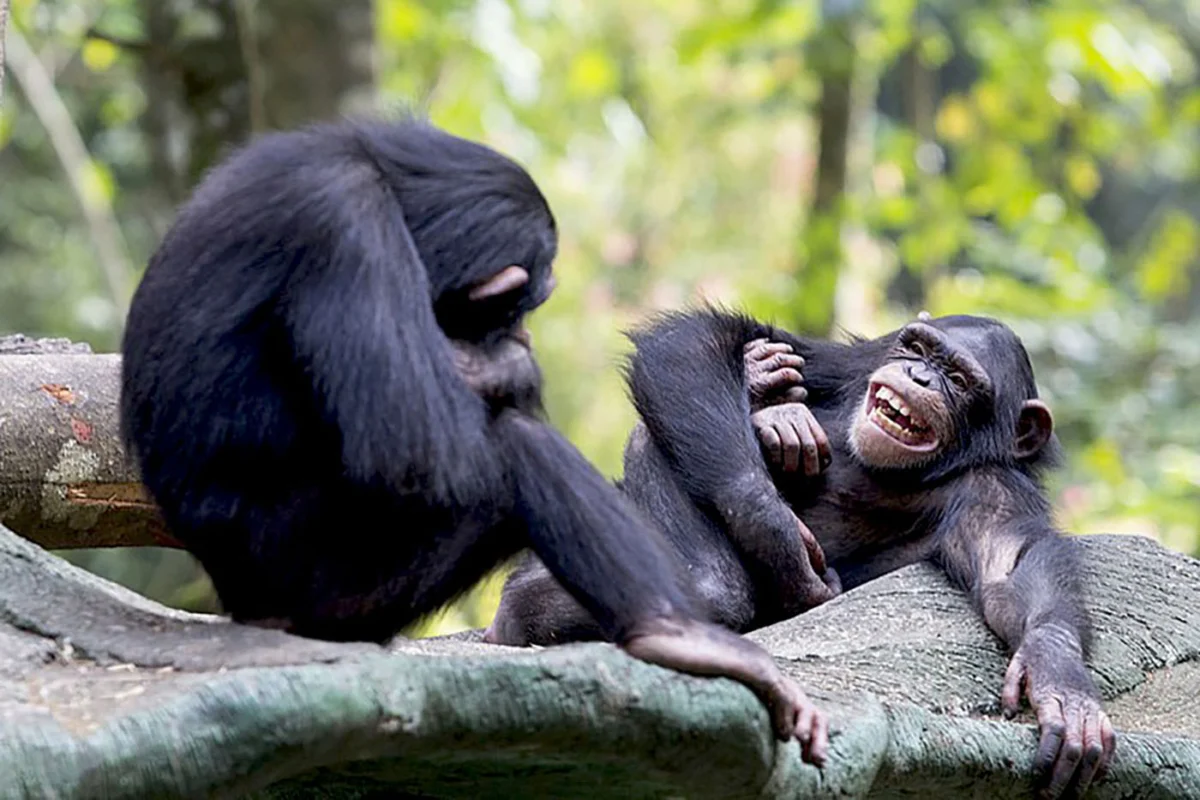
The simple act of two individuals passing each other, locking eyes, and sharing a spontaneous smile is a cornerstone of human social interaction, yet the origins of this gesture have long remained a mystery of evolutionary biology. Long before the advent of complex syntax or spoken language, the ancestors of modern humans relied on a sophisticated repertoire of non-verbal cues to navigate their social landscapes. Recent groundbreaking research published in the journal Scientific Reports has shed new light on these ancient origins by examining the "laugh faces" and mimetic behaviors of our closest living relatives: the orangutan and the chimpanzee. By analyzing the nuances of facial muscle movements and the speed of social responses, scientists are uncovering a shared heritage of laughter that predates the human species by millions of years.
The Evolutionary Framework of the Hominidae Family
To understand the origins of the human smile, researchers look toward the Hominidae family, which encompasses humans, chimpanzees, bonobos, gorillas, and orangutans. Among these, chimpanzees are our closest genetic cousins, sharing over 98 percent of our DNA. Their social structures are famously complex, characterized by rigid hierarchies, intense political maneuvering, and high levels of cooperation. Orangutans, while slightly more distant—sharing approximately 97 percent of their DNA with humans—offer a unique perspective due to their more solitary nature. By comparing these two distinct social models, researchers can identify which traits are universal across the great ape lineage and which are adaptations to specific social environments.
The study, titled "Towards the complexity of laugh communication in great apes: exact facial replications in laugh faces of orangutans and chimpanzees," represents a major leap forward in primatology. Led by Diane A. Austry, a specialist in primate behavior from the University of Portsmouth and Durham University, the research team sought to determine if the human tendency to spontaneously mimic a companion’s laughter—a phenomenon known as emotional contagion—was present in other great apes.
Methodology: Observing Laughter in the Wild and Sanctuary
The research was conducted through meticulous observation at two primary sites: the Sepilok Orangutan Rehabilitation Centre in Malaysia and the Chimfunshi Wildlife Orphanage in Zambia. These locations provided a diverse pool of 96 individual apes from various social groups, allowing the team to record hundreds of hours of natural interaction.
The researchers utilized a highly technical approach to analyze these interactions, employing a version of the Facial Action Coding System (FACS) adapted for non-human primates. This system allows for the precise tracking of individual muscle contractions, such as the pulling back of the lip corners (zygomaticus major) or the dropping of the jaw. By focusing on "laugh faces"—the primate equivalent of a human smile or laugh—the team could measure how quickly and accurately one ape would mirror the expression of another.
A critical metric in the study was the "three-second rule." In humans, spontaneous facial mimicry typically occurs within a three-second window, signifying an involuntary, empathetic response rather than a calculated social maneuver. The researchers discovered that both orangutans and chimpanzees are capable of this rapid, spontaneous replication, suggesting that the neurological pathways for emotional mirroring are deeply embedded in the great ape brain.
The Social Logic of Mimicry: Orangutans vs. Chimpanzees
One of the most significant findings of the study was the discovery of "exact facial replication." When an ape displayed a specific variant of a laugh face—for instance, one where the upper teeth remained covered—the play partner was statistically more likely to respond with the exact same facial configuration. This level of precision is considered a marker of high social intelligence, as it requires the observer to not only recognize an emotion but to physically align themselves with the other individual’s state.
However, the social application of this mimicry varied significantly between the two species, reflecting their different evolutionary pressures:
1. The Orangutan: Building Instant Trust
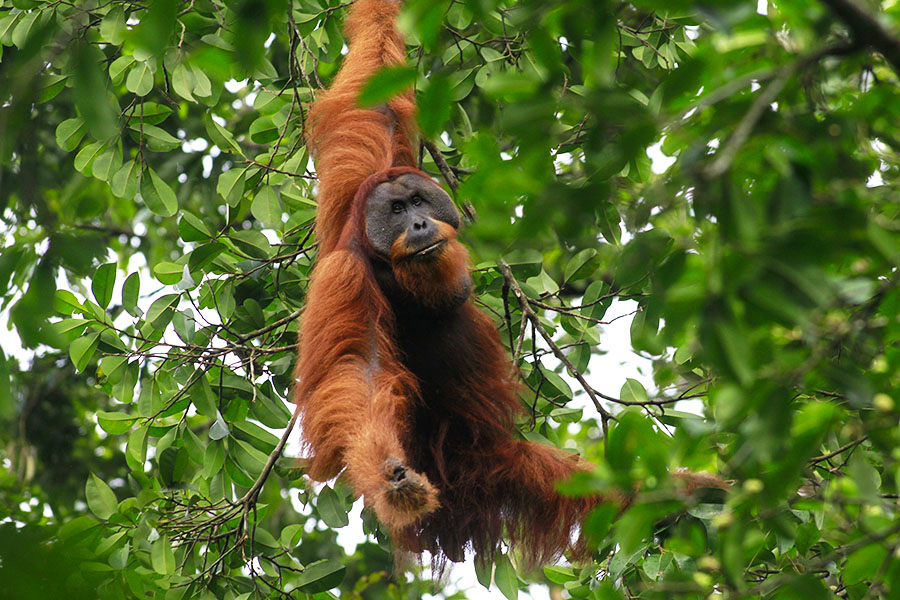
For the semi-solitary orangutan, social encounters are less frequent than for chimpanzees. The study found that when orangutans engaged in precise facial mimicry, their play sessions lasted significantly longer. In this context, the smile serves as a vital tool for building "instant trust." By mirroring a partner’s laugh face, an orangutan signals safety and emotional alignment, allowing two individuals who may not know each other well to engage in prolonged, high-energy play without the risk of the interaction turning into a conflict.
2. The Chimpanzee: Navigating Hierarchy
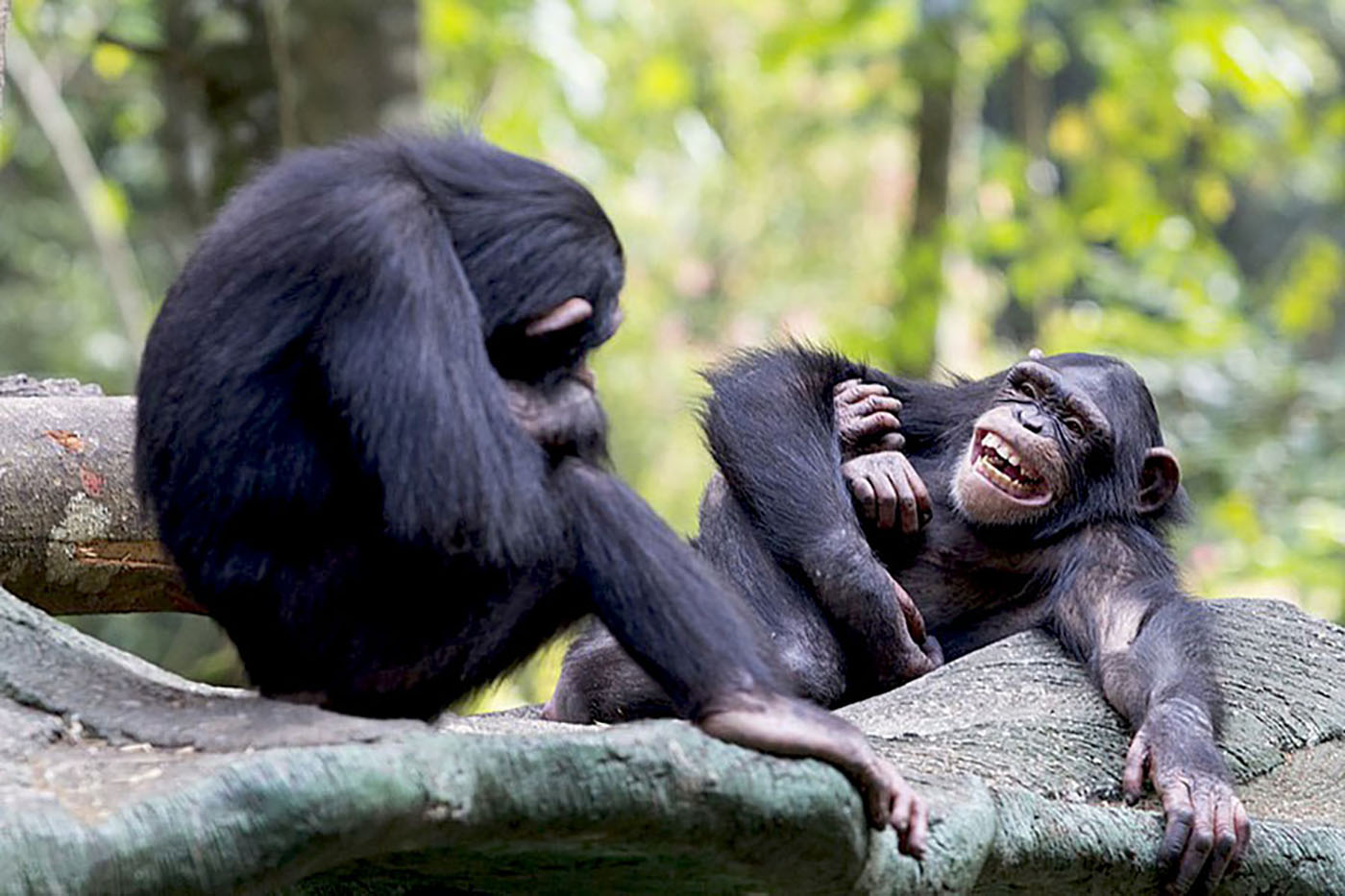
In contrast, chimpanzees live in highly stratified groups where social standing is everything. The researchers found that chimpanzees were much more selective about when and how they mimicked laughter. Specifically, they tended to avoid replicating "open-teeth" laugh faces when interacting with dominant individuals. In chimpanzee society, showing the upper teeth can sometimes be a sign of submission or fear, but it can also be perceived as a challenge if not used correctly. By opting for a more "muted" laugh face—one where the teeth are covered—subordinate chimpanzees can maintain social harmony and avoid appearing "presumptuous" or disrespectful to their superiors.
The Morphological Complexity of the Laugh Face
Further enrichment of this research comes from a related study published in 2024 by Fabio Crepaldi and colleagues, titled "Orangutans and Chimpanzees produce morphologically varied laugh faces in response to the age and sex of their social partners." This research looked at over 600 facial expressions and found that the "shape" of a laugh is not static; it changes depending on who the ape is talking to.
Orangutans were observed to expose their upper teeth and pull their lip corners back more frequently when playing with younger individuals or females. This suggests a form of "social tailoring," where the ape modifies its expression to appear more inviting or less threatening to more vulnerable members of the group.
Chimpanzees, conversely, showed a higher frequency of both upper and lower teeth exposure when interacting with more powerful partners. This provides a fascinating contrast to the mimicry study: while they might not mimic an aggressive or dominant laugh, they use their own facial morphology to signal their awareness of the social stakes involved in the interaction.
Chronology of Evolutionary Development
The implications of these findings allow scientists to construct a timeline for the evolution of human communication. The researchers conclude that the "laugh face" of the common ancestor of humans and great apes must have been functionally and morphologically complex as far back as 10 to 16 million years ago.
- 16 Million Years Ago: The common ancestor of all great apes likely possessed the basic "play face" (relaxed open mouth), used primarily to signal that "this is play, not an attack."
- 12-10 Million Years Ago: As social structures became more complex, the ability to mimic these faces evolved to facilitate emotional contagion and social bonding.
- 5-7 Million Years Ago: The human lineage (hominins) branched off, taking these pre-existing facial tools and refining them.
- Modern Era: In humans, these ancient "laugh faces" evolved into the diverse array of smiles we use today—from the genuine "Duchenne" smile of true joy to the polite social smile used to navigate professional environments.
Scientific Analysis and Broader Implications
The discovery that great apes use precise facial mimicry to regulate social interactions has profound implications for our understanding of human psychology and linguistics. It suggests that empathy is not a "civilized" human construct but a biological imperative that has been fine-tuned over millions of years.
Furthermore, this research challenges the "vocal-first" theory of language evolution. If our ancestors were already using complex, nuanced facial expressions to communicate social status, intent, and emotional state 10 million years ago, it suggests that the foundations of language are visual and gestural rather than purely auditory. The "smile" may well be the world’s oldest and most universal language, a bridge that has connected primates across the eons.
From a conservation perspective, these findings emphasize the cognitive and emotional depth of orangutans and chimpanzees. As these species face the threat of extinction due to habitat loss and poaching, understanding their "social lives" becomes an argument for their protection. They are not merely animals; they are "political" and "social" beings who share the same evolutionary toolkit for joy and connection that we do.
Conclusion: A Legacy of Laughter
The shared smile between two people on a street corner is a silent echo of a 15-million-year-old tradition. The work of Austry, Crepaldi, and their colleagues demonstrates that laughter and its mimicry are essential survival mechanisms. Whether it is an orangutan in the canopy of Borneo trying to signal friendship to a stranger, or a chimpanzee in the forests of Zambia navigating the complexities of tribal power, the "laugh face" remains a vital instrument of social cohesion.
As we continue to study our primate relatives, we find that the line between "human" and "animal" behavior grows increasingly thin. We are part of a long, unbroken chain of social beings who have used the simple curvature of the lips to melt tension, build bridges, and ensure the survival of the group. Laughter, it seems, was the first "social media," and its code was written in the muscles of our faces long before the first word was ever spoken.