Eko Sulistyo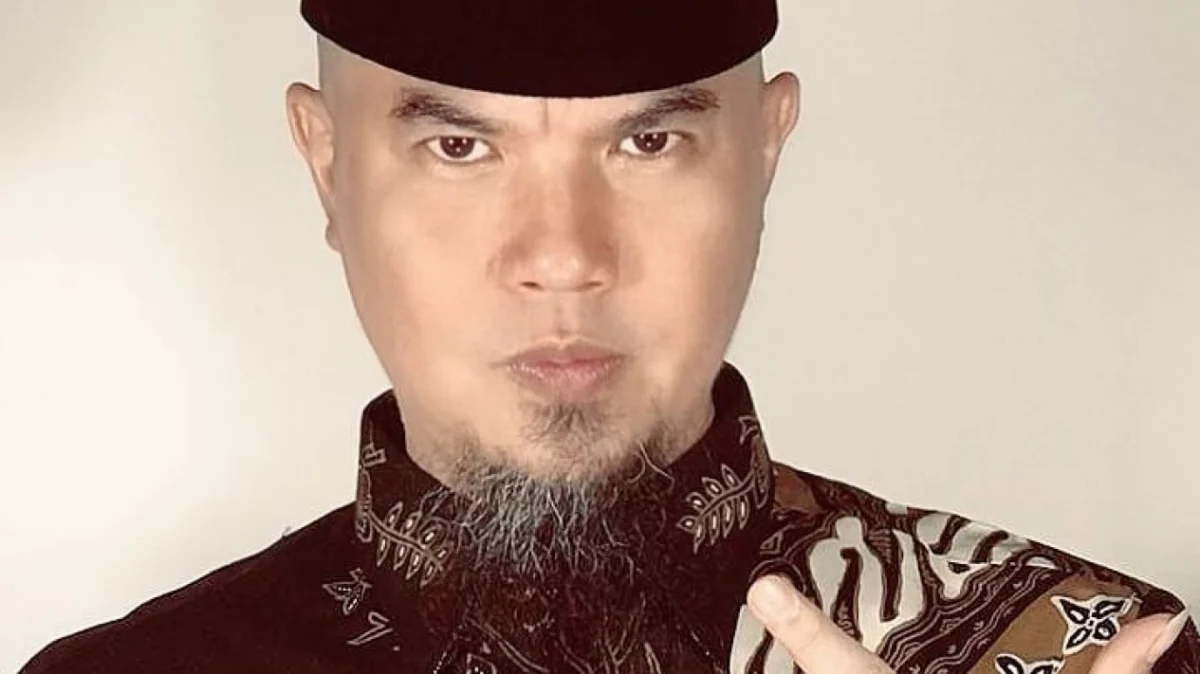
Jakarta, April 30, 2026 – A moment intended for familial sanctity and traditional celebration has instead become the catalyst for a renewed public confrontation between two of Indonesia’s most prominent musical figures. Ahmad Dhani, the frontman of the legendary band Dewa 19, has sparked significant controversy after publishing a social media post that directly targets his former wife, Maia Estianty. The dispute arose following a traditional siraman ceremony for their second son, El Rumi, an event that was meant to symbolize purification and preparation for marriage but has instead reopened deep-seated wounds from a divorce that occurred nearly two decades ago.
The conflict escalated when Dhani uploaded a video to his official Instagram account, @ahmaddhaniofficial, showing his daughter, Shafeea Ahmad, in tears during the proceedings. While the visual appeared to capture a moment of raw family emotion, Dhani’s accompanying commentary shifted the narrative from one of fatherly comfort to a scathing critique of Estianty’s character and their shared history. In the video, Dhani is seen embracing Shafeea, later claiming he was whispering "facts" to her to provide clarity on the situation.
The Catalyst: A Traditional Ceremony Marred by Modern Conflict
The siraman ceremony is a deeply rooted Javanese tradition where the bride or groom is bathed in water infused with various flowers. It is traditionally a time for parents to give their final blessings before their child embarks on married life. For El Rumi, the event brought together members of both the Dhani and Estianty households, a rare occurrence that often draws intense media scrutiny given the volatile history of the parents’ relationship.
However, the atmosphere of reconciliation was short-lived. Dhani’s social media post, dated Thursday, April 30, 2026, characterized the emotional displays at the event as disingenuous. He explicitly labeled the behavior of his former spouse as "bad acting" and suggested that the emotional weight of the ceremony was being manipulated for public perception.
"What you just saw was very bad acting from a woman whose mental state needs to be examined," Dhani stated in his post, directly challenging the authenticity of the emotions displayed during the ritual. He further asserted that the narrative presented to the public—and to his children—did not align with the historical reality of their separation.
Revisiting a Two-Decade Legal and Personal Battle
The statements made by Ahmad Dhani do not merely address the events of the siraman but delve back into the specifics of his 2008 divorce from Maia Estianty. Dhani utilized the platform to reiterate long-standing allegations regarding the cause of their split. He claimed that the "talak tiga" (triple divorce) he issued years ago was predicated on allegations of infidelity involving a high-ranking television executive, a claim he insists was documented and signed.
These allegations have been a point of contention for nearly 20 years. While Estianty has historically maintained a narrative of being the aggrieved party—often citing Dhani’s relationship with her former musical partner, Mulan Jameela, as the primary cause of the marriage’s collapse—Dhani’s recent outburst seeks to flip this script. He argued that the public has been misled by a "soap opera" or "Korean drama" style narrative that has persisted since the mid-2000s.
"It has been going on for 20 years. Some of those narratives are only believed by fans of soap operas and Korean dramas. They are not believed by the Supreme Court," Dhani wrote. This reference to the Mahkamah Agung (Supreme Court) pertains to the final legal rulings regarding their divorce and child custody. Dhani emphasized that while the court granted the divorce, it did not necessarily validate all the personal grievances or specific demands for custody and asset division originally sought by Estianty.
Chronology of the Dhani-Estianty Relationship and Public Fallout
To understand the weight of the current dispute, one must look at the timeline of their relationship, which has remained a fixture of Indonesian tabloid culture for three decades:
- 1994–1996: Ahmad Dhani and Maia Estianty married during the height of Dewa 19’s early success. They were considered a "power couple" in the Indonesian music industry.
- 2006: Rumors of a rift began to circulate, coinciding with the rise of the musical duo Ratu, which Estianty led alongside Mulan Jameela.
- 2007–2008: A highly publicized and bitter divorce battle commenced. The proceedings were marked by police reports, allegations of domestic gatekeeping, and public protests. Dhani famously locked the gates of their home, preventing Estianty from seeing their three sons: Al Ghazali, El Rumi, and Dul Jaelani.
- 2008: The South Jakarta Religious Court officially granted the divorce. However, the legal battle over custody continued for years.
- 2013: The Supreme Court eventually ruled that the children, who were by then approaching their teenage years, should be allowed to choose which parent they wished to live with.
- 2020–2025: Occasional moments of public "truce" occurred at televised events or milestones for their children, leading the public to believe the animosity had subsided.
- 2026: The current incident at El Rumi’s siraman proves that underlying tensions remain unresolved.
Analysis of the Legal and Social Implications
Dhani’s decision to bring these issues back into the spotlight via social media reflects a broader trend in celebrity culture where the "court of public opinion" is treated with the same weight as a court of law. By citing the Supreme Court, Dhani is attempting to provide a factual anchor to his claims, distinguishing between "legal truth" and "media narrative."
From a legal standpoint, the Indonesian Supreme Court’s involvement in their case was a landmark in celebrity divorce law in the country. It highlighted the complexities of child custody in high-conflict separations. Dhani’s insistence that the court did not support Estianty’s version of events is a strategic move to undermine her public image as a "survivor" of a broken home.
Sociologically, the impact on the children involved remains a primary concern for observers. While Al, El, and Dul are now adults, the inclusion of Shafeea Ahmad—Dhani’s daughter with Mulan Jameela—into the conflict adds a new layer of complexity. Shafeea, being of a younger generation, is now being caught in the crossfire of a resentment that predates her birth. Dhani’s public message to her, urging her to "remain grateful" and prioritize "family values," suggests an attempt to insulate her from the influence of the Estianty-Dhani history, albeit by involving her in the public discourse.
Public and Media Reaction
The reaction to Dhani’s post has been polarized. On one side, supporters of Ahmad Dhani argue that he has the right to defend his reputation against a 20-year-old narrative that has painted him as the sole villain. They view his statements as an act of "setting the record straight" for the sake of his younger children.
On the other hand, critics and fans of Maia Estianty view the timing of the post as inappropriate. The siraman ceremony for El Rumi was intended to be a celebration of the future, and many netizens have expressed disappointment that Dhani chose this moment to revisit past grievances. The use of terms like "mental state needs to be examined" has also been criticized as an unnecessary escalation and an insensitive use of mental health terminology.
Maia Estianty has, as of the time of this report, not issued a direct rebuttal to Dhani’s specific allegations regarding the siraman or the claims of past infidelity. Historically, Estianty has preferred to respond with cryptic social media posts focused on "patience," "karma," and "moving on," a strategy that has garnered her significant public sympathy over the years.
Broader Impact on the Entertainment Industry
This flare-up serves as a reminder of the enduring power of celebrity domestic disputes in the Indonesian media landscape. The "Dhani vs. Maia" saga is more than just a personal feud; it is a cultural touchstone that has influenced how the public perceives marriage, divorce, and blended families.
As El Rumi prepares for his wedding, the shadow of his parents’ unresolved conflict looms large. The incident underscores the difficulty of maintaining "co-parenting" harmony when historical grievances are tied to public branding and career identities. For the music industry, where both Dhani and Estianty remain influential figures, the continued friction ensures that their personal lives will continue to overshadow their professional contributions in the eyes of the general public.
In conclusion, while the siraman was meant to be a ritual of cleansing, it has instead resulted in the dredging up of old accusations. Ahmad Dhani’s latest statements have effectively dismantled the illusion of a lasting peace between the two camps, proving that even after two decades, the scars of their separation remain a potent force in their public and private lives. The focus now shifts to how the rest of the family, particularly the children who are at the center of this milestone, will navigate the fallout as the wedding date approaches.