Nila Kartika Wati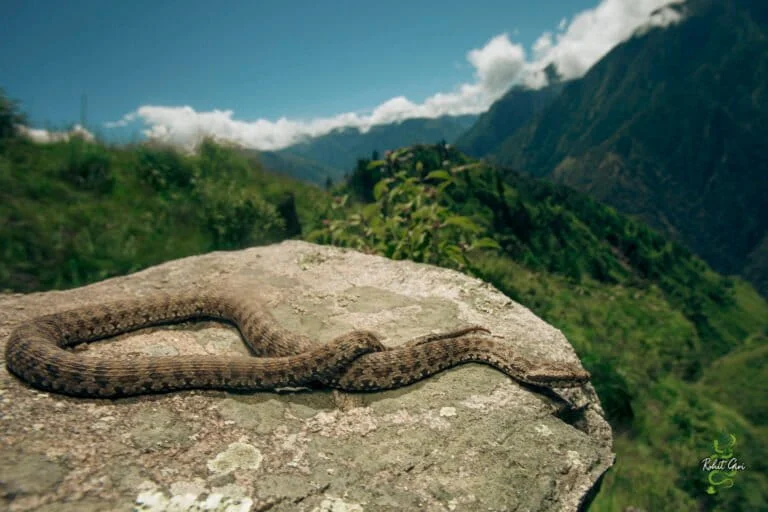
At altitudes approaching 5,000 meters above sea level, the air is thin, the ultraviolet radiation is intense, and temperatures can plummet from a mild sun-drenched afternoon to a lethal freeze within minutes. In this unforgiving landscape, often referred to as the "Third Pole," the biological limits of most terrestrial vertebrates are tested to their breaking point. Yet, amidst the crags and alpine meadows of the Himalayas lives a silent sentinel that has adapted to these extremes over millions of years: Gloydius himalayanus, commonly known as the Himalayan pit viper. Recent scientific breakthroughs, including phylogenetic studies and the discovery of cryptic species, have begun to peel back the layers of mystery surrounding this venomous reptile, revealing a story of ancient migration, isolated evolution, and a precarious future in a rapidly warming world.
The Himalayan pit viper is more than just a high-altitude inhabitant; it is a testament to the resilience of the Viperidae family. While most reptiles are ectothermic and rely heavily on external heat sources—making high-altitude living particularly difficult—this species has carved out a niche in one of the most extreme environments on Earth. Recent research, extending through 2024 and projected into 2026, has utilized advanced genomic sequencing to trace the lineage of these snakes, uncovering a history that dates back to the middle of the Miocene epoch. Unlike its cousins in East Asia, the ancestors of the Himalayan pit viper are believed to have traversed subtropical corridors across Paleo-Tibet approximately 14.5 million years ago. This ancient migration occurred during a period of significant geological upheaval as the Indian Plate continued its slow-motion collision with Eurasia, thrusting the Himalayas into the sky.
This prolonged geographic isolation is the cornerstone of the species’ unique biological identity. Over nearly 15 million years, the Gloydius himalayanus lineage diverged sharply from all other members of the Gloydius genus. While other pit vipers adapted to temperate forests or lowland shrublands, the Himalayan variety became a specialist of the alpine zone. This divergence is not merely genetic but morphological and behavioral, as the snake developed specialized metabolic processes to survive in an oxygen-depleted environment where the metabolic cost of movement and digestion is significantly higher than at sea level.

The Discovery of Cryptic Diversity at the Roof of the World
For decades, herpetologists believed that the Himalayan pit viper was a single, widely distributed species across the mountain range. However, the application of modern molecular tools has corrected this misconception. In late 2022, a landmark study published in the European Journal of Taxonomy identified a new species, Gloydius chambensis, in the Chamba District of Himachal Pradesh, India. This discovery was the result of meticulous fieldwork and DNA analysis led by researchers like S. Kuttalam and V. Santra. Although G. chambensis bears a striking physical resemblance to G. himalayanus, researchers noted subtle but consistent differences in scale counts—specifically the number of ventral and subcaudal scales—and significant genetic distance.
This finding suggests that the rugged topography of the Himalayas, characterized by deep valleys and soaring peaks, acts as a powerful engine for speciation. Populations of snakes that were once contiguous became trapped in isolated valleys as glaciers advanced and retreated or as tectonic shifts altered the landscape. Over time, these isolated groups evolved independently, leading to the "cryptic diversity" we see today. The identification of G. chambensis has fundamentally changed the conservation landscape of the region, as it indicates that the biodiversity of high-altitude reptiles is far richer and more complex than previously documented.
Behavioral Adaptations and the Phenomenon of Dichromatism
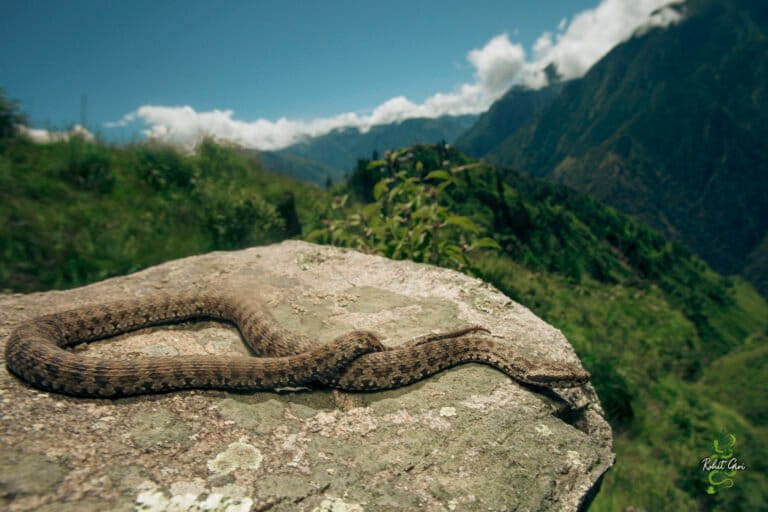
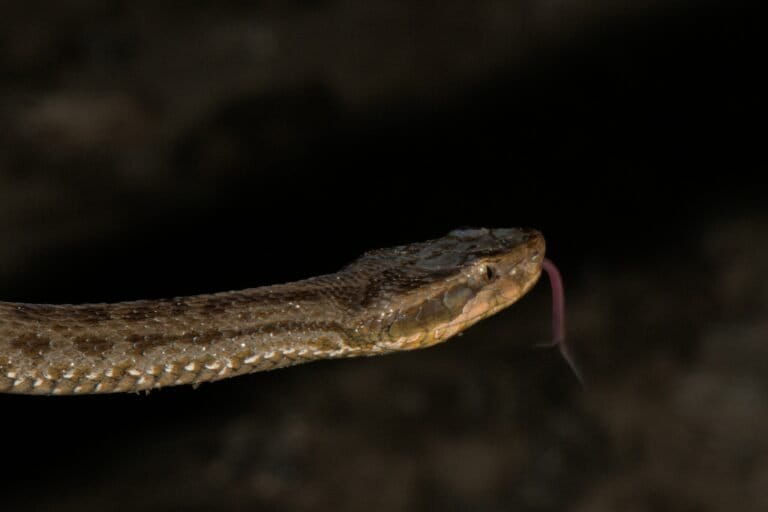
Survival at 5,000 meters requires more than just genetic luck; it requires precise behavioral and physiological adaptations. One of the most fascinating aspects of the Himalayan pit viper’s biology is the recently documented phenomenon of dichromatism—a variation in coloration between individuals, often linked to sex or environmental factors. Observations in the wild have shown that these snakes typically possess a brownish-grey or olive-toned body, often adorned with dark, irregular blotches. This coloration provides near-perfect camouflage against the granite boulders and lichen-covered rocks of their habitat, protecting them from avian predators such as eagles and lammergeiers.
Furthermore, researchers have recorded the first detailed accounts of mating behavior in the wild, providing insights into how these reptiles reproduce in such a short growing season. The snakes are primarily active during the brief Himalayan summer, where they can be seen "basking" or heliotherming on sun-exposed rocks to raise their body temperature sufficiently for hunting and digestion. Their metabolism is remarkably efficient; they are capable of surviving on very few meals per year, primarily preying on high-altitude skinks, small rodents, and occasionally ground-nesting birds. This low-energy lifestyle is a critical adaptation to an environment where prey density is low and the window for activity is narrow.
Ecological Role and the Balance of the Alpine Ecosystem
As an apex predator within its specific altitudinal niche, the Himalayan pit viper plays a vital role in maintaining the health of the alpine ecosystem. By regulating the populations of mountain voles and other small mammals, the viper prevents overgrazing of sensitive alpine flora. This vegetation is crucial for soil stability in a region prone to landslides and erosion. Without the predatory pressure from snakes like the Gloydius species, the delicate balance of the high-altitude meadows could easily be disrupted, leading to a cascade of negative environmental impacts.
From a human perspective, the Himalayan pit viper is often misunderstood. While it possesses a potent hemotoxic venom, it is a shy and non-aggressive creature. Because its habitat is so remote and sparsely populated, human-snake conflicts are exceedingly rare. However, medical records from high-altitude settlements indicate that bites, when they do occur, can cause significant local tissue damage, severe swelling, and chronic pain. Fortunately, fatalities are almost non-existent when prompt medical care is provided. The snake’s venom is currently a subject of interest for pharmacological researchers, who believe that the unique proteins evolved for high-altitude survival may have applications in treating blood pressure or circulatory disorders.
Conservation Challenges and the Looming Threat of Climate Change
Despite its resilience, the Himalayan pit viper faces an uncertain future. Currently, the species is categorized as "Data Deficient" by the International Union for Conservation of Nature (IUCN). This status is largely due to the extreme difficulty of conducting long-term population surveys in such rugged and inaccessible terrain. The lack of data makes it difficult to implement effective conservation strategies, leaving the species vulnerable to habitat degradation.
The most pressing threat, however, is climate change. The Himalayas are warming at a rate faster than the global average, a phenomenon known as elevation-dependent warming. As temperatures rise, the boundaries of the alpine zone are shifting. While it might seem that a warmer climate would benefit a reptile, the reality is more complex. The "upward squeeze" occurs when species are forced to move to higher altitudes to find their preferred temperature niches. Eventually, they reach the summits of the mountains and have nowhere left to go—a phenomenon ecologists call "mountain-top extinction."
Moreover, changing weather patterns are altering the timing of snowmelt and the availability of water, which can disrupt the life cycles of both the vipers and their prey. The encroachment of human activity, including high-altitude grazing and tourism infrastructure, further fragments the habitat of these specialized snakes.
A Call for Continued Research and Protection
The story of the Himalayan pit viper is a reminder that the world’s most extreme environments are still full of biological surprises. The recent discovery of Gloydius chambensis and the ongoing phylogenetic studies into Gloydius himalayanus highlight the importance of protecting high-altitude corridors. These regions are not just barren rocks; they are dynamic evolutionary laboratories that hold the secrets to how life can adapt to the most hostile conditions imaginable.
To ensure the survival of these "guardians of the heights," increased international cooperation is needed for herpetological research and habitat preservation. Protecting the Himalayan pit viper means protecting the integrity of the entire Himalayan alpine ecosystem. As we move further into the 21st century, the fate of this ancient lineage will serve as a bellwether for the health of the world’s highest mountain range. The silent sentinel of the Himalayas has survived for 14 million years; whether it survives the next century of human-induced change remains to be seen.