Nila Kartika Wati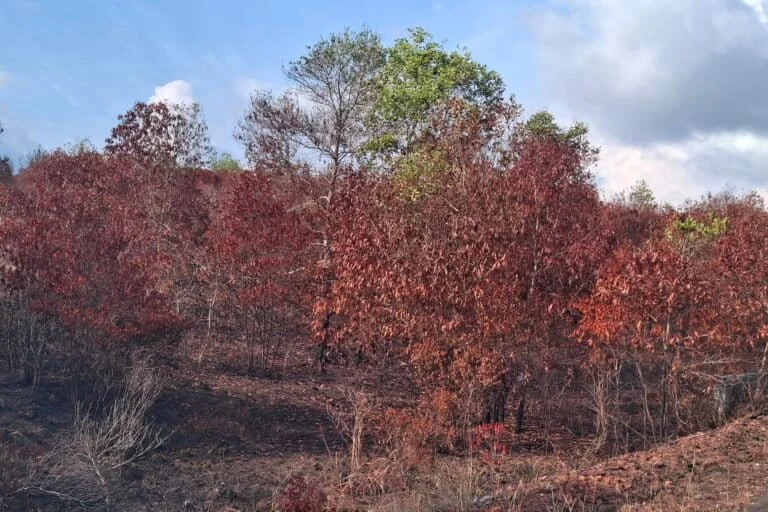
The climate outlook for 2026 has reached a critical state of alarm as meteorologists and environmental experts warn of an impending "El Nino Godzilla" phenomenon, characterized by extreme sea surface temperature warming that threatens to trigger a catastrophic drought across the Indonesian archipelago. This climatic anomaly is expected to significantly exacerbate the vulnerability of critical peatland ecosystems, which are already under immense pressure from decades of mismanagement. Without immediate and systemic intervention, the combination of extreme weather and degraded landscapes is poised to ignite a wave of forest and land fires (karhutla) that could rival the most devastating environmental disasters in the nation’s history.
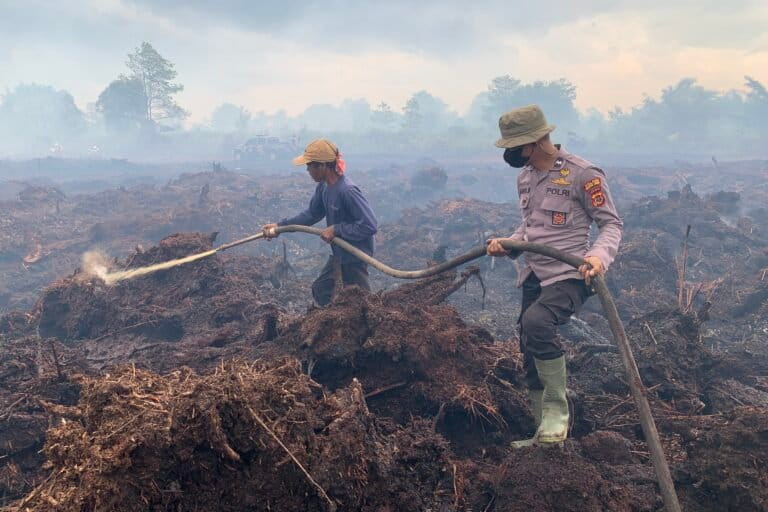
Data from the monitoring organization Pantau Gambut highlights the severity of the situation. Between January and March 2026 alone, a staggering 23,546 hotspots were detected within Peat Hydrological Units (KHG) across the country. The spatial distribution of these hotspots reveals a troubling pattern: 15,424 points were identified within Peatland Ecosystem Protection Functions (FLEG), areas legally mandated for conservation, while 8,122 points were located within cultivation zones. This early-year surge in thermal anomalies serves as a precursor to what could be a long and hazardous dry season, particularly as the peak of the drought is anticipated to hit in August and September.
The Structural Roots of Peatland Vulnerability
The current crisis is not merely a result of natural climate cycles but is deeply rooted in structural failures within peatland governance. Putra Saptian, a campaigner for Pantau Gambut, emphasizes that Sumatra remains a high-risk zone due to long-standing environmental degradation. Analysis of the 2026 data shows that thousands of hotspots are concentrated within corporate concessions, indicating that the industry’s reliance on peatland drainage remains a primary driver of fire risk.
Riau has emerged as the most affected province, recording 8,930 hotspots, followed by Aceh with 1,975, Jambi with 359, and South Sumatra with 164. Of the total hotspots detected nationwide, 7,526 were located inside concession areas, including 6,192 within Right to Cultivate (HGU) permits and 1,334 within Forest Product Utilization Business Permits (PBPH). The prevalence of fires in these areas points toward the continued practice of peat drainage via canal construction to support monoculture plantations. When peat is drained, it loses its natural moisture-retaining properties, transforming from a carbon sink into a highly flammable tinderbox.
Environmental advocates argue that this situation reflects a systemic failure to enforce existing regulations. Fragmented oversight and overlapping policies have historically hindered effective law enforcement, allowing companies to operate with a degree of impunity. There is now a growing demand for a comprehensive Peatland Ecosystem Protection Law based on the KHG framework. Such legislation would ideally harmonize conflicting regulations and provide a stronger legal basis for protecting these vital carbon-rich wetlands from further exploitation.
Escalating Fire Intensity and Historical Context
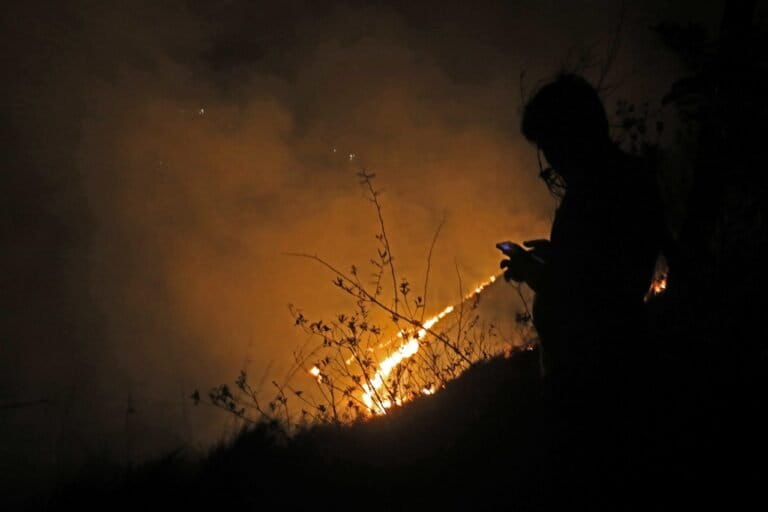
The scale of the 2026 fires represents a dramatic escalation compared to the previous year. According to data from the Sipongi monitoring system, fire incidents have occurred 568 times across 167 regencies in 31 provinces, with more than 55,000 hectares of land already scorched. To put this in perspective, during the same period in 2025, the burned area was limited to approximately 1,000 hectares. This fifty-fold increase underscores the volatility of the current climate cycle.
West Kalimantan has recorded the highest level of destruction with 25,420 hectares burned, followed by Riau with 8,555 hectares and the Riau Islands with 4,167 hectares. Satellite imagery from Terra Aqua confirms that high-confidence hotspots have increased nearly three-fold, reaching over 700 points. This rapid escalation has brought back memories of the 2015 and 2019 fire seasons, which caused billions of dollars in economic losses, severe health crises due to toxic haze, and massive carbon emissions that disrupted global climate goals.
The Collapse of Local Ecosystems and Economies
The environmental degradation of peatlands has profound socioeconomic consequences for local communities. In South Sumatra, the Perkumpulan Rawang has documented a heartbreaking decline in the population of swamp buffalo, a livestock species that serves as the economic backbone for many rural families. Hairul Sobri, Director of Perkumpulan Rawang, notes that the loss of healthy peatlands directly impacts the animals’ survival.
In 2020, there were approximately 32,000 swamp buffalo in the Ogan Komering Ilir (OKI) region. By 2025, official statistics from the Central Bureau of Statistics (BPS) showed the population had plummeted to just 2,025. This collapse is attributed to the drying of peatlands caused by corporate drainage canals, which destroys the natural vegetation the buffalo rely on for food. Historical data suggests the population once reached hundreds of thousands in the early 2010s. The buffalo are essentially being "burned out" of their habitat alongside the peatlands themselves.
In Jambi, the situation is equally dire. Aditya Prakoso, Program Manager at Walhi Jambi, reports that despite a decade of government-led restoration programs, forest cover in peat areas continues to vanish. In 2001, Jambi’s peat forests spanned 527,894 hectares. By 2024, that figure had dropped to 309,425 hectares—a loss of nearly 50% in less than 25 years. Walhi argues that restoration efforts have largely focused on administrative targets and infrastructure, such as canal blocks and deep wells, rather than addressing the core issue of land tenure and industrial expansion.
The Crisis in Rawa Tripa and the Impunity of Corporations
One of the most egregious examples of governance failure can be found in the Rawa Tripa peat swamp in Aceh. Once a lush sanctuary for endangered species like the Sumatran orangutan and tiger, Rawa Tripa has been decimated by palm oil expansion. From an original area of over 91,000 hectares in the 1990s, only 6.75% of the forest remains today.
The case of PT Kallista Alam serves as a symbol of the "toothless" nature of environmental law enforcement. In 2012, the company was found guilty of burning 5,769 hectares of peatland and was ordered to pay 366 billion IDR in fines and restoration costs. However, more than a decade later, the obligations remain unfulfilled. Reports from Apel Green Aceh indicate that heavy machinery continues to operate within the former concession area, clearing land and planting new oil palms on the very soil that was supposed to be under state-mandated restoration.
Rahmad Syukur, Director of Apel Green Aceh, points out the double standard in enforcement. While small-scale farmers are often prosecuted for minor land-clearing activities, large corporations frequently manage to evade the full weight of the law. This perceived "peace agreement" between the state and powerful investors undermines public trust and ensures that the cycle of destruction continues.
Government Response: Technology and Prevention
In response to the mounting threat, the Indonesian government has pivoted toward a strategy of early intervention. Minister of Forestry Raja Juli Antoni has championed the use of Weather Modification Operations (OMC) to induce artificial rain in fire-prone provinces like Riau and West Kalimantan. The goal is to perform "rewetting"—keeping the peat water table above the critical 40-centimeter threshold.
The government maintains that OMC has been a "turning point" in reducing fire incidents in recent years. By integrating data from the Meteorology, Climatology, and Geophysics Agency (BMKG), authorities aim to be more proactive. Teuku Faisal Fathani, Head of BMKG, stated that the agency is focusing on precision data to predict drought patterns and install meteorology sensors across forest landscapes to provide real-time monitoring.
The Minister emphasized that Indonesia has become a "learning nation," utilizing the painful lessons of the 2015 fires to refine its mitigation strategies. However, the 2026 El Nino presents a unique challenge that will test the limits of these technological solutions. While cloud seeding can provide temporary relief, it does not solve the underlying problem of drained and degraded landscapes.
Implications and the Path Forward
As Indonesia enters the most dangerous months of 2026, the stakes could not be higher. The "El Nino Godzilla" is not just a weather event; it is a stress test for the country’s environmental policies and its commitment to international climate pledges. If the fires are allowed to spiral out of control, the resulting carbon emissions could negate years of progress in reducing deforestation.
The recurring nature of these fires suggests that a shift from "firefighting" to "systemic reform" is overdue. Civil society groups continue to call for an audit of all corporate concessions on peatlands and the immediate revocation of permits for companies that fail to meet environmental standards. Furthermore, the restoration of peatlands must move beyond technical infrastructure to include the genuine ecological recovery of the landscape and the protection of the rights of local communities.
The year 2026 stands as a potential watershed moment. It will either be remembered as the year Indonesia finally gained the upper hand against the "annual cycle of smoke" through rigorous law enforcement and scientific management, or it will be another chapter in a long history of ecological loss and administrative failure. With the peak of the dry season approaching, the eyes of the international community are on Indonesia, waiting to see if the state can protect one of the world’s most important natural defenses against climate change.