Nila Kartika Wati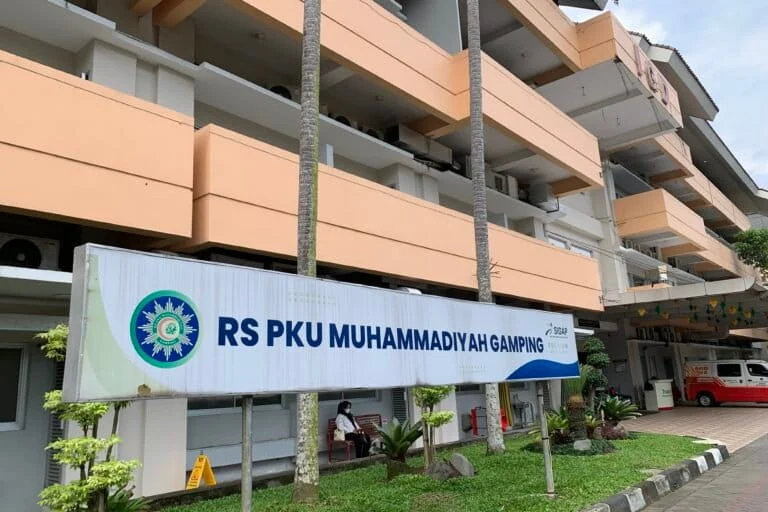
The healthcare sector in Indonesia is undergoing a significant transformation as major medical institutions begin to embrace renewable energy solutions and comprehensive energy management strategies. This shift, driven by both economic necessity and environmental responsibility, is helping hospitals across the archipelago drastically reduce their electricity expenditures while contributing to the nation’s broader climate goals. From the installation of rooftop solar power plants (PLTS Atap) to the implementation of pioneering energy audits, these facilities are setting a new standard for the "Green Hospital" concept in Southeast Asia.
In the Special Region of Yogyakarta, the PKU Muhammadiyah Gamping Hospital has emerged as a frontrunner in this movement. Alif Khoiruddin Azizi, the hospital’s General Manager, reports that the institution has integrated solar power into its daily operations, specifically targeting high-consumption areas such as garden and street lighting, as well as water heating systems for patient bathrooms. This initiative is mirrored by other Muhammadiyah-affiliated institutions, such as the Muhammadiyah Hospital in Lamongan, East Java, where the central mosque within the health complex is now powered by solar energy. These efforts represent a growing trend within the Muhammadiyah network to align healthcare services with "Fikih Transisi Energi," a religious jurisprudence that provides a moral and ethical framework for mitigating the global climate crisis through sustainable energy practices.
The adoption of solar technology is not limited to private or faith-based institutions. In Bali, RSUD Karang Asem has successfully implemented a rooftop solar power system with a capacity of 50,000 watts. Utilizing 72 solar panels, the hospital aims to achieve two primary objectives: reducing its annual budget for utility costs and ensuring the continuity of critical medical services during grid outages. By diversifying its energy sources, the hospital minimizes its reliance on the state electricity provider (PLN), providing a safety net for life-saving equipment that requires an uninterrupted power supply.
Technological Innovation in Waste Management at RSUP Sardjito
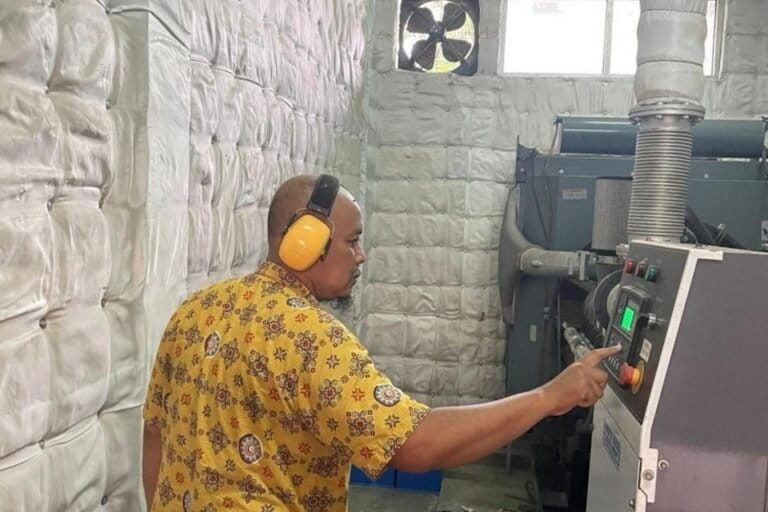
One of the most sophisticated examples of energy transition in the healthcare sector can be found at RSUP Dr. Sardjito in Yogyakarta. As the largest referral hospital in the region, RSUP Sardjito has integrated renewable energy into its core infrastructure and specialized waste management processes. Junediyono, Assistant Manager of Public Relations at RSUP Sardjito, confirmed that the hospital currently operates rooftop solar panels on two of its major buildings. These panels generate electricity used directly for the operational needs of each respective facility, with plans to expand this capacity as new buildings are constructed under a management commitment to environmental sustainability.
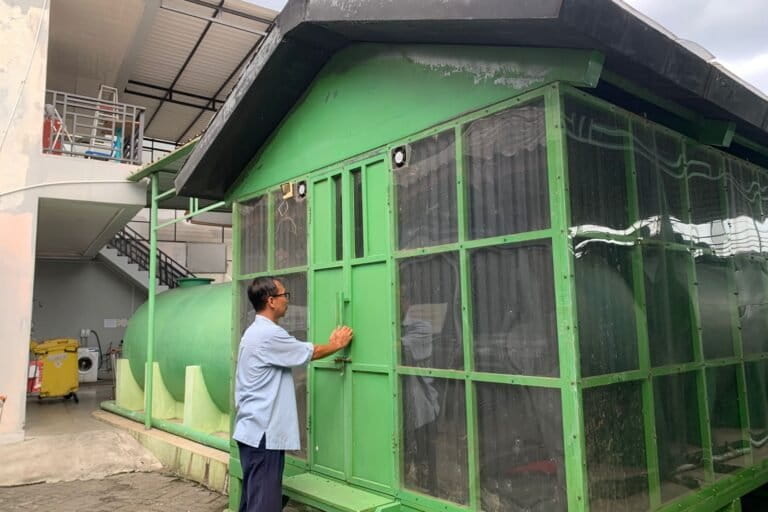
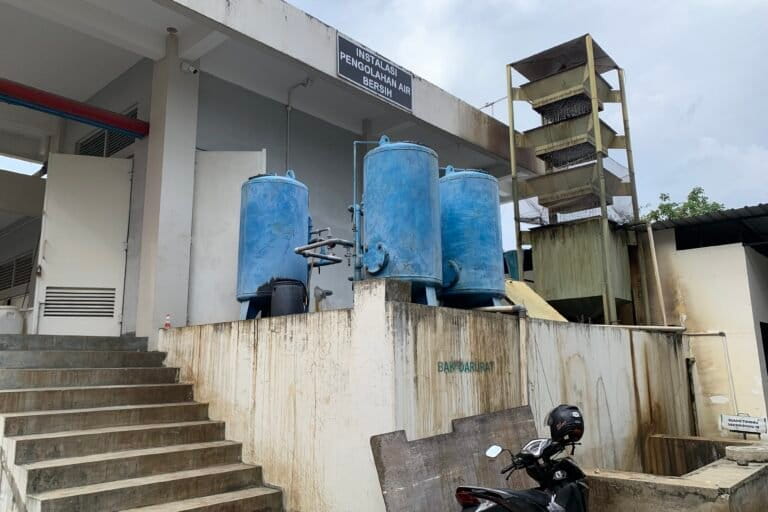
Beyond simple electricity generation, RSUP Sardjito has pioneered the use of "Rumah Surya" (Solar House) technology for the treatment of liquid medical waste. This facility utilizes solar collectors—integrated into the roof, walls, and floors—to trap and concentrate solar heat. Purwati, a Senior Sanitarian at RSUP Sardjito, explained that the interior temperature of the Solar House can reach 60 degrees Celsius. This heat is used to dehydrate liquid waste, transforming it into solid sludge, which is then managed by third-party hazardous waste (B3) specialists.
The transition to solar-based waste processing has yielded dramatic improvements in efficiency. Previously, the hospital relied on manual processes and mechanical presses, which required up to three months to dry waste and necessitated large evaporation ponds. With the Solar House, the drying time has been slashed to just three days. Furthermore, the economic impact is substantial: the cost of waste processing has dropped from IDR 21.8 million to just IDR 4.5 million per cycle. While the current technology focuses on heat collection, hospital officials noted that future upgrades involving thermal storage could further enhance efficiency by allowing the system to operate even when the sun is not shining.
The Economic Imperative: Addressing Energy Inefficiency
The move toward renewable energy is often a response to the staggering operational costs associated with modern healthcare. At RS PKU Muhammadiyah Gamping, a Type B hospital that averages 300 inpatients daily, electricity bills can reach IDR 300 million per month, while water costs average IDR 20 million. To address these rising costs, the hospital has initiated a comprehensive energy audit in collaboration with the "1,000 Cahaya" program.
The audit aims to map the energy consumption of every medical unit and piece of equipment. Historically, many hospitals have struggled to control expenditures because the specific power draw of complex medical machinery was not accurately recorded. Preliminary findings at RS PKU Muhammadiyah Gamping identified three units as the primary drivers of energy consumption: Radiology, Radiotherapy, and the Surgical Suite. These departments are so energy-intensive that they occasionally require supplemental power from onsite generators to maintain stability during peak usage.
By conducting these audits, hospitals can develop "load-shifting" strategies. This involves scheduling the use of high-power medical equipment at different times to avoid expensive peak-demand surges, provided that such scheduling does not compromise patient care. "It requires a mature study through energy audits so that health services remain optimal and undisturbed while remaining electricity-efficient," said Azizi. He also noted that the hospital is transitioning to LED lighting and automated systems for hallways and public spaces to ensure lights are only active when needed.
Data Analysis: The Hidden Carbon Footprint of Healthcare
The push for efficiency is supported by alarming data regarding energy use in the sector. Various studies indicate that many Indonesian hospitals consume as much as 400 kWh per square meter annually. This figure exceeds the ASEAN-wide recommendation for energy-efficient buildings, which is capped at 380 kWh per square meter. However, research conducted at RSUD Saiful Anwar in Malang suggests that significant improvements are possible; optimizing air conditioning systems alone can result in energy savings of 15% to 29%.
The Politeknik Negeri Malang has identified that the root causes of energy waste in hospitals are often a combination of technical and institutional failures. Many facilities still use conventional, poorly maintained cooling systems and lack integrated energy management systems. Furthermore, there is a persistent fear among administrators that energy-saving measures might interfere with medical outcomes, leading to a slow pace of adoption for new technologies.
Globally, the healthcare sector is a significant contributor to environmental degradation, accounting for approximately 5.2% of total global carbon emissions. If the global health sector were a country, it would be the fifth-largest emitter on the planet. In Indonesia, where the majority of the electricity grid is still powered by coal, every kilowatt-hour saved at a hospital directly translates to a reduction in carbon output and a decrease in the demand for fossil fuel mining, which often devastates local communities in mining regions.
Regulatory Gaps and Advocacy for Reform
Despite these grassroots successes, the regulatory framework in Indonesia has yet to catch up with the pace of innovation. Currently, the Ministry of Health (Kemenkes) does not have a specific, detailed standard for energy management in hospitals. While Permenkes No. 7 of 2019 regarding Hospital Environmental Health and Permenkes No. 2 of 2023 touch upon environmental requirements, they primarily focus on health impacts rather than providing a roadmap for energy efficiency or the transition to renewables.
Environmental advocacy groups, such as Walhi Yogyakarta, have praised the initiatives taken by hospitals like PKU Gamping but emphasize the need for systemic change. Rizky Abi Yoga, Head of Advocacy and Campaigns for Walhi Yogyakarta, pointed out that regions like Yogyakarta are heavily dependent on external energy supplies, despite having significant untapped potential for local renewable energy. He argues that energy audits should be mandatory rather than voluntary.
"Self-conducted energy audits like those at RS PKU Gamping can serve as a future model," Rizky stated. "Since this is supported by the 1,000 Cahaya program, other Muhammadiyah hospitals should follow suit. Community-based network initiatives like this need to be supported collectively."
The Path Forward for Green Healthcare
The transition to renewable energy in Indonesian hospitals represents a critical intersection of public health and environmental stewardship. As more institutions prove that solar power and energy audits can lead to massive cost savings without sacrificing the quality of care, the "Green Hospital" model is likely to move from the periphery to the mainstream.
The success of RSUP Sardjito’s Solar House and RS PKU Gamping’s audit-driven strategy provides a blueprint for other facilities across the nation. However, for these individual successes to become a national standard, there is a pressing need for the Indonesian government to formalize energy management regulations within the healthcare sector. By aligning medical infrastructure with the nation’s 2060 Net Zero Emissions target, Indonesia can ensure that its hospitals not only heal patients but also help heal the planet. The ongoing efforts in Yogyakarta, Bali, and East Java serve as a powerful reminder that the healthcare industry has a vital role to play in the global energy transition, proving that the mandate to "do no harm" extends far beyond the walls of the operating room.