Nila Kartika Wati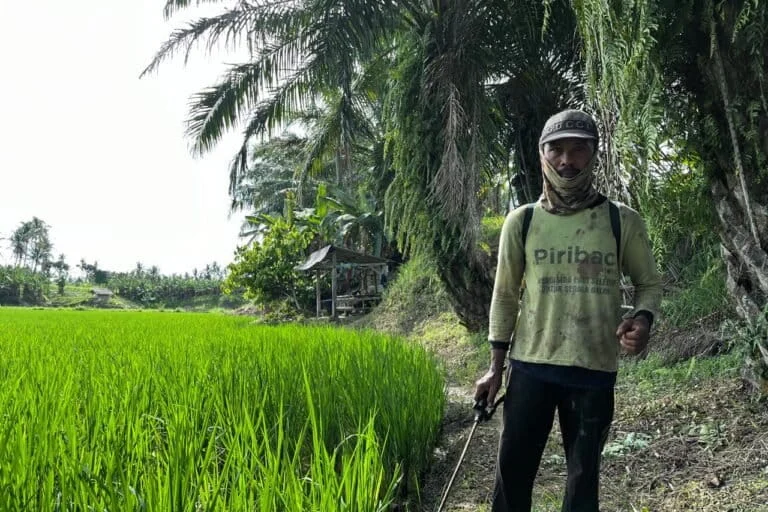
The scorching midday sun did not deter Alvin Gini as he walked toward his cornfield in Kemukus Village, Ketapang District, South Lampung, late last year. Before he could reach his crops, his path was abruptly blocked by five men in olive-drab military uniforms. The soldiers immediately began a rapid-fire interrogation, demanding his identity, proof of land ownership, and the legal status of the soil he was tilling. When Gini informed them the land was part of a state forest register, the soldiers pressed further, asking how he would react if the land were cleared for state use. Gini’s response was a poignant reflection of the community’s desperation: "If I am forced out, where will I live? This farm is my only life."
This encounter was not an isolated incident but the opening salvo of a brewing confrontation between the Indonesian National Armed Forces (TNI) and the residents of Kemukus and Sri Pendowo villages. The tension centers on the planned construction of the Rindam XXI Radin Inten—a Regional Military Training Regiment facility—intended to serve as a hub for soldier education and recruitment for the Lampung and Bengkulu regions. While the government frames the project as a strategic necessity for regional development and human resource improvement, the local population views it as the latest chapter in a 45-year history of systemic displacement and land insecurity.
A Legacy of Land Disputes: The Chronology of Register 1 Way Pisang
The villages of Kemukus and Sri Pendowo are situated within the Register 1 Way Pisang area, a territory that has been a flashpoint for agrarian conflict since the early 1980s. The history of the region is marked by a revolving door of corporate claims and state interventions, leaving the residents in a perpetual state of legal limbo.
The cycle of conflict began in the 1980s when PT Jaka Utama, a horticultural company, moved into the area and claimed land already managed by local farmers. By 1992, the residents were embroiled in a dispute with the state-owned forestry company PT Inhutani. This was followed by a 1998 conflict with PT Dermala. The most recent major corporate confrontation occurred in 2014 involving PT Penyelamat Alam Nusantara (PAN), which had secured a permit from the Ministry of Forestry for cattle fattening operations within the register.
In October 2015, the frustration of the locals reached a breaking point. Approximately 3,000 residents from 16 villages within Register 1 Way Pisang staged a massive protest at the South Lampung Regent’s office and the Regional Legislative Council (DPRD). They demanded a definitive resolution to the land status and a rejection of corporate control over their ancestral and managed lands. Despite these decades of advocacy, a permanent solution remained elusive, setting the stage for the current clash with the military.
The Rindam XXI Project and Escalating Tensions
The current crisis was catalyzed by the government’s decision to allocate 155 hectares of land—spanning across Kemukus and Sri Pendowo—for the Rindam XXI Radin Inten facility. The project received official backing during a coordination meeting on December 22, 2025, at the South Lampung Regent’s office. Vice Regent Muhammad Syaiful Anwar praised the project as a strategic move to strengthen regional development. Meanwhile, the District Military Commander (Dandim) 0421/South Lampung, Mochammad Nuril Ambiyah, argued that the location was chosen due to its strategic geography and "adequate land availability."
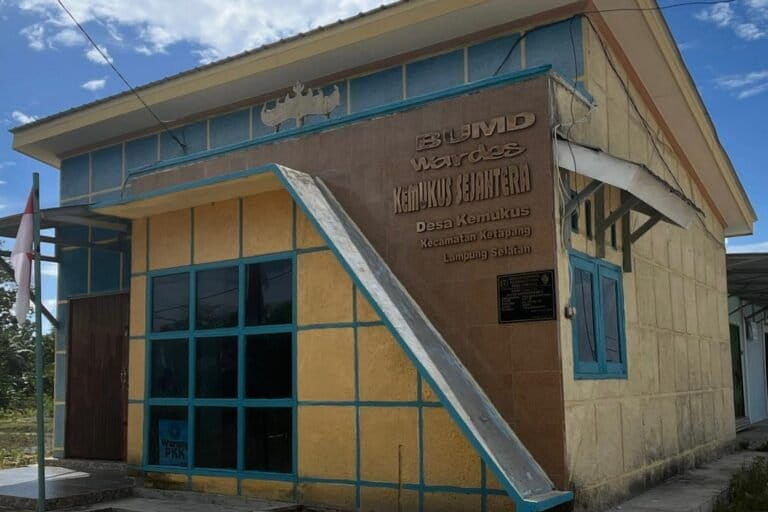
However, the "availability" of this land is fiercely contested. The villages of Kemukus and Sri Pendowo are not empty wilderness; they are established "definitive villages" with formal administrative structures. Sri Pendowo achieved definitive status in 1981, and Kemukus followed in 2002. They possess schools, health clinics (Posyandu), markets, and places of worship. The residents pay Land and Building Tax (PBB) annually, yet the state continues to classify their homes and farms as "forest area."
Tensions boiled over on February 4, 2026, when military personnel and drone operators arrived to map the land without prior socialization or village consent. Fearing imminent eviction, residents blocked the roads. The situation turned volatile when a drone operator refused to hand over recorded data to the villagers, leading to the destruction of the equipment. In the aftermath, five farmers were summoned by authorities as witnesses in a criminal damage investigation, a move local leaders describe as an attempt to intimidate the community into submission.
Socio-Economic Impact: A Forest Without Trees
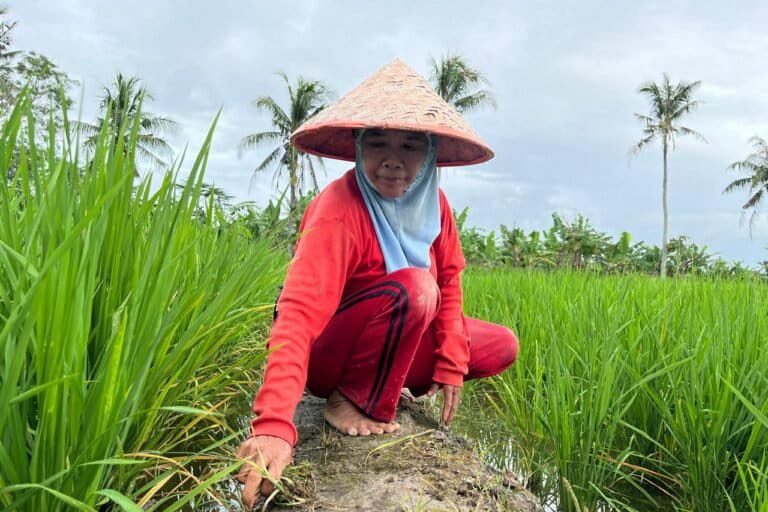
The irony of the "forest register" classification is visible to anyone visiting the area. There are no ancient canopies or dense jungles in Register 1 Way Pisang. Instead, the landscape is a patchwork of productive agricultural fields. Corn is the lifeblood of the local economy, with Kemukus alone boasting 437 hectares of cornfields.
For farmers like Poniati, a resident of Kemukus, the land is not just a commodity but a survival mechanism. Tilling a single hectare of corn, she can earn approximately Rp 10 million per harvest, twice a year. This income supports her family’s daily needs and her children’s education. "They say this is a forest, but we have been farming here for generations," Poniati said. "If this land is taken, I have nothing else."
Beyond corn, the region produces cocoa, papaya, chili, and various vegetables. Despite this productivity, the "forest" status prevents residents from accessing government social programs, such as home renovation grants (Bedah Rumah), because they cannot provide legal land titles. Furthermore, they are barred from accessing bank credit, as they lack the certificates required for collateral, effectively stifling the economic growth of these "definitive" villages.
The Agrarian Reform Paradox
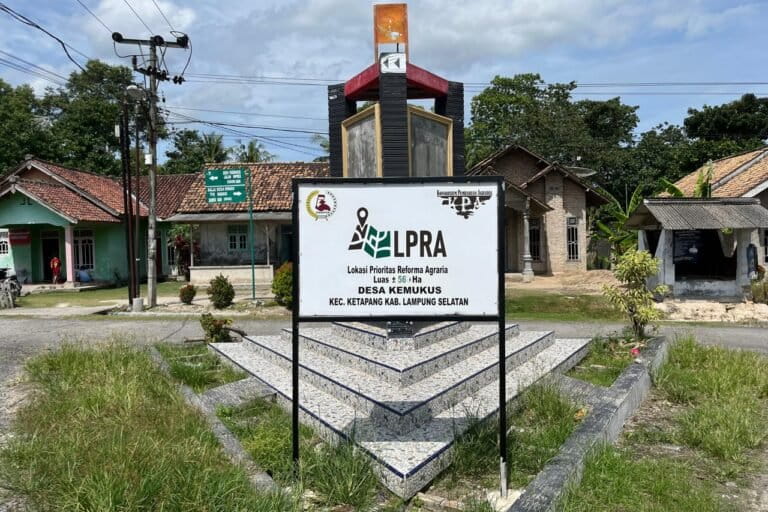
The Rindam XXI project highlights a glaring contradiction in Indonesia’s national policy. Both Kemukus and Sri Pendowo were designated as Priority Locations for Agrarian Reform (LPRA). Under the mandate of Presidential Regulation No. 86/2018 on Agrarian Reform, these lands were supposed to be redistributed to the farmers who have managed them for decades.
Dewi Kartika, Secretary General of the Consortium for Agrarian Reform (KPA), argues that the military project directly sabotages the government’s own reform agenda. "The construction of military facilities on land that should be a priority for redistribution to farmers is evidence of a misguided development policy," Kartika stated. She emphasized that agrarian reform is a constitutional mandate, not an optional policy that can be discarded in favor of defense infrastructure.
The KPA’s 2025 year-end report paints a grim picture of the national landscape. Agrarian conflicts increased by 15% in 2025, with 341 recorded outbreaks affecting over 123,000 families. Notably, conflicts involving military claims surged by 300% compared to the previous year. This spike is attributed to the aggressive expansion of military facilities under the guise of supporting national priority programs.
Legal Analysis and the Way Forward
Legal experts point out that the involvement of the military in land acquisition without transparent and participatory processes violates the spirit of the 1960 Basic Agrarian Law (UUPA). Suparjo Sujadi, a lecturer in Agrarian Law at the University of Indonesia, notes that UUPA does not permit unilateral claims that ignore the rights of long-term occupants. "The law requires recognition of those who have managed land in good faith over long periods," Sujadi explained.
The Ministry of Forestry, through Director General Ade Tri Ajikusumah, maintains that there are mechanisms for land status adjustment, such as the TORA (Land for Agrarian Reform Objects) scheme. However, he noted that the specific area requested for the Rindam project was not recommended for redistribution by the Integrated Team in 2022. This bureaucratic exclusion leaves the villagers with few legal avenues for protection.
As the conflict persists, the residents of Register 1 Way Pisang remain steadfast. Suyatno, Chairman of the Forum for Anti-Register Communities (Formaster), emphasizes that the community is not looking for a mere permit to manage the land—they are demanding full recognition of their ownership rights. "We have waited through many regimes for the state to keep its promise," Suyatno said. "Until there is legal certainty, this conflict will never truly end."
The standoff in South Lampung serves as a critical test for the Indonesian government’s commitment to social justice versus its ambitions for military and infrastructure expansion. For the thousands of families in Kemukus and Sri Pendowo, the outcome will determine whether they remain the stewards of their ancestral fields or become the latest victims of state-led displacement.