Nasution Nanang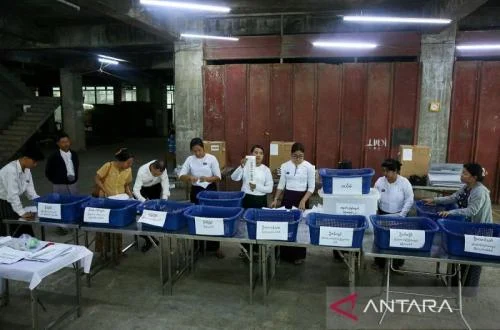
The Association of Southeast Asian Nations (ASEAN) has yet to reach a consensus regarding the recognition of Myanmar’s recent political transition, which saw General Min Aung Hlaing assume the role of the country’s new president. This ongoing diplomatic impasse underscores the deep divisions within the 11-nation bloc regarding how to address the protracted crisis in Myanmar, which erupted following the military coup in February 2021. The situation is further complicated by the junta’s announcement of a multi-stage election process slated for December 2025 to January 2026, a move viewed with skepticism by the international community given the prevailing political repression and lack of a credible pathway to democracy.
The Diplomatic Stalemate within ASEAN
Dominic Xavier Imperial, Assistant Secretary for ASEAN Affairs at the Department of Foreign Affairs of the Philippines, confirmed on Wednesday, May 6, that ASEAN members have not achieved a unified position on the outcomes of Myanmar’s internal political developments. The Philippines, currently holding the rotating chairmanship of ASEAN, has reiterated its steadfast commitment to the Five-Point Consensus (5PC) as the primary framework for resolving the crisis. This commitment reflects a broader sentiment among several ASEAN members who advocate for a peaceful resolution, inclusive dialogue, and an end to violence in Myanmar, yet face significant hurdles in engaging with the military junta, officially known as the State Administration Council (SAC).
Min Aung Hlaing, who previously served as the Commander-in-Chief of the Myanmar Armed Forces and led the 2021 coup, reportedly resigned from his military post in March to pursue the presidency. He was subsequently sworn in as President in April, following an internal parliamentary vote where he purportedly secured 429 out of 500 votes in a legislative body largely controlled or appointed by the military. This move by the junta is widely seen as an attempt to legitimize its hold on power and project an image of a civilian-led government, despite widespread opposition and a lack of international recognition for the process.
Myanmar’s Crisis: A Background of the Coup and its Aftermath
The current crisis in Myanmar began on February 1, 2021, when the Tatmadaw (Myanmar’s armed forces) staged a coup d’état, overthrowing the democratically elected government led by State Counsellor Aung San Suu Kyi and President Win Myint. The military cited unsubstantiated claims of widespread fraud in the November 2020 general election, which Suu Kyi’s National League for Democracy (NLD) had won overwhelmingly. The coup immediately led to the detention of Suu Kyi, President Win Myint, and numerous other NLD leaders, parliamentarians, and activists.
The military takeover plunged Myanmar into chaos, triggering nationwide protests, mass civil disobedience movements, and eventually armed resistance. The junta responded with brutal force, leading to thousands of deaths, arrests, and widespread human rights abuses. According to the Assistance Association for Political Prisoners (AAPP) Burma, as of early May, over 5,000 civilians have been killed by the junta, and more than 26,000 individuals have been arrested or detained since the coup. The crackdown has also resulted in a severe humanitarian crisis, with the United Nations reporting over 2.8 million internally displaced persons (IDPs) across the country, alongside acute food insecurity and a collapsed healthcare system.
The Five-Point Consensus: ASEAN’s Troubled Framework
In response to the escalating violence and political instability, ASEAN convened an emergency summit in Jakarta in April 2021, where the leaders of the bloc, including Min Aung Hlaing, agreed upon the Five-Point Consensus. This framework outlined a path towards de-escalation and resolution, comprising:
- Immediate cessation of violence in Myanmar.
- Constructive dialogue among all parties concerned to seek a peaceful solution.
- Appointment of a special envoy of the ASEAN Chair to facilitate mediation.
- Provision of humanitarian assistance through ASEAN channels.
- A visit by the special envoy and delegation to Myanmar to meet with all relevant parties.
However, the implementation of the 5PC has been largely stalled due to the Myanmar junta’s consistent failure to cooperate. The junta has repeatedly denied the ASEAN special envoy access to key stakeholders, particularly Aung San Suu Kyi and other political prisoners, thereby undermining the second and fifth points of the consensus. This non-compliance has severely tested ASEAN’s unity and its ability to act decisively on regional matters, prompting some members to call for stronger measures, while others prefer a more non-interventionist approach.
Min Aung Hlaing’s Ascent and the Junta’s Political Roadmap
Min Aung Hlaing’s formal assumption of the presidency in April, following his alleged resignation as Commander-in-Chief in March, marks a significant, albeit controversial, development in the junta’s efforts to consolidate power. Since the coup, he has led the State Administration Council (SAC), which functioned as the de facto government. The creation of a "President" role through an internal, military-controlled parliamentary vote is widely interpreted as a strategic move to project a semblance of civilian governance and to prepare for the junta’s announced future elections.
The junta’s "roadmap to democracy" has been consistently criticized for its lack of inclusivity and credibility. The announced elections for December 2025 to January 2026 are viewed by many as a ploy to legitimize military rule under a constitutional framework designed by the Tatmadaw itself. International observers and human rights organizations have expressed serious doubts about the fairness and freeness of any elections held under the current repressive conditions, where opposition parties are suppressed, and dissent is met with severe penalties. The NLD, for instance, has been effectively dismantled, its leaders imprisoned or in exile, making genuine political competition impossible.
Philippines’ Stance and Call for Engagement
As the current chair of ASEAN, the Philippines has taken a proactive stance in addressing the Myanmar crisis, consistently advocating for the full implementation of the 5PC. Manila’s call for the junta to grant the ASEAN special envoy access to Aung San Suu Kyi is crucial for fostering an environment conducive to inclusive national dialogue, as stipulated by the consensus. "This would be in line with the special envoy’s role to interact with all stakeholders and parties to create an environment conducive to inclusive national dialogue," stated the Philippine Department of Foreign Affairs.
The Philippines has also cautiously welcomed recent developments, including reports of Aung San Suu Kyi’s transfer from prison to house arrest and a partial reduction of her sentence. Additionally, the amnesty granted by the Myanmar authorities to over 1,500 political prisoners has been acknowledged as a positive, albeit limited, gesture. However, these steps are seen as insufficient by the international community and many ASEAN members, who emphasize that true progress requires the unconditional release of all political prisoners, an end to violence, and a genuine commitment to democratic reform.
International Reactions and Broader Implications
The international community, including the United Nations, the United States, the European Union, and various human rights organizations, has largely condemned the military coup and refused to recognize the legitimacy of the junta. Sanctions have been imposed on military leaders, military-owned enterprises, and associated entities. The lack of ASEAN consensus on recognizing Min Aung Hlaing’s presidency further isolates the Myanmar junta on the global stage.
The ongoing crisis in Myanmar poses significant challenges to ASEAN’s credibility and unity. The principle of non-interference in member states’ internal affairs, a cornerstone of ASEAN’s charter, has been severely tested. While some members, like Indonesia, Malaysia, and Singapore, have pushed for stronger action and accountability, others, like Thailand, Laos, and Cambodia, have historically maintained closer ties with the Myanmar military or adopted a more cautious approach. This internal division weakens ASEAN’s collective bargaining power and its ability to exert meaningful pressure on the junta.
The humanitarian catastrophe, the proliferation of armed conflict between the Tatmadaw and various ethnic armed organizations (EAOs) and People’s Defense Forces (PDFs), and the resulting refugee flows have regional implications, affecting neighboring countries and potentially destabilizing the wider Southeast Asian region. The geopolitical landscape also plays a role, with China and Russia maintaining engagement with the junta, complicating international efforts to isolate the military regime.
Ultimately, ASEAN’s continued struggle to forge a united front on Myanmar reflects the complexity of the crisis and the formidable challenge of addressing a recalcitrant military regime that shows little inclination to cede power or engage in genuine dialogue. While the Philippines maintains its commitment to the 5PC, the path towards a peaceful, democratic, and stable Myanmar remains fraught with obstacles, demanding sustained diplomatic pressure and a concerted international effort that goes beyond rhetorical condemnation. The non-recognition of Min Aung Hlaing’s claimed presidency by ASEAN is a critical message of non-acceptance of the junta’s self-legitimization, but its impact hinges on the bloc’s ability to translate this stance into effective action.