Nasution Nanang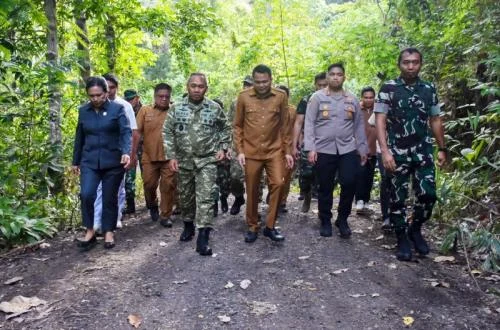
MANADO, REPUBLIKA.CO.ID – Major General TNI Mirza Agus, Commander of the XIII/Merdeka Military Regional Command (Pangdam XIII/Merdeka), conducted a comprehensive inspection of the 128th iteration of the TNI Manunggal Membangun Desa (TMMD) program in Minahasa Tenggara (Southeast Minahasa), North Sulawesi. His visit on Wednesday served to ascertain the program’s efficacy and ensure its initiatives are precisely targeting the most pressing needs of the local communities. The TMMD, a flagship civil-military cooperation endeavor, aims to accelerate development in remote and underdeveloped areas, fostering both infrastructure growth and stronger bonds between the military and the populace.
During his meticulous assessment, Major General Agus focused on several key project sites, evaluating the progress and the tangible benefits being delivered. The inspection underscored the military’s unwavering commitment to its dual function of national defense and support for regional development, particularly in areas grappling with geographical isolation and limited access to essential services. This holistic approach is crucial for achieving sustainable progress and improving the overall quality of life for rural Indonesians.
A Critical Assessment of Rural Development
The Pangdam’s visit began with a detailed review of the road pioneering project in Watuliney Village. This particular initiative is a cornerstone of the TMMD 128 program, designed to open up previously isolated areas. Infrastructure development, especially road access, is often the first critical step in unlocking a region’s economic potential and improving social mobility. The new road is expected to significantly reduce travel times, lower transportation costs for agricultural products, and facilitate access to education, healthcare, and markets for residents who have long struggled with challenging terrain and inadequate connectivity. Major General Agus personally surveyed the stretch of road, observing the quality of construction and interacting with local workers and military personnel involved in the project.
Beyond physical infrastructure, the inspection also covered the crucial manunggal clean water program, another vital component aimed at addressing a fundamental need. Access to safe and readily available clean water remains a significant challenge in many rural parts of Indonesia. The TMMD program’s initiative in Watuliney is designed to establish or improve water supply systems, ensuring communities have reliable access to potable water for daily consumption, sanitation, and agricultural needs. This directly impacts public health, reducing the incidence of waterborne diseases and freeing up time, particularly for women and children, who often bear the burden of fetching water from distant or unsafe sources. The Pangdam’s scrutiny of this project highlighted the program’s commitment to improving basic human welfare.
The TNI Manunggal Membangun Desa (TMMD) Initiative: A National Overview
The TNI Manunggal Membangun Desa, historically known as ABRI Masuk Desa (ABRI Enters the Village) before the reformation of the Indonesian armed forces, is a long-standing national program initiated in the early 1980s. It represents a strategic civil-military operation aimed at assisting local governments in accelerating regional development, particularly in remote, border, and underdeveloped areas. The program’s core philosophy is rooted in the Indonesian principle of "gotong royong" (mutual cooperation), bringing together military personnel, local government agencies, and community members to collectively address development challenges.
TMMD projects typically encompass a wide range of activities, including the construction and renovation of roads, bridges, public facilities (such as schools, health clinics, and houses of worship), irrigation systems, clean water infrastructure, and sanitation facilities. Beyond physical construction, the program also often includes non-physical activities like health awareness campaigns, agricultural training, vocational skills workshops, and civic education, all tailored to the specific needs and priorities of the target communities. Over the decades, TMMD has played a crucial role in improving rural livelihoods, strengthening national resilience, and fostering a strong sense of unity and shared responsibility between the military and the people it serves. The 128th iteration in Minahasa Tenggara is a testament to the program’s enduring relevance and adaptability to contemporary development needs.
Targeting Underdevelopment: Minahasa Tenggara’s Specific Needs
Minahasa Tenggara, often abbreviated as Mitra, is a regency in North Sulawesi that faces typical development challenges common to many outlying regions in the Indonesian archipelago. Characterized by a mix of coastal areas, agricultural lands, and some mountainous terrain, the regency’s development progress is often hampered by geographical barriers, limited access to resources, and infrastructure deficits. Many villages, particularly those nestled further inland or in more rugged topography, experience varying degrees of isolation, which restricts economic opportunities and access to essential government services.
The selection of Minahasa Tenggara for the 128th TMMD program was a strategic decision, aimed at addressing these specific vulnerabilities. Data from the regional development planning agency often highlights disparities in infrastructure provision between urban centers and rural villages, with remote communities frequently lagging in terms of road connectivity, access to clean water, and adequate sanitation. For instance, while national figures show significant improvements in access to basic services, pockets of underdevelopment persist, where a substantial portion of the population still relies on unimproved water sources or lacks proper toilet facilities. The TMMD’s targeted interventions in Mitra are therefore designed to bridge these gaps, fostering inclusive growth and ensuring that no community is left behind in the broader national development agenda.
On-the-Ground Impact: Infrastructure and Basic Services
Following his inspection in Watuliney, Major General Agus proceeded to Tababo Induk Village, where he oversaw the construction of public sanitation facilities (MCK – Mandi, Cuci, Kakus, meaning Bathing, Washing, Toilet facilities) and the TMMD 128 Posko (Command Post). The establishment of modern MCK facilities is a critical public health intervention, especially in areas where open defecation or rudimentary latrines are still prevalent. Improved sanitation directly contributes to disease prevention, environmental hygiene, and the dignity of community members. The TMMD Posko serves as the operational hub for the military personnel and local volunteers, coordinating activities, managing resources, and acting as a central point of contact for the community during the program’s duration. Its presence signifies the organized and systematic approach taken by the TNI in executing these complex development projects.
The meticulous attention to detail in these projects reflects a commitment to not just build, but to build to last, ensuring that the infrastructure serves the community effectively for years to come. The design and implementation process often involve consultation with local leaders and residents to ensure that the facilities meet specific cultural and practical needs, thereby maximizing their utility and acceptance.
Fostering Community Resilience: Housing and Sanitation
The tour concluded in Tababo Selatan Village, where the Pangdam observed the progress of the Uninhabitable House (RTLH – Rumah Tidak Layak Huni) renovation program. This component of TMMD addresses the critical need for decent and safe housing, particularly for the most vulnerable segments of the population. The RTLH initiative involves the rehabilitation of dilapidated homes, transforming them into livable dwellings that offer improved structural integrity, better sanitation, and a healthier living environment. This directly impacts the well-being of families, providing security, comfort, and a foundation for improved health and productivity.
The RTLH program embodies the TMMD’s broader humanitarian objectives, demonstrating the military’s role in directly enhancing the social welfare of communities. It’s not merely about providing shelter, but about restoring dignity and providing a safe space for families to thrive. Such initiatives often involve local masons and laborers, providing temporary employment and transferring valuable construction skills within the community, contributing to local economic empowerment.
Leadership Endorsement and Program Philosophy
In his concluding remarks, Major General TNI Mirza Agus unequivocally affirmed that the TMMD program exemplifies a robust synergy between the Indonesian National Armed Forces (TNI), local government authorities, and the community itself, all working in concert to accelerate regional development. "We are determined to ensure that every program implemented is precisely targeted and delivers a direct, tangible impact on the welfare of the community," he stated, emphasizing the strategic importance of effective resource allocation and project execution. This statement underscores the program’s results-oriented approach, where success is measured not just by completed structures but by the demonstrable improvements in people’s lives.
The Pangdam’s words resonate with the core principles of TMMD, which seeks to integrate military capabilities with civilian development efforts. This collaborative model leverages the TNI’s organizational discipline, logistical prowess, and manpower, combined with the local government’s understanding of community needs and administrative oversight, and crucially, the active participation of the residents themselves. This multi-stakeholder approach is considered essential for achieving sustainable development outcomes, as it fosters local ownership and ensures that projects are relevant and responsive to the community’s actual demands.
The Power of Gotong Royong: Ensuring Sustainability
Major General Agus further stressed the enduring importance of "gotong royong" – the Indonesian spirit of mutual cooperation and communal work – in sustaining the positive outcomes of the development initiatives. "We earnestly hope that all the results of this development can be meticulously maintained and maximally utilized by the community," he urged. "Through unity and gotong royong, we can collectively drive the continuous progress of our villages." This emphasis on community involvement post-construction is vital for the long-term success and impact of the TMMD program.
The concept of gotong royong is not merely a cultural tradition but a practical mechanism for ensuring the longevity and effectiveness of community projects. By actively participating in the construction and subsequent maintenance of infrastructure, local residents develop a sense of ownership and responsibility. This collective stewardship ensures that roads remain passable, water systems function efficiently, and public facilities are kept in good repair, preventing rapid deterioration and the need for costly future renovations. The TMMD program, therefore, is not just about building physical structures; it is fundamentally about building community capacity and fostering a culture of self-reliance and collective responsibility.
Broader Implications: Socio-Economic Transformation and Civil-Military Synergy
The TMMD program in Minahasa Tenggara carries significant broader implications beyond the immediate improvements in infrastructure and basic services. From a socio-economic perspective, the new roads and improved connectivity are expected to stimulate local economies. Farmers will have easier and cheaper access to markets, potentially increasing their income. Small businesses can thrive with better access to supplies and customers. Furthermore, enhanced access to education and healthcare facilities will lead to improved human capital development, laying the groundwork for future prosperity. The provision of clean water and sanitation directly impacts public health, reducing medical expenses and increasing productivity by decreasing illness-related absenteeism.
From a civil-military relations standpoint, the TMMD strengthens the bond between the TNI and the civilian population. By actively participating in community development, the military reinforces its role as a protector and a partner in progress, dispelling any negative perceptions and building trust. This synergy is crucial for national stability and resilience, as a military that is respected and integrated within society is better positioned to fulfill its broader mandate. The program serves as a powerful reminder that national security extends beyond defense and encompasses the well-being and development of all citizens, particularly those in the most remote corners of the archipelago.
Looking Ahead: Sustaining the Momentum of Development
As the 128th TMMD program progresses towards its conclusion, the focus will undoubtedly shift towards ensuring the sustainability of the implemented projects. Local government officials, such as the Regent of Minahasa Tenggara, are expected to echo the Pangdam’s sentiments, expressing profound gratitude for the TNI’s unwavering commitment and emphasizing the transformative impact of the program. They would likely highlight the importance of continued collaboration between all stakeholders to maintain the newly built infrastructure and leverage these improvements for further regional development. Community leaders, for their part, would articulate the tangible improvements in daily life, from reduced travel times to healthier living conditions, and voice their commitment to upholding the spirit of gotong royong.
The TMMD program in Minahasa Tenggara stands as a powerful testament to the effectiveness of a collaborative, community-centric approach to rural development. It is a model that successfully combines the organizational strength of the military with the local knowledge of government and the active participation of the people. By addressing critical needs such as infrastructure, clean water, sanitation, and housing, TMMD not only builds physical structures but also fortifies the social fabric of communities, paving the way for a more prosperous, healthy, and interconnected future for remote areas across Indonesia. The commitment of leaders like Major General TNI Mirza Agus ensures that this vital national program continues to hit its mark, delivering real change where it is most needed.