Nila Kartika Wati
The traditional perception of the ocean as a "silent world" is being systematically dismantled by modern marine biology, revealing instead a complex and cacophonous environment where sound is the primary currency of survival. For decades, conservation efforts focused almost exclusively on the visual health of coral reefs—the vibrancy of their colors and the density of their structures. However, recent breakthroughs in bioacoustics have shifted the focus toward the "reef soundscape," an intricate acoustic tapestry that serves as both a biological signature of health and a critical navigation tool for marine life. A healthy coral reef is not merely a visual spectacle but a riotous auditory environment, filled with the "snap, crackle, and pop" of snapping shrimp, the low-frequency grunts of territorial damselfish, and the rhythmic drumming of various reef dwellers. This soundscape is far more than background noise; it is a vital sensory beacon that guides the next generation of marine organisms to their homes.
The mechanics of this acoustic environment, often referred to by scientists as a "reef soundscape," are formed by the collective activities of thousands of organisms. The most prominent contributors are snapping shrimp (Alpheus spp.), which produce a sharp, high-frequency "krek-krek" sound by collapsing specialized bubbles with their claws. This sound is so pervasive that it can interfere with sonar equipment. Interwoven with these high-pitched snaps are the percussive thumps and hums of fish, who use sound for communication, mating rituals, and territorial defense. For larval fish and coral polyps, which spend their early lives drifting in the vast, open ocean, these sounds act as an auditory lighthouse. Because sound travels approximately 4.5 times faster in water than in air and can propagate over long distances with minimal loss of energy, it provides a reliable signal for organisms searching for a suitable habitat in a featureless blue expanse.
However, as coral reefs face unprecedented degradation due to climate change, overfishing, and pollution, this vital soundtrack is fading into a haunting silence. Research published in the Proceedings of the National Academy of Sciences (PNAS) has quantified this decline, revealing that degraded reef areas are often 15 decibels quieter than their healthy counterparts. This reduction in volume is accompanied by a significant loss of acoustic complexity. When the structural integrity of a reef collapses and its inhabitants flee or perish, the navigational cues that attract new larvae vanish. This creates a catastrophic feedback loop: without the sound of a healthy reef to guide them, young fish and coral larvae cannot find the reef to settle and begin the process of regeneration. Consequently, a quiet reef remains a "ghost town," unable to recruit the very life forms needed for its recovery.
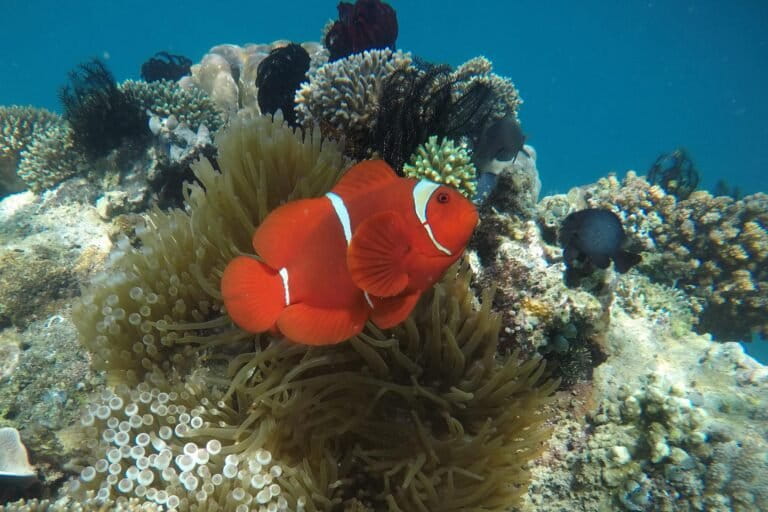
The situation is particularly dire in Indonesia, a nation situated at the heart of the Coral Triangle, the global epicenter of marine biodiversity. Indonesia’s coral reefs cover approximately 2.5 million hectares, representing nearly 18% of the world’s total coral reef area. Yet, the health of these ecosystems is in a state of precarious flux. According to 2024 data from the Indonesian Central Bureau of Statistics (Badan Pusat Statistik or BPS), which monitored ,1153 specific sites across the archipelago, the results are sobering. Approximately 33.82% of the monitored reefs are classified as being in "poor" condition. In contrast, only 6.42% of the sites reached the "excellent" or "very good" category. This widespread degradation means that more than a third of Indonesia’s underwater territory is potentially falling silent, losing the acoustic signals necessary to sustain its biodiversity.
The chronology of our understanding of reef acoustics has evolved rapidly over the last decade. Early studies in the early 2000s first suggested that fish larvae might use sound to find reefs, but it wasn’t until the mid-2010s that researchers like Tim Gordon and Stephen Simpson began to quantify the relationship between habitat quality and soundscape intensity. In 2018, their landmark study proved that the "acoustic settlement" behavior of fish was severely hampered by habitat degradation. By 2022, research by Thomas Lamont and colleagues demonstrated that successful reef restoration could actually be "heard"—that as corals were replanted and structures rebuilt, the soundscape slowly returned to its original complexity. This timeline of discovery led to a radical new proposition in 2024: if a reef is too quiet to attract life, why not simply turn up the volume?
This innovative approach, known as "acoustic enrichment," involves the deployment of high-fidelity underwater speakers to broadcast the sounds of healthy reefs in areas undergoing restoration. The results of these experiments have been nothing short of transformative. A 2024 study led by the Woods Hole Oceanographic Institution revealed that larval coral settlement was up to seven times higher in areas where healthy reef sounds were played compared to silent control sites. By "tricking" the larvae into thinking they had found a thriving, vibrant home, scientists were able to jump-start the colonization process. Similar experiments conducted on the Great Barrier Reef showed that playing healthy sounds doubled the total number of fish on degraded reefs and increased the number of species present by 50%.
The implications of this research extend far beyond the realm of academic biology; they have profound socio-economic consequences. For a maritime nation like Indonesia, the health of coral reefs is inextricably linked to national food security and the economy. Reefs serve as the primary nursery grounds for many of the fish species that support the country’s artisanal and industrial fisheries. Furthermore, the tourism sector, which relies heavily on the aesthetic and biological richness of underwater ecosystems in places like Raja Ampat and Komodo, stands to lose billions if reefs continue to collapse. Acoustic enrichment offers a relatively low-cost, scalable tool that can be integrated into existing conservation strategies, such as the deployment of artificial reefs or "bio-rock" structures. By combining physical restoration with acoustic stimulation, conservationists can significantly increase the "return on investment" for reef recovery projects.
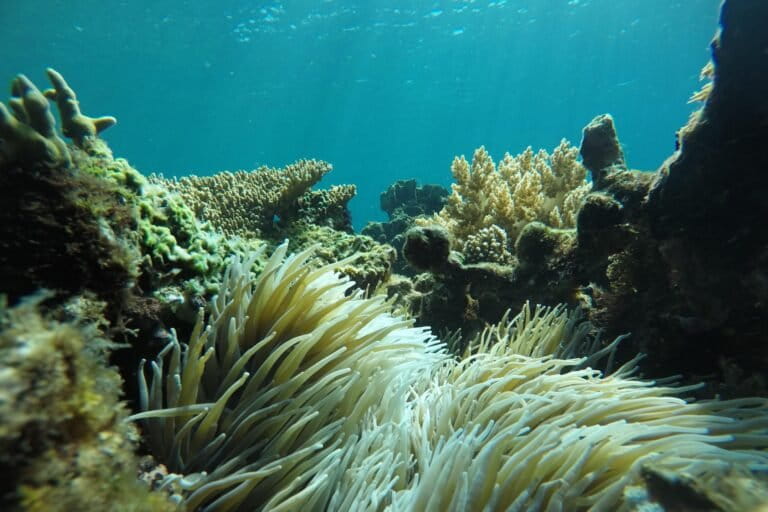
Despite the promise of acoustic enrichment, experts caution that it is not a "silver bullet" for the global coral crisis. While sound can attract fish and larvae, it cannot protect them from the underlying causes of reef death, such as rising sea temperatures (leading to coral bleaching) or ocean acidification. Marine biologists emphasize that acoustic enrichment must be part of a holistic management plan that includes the establishment of Marine Protected Areas (MPAs), the reduction of plastic pollution, and global efforts to curb carbon emissions. The "speaker" method helps with recruitment, but the environment must still be hospitable enough for those new arrivals to survive and thrive.
Looking forward, the scientific community is advocating for the creation of a global soundscape monitoring network. By using hydrophones to "listen" to the ocean 24/7, researchers can gain real-time insights into the health of remote ecosystems without the need for frequent, expensive diving expeditions. These "black box" recorders for the ocean can detect illegal fishing activities (such as blast fishing), monitor the migration patterns of whales, and provide early warning signs of ecosystem collapse. In Indonesia, integrating acoustic monitoring into the BPS data collection framework could provide a more nuanced and accurate picture of reef health than visual surveys alone.
The transition from viewing the ocean as a silent void to a complex acoustic environment represents a paradigm shift in marine conservation. It reminds us that the health of our planet is a multi-sensory experience. The "reef soundscape" is a testament to the interconnectedness of life; a single snapping shrimp contributes to a symphony that guides a wandering larva, which in turn grows to build the reef that protects a coastline. As we move further into the 21st century, the survival of the world’s coral reefs may depend on our ability not just to see their beauty, but to listen to their needs. The success of underwater speakers in attracting life provides a rare glimmer of hope, suggesting that even in the quietest, most degraded corners of our oceans, the right song might be enough to bring the rhythm of life back to the deep. Turning up the volume on marine conservation is no longer just a metaphor; it is a literal necessity for the preservation of the "blue heart" of our planet.