Azin Asro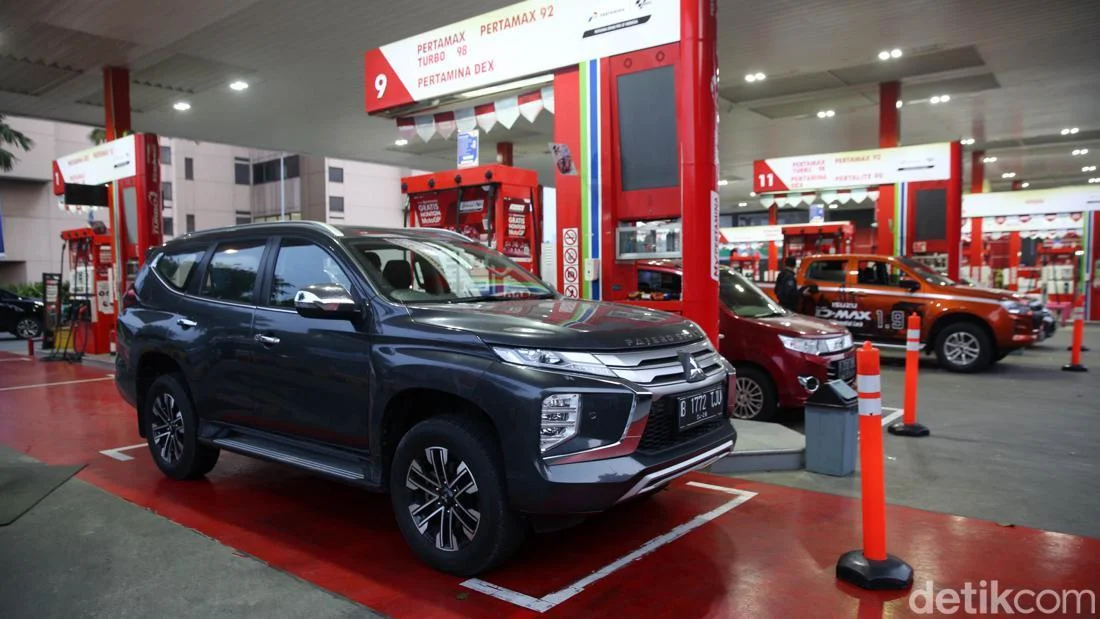
The landscape of private transportation in Indonesia’s metropolitan hubs is undergoing a seismic shift as the soaring costs of non-subsidized diesel fuels begin to take a heavy toll on the disposable income and daily habits of vehicle owners. For years, diesel-powered SUVs and MPVs were favored by the Indonesian middle and upper-middle class for their perceived fuel efficiency and robust torque. However, a series of aggressive price adjustments for high-cetane fuels has transformed these vehicles from economical long-distance cruisers into significant financial liabilities for their owners.
The most recent price hikes have seen Dexlite and Pertamina Dex—the two primary non-subsidized diesel products offered by the state-owned energy giant Pertamina—reach unprecedented levels. Dexlite is currently hovering around Rp 26,000 per liter, while the higher-grade Pertamina Dex has climbed to approximately Rp 27,900 per liter. For owners of popular diesel models like the Mitsubishi Pajero Sport and the Toyota Innova, these figures represent a departure from the historical norms of affordable diesel motoring, leading to a drastic reassessment of how, and if, these vehicles should be used for daily commuting.
The Human Cost of Fuel Inflation: From Pajeros to Public Transport
The financial strain is best illustrated by the experiences of long-time diesel enthusiasts in the capital. May, a 68-year-old Jakarta resident who relies on a Mitsubishi Pajero Sport for her daily activities, expressed a sense of profound shock at the current pricing structure. For May, the Pajero Sport was once a reliable and manageable asset. However, the math of maintaining a full tank has become increasingly daunting.
"The price increase is extraordinary; it has nearly tripled," May stated in an interview. She recalled a time when a mere Rp 500,000 was sufficient to fill the tank of her SUV. Under the current pricing regime, that same "full tank" experience now demands an expenditure of Rp 1.5 million. Despite the escalating costs, May finds herself in a difficult position. She remains hesitant to switch to the significantly cheaper, subsidized "Biosolar" fuel, fearing that the high sulfur content of the lower-grade fuel would cause irreparable damage to her vehicle’s sophisticated engine components. Furthermore, she expressed a sense of resignation regarding the prospect of selling the vehicle, noting that the sentimental and functional value of the car makes a transition to a new vehicle unappealing in the current market.
A similar sentiment is echoed by Ari, a 37-year-old professional working in the Mega Kuningan business district of South Jakarta. Ari utilizes a 2019 Toyota Innova diesel for his daily commute between Bintaro and South Jakarta. The Innova, known for its "2GD-FTV" engine, is designed to run on high-quality diesel to maintain its performance and longevity.
"It’s frustrating," Ari remarked, noting that the price jump feels closer to 100 percent compared to the rates he was accustomed to just a year ago. Like May, Ari refuses to downgrade to subsidized solar out of concern for his car’s health. However, unlike May, Ari has begun to alter his lifestyle significantly to mitigate the financial impact. He has increasingly turned to Jakarta’s public transportation network, including the TransJakarta bus system, to navigate the city. On weekends, his diesel MPV often remains idle in the garage as he seeks more cost-effective ways to move his family.
A Comparative Look at the Private Fuel Market
The price surge is not limited to Pertamina’s stations. Private fuel providers have also adjusted their rates upward, reflecting the volatility of global crude oil prices and the weakening of the Indonesian Rupiah against the US Dollar. A survey of private gas stations in Jakarta reveals an even steeper climb for premium diesel products:
- BP-AKR: The provider’s "BP Ultimate Diesel" is currently positioned at the higher end of the market, with prices reaching Rp 29,890 per liter.
- VIVO: The "Diesel Primus" offered by VIVO has breached the Rp 30,000 mark, retailing at approximately Rp 30,890 per liter.
These prices create a stark contrast with "Biosolar," the subsidized diesel fuel which remains fixed at a much lower price point but is strictly regulated and intended for logistics, public transport, and lower-income users. The widening gap between subsidized and non-subsidized fuel—often exceeding Rp 20,000 per liter—has created a "diesel trap" for owners of modern, Euro 4-compliant vehicles who cannot safely use the cheaper alternative.
Technical Context: Why Modern Diesels Demand Premium Fuel
To understand why owners like May and Ari are "trapped" into paying premium prices, one must look at the evolution of diesel engine technology in Indonesia. In April 2022, the Indonesian government officially implemented Euro 4 emission standards for all diesel vehicles produced in the country. This transition required manufacturers to utilize Common Rail injection systems and sophisticated exhaust after-treatment technologies.
Common Rail engines operate at extremely high pressures. Using subsidized Biosolar, which has a high sulfur content (often up to 500 ppm or more) and a lower Cetane Number, can lead to several catastrophic failures:
- Injector Clogging: High sulfur leads to carbon deposits that can clog the microscopic nozzles of high-pressure injectors.
- Fuel Filter Saturation: Biosolar’s fatty acid methyl ester (FAME) content acts as a detergent, loosening old deposits in the fuel tank which then clog the filters.
- Engine Longevity: Lower cetane levels cause "knocking" and incomplete combustion, reducing the overall lifespan of the engine.
Consequently, while the price of Pertamina Dex is high, the cost of replacing a set of common rail injectors—which can range from Rp 20 million to Rp 40 million—acts as a powerful deterrent against using subsidized fuel.
Chronology of the Price Surge
The path to Rp 27,900 per liter has been marked by several key economic and geopolitical triggers:
- Post-Pandemic Recovery (2022): As global economic activity resumed, demand for distillates like diesel surged, outstripping supply and beginning the upward trend in prices.
- Geopolitical Instability (2022-2023): The conflict in Eastern Europe disrupted global energy supply chains, particularly affecting diesel refining margins, as Russia was a major exporter of diesel to the global market.
- Currency Fluctuations (2023-2024): The Rupiah’s depreciation against the Dollar has made the import of refined fuel products significantly more expensive for Pertamina and private distributors.
- Subsidy Reallocation: The Indonesian government has gradually shifted its fiscal policy to ensure that subsidies are more targeted. This has led to the "un-pegging" of non-subsidized fuels from government-stabilized rates, allowing them to fluctuate freely with market dynamics.
Official Responses and Economic Analysis
While Pertamina has not issued a specific statement regarding the individual grievances of Pajero or Innova owners, the company has consistently maintained that its pricing strategy for non-subsidized fuel is a necessary reflection of the Means of Product Price (MOPS). Corporate communications from Pertamina Patra Niaga have previously emphasized that the price of Pertamina Dex and Dexlite is reviewed monthly to ensure it remains competitive yet sustainable in the face of global market shifts.
Energy analysts suggest that the current situation is a "painful but necessary" transition for the Indonesian automotive market. "We are seeing a correction in the perceived cost of luxury vehicle ownership," says a Jakarta-based energy economist. "For a long time, the price of high-quality diesel in Indonesia was kept artificially low or was at least stable. Now, consumers are facing the true market cost of the energy they consume. This will likely accelerate the shift toward hybrid or electric vehicles (EVs) in the premium segment."
Broader Implications for the Automotive Industry
The "Diesel Dilemma" is expected to have long-term repercussions for the Indonesian automotive industry. For decades, the diesel Toyota Innova and Mitsubishi Pajero Sport have been the "kings of the road" in Indonesia, holding their resale value better than almost any other vehicle type.
However, if the operational cost remains at Rp 1.5 million per full tank, the secondary market for these vehicles may begin to cool. Prospective buyers are now factoring in a monthly fuel bill that could rival a mid-range apartment rental in Jakarta. This has led to an increased interest in:
- Hybrid Electric Vehicles (HEVs): Models like the Innova Zenix Hybrid are seeing surged demand as they offer the torque and space of a diesel but with the efficiency of a gasoline-electric powertrain that runs on more stable-priced gasoline.
- Public Infrastructure Utilization: As Ari’s story suggests, there is a growing "modal shift" where even affluent car owners are choosing the MRT or TransJakarta for their daily commute, reserving their private vehicles for specific, essential trips.
- Fuel Efficiency Optimization: Automotive workshops are reporting an uptick in customers seeking "ECU Remapping" or "Eco-tuning" services to squeeze every possible kilometer out of a liter of expensive Dexlite.
Conclusion
The current pricing of non-subsidized diesel serves as a stark reminder of Indonesia’s vulnerability to global energy markets. For the thousands of diesel vehicle owners in Jakarta and other major cities, the era of "cheap power" has come to a definitive end. While the government continues to protect the most vulnerable through subsidized Biosolar, the aspirational middle class is being forced to adapt to a high-cost energy environment. Whether through the adoption of new technologies or a shift toward public infrastructure, the way Indonesians move is being fundamentally rewritten by the numbers on the fuel pump. For owners like May and Ari, the "Pajero lifestyle" is no longer just about the prestige of the vehicle, but about the endurance of the wallet.