Azin Asro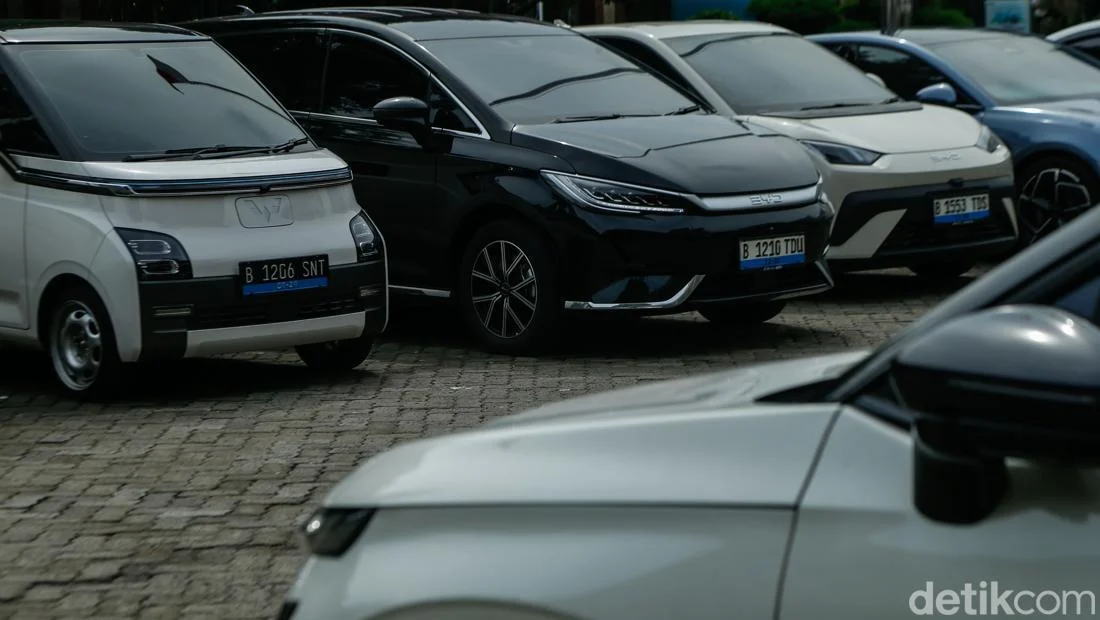
The Indonesian government has officially confirmed the continuation and expansion of fiscal incentives for the electric vehicle (EV) sector, signaling a robust commitment to transforming the nation into a regional hub for sustainable transportation. According to statements from government officials, the upcoming incentive package is designed to stimulate both supply and demand, targeting a total of 200,000 units of electric cars and motorcycles for the current fiscal period. This policy is part of a broader strategic roadmap to accelerate the adoption of battery-powered transportation while simultaneously leveraging Indonesia’s vast natural resources, particularly nickel, to build a vertically integrated domestic battery industry.
Purbaya Yudhi Sadewa, a prominent figure in the government’s fiscal and economic planning apparatus, revealed that the incentive structure will involve a combination of direct subsidies for two-wheeled vehicles and tax exemptions for four-wheeled vehicles. For electric motorcycles, the government plans to provide a direct subsidy of Rp 5 million per unit. Meanwhile, for electric cars, the primary mechanism remains the Value Added Tax Borne by the Government (PPN DTP). While the specific technical regulations for the upcoming cycle are being finalized, the government has indicated that the level of incentive will be heavily influenced by the local content and the specific materials used in the vehicle’s battery systems.
The Evolution of the PPN DTP Mechanism
The Value Added Tax Borne by the Government (PPN DTP) has been a cornerstone of Indonesia’s EV strategy since 2023. Under the standard tax code, motor vehicles are subject to a Value Added Tax (VAT) of 11%. However, to lower the barrier to entry for consumers, the government introduced a scheme where it covers a significant portion of this tax burden. In the initial phase, qualifying electric cars were only required to pay an effective VAT rate of 1%, with the government bearing the remaining 10%.
As the national VAT rate is scheduled to transition toward 12% in the coming years, the government’s incentive scheme is expected to adjust accordingly. Under the proposed framework, if the standard VAT is 12%, consumers of qualifying EVs would only be liable for a 2% tax, maintaining the 10% government-covered discount. This fiscal intervention significantly reduces the "on-the-road" price of electric vehicles, making them more competitive against traditional internal combustion engine (ICE) vehicles.
For instance, a mid-range electric vehicle priced at Rp 300 million would normally incur a VAT of Rp 33 million (at an 11% rate). With the PPN DTP incentive, the consumer only pays a VAT of Rp 3 million, resulting in an immediate saving of Rp 30 million. In the case of popular compact models like the Wuling Air ev, these incentives have historically driven price reductions of approximately Rp 20 million to Rp 26 million, depending on the variant and the local content percentage (TKDN).
Strategic Prioritization of Nickel-Based Batteries
A defining feature of the new incentive roadmap is the distinction between battery chemistries. The Ministry of Finance and the Ministry of Industry have indicated that the scale of the incentive—whether the government covers 100% or 40% of the VAT—will depend on the battery material. Specifically, vehicles utilizing nickel-based batteries (such as Nickel Cobalt Manganese or NCM) are poised to receive higher levels of support compared to those using non-nickel alternatives, such as Lithium Iron Phosphate (LFP).
This policy choice is deeply rooted in Indonesia’s "downstreaming" (hilirisasi) economic strategy. Indonesia holds the world’s largest reserves of nickel, a critical component in high-energy-density EV batteries. By linking fiscal incentives to battery chemistry, the government aims to force a structural shift in the automotive supply chain. "The reason we are providing a larger subsidy for nickel-based batteries is to ensure that our domestic nickel reserves are utilized within the global and local value chains," Purbaya Yudhi Sadewa explained.
By creating a domestic market that favors nickel-based EVs, Indonesia hopes to attract more foreign direct investment (FDI) from global battery manufacturers and automotive giants. The goal is to move beyond the export of raw ore or semi-processed ferronickel and instead produce high-value battery cells and EV components locally. This transition is expected to create thousands of high-skilled jobs and bolster the national GDP.
Chronology of Indonesia’s EV Policy Development
The current incentive plan is the result of a multi-year legislative and regulatory effort to pivot the Indonesian economy toward green energy. The timeline of this transition highlights the government’s consistent approach:
- 2019: President Joko Widodo signed Presidential Regulation No. 55 of 2019 regarding the Acceleration of the Battery Electric Vehicle Program for Road Transportation. This established the foundational legal framework for EV development.
- 2020-2022: The government focused on the "downstreaming" of the mining sector, banning the export of raw nickel ore to encourage domestic smelting and refining.
- Early 2023: The Ministry of Industry and the Ministry of Finance launched the first major wave of EV incentives, including the Rp 7 million subsidy for electric motorcycles (later adjusted) and the PPN DTP for cars with a minimum Local Content Requirement (TKDN) of 40%.
- Late 2023 – 2024: Expansion of the subsidy eligibility criteria for motorcycles to include all Indonesian citizens with a valid national ID (NIK), removing previous restrictions that limited subsidies to certain socioeconomic groups.
- 2025-2026: The current roadmap aims to reach a cumulative target of hundreds of thousands of units, with a more sophisticated incentive structure that accounts for battery technology and domestic industrial integration.
Market Impact and Consumer Response
The impact of these incentives on the Indonesian automotive market has been measurable. Data from the Association of Indonesia Automotive Industries (GAIKINDO) shows a steady increase in the market share of battery electric vehicles (BEVs) and hybrid electric vehicles (HEVs). While the initial adoption was slow due to high price points and limited charging infrastructure, the PPN DTP has made models like the Hyundai Ioniq 5 and Wuling Air ev household names in urban centers like Jakarta, Surabaya, and Bandung.
Industry analysts suggest that the new 200,000-unit target is ambitious but achievable if the government maintains a clear and consistent regulatory environment. "The biggest hurdle for EV adoption in Indonesia has always been the price gap between EVs and ICE vehicles," says an industry consultant. "The PPN DTP effectively narrows that gap. When you combine that with the lower operational costs—electricity being significantly cheaper than subsidized fuel—the value proposition becomes very compelling for the middle class."
However, the shift toward prioritizing nickel-based batteries may present a challenge for some manufacturers. Currently, many entry-level and mass-market EVs, particularly those from Chinese manufacturers, utilize LFP batteries because they are cheaper to produce and do not require nickel or cobalt. By offering higher subsidies for nickel-based vehicles, the Indonesian government is essentially signaling to these manufacturers that they should consider establishing NCM battery production facilities within Indonesia to remain competitive in the local market.
Broader Implications for the National Economy and Environment
Beyond the immediate automotive market, the expansion of EV incentives carries significant implications for Indonesia’s environmental and fiscal health.
- Reduction in Fuel Subsidies: Indonesia spends a significant portion of its national budget on subsidizing fossil fuels (BBM). By shifting the population toward electric vehicles, the government can reduce its dependence on imported oil and lower the fiscal burden of fuel subsidies. This allows for a more efficient allocation of state funds toward infrastructure and social welfare.
- Commitment to Net Zero 2060: As part of the Paris Agreement and its own Long-Term Strategy for Low Carbon and Climate Resilience, Indonesia has committed to achieving Net Zero Emissions by 2060 or sooner. The transportation sector is one of the largest contributors to carbon emissions in the country. A rapid transition to EVs is essential for meeting these international and national climate targets.
- Industrial Competitiveness: By positioning itself as a leader in the EV supply chain, Indonesia aims to become a key player in the global energy transition. The development of the Indonesia Battery Corporation (IBC) and partnerships with global firms like LG Energy Solution and CATL are evidence of this ambition.
Challenges and Future Outlook
Despite the optimistic outlook, several challenges remain. The success of the 200,000-unit target will depend heavily on the rapid expansion of charging infrastructure (SPKLU). While the state electricity company, PLN, has been aggressively installing charging stations, the density of these stations in rural areas and along major toll roads remains a concern for potential buyers worried about "range anxiety."
Furthermore, the Ministry of Industry must ensure that the Local Content Requirement (TKDN) calculations are transparent and that manufacturers are given adequate time to adjust their supply chains. The distinction between nickel and non-nickel incentives must be managed carefully to avoid stifling market competition while still achieving the goal of domestic resource utilization.
As the government prepares to implement these refined schemes, the focus will be on the "June 2026" milestone mentioned in the strategic discussions. This date likely represents a transition point where the government expects the domestic battery industry to be fully operational, allowing for a more self-sustaining EV ecosystem that relies less on fiscal stimulus and more on industrial efficiency.
In conclusion, the Indonesian government’s decision to enrich its EV incentive program is a calculated move to harmonize economic growth with environmental sustainability. By focusing on the PPN DTP mechanism and domestic nickel integration, Indonesia is not just selling cars; it is building a future-proof industry. The coming years will be a critical test of whether these fiscal policies can successfully drive the mass adoption required to turn Indonesia’s "Green Mobility" vision into a reality.