Nila Kartika Wati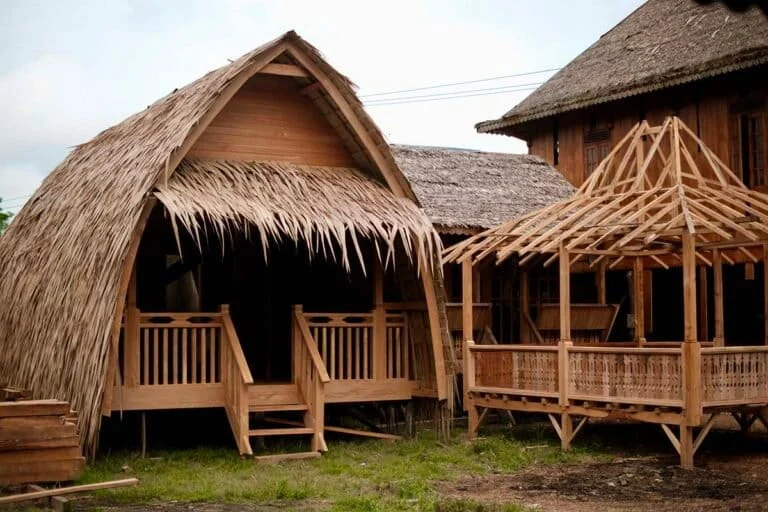
The landscape of South Sumatra, particularly the Ogan Ilir Regency, has for centuries been synonymous with a unique breed of artisans: the Penesak woodworkers. These master craftsmen, known as "maestros" in their own right, have defined the architectural identity of the region, constructing everything from the iconic Rumah Limas (traditional Palembang houses) to intricate furniture and sturdy river vessels. Today, while their craftsmanship remains globally recognized through the production of knock-down wooden houses that are shipped across the Indonesian archipelago, the survival of this ancient knowledge faces an unprecedented existential threat. The dual pressures of dwindling timber supplies and shifting environmental regulations are pushing a centuries-old tradition toward the brink of extinction.
The Historical Tapestry of the Penesak People
The Penesak tribe’s reputation as master builders is not a modern development but a legacy forged during the height of the Palembang Sultanate. Historically, the center of this woodworking excellence was Meranjat, which served as the administrative hub for the local clans (marga) before the administrative restructuring into the current village system. Within the modern boundaries of Ogan Ilir, the villages of Tanjung Batu Seberang and Tanjung Baru Petai have emerged as the primary sanctuaries for these artisans.
Retno Purwanti, an archaeologist from the Center for Prehistoric and Historical Archaeology Research at the National Research and Innovation Agency (BRIN), emphasizes that the Penesak people were the primary architects of Palembang’s civilization. During the Sultanate era, they were not merely carpenters; they were the essential providers of "papan and sandang" (shelter and clothing). Beyond woodworking, they were skilled in metallurgy—working with iron, gold, silver, copper, and tin—and were renowned for weaving the exquisite Songket fabrics that remain a symbol of South Sumatran nobility.
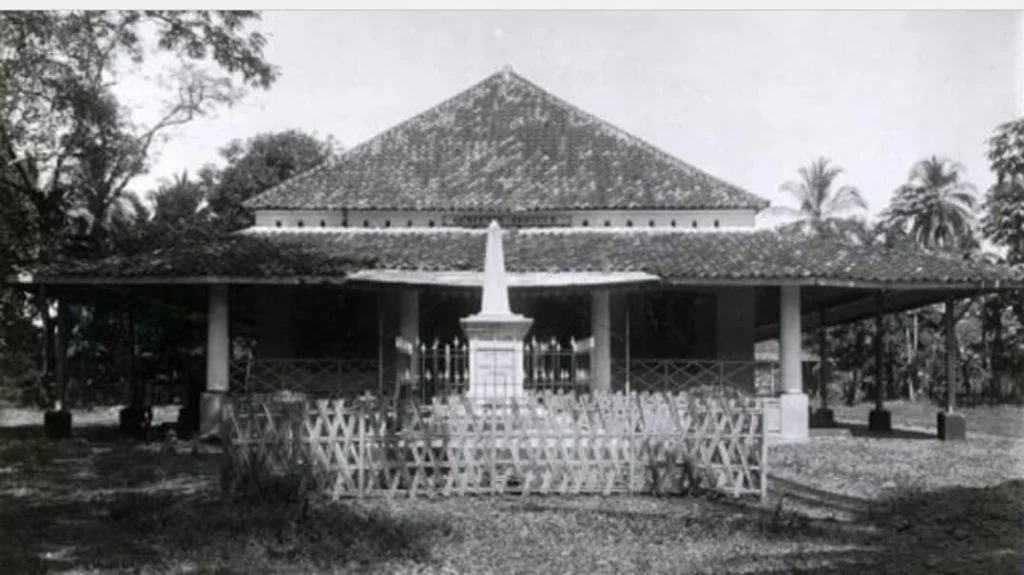
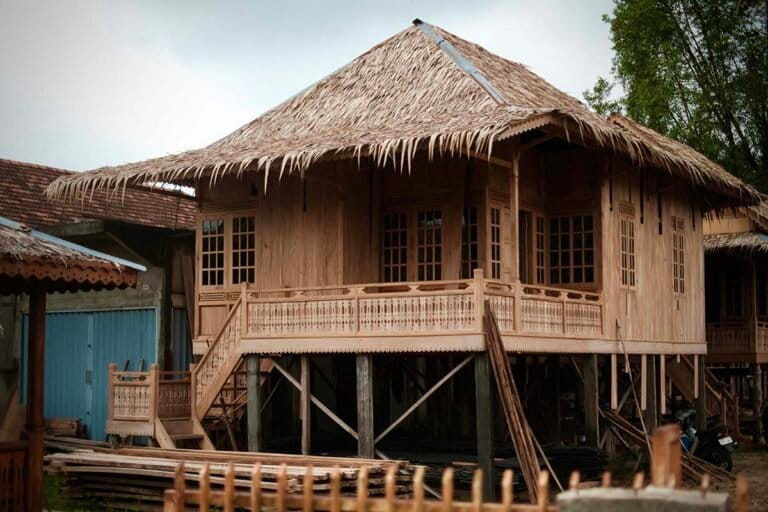
Virtually every Rumah Limas that still stands in Palembang today, some dating back over two hundred years, bears the fingerprints of Penesak maestros. These structures are more than just dwellings; they are complex engineering feats designed to withstand the tropical climate and the marshy terrain of the Musi River basin.
The Science of Wood: A Traditional Wisdom
What sets the Penesak woodworkers apart is a profound, almost intuitive, understanding of dendrology—the study of wooded plants. Their craft is governed by a strict philosophy: one type of wood does not fit all purposes. This traditional knowledge system dictates that specific species must be used for specific structural components to ensure longevity and safety.
For instance, the Ulin wood (Eusideroxylon zwageri), also known as "ironwood," is reserved for the most critical elements of a building. Due to its extreme density and resistance to rot and termites, Ulin is used for foundation pillars, staircases, roof shingles, and door frames. Other species are selected for wall panels, flooring, or decorative elements based on their grain, weight, and flexibility.
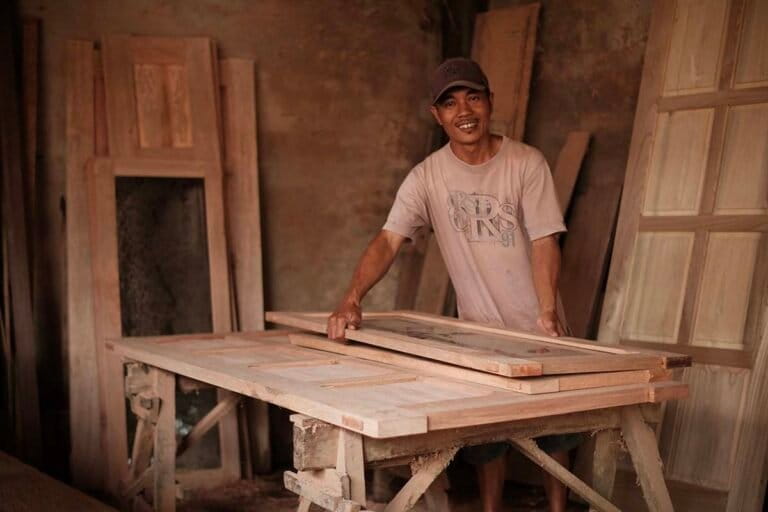
Crucially, this knowledge includes a conservationist ethic. Traditional Penesak law dictates that only mature trees of a certain diameter can be harvested. This "wisdom of the elders" ensured that the forests remained productive for generations. The artisans are also famous for their joinery techniques; they can connect massive beams with surgical precision using mortise and tenon joints (purus) and wooden pegs (pasak), often avoiding the use of metal nails entirely. They possess the rare ability to "straighten" crooked timber without cutting it and, conversely, to bend wood to create the graceful curves required for boat hulls and ornate furniture.
The Legend of Usang Sungging
The origins of this mastery are shrouded in local folklore, centered on the figure of Usang Sungging, also known as Abdul Hamid. According to local legend, Usang Sungging was a multi-talented artist who fled the Palembang Sultanate’s palace. He was a painter, a woodcarver, and a weaver who settled among the Penesak people, passing down his skills to the locals.
The legend takes a romantic turn with his unrequited love for Putri Pinang Masak (also known as Putri Nafisah) from the village of Senuro. The princess was herself a maestro of bamboo and rattan weaving. While their romance never blossomed, their combined artistic legacies created a culture of craftsmanship that defines the region.
"I am a descendant of woodworkers who studied under the lineage of Usang Sungging," says Mas’ad Abdul Gofar Yasin Na’yah, a 61-year-old artisan in Tanjung Batu Seberang. "He taught us not just wood, but metalwork. While the painting skills have largely faded, the carving and construction techniques remain our lifeblood."
The Modern Industry: Knock-Down Houses
In the face of changing economic tides, the Penesak woodworkers have adapted by specializing in "knock-down" or prefabricated wooden houses. These structures are built in the villages of Ogan Ilir, disassembled, and then shipped to buyers in Jakarta, Bandung, Bali, Medan, and even as far as Lombok.
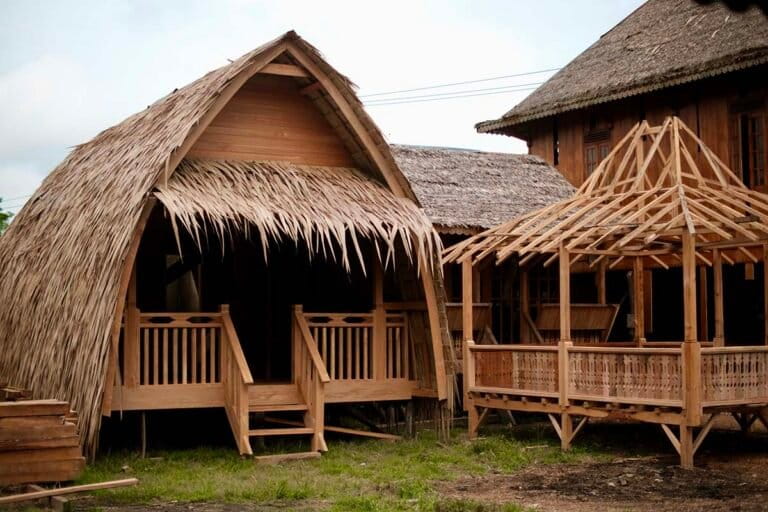
The scale of these projects is impressive. Sizes range from modest 4×6 meter cottages to expansive 20×20 meter villas. Prices vary accordingly, starting at approximately 70 million IDR (roughly 4,500 USD) and reaching into the hundreds of millions for bespoke, highly decorated mansions. This industry has allowed the Penesak identity to survive in a globalized market, providing a luxury architectural product that blends traditional aesthetics with modern portability.
The Crisis of Raw Materials
Despite the high demand for their work, the Penesak craftsmen are facing a crisis that threatens to end their lineage. The primary issue is the catastrophic loss of forest cover in South Sumatra. The vast "rimba" (jungle) that once surrounded their villages—filled with Ulin, Medang, and Jelutung trees—has largely vanished.
In its place are sprawling monoculture plantations of rubber, sugarcane, and oil palm. The decline began in earnest during the 1970s and 1980s, an era defined by the "HPH" (Forest Concession Rights) boom, when large-scale industrial logging decimated primary forests. By 1982, local artisans were already struggling to find high-quality timber within their own province, forced to source wood from Jambi, Riau, and remote parts of Kalimantan.
"We can no longer use the high-quality wood of the past," Mas’ad laments. "Now, we rely on ‘Medang Gatal’ (Schima wallichii) and ‘Meranti Paya’ (Shorea platycarpa), which are still found in community gardens and swamps. But even these are becoming scarce."
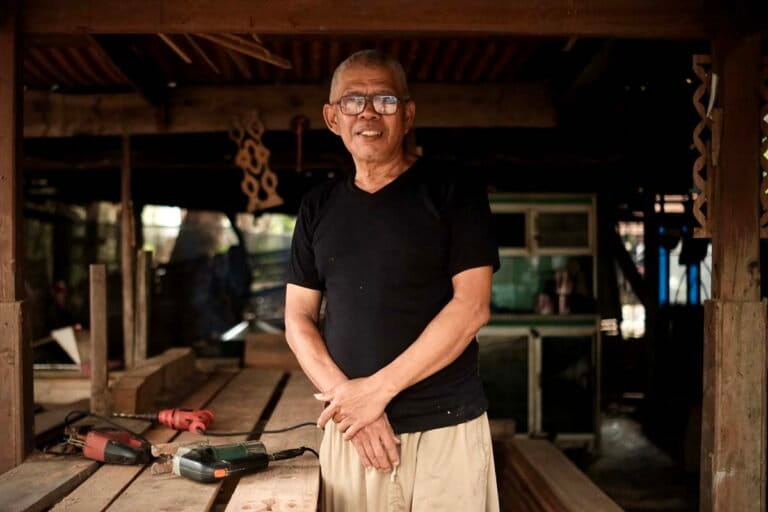
Furthermore, legal restrictions intended to combat illegal logging have created a paradox for the artisans. While the laws are necessary to protect the remaining conservation forests, they often criminalize traditional woodworkers who lack the bureaucratic means to certify the origin of their timber. This has led to a decline in the production of boats and furniture, as the artisans consolidate their limited resources into the more profitable knock-down house market.
Economic and Cultural Implications
The potential loss of the Penesak woodworking tradition carries heavy implications. Economically, it represents the death of a specialized cottage industry that sustains thousands of families in Ogan Ilir. Culturally, it signifies the disappearance of intangible heritage. When a maestro dies without a successor—or without the wood necessary to train a successor—centuries of technical knowledge regarding wood behavior, natural preservatives, and joinery are lost forever.
Helmi Nawawi, a 60-year-old community leader in Fajar Bulan, argues that the disappearance of the craft is a direct result of environmental mismanagement. "The forest is gone, and with it, the soul of our people," he says. He notes that the current generation is increasingly looking for work in urban centers or in the plantation sector, as the uncertainty of timber supplies makes woodworking a precarious profession.
The Path Forward: Sustainability and Conservation
To prevent the total collapse of this heritage, community leaders and experts are calling for a radical shift in how local forests are managed. Helmi Nawawi suggests the establishment of "Hutan Rakyat" (Community Forests) specifically dedicated to the cultivation of timber species used in Penesak craftsmanship.
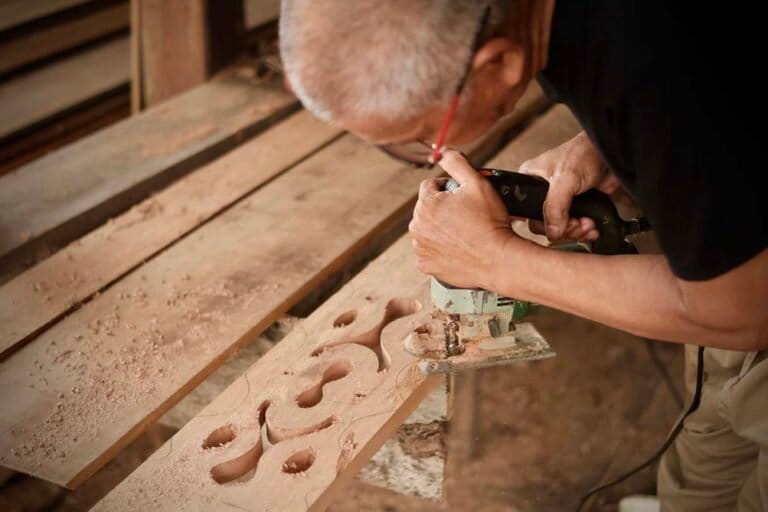
"This is a long-term investment," Helmi explains. "We won’t see the harvest for decades, but it is the only way to ensure that the next generation has the materials they need. We need a sustainable cycle where we plant today for the maestros of tomorrow."
Such an initiative would require government support in the form of land allocation, seedling provision, and legal frameworks that distinguish between industrial logging and traditional artisanal harvesting. There is also a call for the "Rumah Knock-Down" industry to be recognized as a Geographical Indication (GI) product, which would provide legal protection and better market positioning for the authentic work of Ogan Ilir.
The story of the Penesak woodworkers is a microcosm of a global struggle: the tension between traditional wisdom and the depletion of natural resources. As the sun sets over the workshops of Tanjung Batu Seberang, the rhythmic sound of chisels hitting wood continues for now. However, without a concerted effort to restore the forests and protect the artisans, the "Maestros of the Marshlands" may soon become nothing more than a legend, much like Usang Sungging himself.