Azin Asro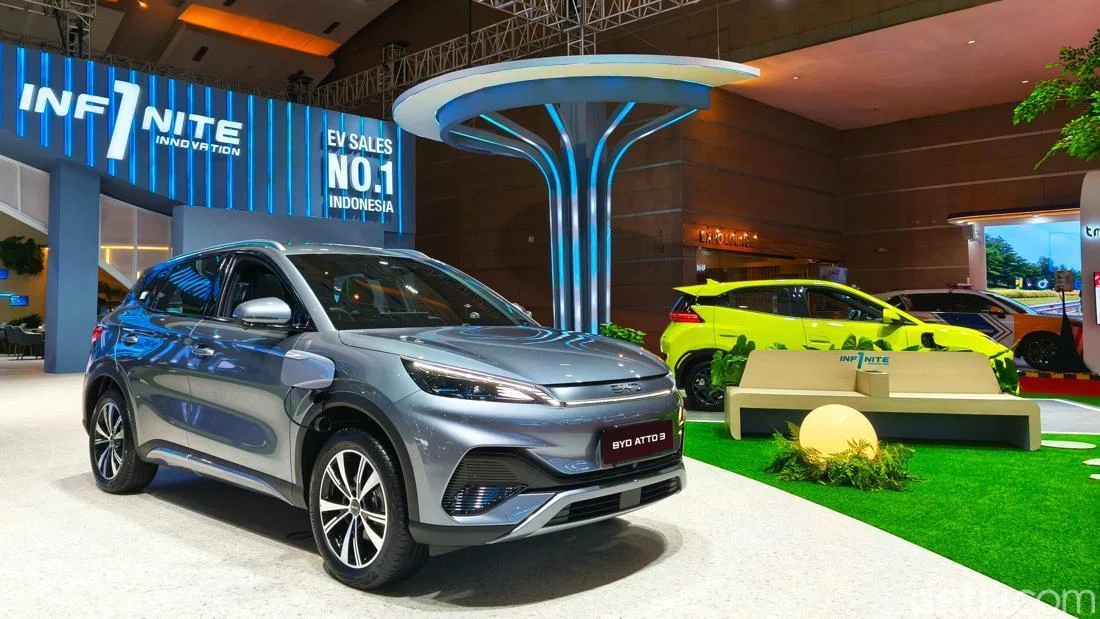
The Indonesian government has announced a strategic shift in its fiscal policy regarding the electric vehicle (EV) sector, introducing a tiered incentive structure that prioritizes vehicles equipped with nickel-based battery technology. This move is designed to synchronize the nation’s burgeoning EV market with its ambitious industrial "hilirisasi" or downstreaming agenda, leveraging Indonesia’s status as the holder of the world’s largest nickel reserves. Finance Minister Purbaya recently clarified that these upcoming incentives will be specifically targeted at Battery Electric Vehicles (BEVs), while excluding hybrid models from the new framework. This policy adjustment marks a significant evolution in the state’s approach to energy transition, moving from a general support system to one that actively promotes the domestic mineral supply chain.
At the heart of this new initiative is the Value Added Tax (PPN) borne by the government, a fiscal instrument that has already played a crucial role in stimulating initial EV adoption. However, the government is now refining this mechanism to be more surgical in its application. According to the Ministry of Finance, the administration is currently conducting a comprehensive "scanning" or audit of various incentive models to determine which structure will yield the highest economic multiplier effect for the domestic economy. The primary differentiator in the forthcoming regulations will be the chemical composition of the vehicle’s battery, specifically distinguishing between nickel-manganese-cobalt (NMC) variants and non-nickel alternatives such as Lithium Iron Phosphate (LFP).
The Strategic Imperative of Nickel-Based Incentives
The decision to provide larger subsidies for nickel-based EVs is a direct extension of Indonesia’s long-term economic strategy to move away from being a mere exporter of raw materials to becoming a global hub for high-tech manufacturing. Indonesia currently possesses approximately 21 million metric tons of proven nickel reserves, accounting for nearly 22% of the global total. By tethering consumer incentives to nickel technology, the government aims to ensure a guaranteed domestic market for the battery factories currently being constructed across the archipelago, such as those in the Morowali Industrial Park and the integrated battery plants in North Kalimantan.
Minister Purbaya emphasized that the rationale behind the preferential treatment for nickel is purely strategic. The government seeks to maximize the domestic value-added (TKDN) component of every vehicle sold in the country. If the batteries—which typically account for 40% to 50% of an EV’s total production cost—are made using Indonesian nickel, the economic benefit remains within the country. "The reason I am pushing for larger subsidies for nickel-based vehicles is to ensure our own battery resources are utilized," Purbaya stated. This protectionist yet proactive stance is intended to de-risk the massive investments made by international consortiums in Indonesia’s smelting and precursor industries.
Comparative Analysis of Battery Technologies
To understand the implications of this policy, it is essential to examine the two dominant battery chemistries currently competing in the global market. Nickel-based batteries, particularly NMC (Nickel Manganese Cobalt), are known for their high energy density, allowing for longer driving ranges and better performance in varied climates. Because they require significant amounts of high-grade nickel, they align perfectly with Indonesia’s resource profile.
Conversely, Lithium Iron Phosphate (LFP) batteries have gained significant traction recently due to their lower production costs, longer cycle life, and enhanced thermal stability. LFP batteries do not require nickel or cobalt, instead relying on more abundant and cheaper materials. While LFP technology has become a favorite for entry-level and mass-market EVs—led largely by Chinese manufacturers—the Indonesian government views the rise of LFP as a potential challenge to its "nickel-centric" industrial roadmap. By providing a larger subsidy for nickel-based vehicles, the government is effectively narrowing the price gap between the typically more expensive NMC vehicles and the cheaper LFP alternatives, thereby steering consumer demand toward the technology that utilizes Indonesian minerals.
Industry Response: The Case of BYD and LFP Adopters
The announcement has drawn a measured response from major industry players, most notably BYD (Build Your Dreams), the world’s leading EV manufacturer by volume. BYD has built much of its global success on its proprietary "Blade Battery," which utilizes LFP technology. As BYD ramps up its presence in the Indonesian market, the prospect of a subsidy disadvantage presents a new dynamic for the company’s regional strategy.
Luther Panjaitan, Head of PR & Government Relations at PT BYD Motor Indonesia, addressed the proposed policy by highlighting the shared goals of all EV technologies. While acknowledging that official regulations are still pending, Panjaitan expressed confidence that the government’s ultimate intention is to accelerate the energy transition and reduce the nation’s heavy reliance on fossil fuel subsidies. He noted that both nickel-based and LFP technologies contribute to the overarching goal of reducing carbon emissions and enhancing energy security.
"I cannot provide a formal response until official regulations are released," Panjaitan stated in mid-May 2026. "However, I believe the government’s intent is to support the energy transition as quickly as possible. In a time of complex geopolitical uncertainty, reducing dependence on traditional fuel ecosystems is vital. Whether the technology is nickel-based or LFP, both serve the same noble purpose of supporting the government’s green initiatives." He further noted that while incentives serve as a "booster" for sales, BYD’s long-term strategy is focused on product quality and supporting the broader transition to sustainable mobility.
A Chronology of Indonesia’s EV Policy Evolution
The shift toward nickel-specific incentives is the latest step in a decade-long effort to transform Indonesia’s automotive landscape. To provide context, a brief chronology of key policy milestones is essential:
- 2014-2019: The government begins exploring the potential for an EV ecosystem, focusing initially on luxury tax exemptions for low-emission vehicles.
- 2020: Indonesia implements a total ban on the export of raw nickel ore. This controversial move, which faced challenges at the World Trade Organization (WTO), was designed to force foreign mining companies to build refineries and smelters on Indonesian soil.
- 2021: The establishment of the Indonesia Battery Corporation (IBC), a state-owned enterprise formed by four major state firms (PLN, Pertamina, MIND ID, and Antam), to manage the end-to-end battery supply chain.
- 2023: The government introduces a PPN discount (reducing the tax from 11% to 1%) for BEVs that meet a minimum local content requirement (TKDN) of 40%.
- 2024-2025: Massive investments from Hyundai and LG Energy Solution culminate in the opening of the first large-scale battery cell plant in Karawang, West Java.
- 2026 (Current): The Finance Ministry moves to further refine these incentives by distinguishing between battery chemistries to protect the domestic nickel industry against the global surge in LFP battery usage.
Supporting Data and Economic Implications
The stakes for this policy are high. According to data from the Ministry of Industry, Indonesia aims to produce 600,000 electric cars and 2.45 million electric motorcycles annually by 2030. Achieving this target requires not only consumer demand but also a robust manufacturing base. By favoring nickel, the government is supporting the $15 billion in investments already committed to the battery supply chain.
From a fiscal perspective, the government is balancing the cost of these subsidies against the savings generated by reduced fuel imports. Indonesia currently spends billions of dollars annually on fuel subsidies to keep domestic prices stable. A successful transition to EVs—powered by domestic electricity generated increasingly from renewable sources—could significantly improve the nation’s current account balance. Furthermore, the development of a nickel-based battery industry is expected to create over 150,000 high-skilled jobs in the manufacturing and processing sectors by 2035.
However, analysts warn that the policy must be implemented carefully. If the subsidy gap between nickel and non-nickel vehicles is too wide, it could inadvertently slow down the overall adoption of EVs by making the most affordable models (which often use LFP) less competitive. The challenge for the Ministry of Industry and the Ministry of Finance will be to find a "sweet spot" that encourages nickel usage without stifling market diversity or penalizing manufacturers who have already invested in LFP-based platforms.
Geopolitical and Environmental Context
The focus on nickel also carries significant geopolitical weight. As the West seeks to "de-risk" its supply chains from Chinese dominance, Indonesia is positioning itself as an alternative partner for the global EV industry. However, much of the nickel processing in Indonesia is currently funded by Chinese investment, creating a complex web of international relations. The government’s insistence on domestic value-added processes is a way to maintain sovereignty over its natural resources while participating in the global green economy.
Environmentally, the move toward nickel-based batteries presents both opportunities and challenges. While EVs reduce tailpipe emissions, the mining and smelting of nickel are energy-intensive processes that have historically relied on coal-fired power plants. To truly realize the "green" potential of this policy, the Indonesian government is simultaneously working on the "Green Industry" initiative, which aims to integrate renewable energy into the industrial parks where nickel is processed.
Future Outlook and Conclusion
As the Ministry of Industry prepares to finalize the technical details of these differentiated incentives, the automotive sector remains in a state of watchful anticipation. The upcoming regulations will likely set the tone for the next decade of Indonesia’s industrial development. By aligning fiscal policy with mineral resources, Indonesia is attempting a bold economic experiment: to dictate the technological direction of a global industry based on its domestic geological wealth.
The success of this policy will depend on several factors: the pace at which domestic battery plants can reach economies of scale, the willingness of global automakers to adapt their platforms to nickel-based chemistries for the Indonesian market, and the government’s ability to maintain a stable and transparent regulatory environment. If successful, Indonesia will not only become a leading consumer of electric vehicles but also an indispensable pillar of the global EV supply chain, transforming its "nickel dream" into a tangible economic reality. For now, the message from Jakarta is clear: the future of Indonesian mobility is electric, and that electricity will be stored in batteries made of Indonesian nickel.