Nila Kartika Wati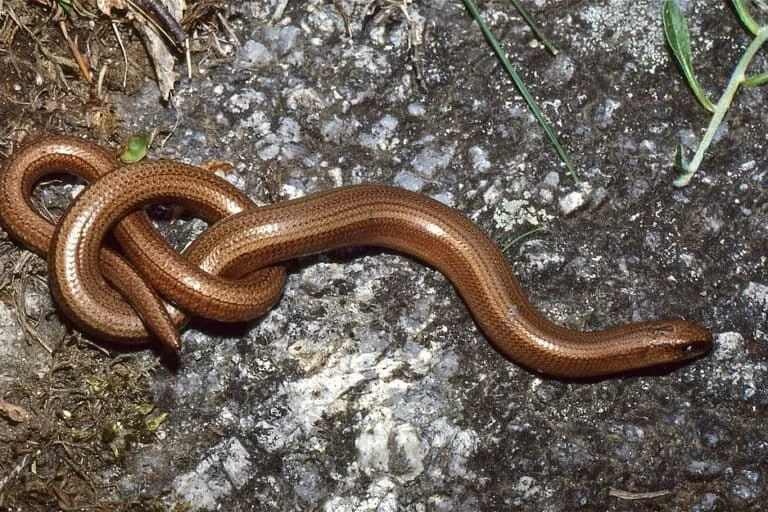
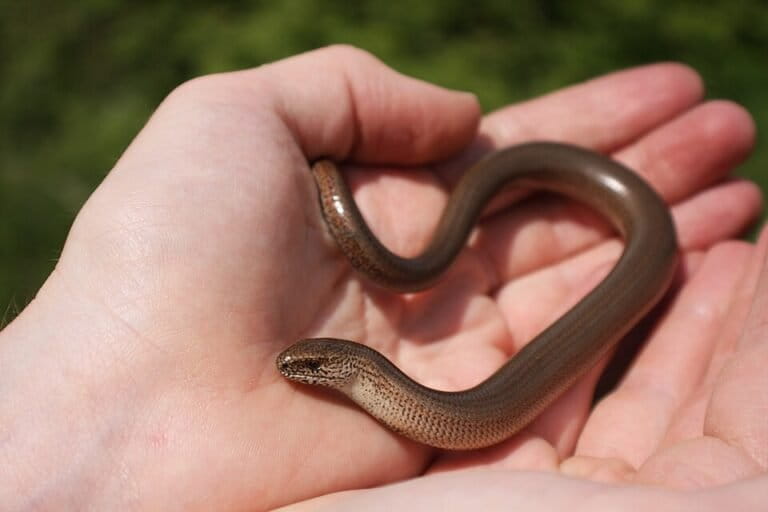
The slow worm, scientifically known as Anguis fragilis, represents one of nature’s most intriguing examples of convergent evolution, frequently falling victim to cases of mistaken identity due to its deceptive, snake-like morphology. Despite its elongated, legless body, the slow worm is a true lizard belonging to the family Anguidae, a group that includes various species of glass lizards and alligator lizards. This reptile, characterized by its smooth, cylindrical body and metallic sheen ranging from copper-brown to silver-gray, serves as a vital component of Eurasian ecosystems. While the casual observer might recoil at the sight of what appears to be a small serpent, a closer examination reveals a sophisticated creature with anatomical features and behaviors that distinguish it sharply from the world of snakes.
The Anatomical Divide: Distinguishing Lizard from Serpent
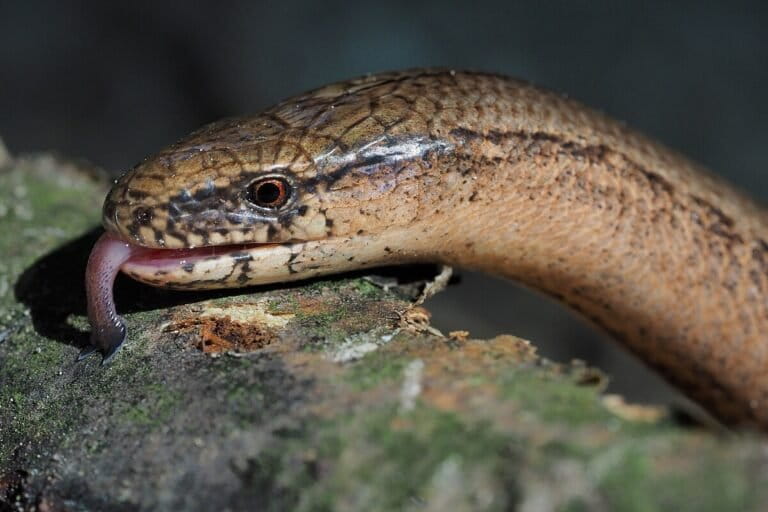
The most definitive characteristic separating the slow worm from any snake species is the presence of moveable eyelids. While snakes possess a fixed, transparent scale known as a brille or "spectacle" that covers the eye permanently, slow worms can blink and close their eyes during sleep. This seemingly minor anatomical detail is a hallmark of their lizard ancestry. Furthermore, the slow worm possesses visible ear openings, though they are often small and partially concealed by scales, a feature entirely absent in snakes, which rely on vibrations felt through the jawbone to perceive sound.
The internal structure of the slow worm further confirms its taxonomic classification. Beneath its smooth, overlapping scales lie osteoderms—tiny bony plates that provide a rigid yet flexible armor. This makes the slow worm feel much firmer to the touch than a snake of similar size. Their tongue, while notched or slightly forked, is broader and flatter than the thin, deeply bifurcated tongues of snakes. These physiological markers are not merely curiosities; they represent millions of years of divergent evolution, where the slow worm’s ancestors independently lost their limbs to better navigate dense vegetation and subterranean environments.
Chronology of the Slow Worm Life Cycle: From Hibernation to Maturity
The annual activity of the slow worm is dictated by the fluctuations of the temperate climates it inhabits. Its lifecycle follows a strict seasonal chronology that ensures survival through harsh winters and maximizes reproductive success during the warmer months.
From October through March, slow worms enter a state of brumation, a reptilian form of hibernation. They seek refuge in frost-free subterranean chambers, often utilizing abandoned rodent burrows, deep crevices in rock piles, or the insulating warmth of compost heaps. It is common for individuals to hibernate communally, sometimes in groups of up to 30 or more, to conserve moisture and perhaps provide a slight buffer against temperature drops.
As the ground thaws in late March and early April, the emergence phase begins. This period is critical for thermoregulation and the restoration of energy reserves. Males are typically the first to emerge, spending the early spring weeks optimizing their body temperature to kickstart sperm production. By May, the mating season reaches its peak. During this time, male slow worms exhibit uncharacteristic aggression, engaging in physical bouts to establish dominance and secure access to females. These encounters involve biting and wrestling, with the larger, more robust males usually prevailing.
The gestation period occupies the summer months. Female slow worms are ovoviviparous, meaning they retain their eggs inside their bodies until the embryos are fully developed. This allows the mother to actively regulate the temperature of the developing young by moving between warmer and cooler micro-habitats—a crucial advantage in the unpredictable climates of Northern Europe and Eurasia. In late August or September, the female gives birth to between six and twelve live young. These neonates, measuring approximately four centimeters in length, are born encased in a thin placental membrane that they rupture almost immediately, emerging as miniature, golden-hued versions of their parents, fully equipped for independent survival.
Thigmothermy and the Science of Heat Absorption
Unlike many reptiles that are "heliothermic"—meaning they bask directly in the sun to gain heat—the slow worm is primarily a "thigmothermic" regulator. This strategy involves obtaining heat through conduction by pressing its body against warm surfaces. In garden and woodland settings, this behavior explains why slow worms are frequently found beneath artificial objects such as discarded sheets of corrugated metal, rubber mats, or flat stones. These objects act as thermal batteries, absorbing solar radiation and transferring it to the lizard resting beneath them.
A landmark study by herpetologist R. Meek (2005) on the thermal biology of Anguis fragilis utilized null models to demonstrate that these lizards are not passive victims of their environment. Instead, they are active thermoregulators that consistently select specific micro-habitats to maintain a preferred body temperature range. This cryptic basking method offers a significant survival advantage: it allows the slow worm to reach optimal metabolic temperatures while remaining hidden from aerial predators like kestrels and buzzards.
Survival Tactics: Autotomy and Longevity
The slow worm’s name is a double misnomer; it is neither slow when threatened nor is it a worm. When confronted by a predator—which may include domestic cats, adders, hedgehogs, or various bird species—the slow worm employs a dramatic defense mechanism known as caudal autotomy. The lizard can voluntarily shed its tail at predetermined fracture planes within the vertebrae. The detached tail continues to wriggle violently for several minutes, creating a sensory distraction that allows the slow worm to slip away into the undergrowth.
While this saves the lizard’s life, it comes at a high physiological cost. Unlike many other lizard species that can regenerate a near-perfect replica of their original tail, the slow worm’s regenerated tail is typically a short, blunt stump that lacks the elegance and full mobility of the original. Furthermore, the energy required for this regeneration is significant, often impacting the individual’s growth rate or reproductive output for the following season.
Despite these risks, slow worms are among the longest-lived lizards in the world. In the wild, they frequently reach ages of 20 to 30 years. In protected, captive environments, their longevity is even more startling; one famous specimen at the Copenhagen Zoo lived for 54 years, eventually passing away in 1946. This slow-paced life history underscores the importance of stable habitats for the species’ long-term persistence.
Ecological Impact: The Gardener’s Silent Ally
From an agricultural and horticultural perspective, the slow worm is an invaluable asset. They are specialized predators of "soft-bodied" invertebrates. Their diet consists largely of slugs and snails, which they are able to consume thanks to small, backward-curving teeth that provide a secure grip on slippery prey. They also consume earthworms, spiders, and insect larvae.
By acting as a natural pest control agent, slow worms help maintain the balance of garden ecosystems. Their presence reduces the need for chemical molluscicides, which can have detrimental "knock-on" effects on the broader food chain. Conservationists often point to the slow worm as a flagship species for "wilder" gardening, encouraging homeowners to leave piles of logs or maintain compost heaps to provide the humid, prey-rich environments these lizards require.
Conservation Status and Human Implications
While the slow worm is currently listed as a species of "Least Concern" on the IUCN Red List due to its wide distribution across Europe and parts of Asia, local populations are facing severe pressures. In the United Kingdom, for instance, the slow worm is protected under the Wildlife and Countryside Act 1981, making it illegal to intentionally kill, injure, or sell the animals.
The primary threats to the species are anthropogenic. Habitat fragmentation caused by urban sprawl and intensive agriculture isolates populations, leading to reduced genetic diversity. Furthermore, the widespread use of pesticides in commercial farming and domestic gardens eliminates their primary food sources and can lead to secondary poisoning. Domestic cats also pose a significant threat; as "suburban predators," they frequently kill slow worms, which lack the speed to escape a feline’s agility.
Environmental analysts suggest that the slow worm serves as a "bio-indicator" for the health of local ecosystems. A garden or park that supports a healthy population of slow worms is likely to have high soil quality, a diverse invertebrate population, and sufficient cover, indicating a robust local environment.
Expert Analysis and Future Outlook
Herpetologists emphasize that public education is the most critical tool for slow worm conservation. "The greatest threat to these animals is often simple ignorance," notes one conservation officer. "People see a legless reptile and their first instinct is fear, often leading to the unnecessary killing of a harmless, beneficial creature."
As climate change shifts seasonal patterns, researchers are also monitoring how warmer winters might affect the brumation cycles of Anguis fragilis. Shorter, warmer winters may lead to premature emergence when food sources are not yet available, potentially depleting the lizards’ fat reserves and lowering reproductive success.
In conclusion, the slow worm is far more than a mere curiosity of the reptile world. It is a testament to evolutionary flexibility, a master of cryptic survival, and a vital partner in maintaining ecological health. Protecting this legless lizard requires more than just legal frameworks; it requires a shift in public perception—recognizing that the "snake" in the grass is actually a long-lived, blinking lizard that plays a crucial role in the biodiversity of our backyards and woodlands. By preserving the quiet corners of our landscapes—the overgrown verges, the rock piles, and the compost heaps—we ensure that the slow worm continues its ancient, legless journey through the modern world.