Nila Kartika Wati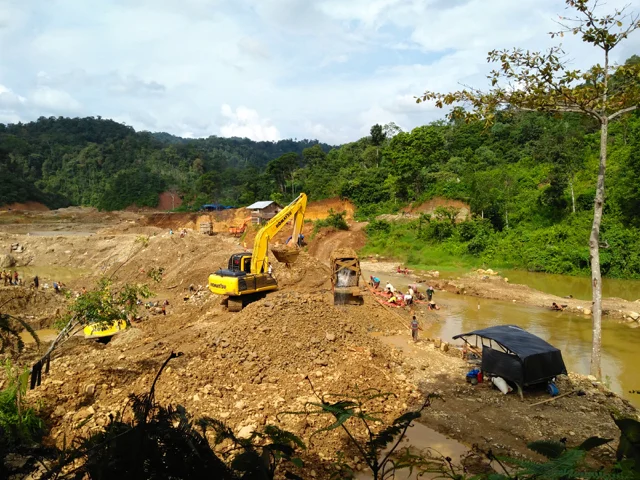
The persistent surge of illegal gold mining activities, locally known as Pertambangan Emas Tanpa Izin (PETI), in West Sumatra has reached a critical juncture, characterized by a rising death toll and systemic environmental degradation that law enforcement agencies have failed to contain. Despite years of sporadic crackdowns, these illicit operations have not only persisted but expanded, transforming once-protected landscapes into hazardous industrial zones. The most recent tragedy in Sijunjung Regency, which claimed the lives of nine miners in a massive landslide, serves as a grim reminder of the human cost associated with a sector that critics argue is being allowed to operate with near-impunity.
According to data compiled by the West Sumatra branch of the Indonesian Forum for the Environment (Walhi), the human cost of illegal mining in the province is staggering. Since 2012, at least 48 individuals have been confirmed dead in various PETI-related incidents across the region. This figure includes the nine victims of the May 2026 Sijunjung disaster and a catastrophic event in September 2024 in Nagari Sungai Abu, Solok Regency, which resulted in 15 fatalities. Tomi Adam, the Executive Director of Walhi West Sumatra, emphasizes that these figures likely represent only a fraction of the actual casualties, as many incidents in remote areas go unreported or are suppressed by those managing the sites.
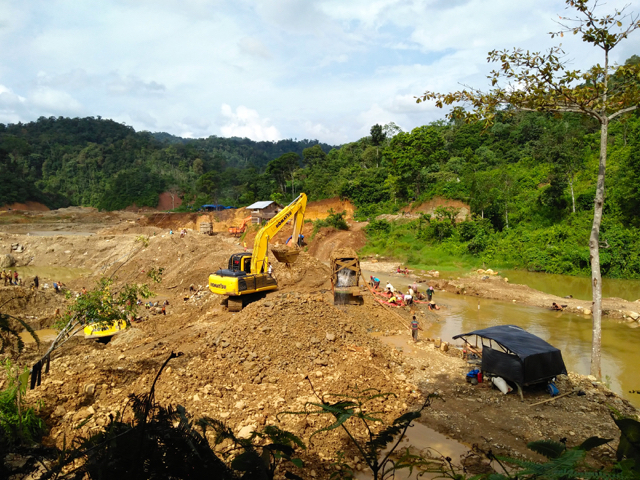
The persistence of these operations is increasingly blatant. Unlike traditional, small-scale artisanal mining of the past, contemporary PETI operations in West Sumatra utilize heavy machinery, including excavators and industrial-grade pumps. These activities are conducted openly, often within protected forest areas or along critical river basins. The ecological fallout is extensive, with significant damage reported in the Batang Hari, Batahan, Pasaman, Indragiri, and Kampar watersheds. These rivers, once vital lifelines for local agriculture and consumption, are now plagued by heavy sedimentation and chemical contamination, primarily from the use of mercury in the gold extraction process.
A Chronology of State Failure and Legal Impotence
The recurring nature of these mining disasters has led legal experts and environmental advocates to categorize the situation as a systemic failure of the state. The Padang Legal Aid Institute (LBH Padang) asserts that the government has failed in its constitutional mandate to protect the safety of its citizens and the integrity of the environment. Adrizal, Head of the Advocacy Division at LBH Padang, notes that law enforcement efforts have historically been superficial, targeting only the low-level laborers at the bottom of the hierarchy while the "intellectual actors"—the financiers and organizers—remain untouched.
This cycle of "catch and release" or targeting "field actors" creates a vacuum where illegal mining can resume almost immediately after a raid. LBH Padang points to a clear timeline of ignored warnings. On December 10, 2025, the institute sent formal notices to 12 high-ranking government and police officials, including the West Sumatra Regional Police (Polda Sumbar), demanding immediate and decisive action against the investors funding these operations. When these demands were met with inaction, the Advocacy Team for Ecological Justice in West Sumatra filed a Citizen Lawsuit (CLS) at the Padang Administrative Court (PTUN). The lawsuit targets a hierarchy of leadership, from the President of Indonesia and the National Police Chief to regional heads, holding them accountable for the ecological disasters that paralyzed parts of Sumatra in late 2025.
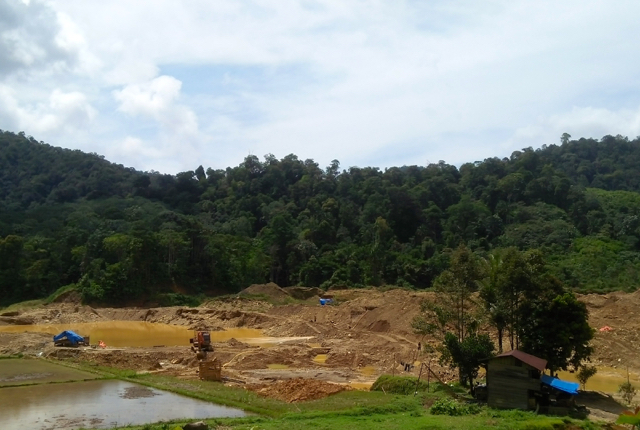
The legal challenge argues that the unchecked operation of PETI is not merely a matter of administrative oversight but a "spatial crime." Spatial analysis conducted by LBH Padang reveals alarming anomalies in land use. In Sijunjung alone, between 2020 and 2023, the regency lost 14,500 hectares of forest. Crucially, over 70% of this destruction occurred within a 100-meter corridor of riverbanks, indicating that mining activities are systematically gutting the region’s water arteries. Furthermore, mapping data shows that the sites of recent fatal landslides were officially designated as "plantation areas" in the provincial spatial plan (RTRW). In practice, however, these areas have been excavated into deep, unstable ravines with slopes reaching dangerous angles of over 16 degrees, directly contradicting their legal status as green agrarian spaces.
The Myth of Economic Necessity and the Reality of Organized Crime
A common defense for the persistence of illegal mining is the economic survival of local communities. However, experts like Dyah Paramita from the Center for Regulation, Policy, and Governance (CRPG) challenge this narrative. Research into PETI sites often reveals that the majority of workers are not local residents but migrants brought in by organized syndicates. The operations are highly structured, involving a sophisticated supply chain for equipment, fuel, and the distribution of processed gold.
"The argument that this is a ‘people’s economy’ is often a smokescreen for organized crime," Paramita explains. She notes that the lack of an integrated and comprehensive management strategy is the primary reason why enforcement fails to create a deterrent effect. When authorities conduct raids, they often focus on seizing equipment or arresting laborers. Without monitoring the supply lines—who provides the excavators, who provides the protection, and who buys the gold—the networks remain intact. The high profitability of illegal gold ensures that as soon as the police leave, the machinery is replaced, and the digging continues.
This lack of deterrence is compounded by the "leaking" of information regarding upcoming raids, a phenomenon widely suspected by environmental groups. The sheer scale of the machinery used—visible from satellite imagery and often accessible only by major roads—makes it nearly impossible for these operations to exist without the knowledge, or tacit approval, of local authorities.

Broader Implications: From Environmental Ruin to Social Conflict
The consequences of PETI extend far beyond the immediate mining pits. The destruction of upstream forests and the destabilization of riverbanks have drastically reduced the environment’s capacity to mitigate natural disasters. The massive floods and landslides that struck West Sumatra and North Sumatra in late 2025 were exacerbated by the "extractivist" damage in the highlands. When the rains came, the absence of forest cover led to catastrophic runoff, carrying logs and debris into downstream communities, destroying infrastructure and livelihoods.
Imam Sofwan, Head of the Mining Advocacy Network (Jatam), views the West Sumatra crisis as a microcosm of a national emergency. From Sangihe in North Sulawesi to Beutong Ateuh in Aceh, the Indonesian archipelago is riddled with illegal mining hubs that operate as "states within a state." Jatam argues that the legalization of "People’s Mining" (IPR) is not a panacea. Without radical reform in the corrupt mentalities of officials and a genuine commitment to dismantling the financial networks of "cukong" (shadow financiers), legalization would likely only serve to provide a veneer of legitimacy to destructive practices.
Furthermore, the presence of these illegal hubs creates fertile ground for social conflict. As water sources become polluted and agricultural land is swallowed by mining pits, friction between mining interests and local farmers intensifies. In many cases, the "protection" provided by certain factions within the security apparatus further marginalizes the local populace, leading to a breakdown in social cohesion and trust in government institutions.
Seeking a Sustainable Exit Strategy
While the outlook remains grim, some local voices are calling for a fundamental shift in the regional economic model. Zuhrizul, a prominent West Sumatra tourism activist, suggests that the only way to permanently curb PETI is to offer a more lucrative and sustainable alternative: eco-tourism and conservation. He points to the Silokek Geopark project as a potential blueprint.
A Geopark model rests on three pillars: nature conservation, education, and the enhancement of the local economy. By transforming Sijunjung’s unique geological landscape into a protected tourist destination, the region could generate revenue without destroying its natural assets. "The tragedy of the landslides and the persistent turbidity of our rivers should be a wake-up call," Zuhrizul says. "We are choosing between short-term gold and the long-term survival of our land. If the water in Silokek remains muddy because of upstream mining, we lose our future in tourism and agriculture alike."
However, transitioning to such a model requires more than just local initiative; it requires the state to reassert its authority. Advocates argue that the government must first clean its own house by investigating the alleged "backing" of PETI by rogue officials. Only then can a transition to a "green economy" be taken seriously by the investors and communities currently entangled in the illegal gold trade.
The crisis in West Sumatra is a test of Indonesia’s commitment to its environmental laws and its "Golden Indonesia 2045" vision. As long as the "intellectual actors" of illegal mining remain shielded from the law, the hills of Sijunjung and Solok will continue to be sites of both ecological ruin and human tragedy. The ongoing Citizen Lawsuit may provide the necessary legal pressure to force a change, but for the families of the 48 victims, the intervention comes far too late. The challenge now is to ensure that no more lives are buried in the pursuit of illicit gold, and that the rivers of West Sumatra are allowed to run clear once again.