Nila Kartika Wati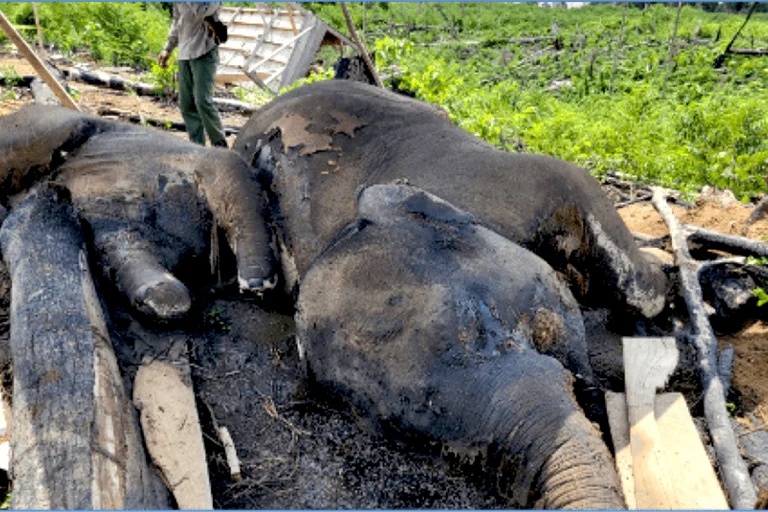
The discovery of several Sumatran elephant and tiger carcasses in the Seblat Landscape of Bengkulu Province has ignited a firestorm of criticism regarding the efficacy of current conservation measures. Despite its official designation as an Essential Ecosystem Area (KEE) and a critical migratory corridor, the region continues to be a site of recurring wildlife fatalities, highlighting a deepening crisis of habitat fragmentation and human-wildlife conflict. Conservationists and environmental coalitions are now demanding a significant overhaul of the area’s legal status, arguing that the current protections are insufficient to prevent the extinction of these critically endangered species.
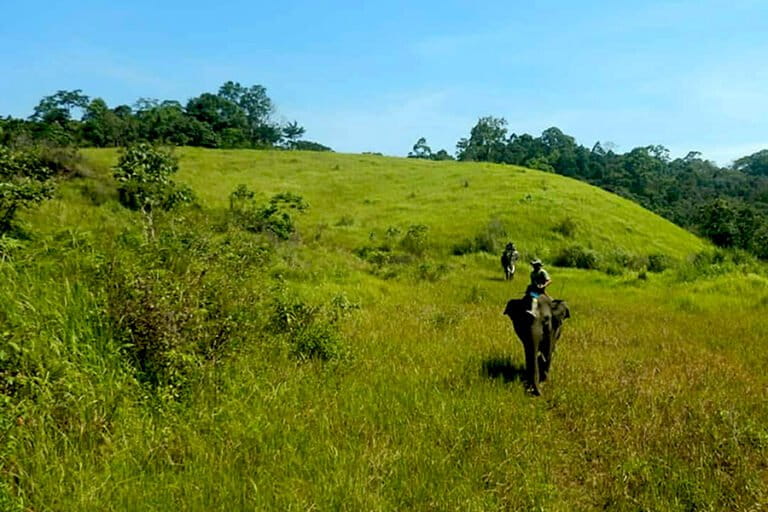
The Seblat Landscape, which spans the regencies of North Bengkulu and Mukomuko, was officially recognized as a Sumatran Elephant (Elephas maximus sumatranus) Essential Ecosystem Area in late 2017. The designation was intended to secure a "life path" for the elephants, connecting fragmented habitats and ensuring the survival of other flagship species, including the Sumatran tiger (Panthera tigris sumatrae). However, the reality on the ground has proven to be far more perilous. Reports from the Save Seblat Landscape Coalition indicate that since the KEE’s inauguration, at least seven elephants and one tiger have been found dead, though experts believe the actual numbers are likely much higher due to the difficulties of monitoring such dense and remote terrain.
A Chronology of Recent Fatalities and Discoveries
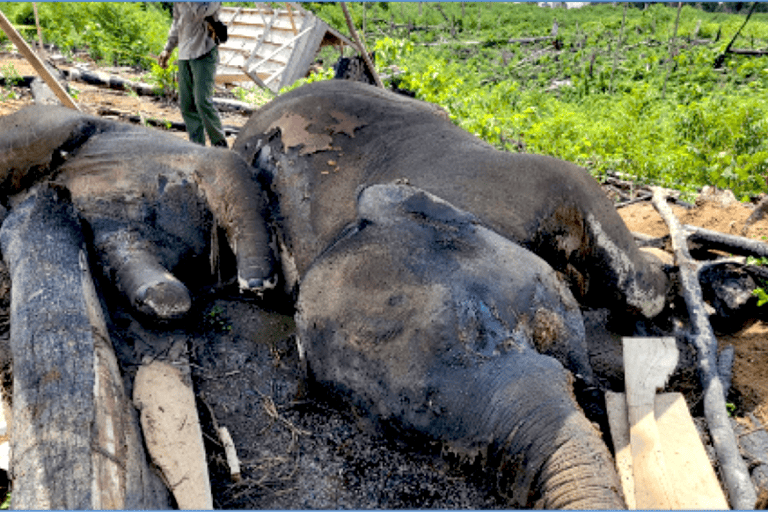
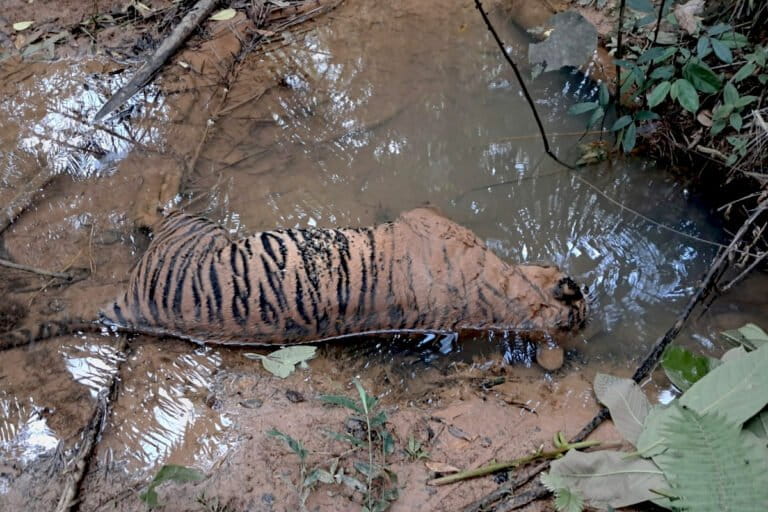
The most recent tragedy came to light on April 30, 2026, when local reports confirmed the deaths of a female Sumatran elephant and her calf, alongside a two-year-old male Sumatran tiger. The tiger’s body was discovered in a small stream within the SP 4 area of Bukit Makmur Village, Penarik District, Mukomuko—a region characterized as a former transmigration settlement. Meanwhile, the elephant carcasses were located within the Air Teramang Production Forest, an area theoretically under state management but heavily impacted by human activity.
Initial forensic assessments by local experts suggested a grim timeline. The tiger was estimated to have been dead for five to six days prior to discovery, while the elephants were in advanced stages of decomposition, suggesting they had died eight to ten days earlier. Iswadi, the Chairman of Lingkar Inisiatif Indonesia, noted that while only one tiger carcass was physically recovered, there are strong indications that at least five other tigers may have perished in recent months due to snares set by poachers or retaliatory killings.
The circumstances surrounding the deaths point toward a systemic failure in managing the interface between wildlife habitats and human settlements. In the weeks leading up to the tiger’s death, sightings of the animal were frequently reported near Bukit Makmur Village. Tensions escalated when a resident’s cow was reportedly preyed upon by the tiger in late April. Shortly thereafter, the tiger was found dead. "Based on the chronology and the lack of external trauma, our working assumption is that the tiger was poisoned," Iswadi stated. This pattern of "retaliatory poisoning" is a common, albeit illegal, response to livestock depredation in regions where forest boundaries are poorly defined.
Investigating the Cause: The Poisoning Hypothesis
The death of the elephants follows a similarly suspicious pattern. Syamsuardi, Chairman of the Network for Forests and Wildlife (PJHS), explained that elephants often fall victim to toxins when they wander into community gardens or plantations located within their traditional migratory routes. According to Syamsuardi, elephants typically succumb to poison within a short distance of the ingestion site. "Experience shows that an elephant will rarely travel more than 400 meters after consuming something toxic; they usually collapse within 100 to 200 meters of the source," he explained.
To determine the exact cause of death, experts have called for a thorough "back-tracking" investigation. This involves sweeping the area starting from the carcass and moving backward at least 500 meters along the elephant’s trail to identify exactly where the animal might have fed. Despite these calls, the results of official necropsies remain pending, leading to frustration among conservation groups who demand transparency from the Ministry of Forestry and the Natural Resources Conservation Agency (BKSDA).
Corporate Accountability and Regulatory Action
The crisis in Seblat is not merely a result of local conflict but is deeply tied to corporate land management. The Save Seblat Landscape Coalition—which includes organizations such as Kanopi Hijau Indonesia, Auriga Nusantara, Genesis Bengkulu, Lingkar Inisiatif Indonesia, and Save Gajah Seblat—identified that the recent deaths occurred within or near the concessions of two major companies: PT Bentara Arga Timber (BAT) and PT Anugerah Pratama Inspirasi (API).
In a decisive move following the reports, the Minister of Forestry, Raja Juli Antoni, announced on May 7, 2026, the revocation of the forest utilization permits for both PT BAT and PT API. The Minister emphasized that the deaths of flagship species on corporate-managed land represent a fundamental breach of environmental responsibility. Furthermore, the Minister directed the Directorate General of Law Enforcement (Gakkum) to launch a criminal investigation into whether the companies’ management practices contributed to the fatalities or if there was negligence in preventing illegal encroachment within their concessions.
This regulatory crackdown follows a series of enforcement actions known as "Operation Merah Putih," which took place between November 2025 and April 2026. During these operations, a government task force destroyed approximately 24,000 illegal oil palm trees—covering 240 hectares—and demolished 11 illegal structures within the Seblat Landscape. Twelve individuals were detained, and five suspects are currently facing legal proceedings.
The Encroachment Crisis: Oil Palm and the "Cukong" Factor
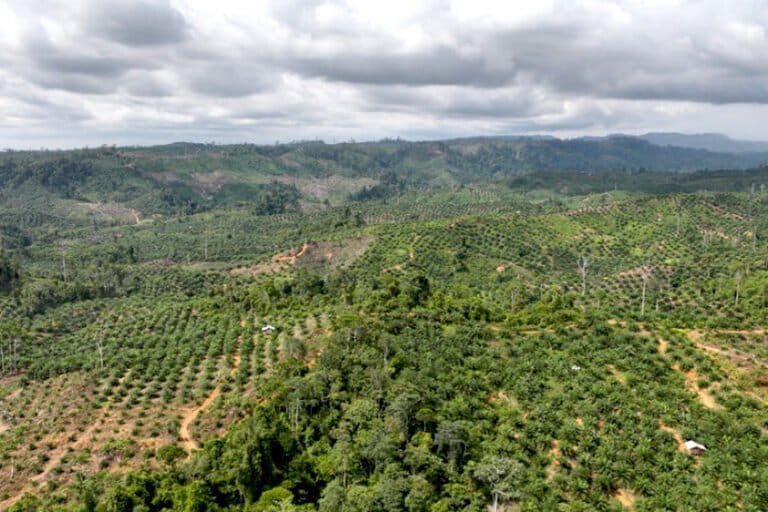
Despite these enforcement successes, environmentalists argue that the root cause of habitat loss remains unaddressed. Data from the Coalition reveals that out of the 112,000 hectares that comprise the Seblat Landscape, more than 30,000 hectares have been illegally converted into oil palm plantations. These plantations are often not the work of small-scale subsistence farmers but are funded by "cukongs"—wealthy illegal investors who bankroll the clearing of state forests for commercial gain.
Egi Saputra, Director of Genesis Bengkulu, pointed out that current enforcement efforts often target the laborers rather than the financiers. "Destroying a few hundred hectares of oil palm is a start, but as long as the major actors behind the encroachment remain free, the habitat will continue to be fragmented," Saputra warned. This fragmentation is lethal for elephants, which require vast, contiguous areas to forage. When their paths are blocked by oil palm, they are forced into closer contact with humans, leading to the very conflicts that result in their deaths.
The Ecological Significance of the Seblat Corridor
The Seblat Landscape is one of the last remaining strongholds for Sumatran biodiversity in the southern part of the island. It serves as a vital horizontal corridor connecting the Seblat Nature Tourism Park (TWA), which covers 7,732 hectares along the coast, to the core zone of the Kerinci Seblat National Park (TNKS) in the highlands. This connectivity is essential for genetic diversity, allowing elephant and tiger populations to move between different ecological zones.
Current estimates suggest that between 50 and 150 elephants reside within this landscape. The tiger population is equally significant; camera trap data from the BKSDA Bengkulu-Lampung between 2020 and 2025 identified at least 42 individual tigers using the Seblat-TNKS corridor. If this corridor is severed, these populations will become "islanded," leading to inbreeding and eventual local extinction.
From KEE to Wildlife Sanctuary: A Call for Status Upgrade
The recurring deaths have led to a consensus among experts that the "Essential Ecosystem Area" (KEE) status is legally "toothless" in the face of industrial and agricultural pressure. Because much of the Seblat Landscape is still classified as Production Forest (HP), it remains open to various forms of exploitation that are incompatible with the needs of large mammals.
Iding Achmad Haidir, Chairman of the Forum HarimauKita (FHK), stressed that the Seblat Landscape is the "home" of these animals, and they are being killed in their own living rooms. "This is a harsh reminder that the threats are real and immediate. We need a synergy between the government and the community that goes beyond mere status on paper," he said.
The Coalition is now advocating for the government to upgrade the Seblat Landscape to a Wildlife Sanctuary (Suaka Margasatwa). Unlike a KEE, a Wildlife Sanctuary provides much stricter legal protections, prohibits commercial extraction, and mandates active state-funded management and patrolling. "Upgrading the status would close the loopholes that corporations and illegal encroachers currently exploit," Iswadi argued.
However, Syamsuardi of PJHS cautioned that a change in status must be accompanied by social and economic solutions for local communities. "A status upgrade is a long-term legal fix, but if we don’t address the economic reality of the people living on the forest edge, we will only see increased resistance and more secret killings of wildlife," he noted. He suggested a model where communities are incentivized to protect the corridor, perhaps through eco-tourism or sustainable non-timber forest products, rather than seeing the forest as a competitor for land.
Conclusion: A Critical Juncture for Sumatra’s Giants
The Seblat Landscape stands at a crossroads. The recent deaths of a mother elephant, her calf, and a young tiger are not isolated incidents but symptoms of a landscape under siege. While the revocation of corporate licenses and the destruction of illegal plantations represent significant steps forward, the long-term survival of Sumatra’s flagship species depends on the permanent restoration of their habitat.
As the Ministry of Forestry and local authorities deliberate on the future of Seblat, the eyes of the international conservation community are on Bengkulu. The transition from a vulnerable "production" landscape to a strictly protected sanctuary may be the only way to ensure that the "life path" of the Sumatran elephant does not become a dead end. For the 50 to 150 elephants and 42 tigers that still roam these woods, the time for half-measures has passed; only a total commitment to habitat integrity will prevent the Seblat Landscape from becoming a graveyard for Indonesia’s most iconic wildlife.