Nila Kartika Wati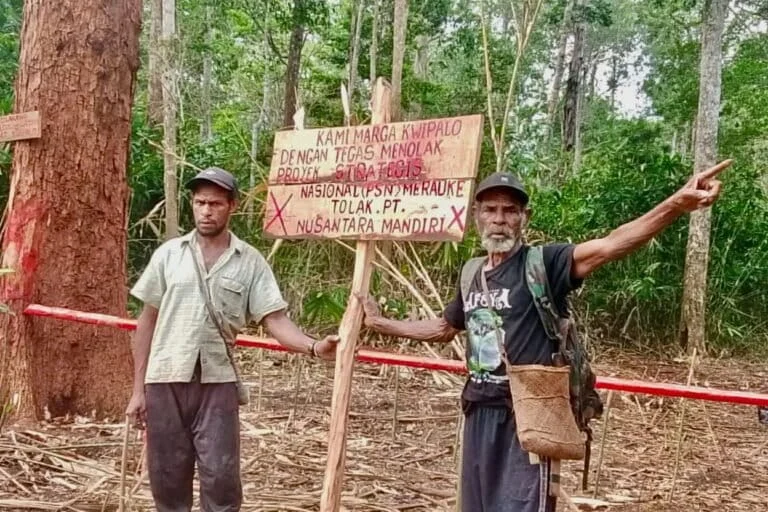
The documentary film Pesta Babi (Pig Feast) has emerged as a pivotal cultural and political touchstone in this discourse. Rather than merely documenting the grievances of indigenous communities or offering a surface-level critique of modernization, the film poses fundamental questions regarding how public policy is formulated, executed, and legitimized. It challenges the state’s approach to governance in regions where the local population bears the brunt of environmental and social transformation. For policy experts and stakeholders involved in natural resource management in Papua, the film serves as a mirror reflecting the systemic gaps in Indonesia’s current developmental framework.
The Socio-Ecological Context of the Merauke Food Estate
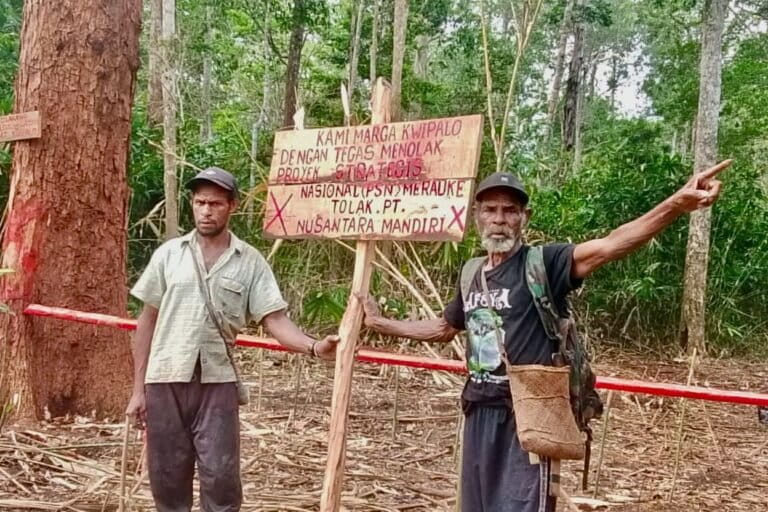
The push for a "Food Estate" in Merauke is not a new phenomenon, but its recent acceleration under the National Strategic Project (PSN) banner has intensified the debate. The Indonesian government views the vast landscapes of South Papua as the key to national food self-sufficiency. However, this vision often treats Papua as a tabula rasa—an empty land waiting to be utilized—ignoring the complex web of customary laws (hukum adat), social structures, and ecological interdependencies that define the region.
Papua’s landscape is a mosaic of primary forests, wetlands, and sago groves, all of which serve as the "supermarket" and "pharmacy" for the indigenous tribes, such as the Malind. The conversion of these lands into monoculture plantations for rice, sugarcane, or bioethanol represents a radical rupture. From a public policy perspective, a "good" policy is not defined solely by the grandeur of its goals but by the inclusivity and justice of its processes. When a policy is designed with a "one-size-fits-all" approach, it risks failing to account for the unique socio-ecological character of the Papuan borderlands.
Historical Timeline and the Evolution of Land Ambition in Merauke
The current crisis in Merauke is the result of a decades-long ambition to transform the region into an agricultural powerhouse. Understanding the current friction requires a look at the chronological development of these projects:
- 2010: The Indonesian government launches the Merauke Integrated Food and Energy Estate (MIFEE). The project initially targets 1.2 million hectares for food crops and palm oil, drawing immediate domestic and international criticism for its potential impact on indigenous rights.
- 2012: The Constitutional Court of Indonesia issues Decision No. 35/PUU-X/2012, which clarifies that "Customary Forests are not State Forests." This landmark ruling provides a legal basis for indigenous groups to claim their ancestral lands.
- 2015–2019: The food estate concept is revitalized under President Joko Widodo’s administration, focusing on rice and corn to reduce import dependency.
- 2020–2024: The project is integrated into the National Strategic Projects (PSN). Large-scale land clearing begins in South Papua, supported by various state-owned enterprises and private investors. Security forces are increasingly deployed to oversee the implementation, leading to reports of intimidation.
- 2025: The documentary Pesta Babi is released, and the National Commission on Human Rights (Komnas HAM) begins formal evaluations of the human rights situation at PSN sites in Merauke following widespread reports of forced displacement and environmental degradation.
Theoretical Failures in Policy Implementation
To understand why the Merauke projects face such stiff resistance, one must examine the mechanics of policy formulation. Using John W. Kingdon’s Multiple Streams Framework, policy experts note that a policy is born when three "streams"—problems, solutions, and political will—converge. National food security is currently framed as a critical "problem," and the Food Estate is presented as the "solution," backed by strong "political will."
However, this framework warns that when a solution is pushed too rapidly without adequate social mapping, the resulting policy may appear rational on paper but becomes fragile and volatile in practice. In Merauke, the "solution" was designed in Jakarta and transplanted to Papua without a deep understanding of the indigenous relationship with the forest.
Furthermore, the implementation theories of Daniel Mazmanian and Paul Sabatier suggest that the success of any policy depends on institutional capacity, inter-agency coordination, and, most importantly, social support. In the case of the Merauke Food Estate, the indicators of success have been narrowed down to hectares cleared and tons produced. The more vital indicator—public trust—has been largely ignored. When communities feel they are denied adequate information or are excluded from decision-making, the legitimacy of the state’s actions erodes.
Human Rights Concerns and the Komnas HAM Findings
The involvement of the National Commission on Human Rights (Komnas HAM) has brought international attention to the situation in South Papua. Recent reports from the commission highlight several alarming trends that suggest the PSN implementation is deviating from both national law and international human rights standards.
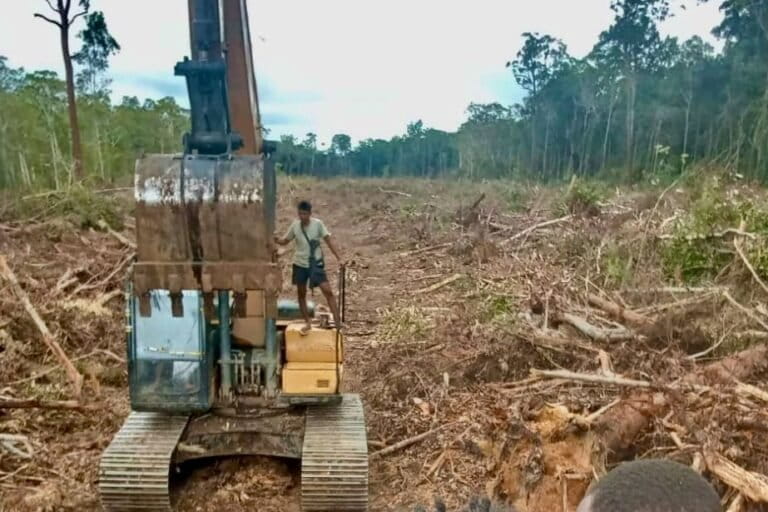
The primary concern is the violation of the principle of Free, Prior, and Informed Consent (FPIC). Indigenous communities in Merauke have reported that land acquisition processes often involve coercion or the use of "representatives" who do not actually have the customary authority to sign away land. Additionally, the presence of security forces during land-clearing operations has created an atmosphere of fear, stifling any meaningful dissent.
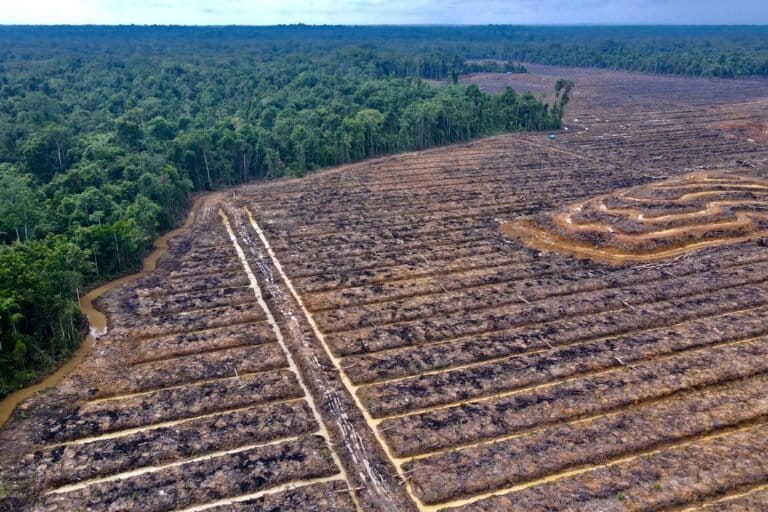
Environmental destruction is another critical issue. The clearing of forests and the drainage of wetlands for agriculture destroy the natural habitats of endemic species and deplete the sago groves that are the primary food source for the local population. Komnas HAM has warned that the loss of these "living spaces" could lead to long-term social instability and the permanent marginalization of the indigenous Papuan people.
The Legal and Constitutional Framework for Protection
Indonesia’s legal system theoretically provides robust protections for indigenous rights, yet there remains a significant gap between the law and its application in Papua. Article 18B of the 1945 Constitution recognizes indigenous communities and their traditional rights. Furthermore, the Special Autonomy Law for Papua (Otonomi Khusus) was designed to ensure that the development of the region prioritizes the welfare and rights of the "Orang Asli Papua" (OAP).
The failure to harmonize the National Strategic Projects with these legal protections creates a "state of exception" in Papua, where national economic goals supersede constitutional rights. Policy analysts argue that for development to be legitimate, it must operate within the framework of "Collaborative Governance," as proposed by scholars like Chris Ansell and Alison Gash. This requires a shift from unilateral "command-and-control" tactics to a deliberative process where the state, indigenous leaders, academics, and civil society meet as equals to chart the path forward.
Proposed Corrections for a Sustainable Future
The current trajectory of the Merauke Food Estate suggests an urgent need for what experts call "policy learning"—the ability of a government to correct its course based on evidence and feedback. To prevent further social and environmental harm, three fundamental corrections are necessary:
First, the government must redefine the problem of "food security." It should not be measured solely by industrial output but must include "food sovereignty," which respects the traditional diets and agricultural practices of the local population. Protecting sago forests is just as vital to food security as planting rice.
Second, the design of the policy must be context-specific. Papua’s unique ecology and social structure cannot be treated the same way as Java’s or Sumatra’s. A "bottom-up" approach that incorporates indigenous knowledge of the land would lead to more resilient and less contentious projects.
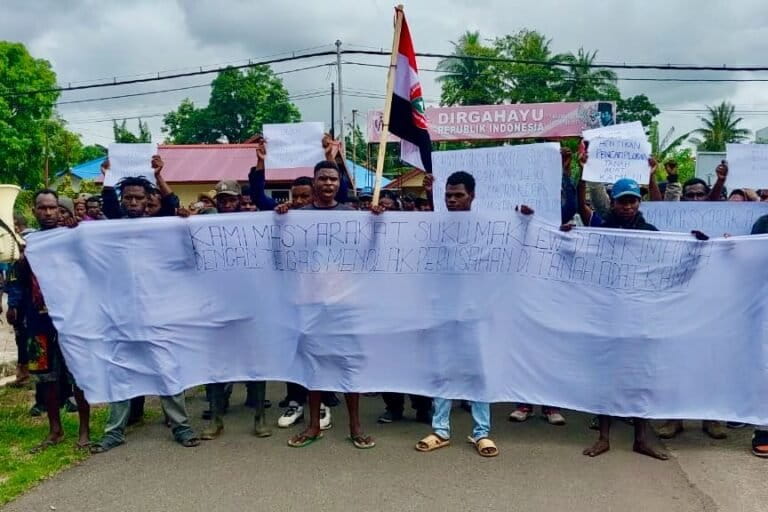
Third, the implementation must shift from a "security-heavy" approach to one based on collaboration. This involves transparent land mapping, genuine consultation processes that follow FPIC protocols, and the establishment of an independent grievance mechanism that the community can trust.
Implications for the Future of Papua
The documentary Pesta Babi is a testament to the fact that development cannot be sustained through political will alone; it requires social legitimacy. When development ignores local wisdom and treats citizens as objects rather than subjects, it risks losing the very people it claims to benefit.
The future of Papua will not be determined by the amount of investment or the number of hectares converted into plantations. Instead, it will be determined by the state’s ability to build trust and respect the dignity of its indigenous citizens. Without a foundation of justice and fair governance, even the largest industrial projects will remain fragile and prone to conflict.
The situation in Merauke serves as a critical test for Indonesia’s commitment to its own constitution and the rights of its most vulnerable populations. As the "alarm" sounded by Komnas HAM and films like Pesta Babi grows louder, the government faces a choice: continue with a top-down model that risks cultural and ecological extinction, or embrace a new paradigm of development that treats the forest and its people with the reverence they deserve. The legitimacy of Indonesia’s public policy in its easternmost province hangs in the balance.