Nila Kartika Wati
The Indonesian government’s ambitious roadmap toward a green energy future is facing intense scrutiny from environmental law experts who argue that the current regulatory framework contains fundamental contradictions that could derail the nation’s climate commitments. At the center of this debate is Presidential Regulation (Perpres) Number 112 of 2022 concerning the Acceleration of Renewable Energy Development for the Supply of Electricity. While ostensibly designed to catalyze the shift away from fossil fuels, legal scholars warn that the regulation’s operational clauses effectively provide a "red carpet" for the continued expansion of coal-fired power plants, particularly those serving industrial zones.
The Regulatory Paradox of Captive Power
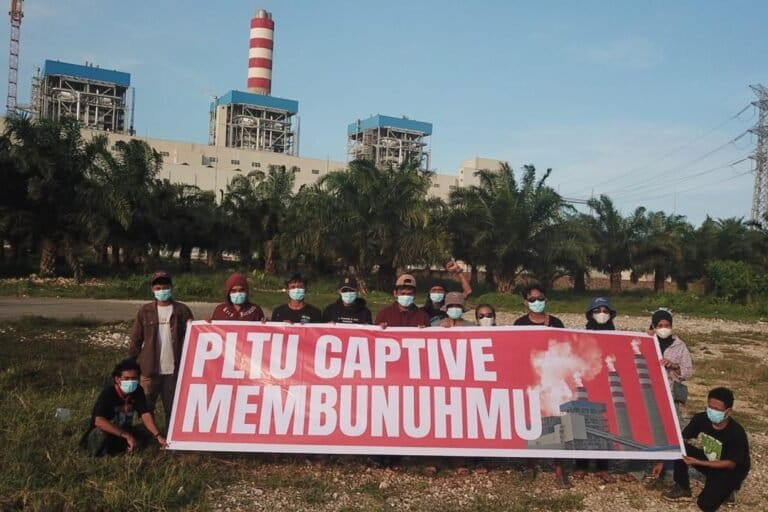
The primary criticism stems from the allowance of "captive" coal-fired power plants (PLTU)—facilities built specifically to power industrial complexes rather than the public grid. Mohamad Nasir, a legal academic specializing in Natural Resource Law at the University of Balikpapan, characterizes the regulation as a "policy paradox." Speaking at a recent expert forum titled "Restructuring National Energy Transition Policies," Nasir noted that while the normative spirit of the Perpres is to promote renewables, its implementation mechanisms open wide loopholes for industrial coal dependency.
This paradox is most visible in the burgeoning nickel industry, which Indonesia has positioned as a cornerstone of the global green ecosystem due to its role in electric vehicle (EV) battery production. However, the production process for this "green" commodity remains heavily reliant on coal. In industrial hubs like Morowali in Central Sulawesi, massive captive PLTUs continue to be commissioned to meet the energy-intensive demands of smelting. This creates an ironic cycle where the materials for global decarbonization are forged using the very fuel the world is trying to abandon.
Conflicting Timelines and Political Commitments
The legal critique highlights a significant discrepancy between high-level political pledges and the fine print of national regulations. During the G20 Summit in Rio de Janeiro, President Prabowo Subianto reaffirmed Indonesia’s commitment to international climate goals, stating that the country aims to shut down all coal-fired power plants by 2040. This statement was viewed as a bold step forward in Indonesia’s climate diplomacy.
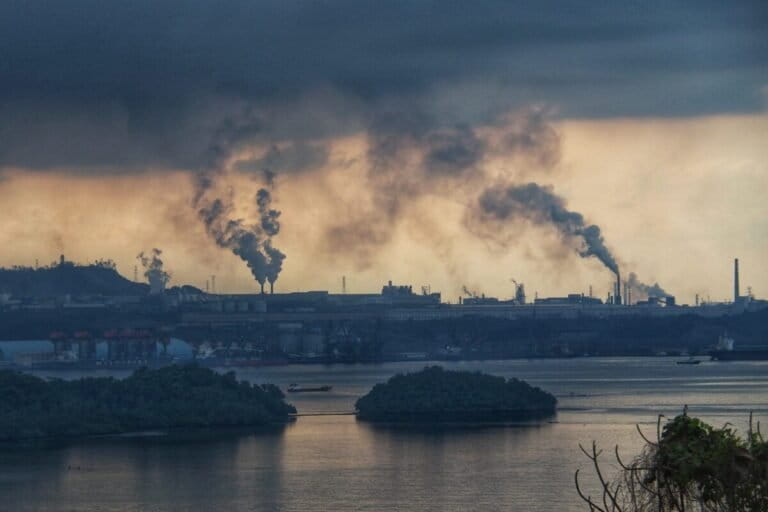
However, Perpres 112/2022 presents a different reality. The regulation allows captive PLTUs to remain operational until 2050, a full decade beyond the President’s stated deadline. Nasir points out that this ten-year gap sends a confusing signal to investors and the international community. "The head of state has declared a 2040 shutdown, yet the regulation provides a pathway for these plants to exist until 2050," Nasir remarked. This inconsistency suggests a tug-of-war between the government’s environmental aspirations and the immediate economic interests of the industrial and mining sectors.
Technical Loopholes and the Illusion of Mitigation
To justify the continued operation of captive coal plants, the regulation introduces several mitigation requirements, such as a commitment to reduce emissions by at least 35% within ten years of operation. However, experts argue these requirements lack binding legal mechanisms and rely on expensive, unproven technologies.
The government has pushed for the adoption of Carbon Capture and Storage (CCS) and Carbon Capture Utilization (CCU) technologies. While scientifically sound, these technologies remain prohibitively expensive for most industrial applications and are currently more prevalent in the oil and gas sector than in coal power generation. Critics argue that mandating CCS/CCU without providing significant subsidies or enforcement creates a "paper commitment" that allows business as usual to continue.
Furthermore, the regulation promotes carbon offsetting as a viable path for companies that fail to meet emission targets. Under this scheme, a company can "cancel out" its pollution by funding carbon absorption projects elsewhere. Environmental lawyers view this as a dangerous loophole that allows heavy emitters to bypass the necessary structural changes to their energy consumption by simply paying for credits, which often lack rigorous verification and do not address the localized pollution and environmental degradation caused by coal mining and burning.
Socio-Ecological Impacts and the Human Toll of Coal
The reliance on coal has ramifications that extend far beyond carbon math, impacting the lives of thousands of Indonesians in mining and industrial regions. Haris Retno Susmiyati, an academic from Mulawarman University focusing on Mining and Environmental Law, emphasizes that the "exceptions" in Perpres 112/2022—which allow coal plants to be built if they are part of National Strategic Projects (PSN) or contribute to "value-added" resource processing—deepen a dangerous dependency.
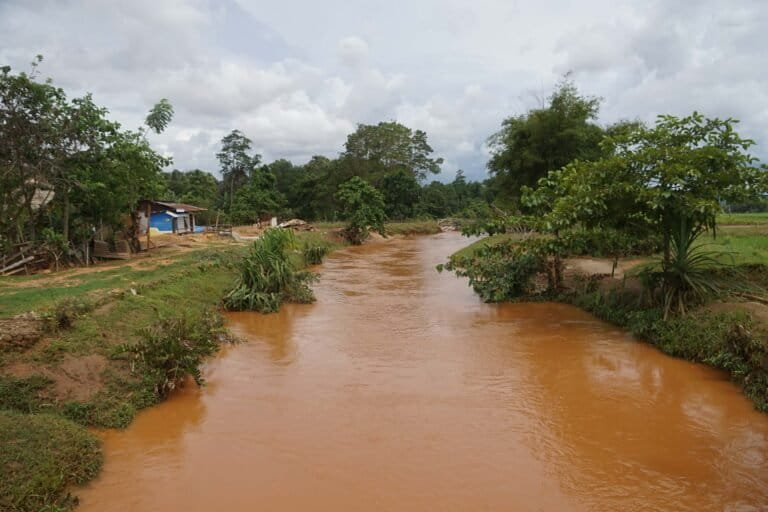
In East Kalimantan, the heart of Indonesia’s coal industry, the human and environmental costs are staggering. Data reveals the existence of approximately 1,735 abandoned mining pits across the province. These pits have become death traps; at least 21 children, mostly from impoverished families living near the mines, have drowned in these un-reclaimed voids.
The industrial expansion also triggers a profound socio-economic shift. Traditional agricultural sectors, which once sustained local communities, are being displaced by mining and smelting operations. Susmiyati notes that the promised benefits of job creation often fail to materialize for local residents, who lack the specialized skills required for industrial work, leaving them with neither their land nor a livelihood.
Furthermore, women in these regions bear a disproportionate burden. Environmental degradation leads to water scarcity and health issues, increasing the labor required for domestic chores and caregiving. When the environment fails, the "safety net" usually provided by nature—clean water, fertile soil, and forage—disappears, leaving the most vulnerable populations in a state of permanent crisis.
Human Rights as a New Frontier for Climate Litigation
As administrative and environmental laws struggle to curb the expansion of coal, legal experts are turning to Human Rights (HAM) frameworks as a more robust tool for litigation. Andri Gunawan Wibisana, a Professor of Environmental Law at the University of Indonesia, suggests that human rights-based arguments can "pierce through" the limitations of climate laws that are often too flexible or compromise-heavy.
Wibisana points to the landmark "Urgenda" case in the Netherlands as a blueprint. In that instance, the Dutch government was sued for having emission reduction targets that, while compliant with international treaties like the Kyoto Protocol, were deemed insufficient by the court to protect the right to life and safety of its citizens. The court ultimately forced the government to increase its ambitions.
"Compliance with a climate treaty is not enough if the policy still threatens human rights," Wibisana explained. In the Indonesian context, the continued licensing of coal plants despite their known health and environmental risks could be argued as a violation of the constitutional right to a healthy environment. The United Nations High Commissioner for Human Rights (OHCHR) has already affirmed that climate change is a direct threat to a wide array of human rights, including the rights to food, water, and health.
State Responsibility and International Accountability
The legal discourse is also shifting toward the concept of "State Responsibility." Laode Muhammad Syarif, an academic from Hasanuddin University and former commissioner of the Corruption Eradication Commission (KPK), argues that Indonesia has a legal obligation under international law to prevent predictable environmental harm.
Referring to the International Law Commission’s Articles on State Responsibility, Syarif notes that a state can be held liable for "internationally wrongful acts," which include both actions and omissions. If the Indonesian government issues regulations that facilitate environmental destruction or fail to implement adequate mitigation, it could face serious legal consequences on the international stage.
The International Court of Justice (ICJ) has recently strengthened this position through advisory opinions, stating that the global temperature rise must be limited to 1.5°C based on current scientific evidence. This sets a higher bar for "regulatory due diligence." States are now expected to conduct comprehensive risk assessments for any policy that might impact the climate and to set mandatory, rather than voluntary, emission limits for the private sector.
The Role of the Private Sector and the Path Forward
While the private sector is often the primary driver of emissions, legal experts emphasize that the state remains the ultimate guarantor of environmental safety. In Indonesia, where the state is often directly involved in energy decisions through state-owned enterprises or the designation of National Strategic Projects, the line between private action and state policy is blurred.
The experts conclude that for Indonesia to truly achieve its 2040 and 2050 climate goals, Perpres 112/2022 must be significantly revised. The "captive power" exemptions must be phased out more aggressively, and the legal system must recognize the standing of citizens to sue for climate-related damages—a mechanism that was famously rejected in the "Samarinda Menggugat" (Samarinda Sues) case.
As the global community moves toward more stringent climate accountability, Indonesia’s internal policy contradictions pose a risk not only to its environment but also to its economic stability and international reputation. The call from the legal community is clear: law should not be a tool to legitimize environmental destruction, but a shield to protect the future of the nation and its people. The transition to renewable energy must be more than a change in technology; it must be a transformation of the legal and ethical framework that governs how the nation uses its resources.