Bambang Pamungkas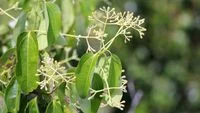
In the sacred verses of the Al-Quran, specifically Surah Al-Insan, ayat 5, a profound promise is extended to those who perform good deeds: they shall partake from a cup containing a drink mixed with "kafir." Islamic scholars have largely interpreted this "kafir" as a reference to a fragrant, pure water derived from a specific aromatic plant, distinct from the synthetic camphor (naphthalene, C10H8) widely known today as a household freshener or moth repellent. This divinely referenced substance, prized for its unique aroma and perceived health benefits, originates from Dryobalanops aromatica, a tree historically found in the lush, biodiverse landscapes of Southeast Asia. Its scarcity in the Middle East compelled ancient Arab traders to embark on arduous journeys to the fabled "eastern lands" in search of this precious commodity, unwittingly charting a course that would intertwine the destinies of distant cultures and lay the groundwork for the spread of a global religion. These journeys ultimately led them to a previously little-known region, now recognized as Indonesia, and more specifically, to the ancient port city of Barus on the island of Sumatra, revealing a forgotten chapter of global commerce and spiritual expansion.
The journey to uncover the true source of this revered camphor, often referred to as Barus camphor or "kapur Barus," traces a fascinating path through ancient trade routes and historical texts. Unlike its synthetic counterpart, the natural camphor from Dryobalanops aromatica possessed a crystalline quality and an intensely aromatic profile that made it highly sought after for various purposes, including perfumery, medicine, embalming, and even as an ingredient in religious rituals. Its rarity outside its native habitat significantly elevated its value, earning it the moniker "white gold" among traders. The trees themselves, towering giants of the rainforest, yield camphor crystals within their wood, requiring intricate and often destructive harvesting methods that further contributed to its high cost and exclusivity. The quest for this valuable substance became a driving force behind early maritime expeditions, connecting the Arab world, India, China, and the islands of Southeast Asia in a vibrant network of exchange.
The Mystical Camphor: From Quranic Verse to Ancient Trade
The Quranic mention of kafir (camphor) in Surah Al-Insan provides a spiritual dimension to the commodity, underscoring its purity and value in an eschatological context. This spiritual reverence, combined with its tangible qualities, fueled the demand for natural camphor across the ancient world. The Dryobalanops aromatica tree, indigenous primarily to Sumatra, Borneo, and the Malay Peninsula, was the exclusive source of this high-grade camphor. Its resin, extracted from incisions in the tree bark or found as crystals within the wood, was significantly different from other aromatic resins like benzoin or frankincense. The natural camphor was not only a fragrant agent but also believed to possess powerful medicinal properties, used in traditional healing practices for its antiseptic, anti-inflammatory, and stimulating effects. Ancient physicians and apothecaries across Persia, India, and China incorporated it into their pharmacopoeias, further cementing its status as a vital trade item.
The geographical exclusivity of Dryobalanops aromatica meant that anyone seeking this premium camphor had to venture to its source. For centuries, the precise location of this source remained a mystery to many outside Southeast Asia, often referred to vaguely as "the East" or "the islands below the wind." This enigma only added to the allure and value of the commodity. Arab merchants, known for their extensive maritime networks and adventurous spirit, were among the first to systematically explore these distant lands, driven by both commercial ambition and a quest for rare goods. Their voyages, navigating the monsoon winds and treacherous seas, were instrumental in establishing direct links between the Middle East and the Indonesian archipelago, forever altering the course of history for both regions.
Barus: A Crossroads of Empires and Commerce
The ancient city of Barus, or Fansur as it was known in many historical accounts, stands as a testament to Indonesia’s profound historical connection to global trade and culture. Archaeological research and ancient texts unequivocally point to Barus, located on the western coast of Sumatra, as the primary hub for the trade of Dryobalanops aromatica camphor. The port’s strategic location, facing the Indian Ocean, made it an ideal point of contact for ships arriving from India, the Middle East, and beyond, before they navigated the Straits of Malacca or continued further east.
The earliest known mention of Barus dates back to the 1st century CE, attributed to the Roman geographer Ptolemy, who in his Geographia referred to a place called "Barousai" or "Barouzae" on the western coast of Sumatra, identifying it as a source of camphor. This early reference highlights the port’s antiquity and its long-standing reputation as a source of valuable commodities even in classical antiquity. Chinese records from the Liang Shu (6th century CE) and Tang Dynasty (7th-10th century CE) also describe a land named "P’an-t’u" or "Fo-shih" (which some scholars link to Fansur/Barus) as a significant trading center, exchanging aromatic woods and resins.
However, it was the Arab chroniclers and traders who provided the most detailed accounts of Fansur and its unparalleled camphor. Ibn Khordadbeh, a 9th-century Persian geographer, included Fansur in his Book of Roads and Kingdoms as a key port producing valuable aromatics. Later, in 902 CE, the Arab merchant and geographer Ibn Al-Faqih specifically noted Fansur as a significant producer of not only camphor but also cloves, nutmeg, and sandalwood, underscoring its role as a multi-commodity trading hub. The celebrated Arab historian and geographer Al-Mas’udi, writing in the 10th century, also mentioned Fansur, describing the exceptional quality of its camphor. By the 13th century, the renowned geographer Ibn Sa’id al-Maghribi further elaborated, confirming that the prized camphor of Fansur originated specifically from Sumatra.
These detailed accounts from various historical sources paint a vivid picture of Barus as a bustling international port, attracting merchants from across the known world. The journey from the Persian Gulf to Barus was a formidable undertaking, typically involving voyages across the Indian Ocean, often with stopovers in Ceylon (Sri Lanka) and along the Indian coast, before reaching the western shores of Sumatra. Historian Claude Guillot, in his work Barus Seribu Tahun yang Lalu (Barus A Thousand Years Ago, 2008), meticulously documents these voyages, emphasizing the direct routes taken by Arab ships, laden with goods for exchange and returning with massive quantities of camphor and other exotic spices. These large vessels were designed to maximize cargo capacity, reflecting the immense profitability of the trade.
The superiority of Barus camphor quickly established its dominance in international markets, surpassing camphor from other regions like Malaya (Peninsular Malaysia) and Kalimantan (Borneo) in both quality and demand. This distinction cemented Barus’s reputation and ensured a steady stream of merchants, particularly from the Arab world, eager to secure their share of this lucrative trade. The economic prosperity generated by the camphor trade transformed Barus into a cosmopolitan entrepôt, a vibrant melting pot where diverse cultures intersected and influenced one another.
Tracing the Footsteps of Faith: Islam’s Early Entry
The constant influx of Arab traders into Barus, driven initially by commercial interests, gradually led to a more profound and lasting impact: the introduction and spread of Islam in the Indonesian archipelago. While scholars continue to debate the exact timeline and precise mechanisms of Islam’s arrival in Indonesia, Barus provides compelling archaeological evidence for one of the earliest entries of the faith.
The presence of Muslim traders in Barus was not merely transactional; many opted to settle, establishing communities that served as both trading posts and centers for religious dissemination. Barus became an essential waypoint for merchants traveling further east to China, making it a critical node in the broader maritime trade network. These extended stays and the formation of permanent settlements facilitated deep cultural exchange and the gradual Islamization of local populations in and around key arrival points like Barus (Fansur), Lamri (Thobri), and Haru.
Perhaps the most significant evidence supporting the early arrival of Islam in Barus is the complex of ancient Muslim tombs at Mahligai. Located just outside the modern town of Barus, these burial sites contain gravestones with inscriptions that date back to the 7th century CE. One particularly notable tombstone bears the year 672 CE, making it one of the oldest Islamic archaeological artifacts discovered in Southeast Asia. This finding strongly suggests that Islam had already taken root in Barus less than a century after the Prophet Muhammad’s death, indicating direct contact between the Arab world and Sumatra during the early Islamic period.
The Mahligai complex and other similar sites in Barus have been the subject of extensive study by archaeologists and historians, including Edward McKinnon, whose work "Ancient Fansur, Aceh’s Atlantis" (2013) highlights the profound significance of these discoveries. The inscriptions, often in Kufic script, attest to the presence of Muslim communities and religious figures, possibly Sufi mystics or influential traders, who played a pivotal role in propagating the faith. This evidence lends considerable weight to the "Arabian theory" of Islam’s arrival, which posits that Muslim merchants and missionaries from the Arabian Peninsula directly introduced Islam to parts of Southeast Asia from the 7th century onwards, predating the more commonly cited theories involving Indian or Persian traders in later centuries.
While debates about the primary vectors and precise timeline of Islamization in Indonesia persist, the historical record from Barus unequivocally demonstrates an early and sustained Muslim presence. The establishment of these communities and the subsequent intermarriage with local populations were crucial for the gradual assimilation of Islamic teachings into the indigenous cultural fabric. The Barus experience illustrates how trade routes served as conduits not only for goods but also for ideas, beliefs, and cultural practices, transforming societies along their path.
The Enduring Legacy of Barus
The historical narrative of Barus extends far beyond its role as a camphor trading post or an early Islamic outpost; it represents a microcosm of Indonesia’s rich and complex history as a maritime nation. Barus was a dynamic cultural melting pot, where Arab, Indian, Chinese, and various local Sumatran cultures (such as Batak and Malay) converged, exchanged, and integrated. This multicultural environment fostered a unique blend of traditions, evident in local customs, language, and architectural styles.
The enduring trade networks forged by Muslim merchants from Barus not only connected the archipelago to the broader Islamic world but also significantly contributed to Indonesia’s recognition on the global stage from ancient times. These networks facilitated the flow of knowledge, technology, and art, enriching the indigenous cultures and contributing to the development of sophisticated maritime societies.
Today, Barus continues to hold immense historical and cultural significance for Indonesia. It is recognized as a vital heritage site, attracting historians, archaeologists, and religious pilgrims. The Mahligai tomb complex, in particular, serves as a powerful reminder of the nation’s deep historical ties to Islam and its role as one of the earliest points of contact for the faith in Southeast Asia. Efforts by the Indonesian government and local communities focus on preserving these historical sites and promoting their educational value, ensuring that the legacy of Barus—as an ancient cradle of commerce, a beacon of cultural exchange, and a pivotal entry point for Islam—continues to be recognized and celebrated.
The story of Barus is a compelling illustration of how a single commodity, "white gold" camphor, could catalyze centuries of trade, cultural exchange, and religious transformation, profoundly shaping the identity and destiny of a nation. It underscores the intricate interplay between economic ambition and spiritual dissemination, demonstrating how the quest for earthly treasures inadvertently paved the way for the establishment of a lasting spiritual heritage in the heart of the Indonesian archipelago. The enduring debate surrounding the early spread of Islam only further solidifies Barus’s critical role as a primary source of empirical evidence, offering invaluable insights into the complex tapestry of Indonesia’s historical development.