Bambang Pamungkas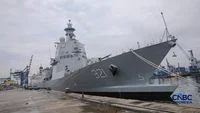
Behind the often-sensationalized headlines of conflicts, such as the recent escalations and retaliatory strikes that unfolded over six weeks in Southwest Asia involving Iran, the United States, and Israel, lies a foundational and frequently underappreciated aspect: the immense logistical apparatus required to sustain modern warfare. While media attention typically focuses on geopolitical maneuvers, weapon systems, and troop movements, the continuous flow of supplies, maintenance, and fuel is the unseen engine driving military capability. Without robust logistics, even the most technologically advanced forces can be rendered ineffective, their operational lifespan measured in hours rather than days.
As a stark illustration of this demand, consider the sheer consumption rates during recent operations. The US Navy, for example, reportedly expended at least 850 Tomahawk cruise missiles in the initial four weeks of specific campaigns in the region, particularly in response to Houthi aggression in the Red Sea. This figure alone represents a staggering financial and logistical commitment. Beyond munitions, the operational footprint of 17 US Navy warships involved in Operation Epic Fury consumed vast quantities of marine fuel, the precise figures of which are rarely disclosed but are undoubtedly immense. Similarly, the diverse array of aircraft operating from the deck of the USS Abraham Lincoln aircraft carrier, including F/A-18 Super Hornets, E-2C Hawkeyes, and MH-60R Seahawks, required enormous volumes of aviation fuel, spare parts, and ground support equipment. These examples underscore a critical truth: a military’s combat effectiveness is inextricably linked to its logistical resilience and sustainment capabilities. The ability to project power, engage adversaries, and maintain presence hinges entirely on the uninterrupted supply chain.
Indonesia’s Critical Defense Logistics Gap
While the theoretical importance of logistics in both wartime and routine military operations is well-understood within Indonesia’s defense establishment, a significant chasm persists between theoretical appreciation and practical implementation. This gap manifests in several critical areas, directly impacting the operational readiness and long-term viability of the Indonesian National Armed Forces (TNI).
-
Bridging Theory and Practice: Defense strategists and military academies in Indonesia routinely emphasize the "logistics chain" as the lifeblood of any successful military campaign. However, this academic understanding often fails to translate into prioritized budgetary allocations and streamlined procurement processes. The focus tends to remain on acquiring new platforms, often neglecting the less glamorous but equally vital aspects of sustainment.
-
The Readiness Conundrum: Peacetime and Wartime Scenarios: A primary symptom of this logistical deficiency is the alarmingly low operational readiness rate of Indonesia’s defense assets. Reports and analyses frequently indicate that the operational readiness of naval vessels and aircraft rarely exceeds 50% even during peacetime. This means that a significant portion of the fleet and air force is often docked for repairs, awaiting spare parts, or undergoing maintenance. The root cause is often the lack of priority given to the procurement of essential spare parts, ammunition, and missiles for existing defense equipment. In a potential wartime scenario, this becomes a critical vulnerability. There is a serious concern among defense analysts that Indonesia’s logistical support capabilities might only sustain combat operations for less than 12 hours, a dangerously short window for a nation with vast archipelagic responsibilities and growing regional security challenges.
-
The Looming Challenge of New Acquisitions: The challenge for the Ministry of Defense (Kemhan) and the TNI is not merely to enhance the operational readiness of its current, often aging, defense equipment, but also to proactively prepare for the sustained maintenance of its newly acquired, high-tech platforms. Indonesia has embarked on an ambitious defense modernization program, acquiring sophisticated systems such as the Rafale multirole fighter jets, A400M Atlas transport aircraft, and Pattugliatore Polivalente d’Altura (PPA) frigates. While these systems currently operate under manufacturer warranties, the clock is ticking. The warranty period is finite, and once it expires, Indonesia will be solely responsible for their upkeep. Questions arise regarding the readiness for post-warranty sustainment: Has Indonesia secured the necessary budgets for long-term maintenance? Are comprehensive spare parts inventories for the various complex subsystems of these platforms in place? Without proactive planning, these state-of-the-art assets risk falling into the same cycle of low readiness as their predecessors.
Systemic Hurdles: Budgeting and Procurement Paradigms
The ability to perform effective maintenance and sustainment is fundamentally determined by two key factors: the availability of adequate funding and the timely provision of spare parts. Indonesia’s current budgetary system, which largely adheres to a single-year allocation model, frequently impedes the efficient procurement of critical spare parts. This is particularly problematic when the delivery of components extends beyond the fiscal year, often requiring contractors to complete deliveries by December 31st of the current fiscal year. This rigid deadline is often incompatible with the lengthy lead times for specialized defense components, leading to delays, stop-gap measures, or even the cancellation of crucial orders.
-
The Global Supply Chain Shockwaves: Compounding these internal budgetary rigidities, the global defense and aerospace supply chains have experienced unprecedented disruptions. The COVID-19 pandemic initially strained logistics networks worldwide, and this was further exacerbated by Russia’s invasion of Ukraine. These events have highlighted the fragility of just-in-time inventory systems and the vulnerability of long international supply lines. While the adoption of multi-year procurement approaches for spare parts is theoretically possible in Indonesia, it has yet to become a mainstream practice. This contrasts sharply with many developed nations that utilize multi-year contracts to secure critical components and ensure continuity of supply, often at more favorable terms.
-
Reactive vs. Predictive Maintenance: Furthermore, the existing maintenance and sustainment system in Indonesia has historically been reactive rather than predictive. Maintenance is often initiated only after a fault occurs, rather than being proactively managed through data analysis and scheduled preventive measures. Similarly, maintenance contracts tend to be short-term, task-based agreements instead of comprehensive, long-term "in-service support" (ISS) contracts. This reactive, short-term approach contributes significantly to the consistently low operational readiness rates observed across the naval and air forces.
-
The Case for In-Service Support (ISS): Implementing an in-service support model represents a strategic shift that could dramatically improve the operational readiness of Indonesia’s defense assets. ISS involves mid-level and heavy maintenance (sustainment) activities, often in collaboration with Original Equipment Manufacturers (OEMs) or other technically capable third parties. This builds upon the operational maintenance levels carried out by military technicians, ensuring a seamless and comprehensive maintenance continuum. The benefits of ISS are manifold: it promises higher operational readiness rates for defense equipment and, crucially, can lead to more cost-effective maintenance expenditure over the long term compared to fragmented, short-term contracts.
-
Overcoming Bureaucratic Inertia: The successful adoption of in-service support in Indonesia hinges on a strong political will from both the Ministry of Defense and the Supreme Audit Agency (BPK). This requires a fundamental shift in procurement philosophy and budgetary flexibility. Such a change needs to be consistently advocated for to reduce inefficient spending in the defense sector and ensure that taxpayer money translates into tangible, sustained defense capabilities.
Arming the Fleet: The PPA Frigate and Munitions Dilemma
The challenges extend beyond mere maintenance. The acquisition of advanced combat platforms like the PPA frigates, built by Fincantieri, presents a more complex set of issues related to combat readiness. These 143-meter-long, 16.5-meter-wide combat vessels require not only diligent maintenance post-warranty but also the full integration of their offensive and defensive capabilities.
A crucial item on the agenda for building the combat readiness of these frigates is the acquisition of munitions. This includes standard naval artillery such as 127mm and 76mm rounds, as well as sophisticated missile systems like the Aster 15, Aster 30, and Teseo missiles. It is vital to note that the PPA frigates are specifically designed to accommodate missiles manufactured by MBDA, given that the Italian government, through Leonardo, is a key contributor to this multinational European firm.
However, the global geopolitical landscape has introduced significant complications. Russia’s ongoing invasion of Ukraine has inadvertently created a "windfall" for MBDA, leading to a hundreds-fold increase in orders for its diverse range of missiles. These orders primarily stem from European nations providing military aid to Ukraine, forcing MBDA to substantially ramp up its production capacity since 2023 to shorten lead times. Despite these efforts, industry experts warn that the lead times for missile orders will not revert to pre-Ukraine war levels in the foreseeable future. This situation makes it imperative for Indonesia to expeditiously finalize acquisition contracts for the MBDA missiles destined for its PPA frigates, especially amidst a global and regional geopolitical environment marked by increasing uncertainty and potential flashpoints. Delays in this procurement could leave expensive, state-of-the-art platforms under-armed and therefore under-capable.
Global Geopolitics and Supply Chain Vulnerabilities
The recurring challenges faced by new defense acquisitions, such as the PPA frigates, are not isolated incidents. They echo similar difficulties encountered with numerous frigates and corvettes acquired by the TNI Navy over the past two decades, as well as various new transport aircraft, fighter jets, and helicopters procured by the TNI Air Force. This consistent pattern underscores a systemic issue that demands urgent and comprehensive policy reform.
The need for a paradigm shift in maintenance and sustainment policies is not only driven by internal factors—the imperative to elevate the operational readiness of existing weapon systems—but also by external geopolitical developments. The cascading effects of major conflicts, such as the Ukraine war and the ongoing tensions in Southwest Asia, reverberate through the global defense and aerospace industry supply chains. For instance, the smooth supply of critical composite materials, often derived from naphtha, has been directly impacted by these conflicts, affecting production schedules and costs worldwide. This illustrates how far-reaching the consequences of regional conflicts can be, affecting even nations far removed from the immediate battlegrounds.
Charting a Course for Enhanced Readiness
To overcome these entrenched challenges, Indonesia must embrace a holistic and forward-looking strategy for defense logistics and sustainment. This strategy should encompass:
- Prioritizing Sustainment in Budgeting: Shifting from a platform-centric acquisition model to one that equally prioritizes the long-term sustainment of assets. This means dedicated multi-year budgets for spare parts, MRO, and training.
- Adopting In-Service Support (ISS) Contracts: Moving away from short-term, reactive maintenance contracts towards comprehensive, long-term ISS agreements with OEMs or authorized service providers. This ensures consistent support, potentially lower lifecycle costs, and higher readiness.
- Strategic Stockpiling and Inventory Management: Developing robust and strategically located stockpiles of critical spare parts and munitions, taking into account lead times and potential supply chain disruptions.
- Investing in Domestic Industrial Capability: While not immediately feasible for all high-tech components, fostering a domestic defense industry capable of producing certain spare parts, performing complex overhauls, and providing technical support can reduce reliance on foreign suppliers and enhance national resilience.
- Human Capital Development: Investing in the training and certification of military technicians and engineers to handle advanced systems, reducing dependence on foreign technical assistance.
- Leveraging Predictive Analytics: Implementing modern maintenance management systems that utilize data analytics and predictive modeling to anticipate equipment failures, optimize maintenance schedules, and reduce downtime.
- Diplomatic and Strategic Sourcing: Diversifying sources for critical components and munitions through strategic partnerships and diplomatic engagements to mitigate risks associated with geopolitical instability.
The effective management of defense logistics is no longer a mere support function; it is a strategic imperative that directly impacts national security, sovereignty, and regional influence. For an archipelagic nation like Indonesia, with vast maritime territories to protect and growing geopolitical complexities, a robust and resilient logistical backbone is not just desirable—it is absolutely essential for projecting credible deterrence and ensuring the operational readiness of its armed forces. The lessons from global conflicts are clear: the true strength of a military lies not just in what it can buy, but in what it can sustain.