Azin Asro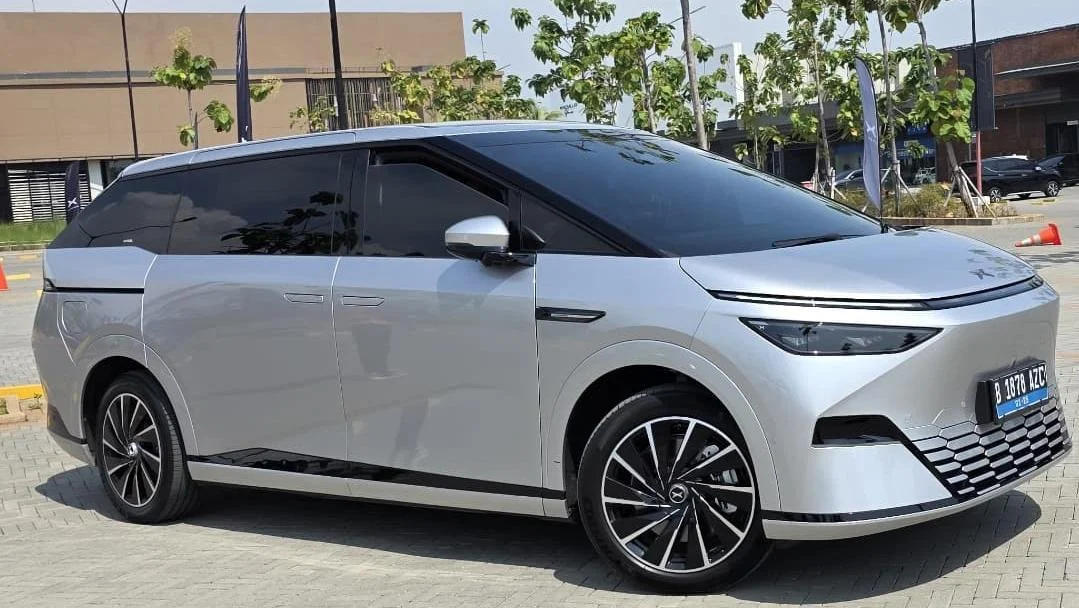
The Indonesian automotive sector is currently undergoing one of its most significant transformations in decades, characterized by an unprecedented influx of new players and a rapid shift toward electrification. At the heart of this evolution is the arrival of numerous Chinese automotive brands, many of which are targeting the premium segment—a territory traditionally dominated by European stalwarts. During the BMW Exhibition held at JIExpo Kemayoran in Jakarta, Peter "Sunny" Medalla, the President Director of BMW Group Indonesia, provided an extensive overview of how the Munich-based manufacturer views this new competitive reality. While acknowledging the aggressive expansion of Chinese manufacturers, Medalla emphasized that BMW’s long-standing legacy, financial stability, and commitment to the "driving pleasure" philosophy remain its primary shields against the shifting tides of the market.
The presence of Chinese brands in Indonesia has surged over the last 24 months, moving beyond the budget-friendly segments into the luxury space. Brands such as BYD, GWM (Great Wall Motor), Chery, and MG have introduced models priced in the billion-rupiah range, directly challenging the established hierarchy. Medalla noted that the competitive environment has changed completely, with more than 20 Chinese brands now operating or preparing to enter the Indonesian market. This proliferation offers Indonesian consumers a level of choice they did not have just three or four years ago, leading many to question whether they should venture away from traditional luxury marques to try these high-tech, competitively priced newcomers.
The Evolution of the Indonesian Premium Market
Historically, the Indonesian premium car market was a relatively stable environment dominated by a few key European players, with BMW and Mercedes-Benz consistently leading the pack. The consumer base was characterized by high brand loyalty and a preference for established prestige. However, the Indonesian government’s aggressive push for Electric Vehicle (EV) adoption, supported by various tax incentives and infrastructure developments, has opened a "side door" for Chinese manufacturers. These brands have leveraged their global leadership in battery technology and software integration to offer vehicles that are not only luxurious in terms of features but also highly competitive in price.
Medalla observed that this price sensitivity is where the immediate impact is felt. Chinese manufacturers often benefit from vertically integrated supply chains and significant economies of scale, allowing them to offer premium features—such as advanced driver-assistance systems (ADAS), massive infotainment screens, and high-quality interior materials—at a fraction of the cost of European equivalents. According to Medalla, this shift has a more pronounced effect on Japanese and Korean brands that occupy the middle-to-upper segments of the market. While BMW remains in a distinct "ultra-premium" category, the broader market movement necessitates a strategic reaffirmation of what the BMW brand stands for.
A Chronology of Market Disruption
To understand the current state of the market, one must look at the timeline of the Chinese automotive expansion in Indonesia. The initial wave began roughly five to seven years ago with brands like Wuling and DFsk focusing on the MPV and entry-level SUV segments. The second wave, which began around 2022, saw a pivot toward electrification and premium positioning. By 2024 and 2025, the market saw the introduction of high-end models like the Zeekr 001, the BYD Seal, and the GWM Tank 500, all of which aim to capture the attention of affluent Indonesian buyers.
This timeline coincides with BMW Group Indonesia’s own expansion of its electric portfolio. BMW has been proactive in introducing its "i" sub-brand to Indonesia, with models like the iX, i4, and i7 seeing strong demand. However, the sheer volume of new entrants has created a "crowded room" effect. Medalla pointed out that while the novelty of new brands attracts attention, the long-term sustainability of these brands in the Indonesian market remains an open question. He raised the critical point of longevity, asking how many of these newcomers will maintain a consistent presence and support their customers over the next several decades.
The Pillars of BMW’s Resilience: Legacy and Financial Health
In addressing why BMW remains confident despite the mounting competition, Medalla pointed to the brand’s 50-year history in Indonesia. BMW’s journey in the archipelago began through distribution partnerships, eventually evolving into a dedicated subsidiary 25 years ago. This long-term commitment has allowed the brand to build a robust infrastructure, including local assembly operations at the Gaya Motor plant in Sunter, North Jakarta. This local footprint not only helps in managing costs and navigating regulatory requirements but also signals to the consumer that BMW is a permanent fixture in the nation’s industrial landscape.
Furthermore, Medalla highlighted BMW’s global financial performance. In the previous fiscal year, BMW was recognized as one of the most financially healthy premium automotive groups in the world. This financial strength allows the company to invest heavily in Research and Development (R&D) and to refresh its product lineup frequently. In the luxury segment, the ability to consistently introduce cutting-edge technology and design is vital for maintaining brand relevance. Medalla noted that BMW’s financial stability ensures that the brand can honor its promises to customers, from warranty fulfillment to the continuous availability of genuine parts.
Beyond the Specs: The Driving Pleasure and Premium Experience
A recurring theme in Medalla’s discourse was the "driving pleasure" (Sheer Driving Pleasure) philosophy. He argued that while many new brands can produce cars with impressive specifications on paper, the tactile and emotional experience of driving a BMW remains a unique differentiator. This includes the precision of the steering, the calibration of the suspension, and the intuitive layout of the driver-centric cockpit. Medalla suggested that once a customer sits in the driver’s seat or even the passenger seat of a BMW, the difference in engineering maturity becomes immediately apparent.
In addition to the product itself, the "Premium Experience" encompasses the entire customer journey. This begins with the showroom experience and extends to after-sales service and, eventually, the resale value of the vehicle. In Indonesia, resale value is a critical factor for car buyers. Established European brands like BMW have a proven track record of maintaining value in the secondary market, supported by a professional network of certified pre-owned dealerships. Medalla emphasized that the "Premium Service" BMW provides is a comprehensive commitment that new entrants may struggle to replicate in the short term, as building a nationwide service network with highly trained technicians takes years, if not decades.
Market Implications and the Competitive Ripple Effect
The rise of Chinese premium brands is expected to have a "trickle-down" effect on the entire Indonesian automotive ecosystem. Industry analysts suggest that the increased competition will force all players to improve their value propositions. For BMW, this means not just relying on the badge, but ensuring that every touchpoint—from digital apps to concierge services—reflects a superior level of luxury.
There is also the implication for the "Big Three" Japanese manufacturers who have long held a near-monopoly on the Indonesian market. As Chinese brands offer more "luxury for less," the traditional mid-tier brands are being squeezed from both the bottom and the top. BMW, positioned at the pinnacle of the market, is less vulnerable to direct price wars but must contend with the "distraction factor" of new technology and flashy designs from the East.
The Indonesian government’s stance remains one of "open arms" toward investment, regardless of the country of origin. This has created a level playing field where the ultimate winner will be determined by the consumer. Medalla’s comments reflect a brand that is respectful of its new competitors but remains steadfast in its own identity. He acknowledged that while some customers might be tempted to "try something new," the core BMW clientele values the peace of mind that comes with a heritage brand.
Future Outlook: Sustainability and Market Share
Looking ahead, the battle for the premium segment in Indonesia will likely be fought on the fronts of electrification and digitalization. BMW has already signaled its intent to lead this charge, with plans to expand its charging infrastructure and introduce even more localized EV models. The challenge for Chinese brands will be to prove their reliability and build the kind of brand "mythology" that BMW has cultivated over the last half-century.
For BMW Group Indonesia, the strategy involves a blend of tradition and transformation. By sticking to its core values of performance and premium service while simultaneously embracing the digital and electric future, the company aims to retain its market leadership. Medalla concluded by reinforcing the idea that BMW is not just selling a car, but a legacy and a promise of future commitment. "We are here today, and we will be here for the next 50 years," he stated, a clear message to both the new competitors and the Indonesian public that BMW’s roots in the country run deep.
As the 2026 automotive landscape continues to evolve, the industry will be watching closely to see if the "price and tech" strategy of Chinese automakers can eventually unseat the "legacy and experience" strategy of European giants. For now, BMW remains the benchmark for luxury in Indonesia, navigating the competitive storm with a blend of confidence and calculated adaptation. The coming years will serve as a ultimate test of brand loyalty in an era of unprecedented choice.