Azin Asro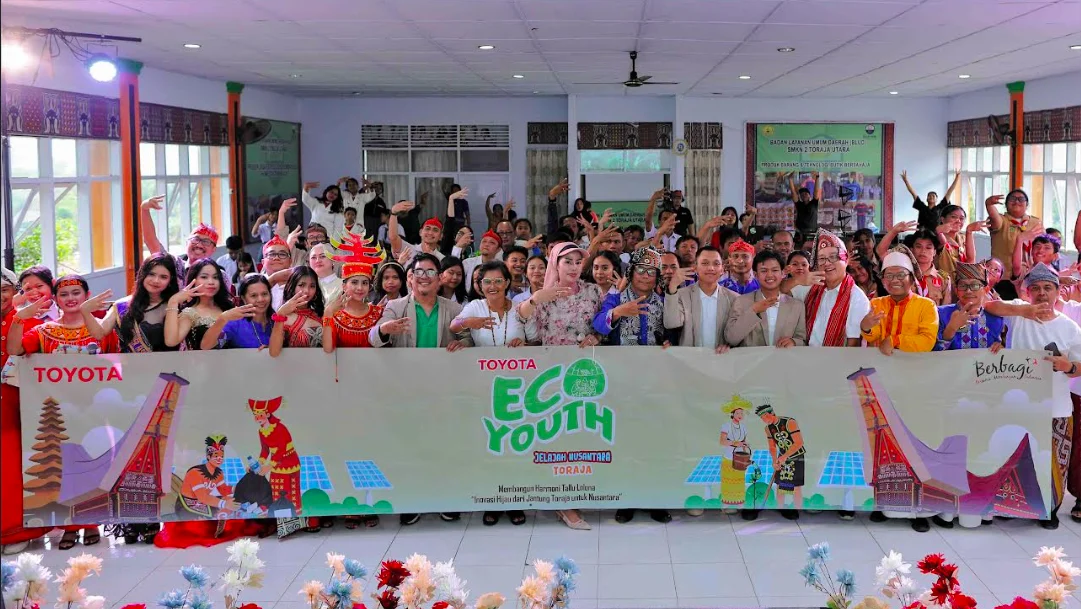
The arrival of the Toyota Eco Youth team in North Toraja underscores a broader commitment to decentralizing innovation and ensuring that students in more remote or culturally rich areas have the same opportunities as those in major urban centers. By collaborating with Sekolah Menengah Kejuruan Negeri (SMKN) 2 Rantepao, Toyota Indonesia aims to bridge the gap between industrial expertise and academic curiosity, encouraging students to look at their immediate surroundings through a lens of sustainability and technological advancement.
A Two-Decade Legacy of Environmental Advocacy
Since its inception in 2005, Toyota Eco Youth has evolved from a simple environmental competition into a comprehensive educational platform. Over the past 20 years, the program has consistently challenged high school students (SMA) and vocational students (SMK) across Indonesia to identify environmental problems within their communities and propose scientific, scalable solutions. The longevity of the program is a testament to Toyota’s long-term vision of integrating environmental stewardship with human capital development.
To date, the program has seen the participation of more than 2,083 schools spanning all 34 provinces of Indonesia. This nationwide reach has resulted in the submission of 9,972 environmental project ideas, ranging from waste management systems and renewable energy prototypes to water purification technologies and biodiversity conservation efforts. The "Jelajah Nusantara" (Exploring the Archipelago) phase is the newest chapter in this journey, designed to ensure that the spirit of TEY reaches every corner of the country, particularly areas like Toraja which possess unique ecological and cultural characteristics.
The Strategic Importance of North Toraja
The selection of North Toraja as a focal point for the TEY Jelajah Nusantara initiative is not coincidental. Toraja is globally recognized for its breathtaking landscapes and a culture that remains deeply intertwined with the natural environment. However, like many regions experiencing growth and tourism, it faces modern environmental challenges, including waste management and the preservation of its delicate ecosystems.
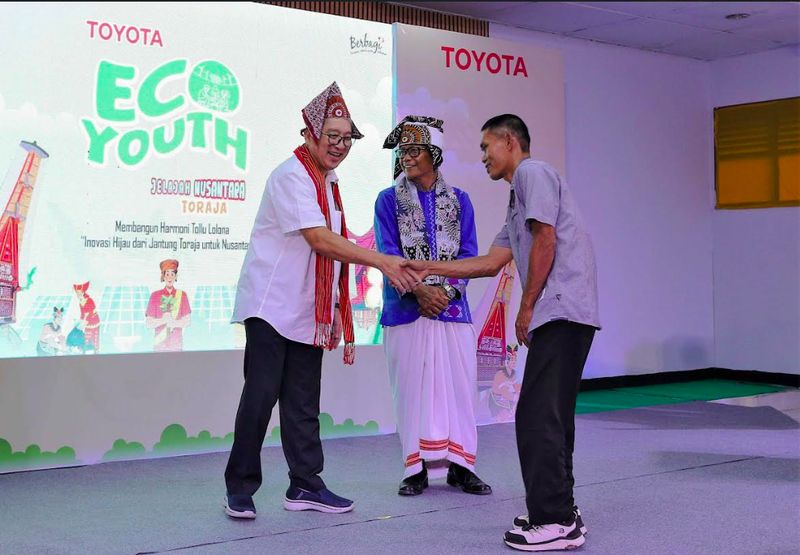
Nandi Julyanto, the President Director of PT Toyota Motor Manufacturing Indonesia (TMMIN), emphasized during his visit to SMKN 2 Rantepao on Wednesday, April 15, 2026, that the presence of TEY in this region is a strategic step. He noted that many areas with immense potential remain under-accessed in terms of formal innovation platforms. By engaging directly with students in North Toraja, Toyota Indonesia is creating a space for "grassroots" ideas—innovations that are born from a deep, native understanding of local environmental conditions. These solutions are often more relevant and easier to implement within the local community than generic, top-down approaches.
The interaction between the TEY team and the students of SMKN 2 Rantepao serves as a catalyst. It transforms students from passive observers of environmental degradation into active problem-solvers. In a region where "local wisdom" dictates much of daily life, TEY provides the technical framework to turn traditional conservation practices into modern, data-driven environmental projects.
Harnessing Local Wisdom for Global Solutions
One of the core philosophies of the Toyota Eco Youth program is the belief that local wisdom holds the key to solving modern environmental crises. In many parts of Indonesia, indigenous practices have sustained the environment for centuries. The TEY Jelajah Nusantara initiative encourages students to study these practices and enhance them with modern scientific methods.
"Local wisdom in every region stores great potential as a solution to environmental challenges," Nandi Julyanto stated. "Through Toyota Eco Youth Jelajah Nusantara, we encourage the younger generation to process this potential into real innovations that have an impact on the environment."
This approach aligns with the global shift toward "biomimicry" and "traditional ecological knowledge" in sustainability science. By valuing the insights of students from regions like Toraja, Toyota is not just teaching them about the environment; it is learning from the diversity of the Indonesian landscape. The goal is to create a symbiotic relationship where corporate resources meet local ingenuity to produce social value that is sustainable in the long term.
The Three Pillars of Toyota’s Sustainable Strategy
The TEY program does not operate in isolation but is part of a larger corporate strategy focused on three primary pillars: the environment, education, and community development.
- Environment: Toyota Indonesia is committed to the "Toyota Environmental Challenge 2050," which aims to achieve zero CO2 emissions throughout the entire life cycle of their vehicles and manufacturing processes. TEY serves as the educational arm of this challenge, preparing the next generation to live and work in a carbon-neutral world.
- Education: By targeting SMA and SMK students, Toyota is investing in the future workforce. Vocational students, such as those at SMKN 2 Rantepao, are particularly vital because they possess the practical skills needed to build and maintain the hardware of a green economy.
- Community Development: The ultimate goal of TEY is to create a "multiplier effect." When a student project successfully solves a local waste issue, the entire community benefits. This strengthens the social fabric and creates a culture of collective responsibility.
Statistical Impact and the Path Forward
The scale of Toyota Eco Youth’s impact over two decades provides a clear picture of its importance. With nearly 10,000 ideas submitted over the years, the program has created a massive repository of youth-led innovation.
- Participation: 2,083+ Schools.
- Geographic Reach: 34 Provinces.
- Innovation Output: 9,972 Project Proposals.
- Timeline: 20 Years of continuous operation.
These figures represent more than just numbers; they represent a movement. Many former participants of TEY have gone on to become environmental engineers, entrepreneurs in the green tech sector, and community leaders. The program acts as an incubator for talent, identifying students with the passion and the "can-do" attitude required to tackle climate change.
In North Toraja, the TEY Jelajah Nusantara team is looking for the "next big idea" that could potentially be scaled nationally. Whether it is a new way to process agricultural waste from coffee plantations or a system to protect local water sources, the emphasis is on feasibility and impact.
Analysis: The Role of Youth in Indonesia’s Green Transition
As Indonesia strives toward its goal of Net Zero Emissions by 2060, the role of the younger generation cannot be overstated. According to demographic data, Gen Z and Gen Alpha make up a significant portion of the Indonesian population. These generations are not only more environmentally conscious but are also digital natives who can leverage technology to solve problems faster than previous generations.
Programs like Toyota Eco Youth are essential because they provide the necessary structure—mentorship, funding, and a competitive platform—that schools often lack. By focusing on vocational schools (SMK), Toyota is also aligning with the Indonesian government’s mission to revitalize vocational education to meet the demands of the 21st-century industry.
Furthermore, the emphasis on "relevance and applicability" mentioned by Nandi Julyanto is crucial. Many environmental initiatives fail because they are too theoretical. TEY forces students to consider the "business case" and the "social case" for their projects, teaching them the basics of project management and stakeholder engagement.
Conclusion: A Future Built on Innovation
The visit to SMKN 2 Rantepao is just one stop in the extensive TEY Jelajah Nusantara journey, but it carries deep symbolic weight. It represents the bridge between Indonesia’s rich traditional past and its high-tech, sustainable future. By empowering the youth of North Toraja, Toyota Indonesia is ensuring that the path to sustainability is inclusive, diverse, and driven by the people who have the most at stake: the younger generation.
As TEY enters its third decade, the focus will likely shift toward even more advanced technologies, such as Artificial Intelligence and IoT (Internet of Things) for environmental monitoring. However, as demonstrated in Toraja, the heart of the program will always remain the same: the belief that a single innovative idea from a dedicated student can change the world. Through continuous support for education and the environment, Toyota Indonesia remains a key player in building a resilient and sustainable nation, one school at a time.