Nasution Nanang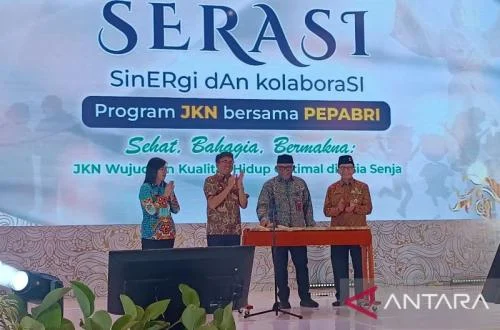
MANADO – The Social Security Agency for Health (BPJS Kesehatan) has initiated a pivotal strategic synergy with the Association of Retired Indonesian National Armed Forces and National Police Personnel and Widows/Widowers (Pepabri) to bolster the sustainability and effectiveness of the National Health Insurance Program (JKN). This landmark collaboration was officially unveiled during the "Synergy and Collaboration of the JKN Program with Pepabri" event held in Manado on Thursday, marking a significant step towards enhancing public understanding and service delivery within Indonesia’s vast healthcare ecosystem.
The Imperative for Collaboration: Sustaining Universal Health Coverage
Indonesia’s JKN program, managed by BPJS Kesehatan, stands as one of the world’s largest single-payer health insurance systems, endeavoring to provide universal health coverage to its burgeoning population. Launched in 2014, the program is a monumental undertaking aimed at ensuring equitable access to healthcare for all citizens, irrespective of their socioeconomic status. However, the path to universal coverage is fraught with multifaceted challenges, including ensuring adequate funding, expanding infrastructure, improving service quality, and crucially, fostering comprehensive public understanding and engagement. It is against this backdrop that BPJS Kesehatan consistently seeks strategic partnerships to navigate these complexities and reinforce the program’s foundational pillars.
Akmal Budi Yulianto, Director of Membership at BPJS Kesehatan, underscored the profound importance of such collaborations in delivering superior JKN services. During his address in Manado, he articulated a clear vision: "BPJS Kesehatan cannot operate in isolation. The success and continuous improvement of the JKN program necessitate robust support from diverse stakeholders. Pepabri, as the esteemed association for retired military and police personnel, holds a uniquely strategic position, making them an invaluable partner in this collective endeavor." His remarks highlighted the recognition that achieving the ambitious goals of universal health coverage requires a whole-of-society approach, leveraging the strengths and networks of various community organizations.
Pepabri: A Strategic Ally with Deep Community Roots
Pepabri, formally known as Persatuan Purnawirawan dan Warakawuri TNI dan Polri, represents a highly respected and influential segment of Indonesian society. Comprising men and women who have dedicated their lives to national service, often with significant contributions to security and public order, its members are widely regarded as pillars of their respective communities. The association’s mandate extends beyond the welfare of its members to active participation in national development and social initiatives. With an extensive network spanning across the archipelago and a membership base known for its discipline, integrity, and community engagement, Pepabri is uniquely positioned to act as a crucial conduit for information dissemination and public education regarding the JKN program.
The synergy with Pepabri is therefore not merely a ceremonial gesture but a pragmatic decision to harness a well-organized and respected civilian force. It is anticipated that this collaboration will significantly elevate the role of retired TNI and Polri personnel in advocating for and supporting the implementation of JKN. Through structured engagement and awareness campaigns, Pepabri members are expected to deepen their own understanding of JKN policies, benefits, and service procedures, thereby transforming them into informed ambassadors for the program within their families, neighborhoods, and broader social circles. This approach addresses the persistent challenge of knowledge gaps and misinformation that can hinder effective program utilization.
Enhancing Understanding and Fostering Dialogue
A core objective of the Manado event was to create an open forum for dialogue, allowing BPJS Kesehatan to directly receive input and feedback from Pepabri members. Akmal Budi Yulianto explicitly invited constructive criticism and suggestions, emphasizing that such insights are vital for continuous service improvement. He candidly acknowledged the various implementation challenges facing JKN, including disparities in public comprehension and limitations in accessing accurate information. These issues, he stressed, can only be effectively mitigated through collaborative strategies that reach into the heart of communities.
From Pepabri’s perspective, this partnership is understood to be mutually beneficial. Many of their members, as retirees, are frequent users of healthcare services and thus directly impacted by the JKN program. Their experiences, perspectives, and practical insights can provide invaluable data points for BPJS Kesehatan to refine its service delivery models. While no direct statement from Pepabri leadership was provided in the original dispatch, the presence of Mayjen TNI (Purn) Ahmad Yani Basuki, Vice Head of the Welfare Department of DPP Pepabri, signifies the association’s commitment to ensuring the health and welfare of its members, and by extension, its willingness to actively support a program critical to their well-being. Such a partnership implicitly suggests Pepabri’s readiness to leverage its organizational structure to disseminate accurate JKN information, facilitate member enrollment and data validation, and generally act as a supportive bridge between BPJS Kesehatan and its beneficiaries.
BPJS Kesehatan’s Transformative Journey: Digitalization and Accessibility
In its relentless pursuit of service excellence, BPJS Kesehatan has embarked on an ambitious transformation journey, heavily leveraging digital innovation to enhance accessibility, simplify procedures, and elevate the quality of healthcare facilities. These efforts are particularly crucial for elderly participants, including retirees, who often require more personalized and responsive care.
The suite of digital services now available includes:
- Mobile JKN Application: A comprehensive smartphone application that allows participants to check their membership status, access virtual cards, change healthcare facilities, file complaints, and view their contribution history, among other features. This app has been instrumental in empowering participants with greater control over their JKN experience, reducing the need for physical visits to BPJS Kesehatan offices.
- Pelayanan Administrasi melalui Whatsapp (PANDAWA): An innovative administrative service accessible via WhatsApp, enabling participants to manage various administrative tasks without requiring face-to-face interaction, further streamlining processes and improving convenience.
- Care Center 165: A dedicated 24/7 call center providing information, complaint handling, and assistance to participants, ensuring that help is always just a phone call away.
- BPJS Kesehatan Website: A robust online portal offering extensive information, FAQs, and self-service options.
- Anjungan Mandiri JKN (AMAN JKN): Self-service kiosks deployed in strategic locations, allowing participants to perform various administrative functions independently, such as checking membership status or printing virtual cards.
Beyond these digital platforms, BPJS Kesehatan has also expanded healthcare access through the integration of the National Identity Number (NIK)/KTP for service registration, streamlining the verification process and reducing administrative hurdles. The implementation of online queuing systems at healthcare facilities has drastically cut down waiting times, improving the overall patient experience. Furthermore, the introduction of teleconsultation services has enabled participants, particularly those in remote areas or with mobility challenges, to receive medical advice and consultations remotely, significantly broadening access to primary care. These advancements collectively demonstrate BPJS Kesehatan’s commitment to creating a more efficient, user-friendly, and inclusive healthcare system for all Indonesians. The specific attention given to the elderly through personalized and responsive service approaches aligns perfectly with the needs of Pepabri’s membership.
Pepabri’s Pivotal Role in the "Garda JKN" Movement
A key element of the proposed synergy involves BPJS Kesehatan actively encouraging Pepabri to play a vital role in the Gerakan Relawan Daerah JKN (Garda JKN), or the JKN Regional Volunteer Movement. This initiative aims to mobilize community volunteers to disseminate accurate and trustworthy information about the JKN program across society. Akmal Budi Yulianto’s call to action for Pepabri members underscores the immense potential of leveraging their established credibility and community ties.
As Garda JKN volunteers, Pepabri members can perform several critical functions:
- Information Dissemination: Actively share correct information about JKN benefits, procedures, and obligations, countering misinformation and clarifying complex aspects of the program.
- Community Advocacy: Serve as local advocates, assisting fellow community members, especially the elderly and less digitally literate, in navigating JKN services and understanding their rights.
- Feedback Channel: Collect and relay feedback from the grassroots level to BPJS Kesehatan, contributing to a continuous improvement cycle for the program.
- Promoting Healthy Lifestyles: Encourage preventive health measures and healthy living practices, aligning with BPJS Kesehatan’s broader public health objectives.
The disciplined nature, organizational structure, and widespread respect commanded by Pepabri members make them ideal candidates for the Garda JKN movement. Their participation can significantly amplify BPJS Kesehatan’s outreach efforts, ensuring that even the most remote or marginalized communities receive accurate information and support. This volunteer-driven approach is cost-effective and highly impactful, building trust and fostering a sense of shared ownership in the national health program.
Data Validation and Future Outlook: Ensuring Seamless Service
A crucial operational aspect highlighted during the Manado event was the importance of regular data validation. BPJS Kesehatan urged Pepabri members and their registered families to periodically update their participation data, particularly when there are changes in personal details or family composition. Accurate and up-to-date data is paramount for ensuring seamless access to JKN services and preventing administrative complications. Without correct data, participants may face delays or issues when seeking medical care, undermining the very purpose of the program. This emphasis on data integrity reflects BPJS Kesehatan’s commitment to operational efficiency and participant satisfaction.
Looking ahead, Akmal Budi Yulianto expressed strong optimism that through strategic synergies with various partners like Pepabri, the JKN Program’s services will become increasingly easy, fast, and equitable for all Indonesian citizens. This collaboration in Manado is envisioned as merely the genesis of a sustained and comprehensive partnership between BPJS Kesehatan and Pepabri that will ideally extend across all provinces and districts of Indonesia. Such a nationwide rollout would significantly strengthen the JKN program’s outreach, particularly to the retired community and their families, ensuring that their healthcare needs are met with dignity and efficiency.
Broader Implications and the Path to Universal Healthcare
The collaboration between BPJS Kesehatan and Pepabri carries significant broader implications for Indonesia’s journey towards universal health coverage. Firstly, it exemplifies a successful model of public-community partnership in addressing complex social security challenges. By engaging an established and respected community organization, BPJS Kesehatan can leverage existing social capital and networks, which are often more effective than purely top-down approaches in reaching diverse populations.
Secondly, this partnership directly benefits a critical demographic: the elderly and retirees. As individuals age, their healthcare needs typically increase. Ensuring that this segment of the population has unfettered access to comprehensive, understandable, and high-quality health services is not just a matter of social justice but also a cornerstone of national stability and welfare. The personalized approach and enhanced information dissemination targeted at Pepabri members will undoubtedly improve their health outcomes and overall quality of life.
Finally, the initiative to integrate Pepabri members into the Garda JKN movement underscores a strategic shift towards community-led advocacy and education. This approach builds trust, reduces information asymmetry, and empowers citizens to become active participants in their own healthcare journey. It fosters a sense of collective responsibility for the success of the JKN program, transforming beneficiaries into advocates.
The event in Manado, attended by key figures including Falah Rakhmatiana, Deputy Director for Service Quality Management at BPJS Kesehatan, Mokhamad Cucu Zakaria, Deputy Director Region X at BPJS Kesehatan, and Mayjen TNI (Purn) Ahmad Yani Basuki from Pepabri, signifies a united front in strengthening Indonesia’s social security framework. This strategic alliance represents a crucial step forward in BPJS Kesehatan’s mission to deliver universal, equitable, and quality health coverage, ensuring that the legacy of service from Indonesia’s retired military and police personnel is honored with robust and accessible healthcare for them and their families, now and in the future.