Hadi Wijaya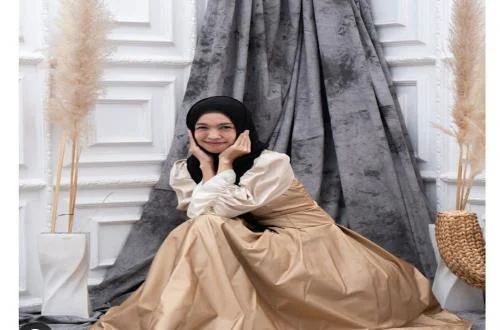
The discourse surrounding the "childfree" lifestyle has reached a fever pitch in Indonesia, sparked primarily by viral comments from social media influencer and YouTuber Gita Savitri Devi, commonly known as Gitasav. Her assertion that remaining childless is a "natural anti-aging" remedy and that children are a financial and emotional burden has drawn significant backlash from various sectors of Indonesian society. Joining the ranks of those refuting these claims is Rr. Sarwi Peni Wulandaru, popularly known as Coach Wulan, a prominent business coach who argues that motherhood and professional success are not mutually exclusive, but rather complementary facets of a fulfilling life.
At 48 years old, Coach Wulan presents a lifestyle that stands in stark contrast to the childfree ideology currently trending among segments of the millennial and Gen Z populations. A mother of ten children—the eldest being 18 and the youngest just one year old—Wulan maintains an exhaustive professional schedule. She is an active figure in the Indonesian Association of Muslim Intellectuals (ICMI), the Indonesian Chamber of Commerce and Industry (Kadin), and the Sharia Economic Society (MES) in the Special Region of Yogyakarta. Despite her large family and demanding career, she notably operates her household without the assistance of domestic helpers, a feat she attributes to disciplined management and a specific ideological outlook.
The Intersection of Motherhood and Professional Growth
Speaking in Yogyakarta, Coach Wulan emphasized that the presence of children should never be viewed as a glass ceiling for a woman’s intellectual or career development. Her personal trajectory serves as a case study for this belief. Throughout her journey of raising ten children, she has continued to build her capacity as a business mentor, guiding entrepreneurs and participating in high-level organizational leadership.
"I have ten children, and I am still active in business, organizations, and various activities," Wulan stated. Her perspective challenges the binary choice often presented in modern feminist discourse: the choice between personal ambition and maternal duty. To Wulan, children do not limit a woman’s capacity; rather, they demand a higher level of efficiency, resilience, and time management, which can actually enhance professional skills.
She further addressed the financial anxieties often cited by proponents of the childfree movement. In many contemporary arguments, the rising cost of living and education is used to justify the decision not to have children. However, Wulan grounds her rebuttal in spiritual conviction, citing the Islamic belief that every soul brought into the world is accompanied by its own "rezeki" or divine sustenance. From her viewpoint, the fear of financial ruin due to childbirth is a reflection of a lack of faith in divine providence.
Reclaiming the Narrative: Children as a Source of Strength
While Gitasav’s comments characterized children as a source of stress that accelerates aging, Coach Wulan views them as "penyejuk hati" or a soothing presence for the heart. She argues that the emotional rewards of parenting—the prayers of children and the joy of a bustling household—far outweigh the physical exhaustion.
"For me, children can be a cooler for the heart in all situations. I believe more in the philosophy that many children bring many blessings, much happiness, and many who pray for us," she added. This sentiment aligns with traditional Indonesian values where the family unit is seen as the primary support system, contrasting sharply with the individualistic leanings of the childfree movement which often prioritizes personal autonomy and leisure over communal or familial responsibilities.
Theological Context and the Status of Women in Islam
A significant portion of Coach Wulan’s critique focuses on the theological status of mothers. She noted that the childfree campaign, often framed within a certain brand of Western feminism, frequently overlooks the elevated status Islam grants to women. She referenced a well-known Sahih Hadith where the Prophet Muhammad (PBUH) was asked who is most deserving of a person’s good company. The Prophet replied, "Your mother," three times before mentioning "Your father."
Wulan explained that this repetition is not merely symbolic but a recognition of the immense physical and psychological toll of motherhood. "Why is ‘your mother’ mentioned three times? Because the Prophet truly understood that being a mother is full of struggle. Pregnancy is difficult, giving birth is a struggle that, if it results in death, is equated with jihad, and breastfeeding is also physically and mentally demanding," she explained.
By framing motherhood as a form of "jihad" (a noble struggle for the sake of God), Wulan seeks to reposition the narrative from one of "burden" to one of "honor." She argues that the hardships of parenting are not reasons to avoid it, but rather the very source of a woman’s spiritual and social elevated status.
Analysis of the Childfree Trend in Indonesia
The childfree debate in Indonesia does not exist in a vacuum. It comes at a time when the country is navigating a demographic transition. According to data from the Indonesian Central Bureau of Statistics (BPS), Indonesia’s Total Fertility Rate (TFR) has seen a steady decline over the last several decades. In the 1970s, the TFR was over 5.0; as of 2022, it has hovered around 2.1, which is the replacement level.
While the government aims to maintain a stable birth rate to avoid the "aging population" crises seen in nations like Japan and South Korea, the emergence of childfree rhetoric presents a cultural shift. Influencers like Gitasav, who resides in Germany, often project Western-centric lifestyle values onto the Indonesian digital landscape. This has created a friction point between traditional, faith-based communalism and modern, secular individualism.
Sociological experts suggest that the childfree choice in Indonesia is often a reaction to the "sandwich generation" phenomenon—where middle-aged adults are pressured to support both their children and their aging parents simultaneously. Coach Wulan’s response addresses this by suggesting that the solution is not the abandonment of the family unit, but a return to spiritual and educational foundations that make the family a source of strength rather than a source of depletion.
Guidance for the Millennial and Gen Z Generations
Coach Wulan issued a stern warning to the younger generation regarding the consumption of social media content. She urged millennials and Gen Z to be more discerning and not to accept the views of influencers "raw" or without critical filters. In the digital age, where "likes" and "shares" often dictate the perceived validity of an idea, Wulan emphasizes that true values should be derived from more stable sources: family, religion, and the environment.
"Values of life, whether they are considered good or bad, are usually obtained from family, religion, environment, and media," she explained. She argued that if the Al-Qur’an and Hadith are used as the primary compass, individuals will find success not only in the afterlife but also in their worldly endeavors.
She stressed the importance of the family’s role in "filtering" outside influences. In her view, parents must be proactive in instilling Islamic values in their children to prevent them from being swayed by trends that deviate from religious teachings. "If young people’s obsession is directed toward the afterlife and their value is obedience, and if the source is the Qur’an and Hadith, God willing, their path will be smooth," she said.
Broader Implications for Society and Policy
The debate sparked by Coach Wulan and Gitasav has broader implications for Indonesian public policy and social cohesion. If the childfree movement gains significant traction, it could impact the country’s long-term demographic dividend—the economic growth potential that results from shifts in a population’s age structure.
Furthermore, the discussion highlights a growing divide in how "success" is defined for women in Indonesia. On one side is the vision of the independent, childless professional; on the other is Coach Wulan’s model of the "multi-role woman" who manages a large family while contributing to the national economy through business and organizational leadership.
Wulan’s message to women across the country is one of empowerment through education and self-improvement. She insists that being a wife and mother should never be an excuse to stop learning or to limit one’s value. "Do not limit yourselves. Continue to learn. Because becoming a mother and a wife will not hinder women from increasing their value," she concluded.
As the controversy continues to simmer on Indonesian social media, the contrast between Coach Wulan’s household of ten and the childfree advocacy of digital influencers remains a focal point for a national conversation on faith, family, and the future of the Indonesian woman. The discourse serves as a reminder that while global trends are easily accessible via a smartphone screen, local cultural and religious values continue to play a decisive role in shaping the identity and choices of the Indonesian populace.