Nasution Nanang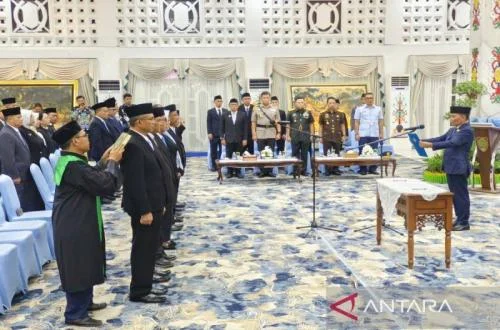
PALANGKA RAYA – Governor Agustiar Sabran of Central Kalimantan (Kalteng) presided over a significant inauguration ceremony, appointing a slate of high-ranking primary officials within the provincial government. The solemn event unfolded at the historic Istana Isen Mulang in Palangka Raya on Thursday evening, June 25, marking a pivotal moment in the province’s administrative landscape. This extensive bureaucratic reshuffle, affecting several critical agencies and departments, is a direct outcome of a rigorous "job fit" assessment process designed to align civil service personnel with the evolving demands of the provincial administration and ensure optimal performance. The move underscores the provincial government’s commitment to strengthening public service delivery, fostering good governance, and accelerating development across Central Kalimantan.
The gubernatorial directive for these appointments stems from a comprehensive evaluation process aimed at matching individual competencies and experiences with the strategic needs of various organizational units. Governor Sabran emphasized that this initiative is not merely a routine administrative adjustment but a calculated step towards cultivating a highly professional, accountable, and results-oriented bureaucracy. The "job fit" methodology, increasingly adopted in Indonesian public administration, serves as a cornerstone for merit-based appointments, moving away from traditional patronage systems towards a more transparent and performance-driven approach. This mechanism is crucial for ensuring that public resources are managed effectively and that policy implementation is executed by individuals best suited for their roles.
"This inauguration of High-Ranking Primary Officials is the direct result of a job fit assessment," Governor Agustiar Sabran stated during the ceremony, elaborating on the rationale behind the extensive personnel changes. He further articulated that through this meticulous process, the regional government endeavors to place officials in positions that perfectly leverage their individual competencies, extensive professional experience, and the specific, dynamic requirements of each organizational unit. This strategic alignment is paramount for enhancing the efficiency and effectiveness of the provincial government’s operations, ultimately benefiting the citizens of Central Kalimantan. The governor’s remarks highlighted a deliberate effort to optimize human resources within the provincial apparatus, ensuring that every appointed official is poised to contribute meaningfully to the province’s development agenda.
Pillars of Good Governance: The Governor’s Mandate for New Appointees
In his address to the newly installed officials, Governor Sabran articulated a clear and resolute mandate, underscoring the profound responsibilities inherent in their new roles. He urged the appointees to swiftly acclimate to their new working environments, immerse themselves in understanding the intricacies of their respective duties and functions, and, crucially, demonstrate tangible and measurable performance from the outset. This emphasis on immediate impact and quantifiable results reflects a broader vision for a proactive and accountable provincial administration.
The Governor stressed that each position is not merely a title but a sacred trust, an amanah, imbued with immense responsibility. This trust, he clarified, encompasses the paramount duty to deliver exemplary services to the populace, to elevate the overall performance of their respective organizations, and to actively contribute to the realization of effective, professional, and integrity-driven governance. This holistic vision for public service aims to embed a culture of excellence and ethical conduct throughout the provincial bureaucracy. Sabran’s message resonated with the principles of good governance, highlighting accountability, transparency, and a steadfast commitment to public welfare as non-negotiable tenets for all civil servants. The expectation is that these new leaders will serve as catalysts for positive change, driving forward the province’s agenda with unwavering dedication and ethical leadership.
Strategic Appointments Reflecting Provincial Priorities
The comprehensive reshuffle saw a number of key positions filled by both permanent (definitif) and acting (Pelaksana Tugas, or Plt) officials, signaling a calculated strategy to infuse new energy and expertise into critical sectors. These appointments are designed to bolster the provincial government’s capacity to address ongoing challenges and capitalize on emerging opportunities, particularly in areas crucial for sustainable development and public welfare.
Among the prominent appointments for permanent roles, Sutoyo was named Head of the Regional Revenue Agency (Bapenda). This agency is pivotal for the province’s financial health, responsible for optimizing local revenue generation through taxes and levies, which in turn funds essential public services and infrastructure projects. A robust Bapenda is indispensable for reducing reliance on central government transfers and fostering fiscal autonomy.
Syahfiri assumed the leadership of the Regional Development Planning, Research and Innovation Agency (Bapperida). This agency is the strategic brain of the provincial government, tasked with formulating long-term development plans, conducting crucial research to inform policy, and fostering an environment of innovation. His role will be central to aligning provincial development with national goals and ensuring evidence-based policymaking.
The critical position of Head of the Regional Finance and Asset Agency (BKAD) went to Suyuti Syamsul. BKAD is responsible for managing the provincial budget, overseeing financial administration, and safeguarding provincial assets. Effective management in this area is fundamental for fiscal discipline, preventing waste, and ensuring transparency in public expenditure.
Further strengthening the provincial secretariat, Anang Dirjo was appointed Assistant for Economy and Development to the Regional Secretary (Setda). This role is crucial for coordinating economic policies and development initiatives across various departments, ensuring a cohesive approach to fostering economic growth and improving living standards.
In the realm of urban and rural development, Eddy Karusman took the helm as Head of the Housing, Residential Areas, and Land Agency (Disperkimtan). With rapid urbanization and the need for equitable access to housing, Disperkimtan plays a vital role in planning sustainable settlements, providing affordable housing solutions, and managing land use effectively.
Addressing social welfare, Akhmad Husain was inaugurated as Head of the Social Affairs Agency (Dinsos). Dinsos is on the frontline of poverty alleviation, disaster response, and providing support for vulnerable populations. His leadership will be crucial in enhancing social safety nets and promoting inclusive development.
Finally, in an era dominated by digital transformation, Adiah Chandra Sari was appointed Head of the Communication, Informatics, Encryption, and Statistics Agency (Diskominfosantik). This agency is instrumental in facilitating government-to-citizen communication, promoting digital literacy, ensuring data security, and leveraging technology to improve public services and transparency. Her role is key to advancing Central Kalimantan’s digital agenda.
Acting Officials: Bridging Leadership Gaps and Sustaining Momentum
In addition to the permanent appointments, Governor Sabran also installed several Acting Officials (Plt) to ensure continuity and sustained progress in key sectors. This practice allows for immediate leadership while the process for definitive appointments is finalized, often involving open bidding or further assessments.
Rangga Lesmana was appointed Plt Head of the Investment and One-Stop Integrated Service Agency (DPMPTSP). This agency is crucial for attracting domestic and foreign investment, streamlining licensing processes, and creating a conducive business environment. In a resource-rich province like Central Kalimantan, a strong DPMPTSP is vital for economic diversification and job creation.
Adi Suseno assumed the role of Plt Head of the Culture and Tourism Agency (Disbudpar). Central Kalimantan boasts rich cultural heritage and significant tourism potential, from its unique Dayak culture to its natural attractions like Tanjung Puting National Park. Disbudpar’s role is to develop and promote these assets sustainably, contributing to the local economy and preserving cultural identity.
Lastly, Miko was appointed Plt Head of the Health Agency (Dinkes). The health sector remains a top priority, particularly in ensuring equitable access to quality healthcare, managing public health programs, and responding to health crises. His interim leadership will be critical in maintaining essential health services and advancing public health initiatives.
The appointment of Plt officials reflects a pragmatic approach to governance, ensuring that no critical sector is left without leadership during the transition phase. It also allows for careful evaluation before permanent appointments are made, fostering a more robust and well-considered bureaucratic structure.
The "Job Fit" Mechanism: A New Era of Meritocracy
The "job fit" assessment process, which served as the foundation for these appointments, represents a significant departure from traditional bureaucratic practices in Indonesia. Historically, civil service appointments could sometimes be influenced by seniority or political connections. However, the "job fit" model, championed by the central government and increasingly adopted by regional administrations, seeks to instill a culture of meritocracy and professionalism.
This process typically involves a multi-faceted evaluation, including competency tests, psychological assessments, interviews with selection committees comprising academics and seasoned bureaucrats, and a review of past performance records. The aim is to objectively assess a candidate’s suitability for a specific role, considering their leadership qualities, technical expertise, problem-solving abilities, and alignment with organizational values. For Central Kalimantan, the implementation of "job fit" underscores the provincial government’s commitment to building a high-performing bureaucracy capable of tackling complex development challenges effectively. It is a vital tool in promoting good governance, fostering integrity, and ensuring that public offices are held by individuals who possess the requisite skills and dedication.
Central Kalimantan’s Development Trajectory and the Role of New Leadership
Central Kalimantan, with its vast natural resources, including oil palm, timber, and mineral deposits, presents a unique blend of opportunities and challenges. The province is also a critical area for environmental conservation, particularly regarding its peatlands and rainforests, which are vital for global climate regulation and biodiversity. The new leadership cohort will be tasked with navigating these complexities, balancing economic development with environmental sustainability and social equity.
The Bapenda and BKAD chiefs will be instrumental in optimizing revenue collection and ensuring prudent financial management, crucial for funding the province’s ambitious development plans. Bapperida’s head will guide the strategic direction, ensuring that development projects are well-planned, innovative, and aligned with the province’s long-term vision, such as the Regional Medium-Term Development Plan (RPJMD). The Asisten Perekonomian will play a crucial role in fostering a conducive investment climate, working closely with DPMPTSP to attract sustainable investments that create jobs and stimulate local economies.
Furthermore, the Dinsos and Disperkimtan leaders will be at the forefront of improving social welfare and living conditions, addressing issues like poverty, access to housing, and social protection. Diskominfosantik will drive digital transformation, enhancing government efficiency and public access to information, while Disbudpar will work to unlock the province’s tourism potential, diversifying the economy and promoting its unique cultural heritage. Dinkes will remain vital in strengthening public health infrastructure, a lesson profoundly underscored by recent global health crises. These roles are interconnected, forming a cohesive administrative framework designed to propel Central Kalimantan towards its development goals.
Expectations, Accountability, and the Path Forward
The appointments signify a renewed push by Governor Agustiar Sabran to streamline the provincial administration and inject fresh dynamism into its operations. The expectation for these newly appointed officials is clear: they must not only meet but exceed performance targets, demonstrate proactive leadership, and uphold the highest standards of integrity. The Governor’s emphasis on measurable performance implies that these officials will be subject to rigorous evaluation, with their continued tenure dependent on their ability to deliver tangible results for the people of Central Kalimantan.
Accountability will be a cornerstone of their service. The public, civil society organizations, and the regional legislative body (DPRD) will undoubtedly be observing the performance of these new leaders closely. The success of this administrative reshuffle will ultimately be judged by its impact on the ground – improved public services, enhanced economic opportunities, more effective infrastructure development, and a higher quality of life for all residents of Central Kalimantan. This strategic move by Governor Sabran is a testament to the ongoing efforts within Indonesian regional governments to professionalize the bureaucracy and foster a culture of public service excellence, aligning with national aspirations for good governance and sustainable development.