Lusiana Hamidun
The House of Chanel unfurled its highly anticipated Cruise 2026/2027 collection under the visionary direction of Matthieu Blazy, embarking on a profound exploration of the maison’s rich archives. Blazy masterfully reinterpreted Chanel’s enduring legacy through a distinctively modern lens, weaving in the vibrant symbols of the Basque Country with a playful and fresh sensibility. This collection, presented in the picturesque coastal resort town of Biarritz, served as a potent testament to Chanel’s historical ties with the region and its ongoing evolution.
Biarritz: A Return to Chanel’s Roots
The choice of Biarritz for this significant presentation was steeped in history. It was in this chic southwestern French locale that Gabrielle Chanel herself established her first boutique and workshop in 1915. This strategic location not only paid homage to the brand’s origins but also provided a tangible connection to the spirit of innovation and freedom that defined early 20th-century fashion. The sea and its elements, as highlighted by Blazy in the collection’s press notes, have always been integral to Chanel’s narrative, particularly in relation to outdoor activities and sports that gained prominence in the 1910s. This historical context directly informed the collection’s emphasis on freedom of movement and comfort, core tenets of the Chanel silhouette.
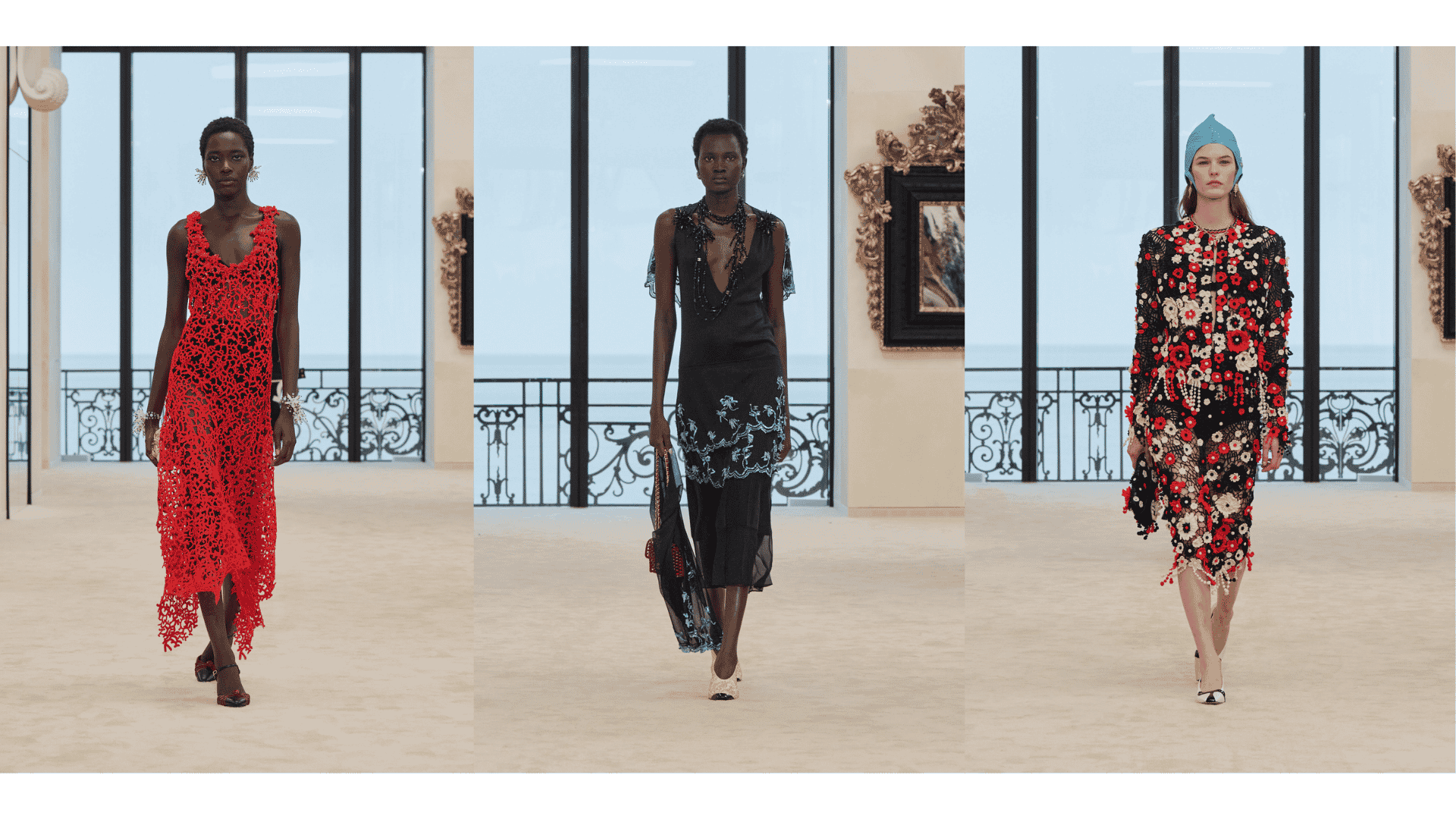
The venue itself, a magnificent casino, offered a breathtaking backdrop. Its vast glass windows framed the expansive panorama of the open sea, creating an immersive experience that blurred the lines between the collection and its environment. The interior ambiance was meticulously crafted to evoke the intimacy of Gabrielle Chanel’s private apartment. Towering bouquets of flowers adorned every corner, while long, mirrored hallways and rows of chairs, embellished with golden wheat carvings on their backs and legs, added an opulent yet personal touch. Underfoot, a soft, sand-colored carpet provided a subtle grounding, upon which the zodiac symbol of Gabrielle Chanel, the lion, was subtly integrated into the decor, peeking out from the corners and imbuing the space with an elegant, personal warmth.
A Dialogue Between Past and Present
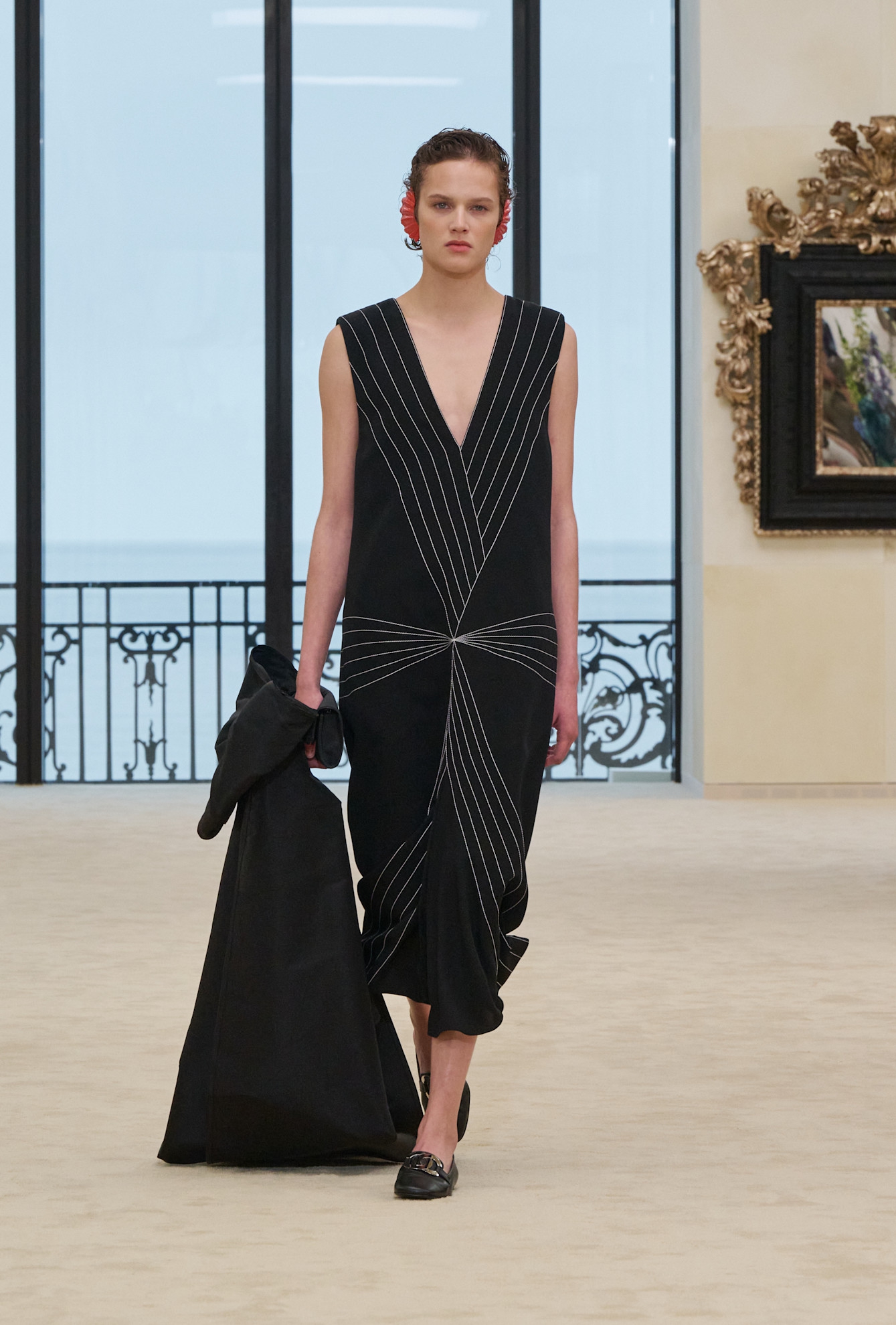
Matthieu Blazy commenced the show with a masterful "past/present" opening, showcasing an iconic little black dress. Exactly a century prior, this simple yet radical garment had revolutionized fashion by embracing understated elegance. In Blazy’s interpretation, the little black dress was reborn with a pure and elegant silhouette: a straight-cut design featuring a lengthened V-neckline, accentuated by Art Deco lines, particularly evident in the precise low-waist detailing. A particularly striking reinterpretation of the original archive involved a voluminous bow that once graced the back of the dress. Blazy transformed this element into a dramatic hand accessory, with the oversized bow cascading elegantly to the floor, a testament to his innovative approach to heritage pieces.
Optimism, Artisanship, and the Iconic Double C
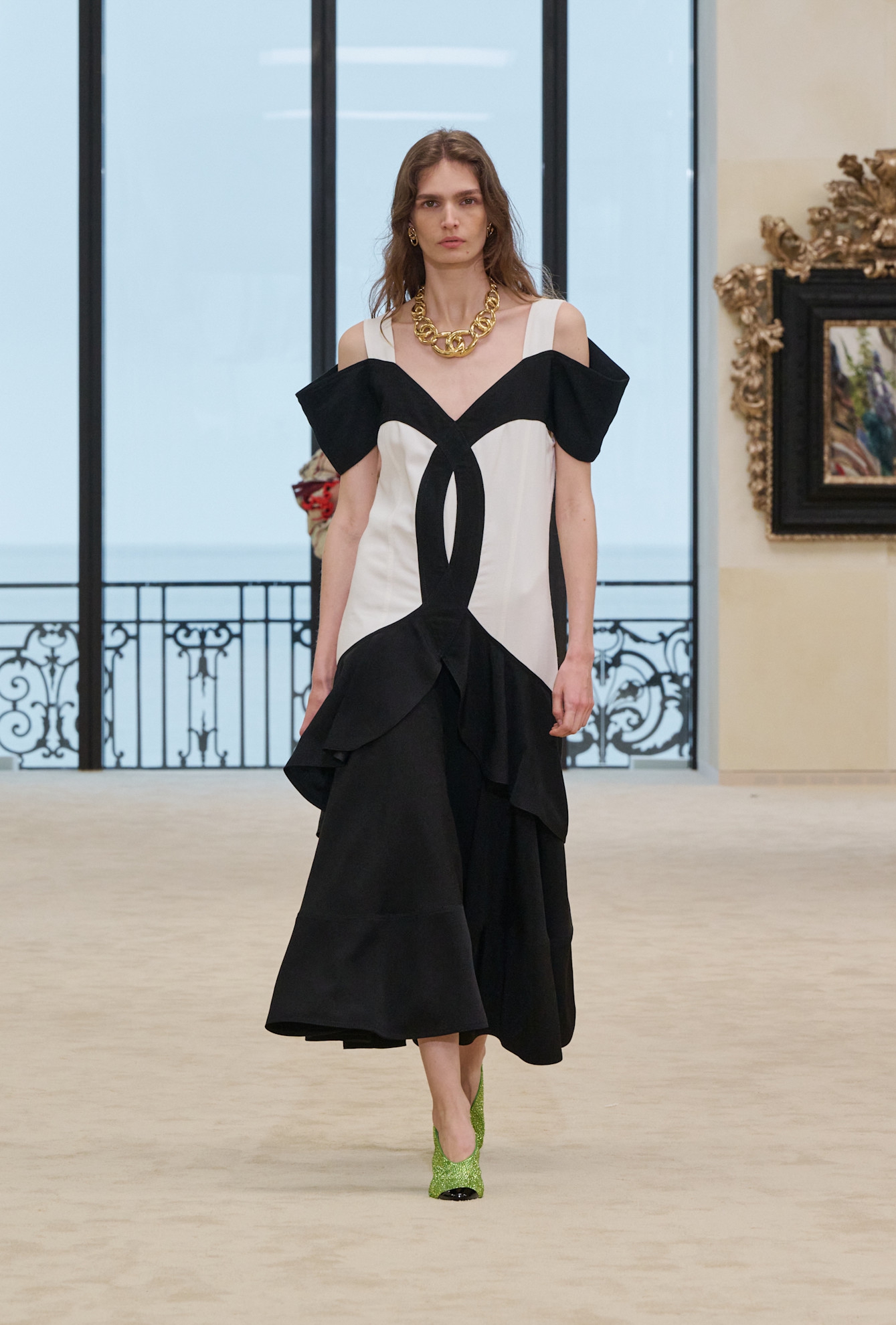
The collection radiated an palpable sense of optimism, expressed through a vibrant palette and a celebration of feminine elegance that remained effortlessly relaxed. Matthieu Blazy’s genius lay in his ability to forge a meticulous correlation between the House’s historical narrative and artisanal textile innovation. The iconic Double C logo, for instance, transcended its role as a mere accessory to become an integral structural element. This was exemplified in an off-shoulder white dress, where the interlocking black "C" lines flowed seamlessly from the sleeves across the décolletage, transforming the logo into a bold, sartorial statement.
Maritime Musings and Basque Influences
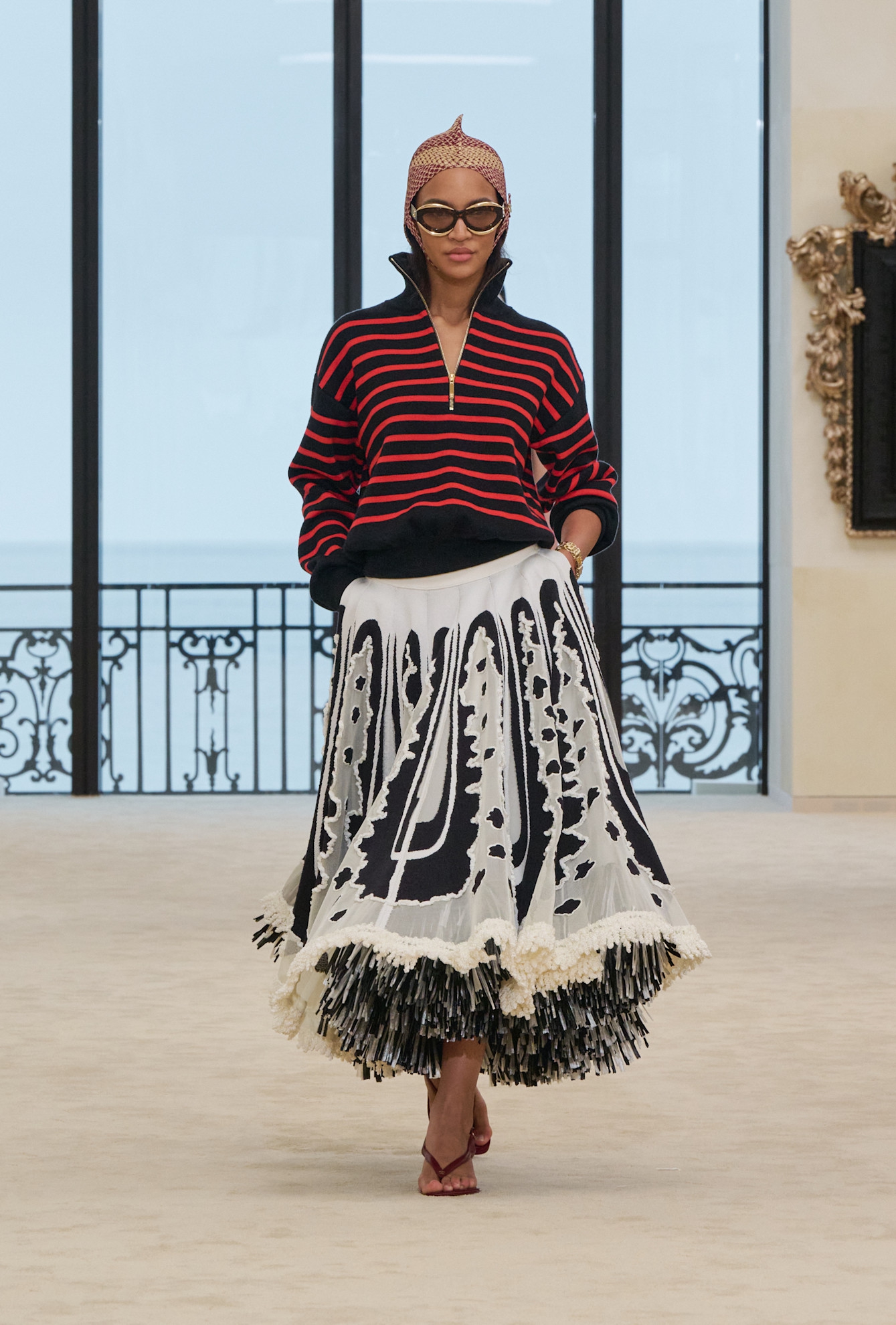
The maritime theme permeated the collection both literally and metaphorically. Sailor-striped trucker hats were paired with wide skirts adorned with nautical motifs, inspired by the patterns of beach umbrellas, complete with raffia fringe accents. This playful nod to seaside leisure captured the essence of a carefree vacation, a core concept of the Cruise collections.
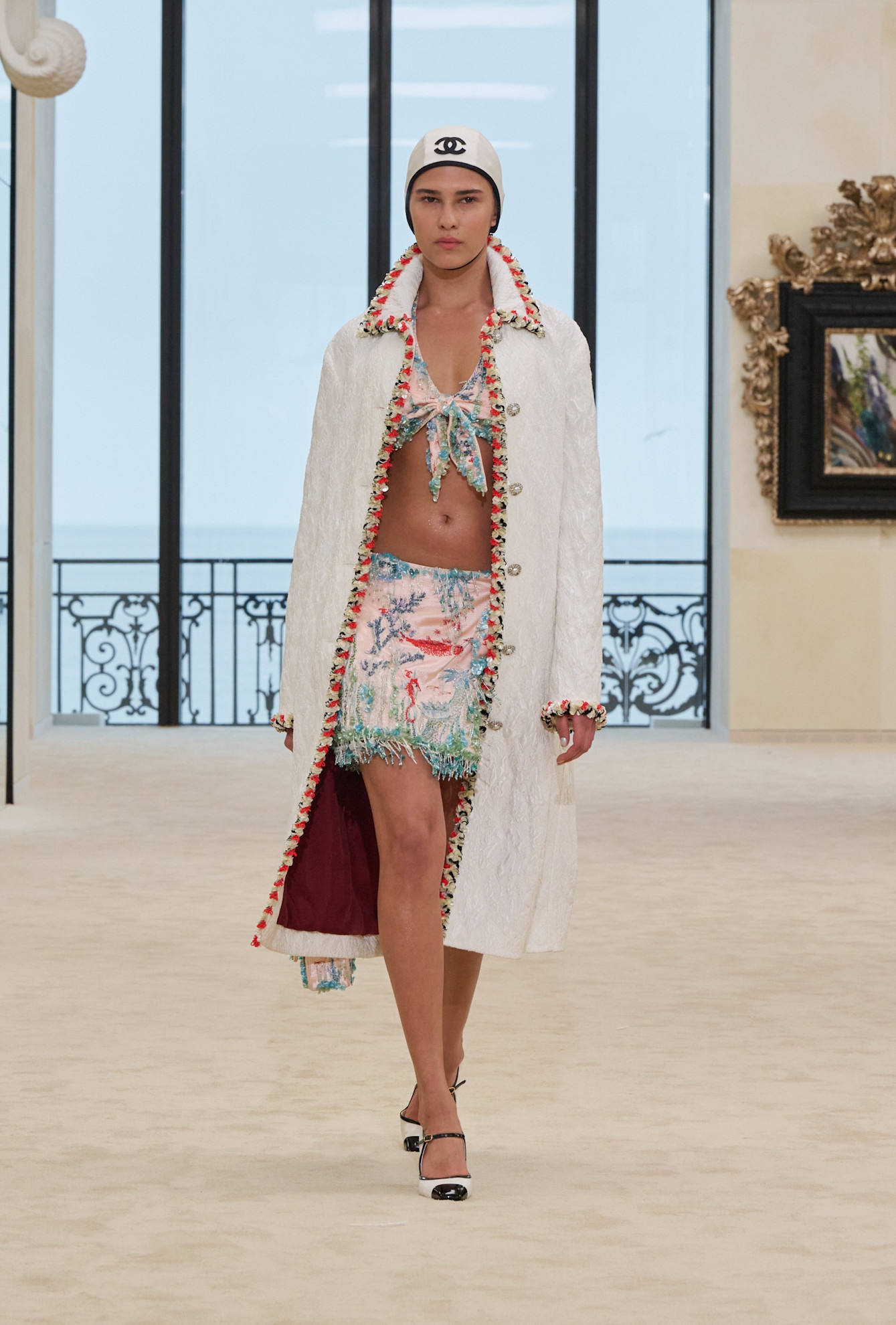
Further drawing from the ocean’s allure, the collection featured dresses that mimicked the intricate weave of fishing nets, alongside shell-shaped earrings that evoked the treasures of the sea. The spirit of the 1920s emerged through swimsuits paired with retro swim caps, a subtle yet effective evocation of a bygone era of glamorous seaside pursuits. The distinctive color palette of the Basque Country – rich reds, vibrant greens, and deep blues – infused the collection with a strong sense of local identity. These regional hues were not confined to garments but also appeared in unique accessories, such as necklaces crafted in the shape of Espelette chili peppers, a signature agricultural product of the Basque region, adding a charming and unexpected touch of local flavor.
A Dreamlike Conclusion
The culmination of this sartorial journey was a magical finale. The collective energy and creative vision poured into the Cruise collection reached its zenith with the appearance of two figures reminiscent of mermaids, seemingly conjured from the depths of Matthieu Blazy’s childhood dreams. This ethereal closing act underscored the collection’s blend of reality and fantasy, grounding its historical references in a timeless, imaginative narrative.
Analyzing the Impact and Implications
The Chanel Cruise 2026/2027 collection, under Matthieu Blazy’s direction, represents a significant moment in the brand’s ongoing evolution. By anchoring the presentation in Biarritz, a location deeply intertwined with Gabrielle Chanel’s personal history and the brand’s genesis, Blazy not only honored the past but also strategically positioned Chanel’s present and future. The emphasis on freedom of movement and comfort, rooted in the early 20th century’s embrace of active lifestyles, resonates strongly with contemporary demands for practical yet luxurious fashion.
The collection’s success lies in its nuanced approach to heritage. Rather than merely replicating archival designs, Blazy has engaged in a sophisticated dialogue with Chanel’s legacy, reinterpreting iconic elements like the little black dress and the Double C logo with a fresh, modern sensibility. This strategy is crucial for maintaining brand relevance while appealing to a new generation of consumers who value both tradition and innovation.
The integration of Basque cultural elements adds a layer of authenticity and localized charm that has become increasingly important in the global fashion landscape. This approach allows Chanel to connect with a broader audience by celebrating regional influences and the stories they represent. The playful yet elegant execution of these motifs, from the chili pepper necklaces to the nautical prints, demonstrates a sophisticated understanding of how to incorporate cultural references without resorting to superficiality.
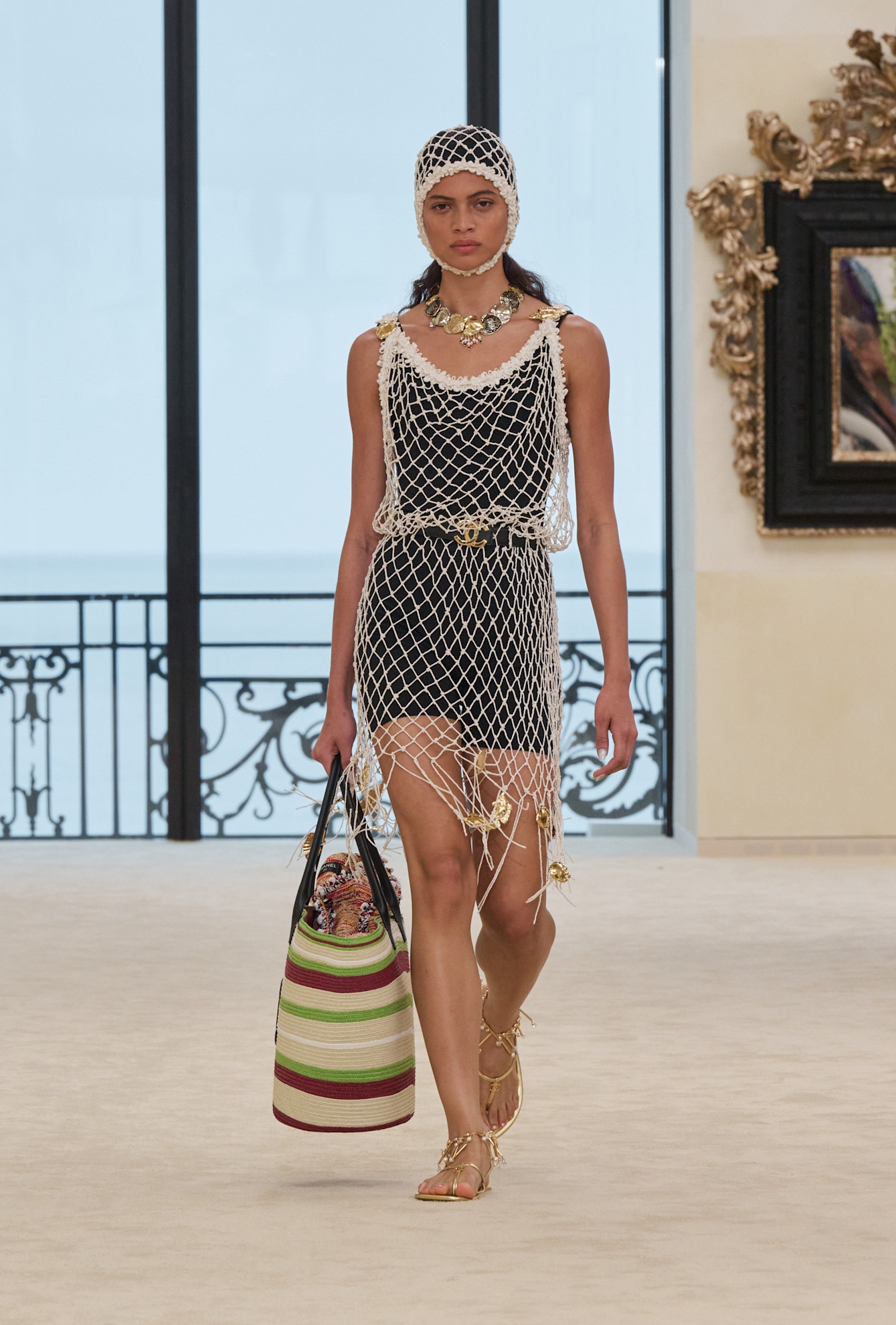
Furthermore, the collection’s emphasis on artisanal craftsmanship, evident in the textile innovations and the detailed embellishments, speaks to a broader trend in luxury fashion towards valuing quality and skilled workmanship. In an era of fast fashion, this focus on enduring quality and unique creation solidifies Chanel’s position as a purveyor of timeless elegance.
The presentation’s setting within a grand casino overlooking the sea provided a powerful metaphor for the collection itself – a blend of grandeur and natural beauty, tradition and modernity. The intimate, apartment-like decor further reinforced the personal connection Blazy sought to establish, making the audience feel like welcomed guests in the world of Chanel.
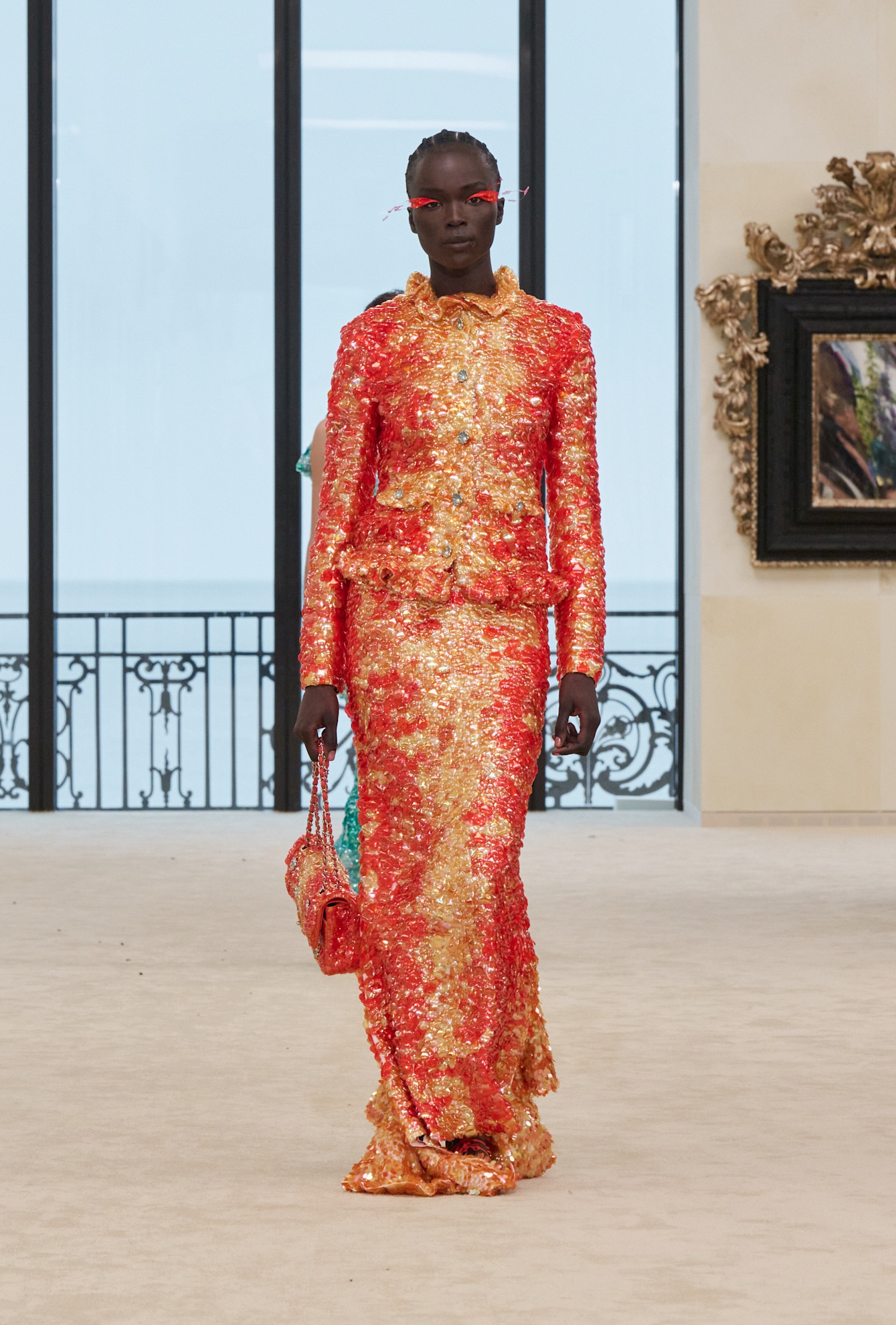
The implications of this collection extend beyond mere aesthetic appreciation. It signals a confident trajectory for Chanel under Blazy, one that is deeply respectful of its foundational principles while boldly embracing contemporary design narratives. The ability to seamlessly merge historical archives with fresh inspirations, and to infuse collections with cultural narratives, positions Chanel to continue its reign as a leading force in the global fashion industry, appealing to a diverse clientele seeking both heritage and cutting-edge design. The collection’s success in Biarritz underscores the enduring power of place and history in shaping fashion narratives and solidifies Chanel’s commitment to exploring these rich connections in its future endeavors.