Azin Asro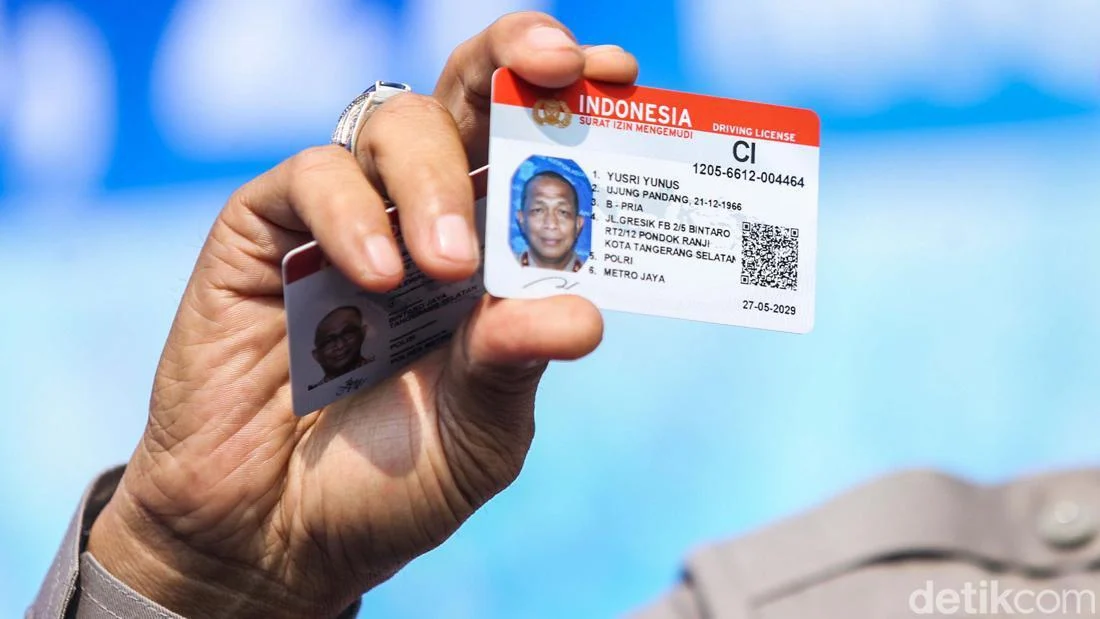
The Indonesian National Police Traffic Corps (Korlantas Polri) has reaffirmed the stringent enforcement of driver’s license (Surat Izin Mengemudi or SIM) renewal deadlines, noting that even a single day of delinquency necessitates a complete re-application process. Under current regulations, a license that has passed its expiration date is considered void, and holders are ineligible for the simplified renewal mechanism. This policy underscores the government’s commitment to administrative discipline and road safety, as the re-application process requires motorists to undergo the full suite of competency evaluations, including theoretical and practical examinations, which are otherwise waived during a timely renewal.
The Legal Framework and the "One-Day" Rule
The legal basis for this strict expiration policy is rooted in the Indonesian National Police Chief Regulation (Perkapolri). According to the latest directives publicized via the Digital Korlantas social media platforms and official portals, there is no grace period for an expired SIM. If a motorist fails to renew their license by the date printed on the card, the individual is legally categorized as not possessing a valid permit. To regain legal driving status, the individual must visit a local Driver’s License Administration Unit (Satpas) and apply as a "new" applicant.
This distinction is significant because the renewal process is primarily administrative, involving a health check and a psychological evaluation but bypassing the rigorous driving tests. In contrast, a new application forces the motorist to prove their proficiency from scratch. This policy serves as a deterrent against negligence, encouraging citizens to monitor their document validity closely.
Financial Implications: A Detailed Breakdown of Costs
The financial burden of missing a renewal deadline is twofold: the direct costs of the license issuance and the indirect costs of mandatory supplementary tests. For the years 2025 and 2026, the fee structure for license issuance remains governed by Government Regulation (PP) Number 76 of 2020 concerning the Types and Rates of Non-Tax State Revenue (PNBP) applicable to the Indonesian National Police.
For a new license application, the base issuance fees (PNBP) are categorized as follows:
- SIM A (Private Four-Wheeled Vehicles): Rp 120,000
- SIM B1/B2 (Heavy Vehicles/Commercial): Rp 120,000
- SIM C (Motorcycles – C, CI, CII): Rp 100,000
- SIM D (Motorists with Disabilities): Rp 50,000
- SIM International: Rp 250,000
In addition to these base fees, applicants must budget for several mandatory auxiliary services. A health examination, which typically checks vision, hearing, and physical reflexes, is required and generally costs approximately Rp 35,000 when conducted at Satpas-affiliated clinics. Furthermore, a psychological evaluation—designed to assess cognitive ability, psychomotor skills, and personality stability—is mandatory. This test costs Rp 100,000 if conducted on-site via digital kiosks or Rp 77,500 if completed through authorized online platforms such as the e-PPars application.
Finally, while technically optional in some jurisdictions but highly encouraged, personal accident insurance (AKDP) typically carries a premium of Rp 50,000. When these figures are aggregated, a new SIM A applicant may face total costs exceeding Rp 300,000, whereas a timely renewal for the same category would generally cap at approximately Rp 265,000. The motorcycle category (SIM C) sees a similar disparity, with new applications totaling around Rp 285,000 compared to renewal costs of approximately Rp 260,000.
The Chronology of Validity: From Birthday to Issuance Date
Historically, the expiration date of an Indonesian driver’s license was synchronized with the holder’s birthday. This system was designed to make it easier for citizens to remember their renewal date. However, following a shift in policy by Korlantas Polri in recent years, the validity period is now strictly five years from the date of issuance.
This change has created a transitional period where many motorists still mistakenly believe their license expires on their birthday. Authorities have urged the public to inspect their physical SIM cards or digital records within the "SINAR" (SIM Nasional Presisi) mobile application to verify the exact expiration date. The shift to a five-year issuance cycle aligns with Supreme Court rulings and administrative streamlining, ensuring that the five-year validity period promised by law is delivered precisely to the day.
The Application Process: Theoretical and Practical Hurdles
For those forced to apply for a new SIM due to a late renewal, the process involves more than just higher fees; it involves the risk of failure. The theoretical exam consists of a series of questions regarding traffic laws, road signs, and situational ethics. In recent years, this has been modernized into an Electronic Driving Test System (e-Drives), which utilizes sensors and digital monitoring to ensure objective grading.
The practical exam is often cited by the public as the most challenging hurdle. For motorcyclists (SIM C), this involves navigating a course that tests balance, emergency braking, and U-turns. For car drivers (SIM A), the test includes parallel parking, incline starts, and reverse maneuvers. Under current regulations, if an applicant fails either the theoretical or practical test, they are permitted to retake the exam after a waiting period (usually 7 to 14 days), though some regional offices have introduced "same-day retakes" to improve public service efficiency.
Digital Transformation and Accessibility
To mitigate the risk of citizens missing their renewal dates, the Indonesian government has invested heavily in digital infrastructure. The Digital Korlantas platform allows for online renewals, where the physical card can be mailed directly to the applicant’s residence. This system integrates the e-Rikkes (health test) and e-PPars (psychological test) into a single workflow.
However, the digital renewal service is only available for licenses that are still valid. Once the expiration date passes, the digital system automatically locks the renewal option, forcing the user to appear in person at a Satpas office for a new application. This technological gatekeeping reinforces the "one-day" rule by removing human discretion from the initial stages of the application process.
Official Responses and Public Sentiment
Official statements from the National Police emphasize that the strictness of the rule is a matter of legal consistency. A spokesperson for the Traffic Corps noted that "the law does not provide a mechanism for ‘reviving’ an expired document. Once it expires, the privilege granted by the state to operate a motor vehicle is revoked, and the individual must prove their competency again to have that privilege reinstated."
Public reaction to this policy remains mixed. While many acknowledge the need for discipline, there are frequent calls for a "grace period," particularly for those who may have been hospitalized or traveling abroad when their license expired. In response to these concerns, the police occasionally offer "SIM Dispensasi" (grace periods) during major national holidays, such as Eid al-Fitr or Christmas, or during periods of technical system maintenance. Outside of these specific windows, however, the "one-day" rule is absolute.
Socio-Economic Impact and Road Safety Analysis
From a road safety perspective, the requirement to re-test lapsed drivers ensures that individuals who may have developed poor driving habits or suffered from declining health are re-evaluated. However, from a socio-economic standpoint, the policy can be burdensome for low-income workers, particularly those in the gig economy such as ride-hailing (Ojek online) drivers and logistics couriers. For these individuals, the loss of a license for even a few days, combined with the higher costs and time commitment of a new application, represents a significant loss of income.
Data suggests that administrative compliance in Indonesia has improved since the introduction of the digital notification system within the SINAR app, which sends push notifications to users as their expiration date approaches. Nevertheless, thousands of motorists every month across Jakarta and other major cities still find themselves in the "new application" queue due to oversight.
Broader Implications for Administrative Reform
The rigid enforcement of the SIM expiration date is reflective of a broader trend in Indonesian governance toward "Single Identity" and administrative precision. With the integration of the National Identity Number (NIK) into the driver’s licensing system, the government aims to create a more transparent and accountable database of motorists. This integration helps in law enforcement efforts, such as the Electronic Traffic Law Enforcement (ETLE) system, which links traffic violations directly to the vehicle owner’s identity and license status.
As Indonesia moves toward 2026, the cost of licensing remains a point of public interest. While the PNBP rates are fixed by government regulation, the auxiliary costs for health and psychological testing are often managed by third-party vendors, leading to slight regional variations in total price. Transparency in these "hidden costs" remains a priority for consumer advocacy groups, who argue that the total cost of being a legal driver should be kept as low as possible to discourage unlicensed driving.
In conclusion, the "one-day" rule for SIM renewals in Indonesia serves as a firm reminder of the responsibilities associated with motor vehicle operation. By removing the buffer for late renewals, authorities have prioritized legal clarity and periodic competency checks over administrative convenience. For the Indonesian motorist, the message is clear: proactive renewal is not merely a suggestion, but a financial and legal necessity to avoid the more arduous path of re-qualification.