Nasution Nanang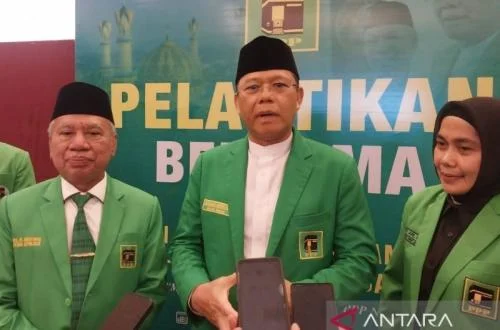
The Indonesian Constitutional Court (MK) has delivered a definitive ruling affirming that regional head elections (Pilkada) must continue to be conducted directly by the people, a decision that maintains the existing electoral system and underscores the nation’s commitment to popular sovereignty. Muhamad Mardiono, Chairman of the United Development Party (PPP), promptly responded to the court’s pronouncement, stating that the decision does not alter the system that has long been in practice and should be upheld.
Speaking to reporters in Mataram, West Nusa Tenggara (NTB), following the inauguration of the new PPP DPW NTB and DPC PPP Regency/City boards for the 2026-2031 period, Mardiono emphasized, "Since this has become the decision, we will simply implement it." His remarks highlighted a broad acceptance of the ruling among political parties, particularly those like PPP that have historically navigated and participated extensively in the direct election framework. Mardiono further elaborated that the concept of direct Pilkada, where regional leaders are chosen directly by the populace, has been a cornerstone of Indonesian local democracy for an extended period. The recent judicial review, he noted, arose from a petition challenging this established system. "This came about because there was a lawsuit from parties who did not want regional heads to be elected by the people. Consequently, the Constitutional Court decided to maintain the direct election system. We will abide by that decision," Mardiono affirmed, accompanied by the Chairman of PPP DPW NTB, Muzihir, and Secretary of PPP DPW NTB, Sitti Ari.
The Constitutional Court’s Definitive Ruling
The Constitutional Court’s unequivocal stance was delivered during the pronouncement of its verdict on Case Number 195/PUU-XXIV/2026. In a session held in Jakarta on Monday, June 29, 2026, Chief Justice Suhartoyo articulated the court’s position, asserting, "This is guided by the general principles of elections, while still recognizing and respecting special or privileged regional government units." With this pronouncement, the Mahkamah Konstitusi formally declared the petition for judicial review of Article 1, Paragraph 1 of Law Number 8 Year 2015 concerning the Election of Governors, Regents, and Mayors (UU Pilkada) as inadmissible. The court’s rationale was based on the finding that the petitioners in Case 195/PUU-XXIV/2026 failed to demonstrate any actual or potential constitutional harm within reasonable limits of reasoning. This decision effectively nullifies attempts to revert to an indirect electoral system, solidifying the direct mandate of the people in selecting their regional representatives.
Historical Evolution of Direct Pilkada in Indonesia
The journey towards direct regional elections in Indonesia is a significant chapter in the nation’s democratic reforms post-1998. Prior to the fall of the New Order regime, regional heads – governors, regents, and mayors – were selected by the respective Regional Legislative Councils (DPRD). This system, while ostensibly democratic, was often criticized for being susceptible to political maneuvering, elite bargaining, and lacking genuine accountability to the populace. The reformasi era brought with it a strong impetus for greater transparency, accountability, and popular participation in governance.
The first major legislative breakthrough came with Law No. 32 of 2004 concerning Regional Government, which mandated the direct election of regional heads. This landmark legislation paved the way for the first wave of direct Pilkada, beginning in 2005. The shift was revolutionary, empowering citizens to directly choose their leaders and fundamentally altering the relationship between the elected and the electorate. No longer were regional leaders beholden solely to the political parties within the DPRD; their legitimacy now stemmed directly from the popular vote. This transition was not without its challenges, including logistical complexities, heightened political competition, and the emergence of new forms of electoral disputes.
Subsequent amendments and new laws, notably Law No. 8 of 2015, refined the framework for direct Pilkada, addressing issues such as electoral financing, dispute resolution mechanisms, and the roles of electoral commissions. Despite broad public support for direct elections, there have been intermittent debates and attempts to reconsider the system. A notable instance occurred in 2014 when the House of Representatives initially passed a bill to revert to indirect Pilkada, sparking widespread public outcry and protests. This move was eventually overturned, reinforcing the public’s and many political factions’ preference for direct elections. The Constitutional Court’s latest ruling thus serves as a powerful reiteration of this established democratic principle, ensuring continuity and stability in the electoral landscape.
Arguments for and Against Direct Elections: A Balanced Perspective
The debate surrounding direct versus indirect regional elections is multi-faceted, encompassing arguments rooted in democratic principles, practical considerations, and socio-political impacts.
Arguments in favor of Direct Pilkada, often cited by proponents and implicitly upheld by the MK’s decision, include:
- Enhanced Legitimacy and Accountability: Directly elected leaders possess a stronger mandate from the people, making them more accountable to the electorate rather than to political parties or legislative bodies.
- Increased Citizen Participation: Direct elections foster greater public engagement in the political process, encouraging voters to understand issues, evaluate candidates, and exercise their democratic rights.
- Reduced Elite Bargaining: While not entirely eliminating it, direct elections can diminish the power of political elites to decide leadership behind closed doors, shifting the focus to popular appeal.
- Democratic Consolidation: For a developing democracy like Indonesia, direct elections are seen as a vital step in strengthening democratic institutions and norms at the local level.
- Responsiveness to Local Needs: Leaders who campaign directly to the people are often perceived as more attuned to the specific needs and aspirations of their constituents.
Conversely, arguments often raised against Direct Pilkada, and likely underlying the recently rejected petition, include:
- High Costs: Direct elections involve substantial financial outlays for campaigns, electoral administration, security, and dispute resolution. This can strain regional and national budgets.
- Potential for Money Politics and Corruption: The high cost of campaigning can incentivize candidates to engage in transactional politics or rely on illicit funding, leading to corruption once in office.
- Increased Political Polarization and Conflict: Direct competition can heighten tensions among candidates and their supporters, potentially leading to social divisions and, in some cases, electoral violence.
- Rise of Political Dynasties: Direct elections, paradoxically, can sometimes facilitate the perpetuation of political dynasties, where well-known families leverage their name and networks to win successive elections.
- Logistical Challenges: Organizing direct elections across Indonesia’s vast archipelago, with its diverse geography and population centers, presents immense logistical hurdles for electoral bodies.
The Constitutional Court’s decision, by rejecting the petition to revert to an indirect system, signals that the benefits of direct elections, particularly concerning popular sovereignty and accountability, outweigh the perceived drawbacks in the eyes of the highest judicial interpreter of the constitution.
Broader Political Landscape and Stakeholder Reactions
The Constitutional Court’s ruling is expected to be met with general approval across the Indonesian political spectrum, particularly from major political parties that have adapted their strategies to the direct election system. While some individual politicians or factions might privately favor an indirect system for its perceived stability or ease of political maneuvering, the public sentiment and the current political climate strongly favor direct elections.
Civil society organizations, which have historically championed democratic reforms and greater public participation, are likely to welcome the decision as a victory for popular sovereignty. Groups advocating for good governance, anti-corruption, and human rights have consistently supported direct Pilkada as a mechanism for holding leaders accountable.
Academic and legal experts view the ruling as a crucial reinforcement of Indonesia’s democratic gains. Political scientists often highlight that direct elections, despite their imperfections, are instrumental in fostering political literacy and civic engagement. Legal scholars emphasize the Constitutional Court’s role as a guardian of the constitution, ensuring that legislative acts align with fundamental democratic principles. The decision underscores the judiciary’s independence and its commitment to upholding the constitutional mandate for democratic governance.
The government, responsible for the implementation of elections, will likely proceed with existing plans, focusing on improving the quality and efficiency of direct Pilkada. This could involve further legislative refinements within the framework of direct elections, such as stricter campaign finance regulations, enhanced voter education programs, and more robust mechanisms for electoral dispute resolution at earlier stages to reduce the burden on the Constitutional Court.
Statistical Context of Pilkada in Indonesia
Indonesia, a vast archipelago nation comprising 38 provinces and over 500 regencies and cities, regularly conducts Pilkada to elect its regional leaders. These elections are staggered, occurring simultaneously in various regions on specific dates. For instance, in previous simultaneous Pilkada events, hundreds of regions participated, involving tens of millions of voters.
- Voter Turnout: Historically, voter turnout in Indonesian Pilkada has been relatively high, often exceeding 70-80% in many regions, indicating strong public interest and engagement in local politics. This participation rate is a testament to the perceived importance of directly electing local leaders.
- Budgetary Allocations: The cost of organizing these elections is substantial. A single simultaneous Pilkada across numerous regions can run into trillions of Rupiah (hundreds of millions of US dollars), covering everything from ballot printing and logistics to honoraria for electoral officials and security operations. For example, the 2020 simultaneous Pilkada, held amidst the COVID-19 pandemic, involved significant budgetary adjustments for health protocols, further highlighting the financial commitment to direct elections.
- Electoral Disputes: Given the high stakes, electoral disputes are a common feature of Pilkada. The Constitutional Court plays a critical role in adjudicating these disputes, with hundreds of cases often filed after each election cycle, challenging results based on alleged fraud, administrative errors, or violations of electoral law. The court’s role in maintaining the integrity of the direct election process is thus paramount.
- Impact on Local Governance: The direct election system has profoundly impacted local governance. It has led to greater responsiveness from regional leaders to public demands and has fostered a more competitive political environment at the local level. However, it has also presented challenges related to short-term populist policies and the need for regional heads to navigate complex relationships with their respective DPRDs.
Implications for Democratic Consolidation and Governance
The Constitutional Court’s ruling solidifies the framework for direct regional elections, providing stability and predictability for Indonesia’s democratic institutions. This certainty allows political parties, electoral bodies, and civil society to focus their efforts on enhancing the quality and integrity of the electoral process rather than debating the fundamental system.
The implications for democratic consolidation are profound. By upholding direct Pilkada, Indonesia reaffirms its commitment to a decentralized democratic system where power flows from the people to their chosen representatives at all levels of government. This strengthens local autonomy and ensures that regional policies are more reflective of local aspirations.
For governance, the decision means continued emphasis on accountability. Regional leaders will remain under direct public scrutiny, incentivizing them to deliver on campaign promises and govern effectively. The focus will now shift towards addressing the persistent challenges associated with direct elections, such as ensuring fair campaign finance, preventing electoral fraud, mitigating political polarization, and fostering ethical leadership. The ongoing development of robust legal and administrative mechanisms to manage these challenges will be crucial for the sustained success of Indonesia’s direct regional election system.
In conclusion, the Constitutional Court’s decision is more than just a legal pronouncement; it is a reaffirmation of Indonesia’s democratic journey. By maintaining direct regional elections, the nation entrenches a system that, despite its complexities, empowers its citizens and reinforces the principles of popular sovereignty and accountability at the very heart of its governance structure. The focus now turns to refining and perfecting this vital democratic instrument for the future.