Nasution Nanang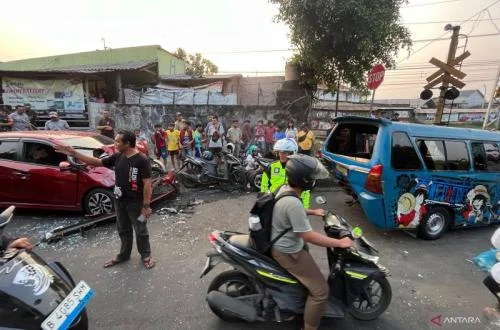
BOGOR, West Java – A severe multi-vehicle collision involving six vehicles at the Kebon Pedes railway crossing in Tanahsareal District, Bogor City, on Saturday, July 4th, has prompted an intensive investigation by the Bogor City Police Traffic Unit. Preliminary findings suggest the incident, which occurred around 4:30 PM Western Indonesian Time (WIB), was primarily caused by a driver’s failure to maintain a safe distance from the vehicles ahead, triggering a chain reaction that damaged several cars and motorcycles and caused minor injuries. The accident has brought renewed focus on road safety protocols, particularly in high-traffic and high-risk areas such as railway crossings.
Iptu Eko Susilo, Head of Law Enforcement (Kanit Gakkum) at the Bogor City Police Traffic Unit (Satlantas Polresta Bogor Kota), confirmed the unfortunate event, detailing the number and types of vehicles involved. "Indeed, a multiple-vehicle accident occurred, involving a total of six vehicles. This includes four four-wheeled vehicles and two two-wheeled vehicles," Iptu Susilo stated, emphasizing the complexity of the scene and the ongoing efforts to determine the precise sequence of events and the full extent of material damages. The incident underscores the critical need for drivers to exercise vigilance and adherence to traffic regulations, especially in congested urban environments like Bogor.
Detailed Chronology of the Incident
The Kebon Pedes railway crossing, a frequently used thoroughfare connecting various parts of Bogor, is known for its heavy traffic, especially during weekend afternoons. On that fateful Saturday, as the clock neared 4:30 PM, traffic along the route was observed to be moving slowly or coming to a halt, a common occurrence either due to general congestion or in anticipation of an approaching train. This particular stretch often experiences bottlenecks, requiring drivers to be extra cautious and prepared for sudden stops.
According to initial police investigations, the sequence of events began when a Honda Brio, positioned at the very rear of the affected traffic queue, failed to decelerate or maintain an adequate safe distance. The driver of the Honda Brio, whose identity has not been fully released pending the investigation, reportedly lost situational awareness or misjudged the stopping distance, leading to a forceful impact with the vehicle immediately in front of it.
This initial collision set off a catastrophic chain reaction. The Honda Brio first struck a public transport minivan (Angkot), a common mode of public transportation in Indonesian cities. The force of this impact propelled the Angkot forward, causing it to collide with a Daihatsu Ayla. The domino effect continued, with the Daihatsu Ayla then hitting a Daihatsu Xenia. Simultaneously, or almost immediately thereafter, two motorcycles that were either slowly moving between lanes or stopped near the main line of traffic were also caught in the ensuing chaos, suffering significant damage. The scene quickly transformed into a tangled mass of metal, glass, and debris, blocking the railway crossing and causing immediate traffic disruption.
Emergency services, including police units and medical personnel, were promptly dispatched to the scene. The primary focus was on securing the area, providing assistance to any injured parties, and commencing preliminary investigations. Fortunately, initial reports indicated that the driver of the Honda Brio, who was identified as the primary catalyst of the accident, sustained only minor injuries. The status of other drivers, passengers, or motorcyclists involved was not immediately detailed beyond the general assessment of minor injuries, suggesting no life-threatening conditions but substantial material damage across all six vehicles. Police personnel immediately began directing traffic around the affected area, working to clear the wreckage and restore normal flow as quickly as possible.
Police Investigation and Preliminary Findings
Following the immediate response, the Bogor City Police Traffic Unit initiated a comprehensive investigation into the multi-vehicle pile-up. Iptu Eko Susilo confirmed that the preliminary assessment points towards driver negligence as the leading cause. "The initial investigation suggests that the driver of the Honda Brio was unable to maintain a safe distance, resulting in the collision with the vehicles ahead," he reiterated. This preliminary finding highlights a recurrent issue in road safety, where a lack of proper following distance, often exacerbated by distractions or fatigue, leads to preventable accidents.
The police investigation is multifaceted, involving several key steps. These include detailed interviews with all drivers and passengers involved, as well as eyewitnesses who might have observed the incident unfold. Furthermore, traffic investigators are conducting a thorough technical inspection of all six damaged vehicles to assess the nature and extent of the damage, which can help in reconstructing the accident. The topography of the Kebon Pedes railway crossing, including road conditions, visibility, and any existing traffic signage or signals, is also being meticulously examined. While no specific mention of CCTV footage was made in initial reports, police typically seek out any available surveillance cameras in such busy areas that might have captured the incident, providing crucial visual evidence.
The ongoing investigation aims to definitively ascertain the precise cause of the accident, determine if any other contributing factors were at play, and calculate the total material losses incurred. This comprehensive approach is vital not only for legal proceedings but also for informing future road safety initiatives and policy adjustments.
The Peril of Railway Crossings and Bogor’s Traffic Landscape
Bogor, often dubbed the "Rain City," is a bustling urban center and a popular weekend destination, leading to chronically high traffic volumes. Its strategic location as a buffer city to Jakarta means a significant daily influx of commuters and tourists, placing immense pressure on its road infrastructure. Railway crossings, like the one at Kebon Pedes, represent critical choke points in this intricate traffic network. They are inherently hazardous due to several factors: the sudden and often unpredictable need for vehicles to stop, the presence of physical barriers, and the potential for limited visibility, especially during peak hours or adverse weather conditions.
National traffic safety data consistently shows that human error accounts for a vast majority of road accidents in Indonesia, often exceeding 80% of all incidents. Within this category, "failure to maintain a safe distance" is a frequently cited cause, alongside speeding, distracted driving (e.g., using mobile phones), and driving under the influence of alcohol or fatigue. According to statistics from the Indonesian National Police, thousands of road accidents occur annually across the country, resulting in tens of thousands of injuries and fatalities. While specific, granular data for Bogor City on July 4th is not yet publicly available, this incident aligns with broader national trends.
Road safety experts often point to the "three-second rule" as a fundamental principle for maintaining safe following distance – drivers should aim to stay at least three seconds behind the vehicle in front of them, increasing this interval in poor weather or heavy traffic. This simple rule, if universally applied, could significantly reduce the incidence of rear-end collisions and multi-vehicle pile-ups. The Kebon Pedes incident serves as a stark reminder of the consequences when this basic safety tenet is overlooked.
Expert Commentary and Road Safety Advocacy
The incident at Kebon Pedes has naturally drawn commentary from road safety experts and advocacy groups. Dr. Andika Pratama, a leading traffic safety analyst, emphasized the psychological aspects contributing to such accidents. "In congested traffic, especially near known bottlenecks like railway crossings, drivers can become complacent or impatient," Dr. Pratama noted. "There’s a tendency to ‘creep up’ on the vehicle ahead, reducing the buffer zone. When an unexpected stop occurs, there’s simply not enough time or space to react safely." He advocates for continuous public awareness campaigns that move beyond simple warnings, delving into the cognitive biases that influence driver behavior.
Furthermore, urban planning experts highlight the need for infrastructure improvements. Ms. Sari Dewi, an urban planner specializing in transportation, suggested that "while driver behavior is paramount, the design of our urban infrastructure also plays a crucial role. Railway crossings, particularly those with high traffic volumes, should ideally be upgraded to grade separations – underpasses or overpasses – to eliminate direct conflict points between road and rail traffic. Where this is not feasible, enhanced signage, intelligent traffic light systems, and clear road markings are essential." She also pointed out that better enforcement of traffic laws, including those related to safe following distance and railway crossing etiquette, is vital.
Road safety non-governmental organizations (NGOs) across Indonesia have consistently called for a multi-pronged approach to reducing road fatalities and injuries. Organizations like the Indonesian Road Safety Partnership (IRSP) advocate for sustained public education, stricter law enforcement, safer vehicle standards, and improved road infrastructure. This incident provides further impetus for their ongoing efforts to foster a culture of responsible driving.
Official Reactions and Preventative Measures
In the wake of the collision, various official bodies are expected to reiterate their commitment to enhancing road safety. The Bogor City Transportation Agency (Dishub Kota Bogor) will likely review the traffic management protocols around the Kebon Pedes crossing. A spokesperson for the agency, speaking on background, indicated that they are constantly assessing road conditions and traffic flow. "We regularly conduct evaluations of critical traffic points, including railway crossings, to ensure adequate signage, lighting, and road markings are in place. This incident will prompt another review of the Kebon Pedes area, and we will collaborate closely with the police to identify any infrastructure improvements that could mitigate future risks," the spokesperson said. They are also expected to emphasize the role of public education in preventing such incidents.
PT Kereta Api Indonesia (KAI), the national railway operator, while not directly responsible for road traffic, consistently issues warnings about the dangers of railway crossings. A representative for KAI is anticipated to remind the public about the importance of adhering to crossing signals, waiting for trains to pass completely, and never attempting to bypass closed barriers. They would stress that the primary responsibility for safety at level crossings lies with road users to ensure their safe passage and to avoid stopping on the tracks.
From the law enforcement perspective, Iptu Eko Susilo’s emphasis on maintaining a safe distance and full concentration while driving serves as a crucial directive for all motorists. The police are expected to intensify patrols and enforcement activities in areas prone to accidents, particularly those with high traffic density and specific hazards like railway crossings. This includes enforcing speed limits, cracking down on distracted driving, and ensuring compliance with traffic signals and regulations. The incident also highlights the importance of defensive driving courses and continuous public awareness campaigns that aim to instill a more responsible driving culture among Indonesian road users.
Broader Implications and Future Outlook
The Kebon Pedes multi-vehicle accident carries several broader implications beyond the immediate incident. Economically, the cost of vehicle repairs for six vehicles, potentially including public transport, represents a significant material loss. Furthermore, any medical expenses for the injured, even if minor, add to the economic burden. The traffic disruption caused by the accident also translates into lost productivity for commuters and businesses.
Socially, such incidents contribute to public anxiety regarding road safety. They serve as stark reminders of the fragility of life on the roads and the constant need for vigilance. For those directly involved or who witnessed the event, there can be psychological impacts, ranging from shock to heightened anxiety about driving. The incident will likely fuel public discourse on whether existing traffic regulations are sufficient or adequately enforced, and whether current infrastructure can handle Bogor’s growing traffic demands.
Looking ahead, this accident could potentially trigger a review of local traffic policies and enforcement strategies in Bogor. It might also accelerate discussions on implementing smarter traffic management systems, leveraging technology such as real-time traffic monitoring and intelligent signaling to improve flow and reduce congestion at critical points. While not directly applicable to all vehicles involved in this incident, the increasing adoption of advanced driver-assistance systems (ADAS) in newer vehicles, such as automatic emergency braking and adaptive cruise control, offers a glimpse into future technological solutions that could mitigate human error.
Ultimately, preventing such tragic and disruptive events requires a concerted, multi-faceted approach involving all stakeholders: government agencies responsible for infrastructure and enforcement, vehicle manufacturers, road safety experts, and most importantly, individual road users. The ongoing investigation into the Kebon Pedes incident will provide valuable insights, and the lessons learned must be translated into actionable strategies to enhance road safety in Bogor and across Indonesia, striving for a future where such collisions become increasingly rare.