Lusiana Hamidun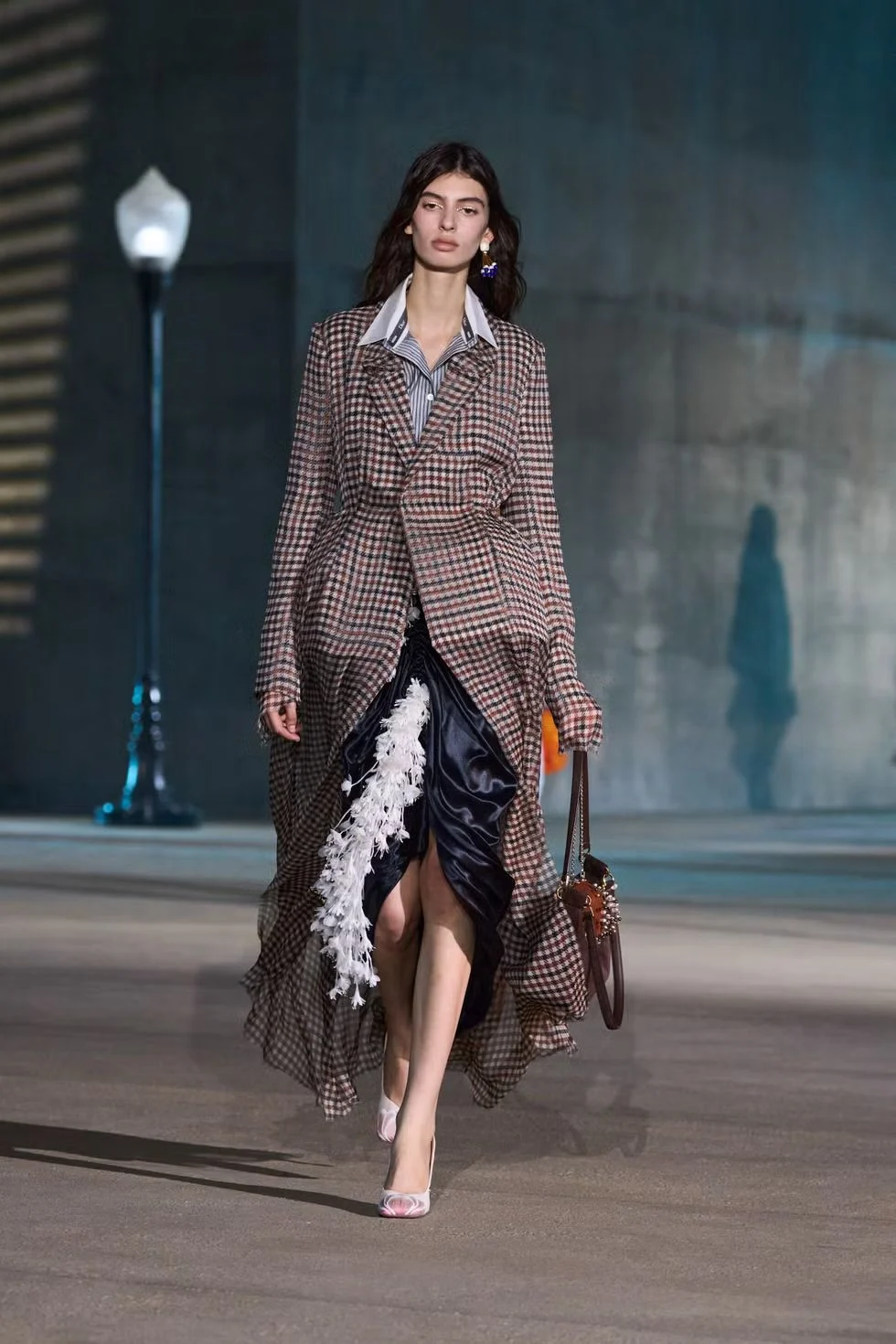
Jonathan Anderson, the celebrated creative director behind Loewe and his eponymous label, has once again demonstrated his masterful ability to weave narrative and art into fashion. Following a captivating Spring 2026 collection staged in the Tuileries Garden of Paris, Anderson transported his audience to the sun-drenched, cinematic landscape of Los Angeles for Dior’s highly anticipated Cruise 2026 presentation. This marked Anderson’s inaugural resort show for the venerable French house, and he chose the iconic Los Angeles County Museum of Art (LACMA), specifically the newly opened David Geffen Galleries, as his dramatic stage.
The choice of venue was no accident. The Brutalist concrete atrium provided a stark, modern canvas, transformed by Anderson’s vision into a scene evocative of American art legends Ed Ruscha and Edward Hopper. The runway itself was a winding path, artfully designed to resemble a tableau from a classic Hollywood film, perhaps even conjuring the dreamlike, unsettling atmosphere of David Lynch’s "Mulholland Drive." As dusk settled over Los Angeles, the runway came alive, illuminated by the soft glow of vintage streetlights and flanked by a curated selection of classic automobiles. This carefully constructed environment fostered a sense of melancholic nostalgia, infused with a distinctly Pop Art sensibility, setting the stage for a collection that delved deep into the multifaceted identity of Los Angeles.
A Narrative Rooted in Hollywood’s Hidden Histories
Anderson is renowned for his intellectual approach to design, possessing a unique talent for elevating potentially kitschy or overly theatrical concepts into sophisticated and nuanced expressions. This was evident in his recent Met Gala creation for Sabrina Carpenter, a gown ingeniously constructed entirely from strips of film. For the Dior Cruise 2026 collection, Anderson revealed that his creative journey began with a deep dive into the life of Scotty Bowers. Bowers, a seemingly unassuming gas station attendant in Los Angeles from the 1940s through the 1980s, secretly served as a discreet intermediary for Hollywood stars, facilitating their personal lives and liaisons.
This intriguing historical figure sparked Anderson’s fascination with the duality of "on-screen and off-screen" personas, and the interplay between "workers and non-workers." Consequently, the collection transcended a mere tribute to Hollywood as an entertainment industry. Instead, it embraced Los Angeles as a vibrant nexus of art, culture, and the complex realities of its inhabitants, both celebrated and behind the scenes. The collection aimed to capture the essence of this duality, exploring the glamorous facade and the more intimate, often hidden, narratives that define the city.
Echoes of Art and the Golden Age of Couture
The artistic influences of Ed Ruscha and Edward Hopper were palpable in the collection’s graphic elements and color palettes, reflecting the visual language of mid-20th century American art. From this artistic foundation, Anderson explored the bustling, often clandestine world of Scotty Bowers, ultimately connecting it to the enduring legacy of Christian Dior himself. Anderson highlighted how Dior, in the 1950s, strategically expanded his role beyond that of a couturier to become a shrewd businessman. He actively cultivated relationships within the burgeoning film industry, visiting major studios like Warner Brothers and Paramount Pictures, and forging connections with studio executives and actors. This proactive engagement was instrumental in bringing Dior’s designs to the silver screen, cementing the house’s global influence.
A pivotal moment in this symbiotic relationship was the legendary statement attributed to actress Marlene Dietrich in 1950. When reportedly asked by Alfred Hitchcock about starring in "Stage Fright," Dietrich famously declared, "No Dior, no Dietrich." This powerful declaration, asserting her commitment to wearing Dior designs, became the central motif and guiding principle for Anderson’s collection. It underscored the profound impact Christian Dior had on blurring the lines between high fashion and cinematic artistry, establishing a precedent for luxury brands’ engagement with the world of film.
Reinterpreting Icons: The Tuxedo Jacket and Beyond
The Dior Cruise 2026 collection served as a profound homage to Marlene Dietrich’s distinctive style and the evolution of Christian Dior’s design philosophy during the 1950s. A significant highlight was the reinterpretation of the iconic tuxedo jacket, originally designed by Dior for Dietrich. This seminal piece, which had been privately held by the late Azzedine Alaïa and was most recently showcased at the Fondation Alaïa’s exhibition of his Dior collection at La Galerie Dior in Paris, was brought back to life by the house.
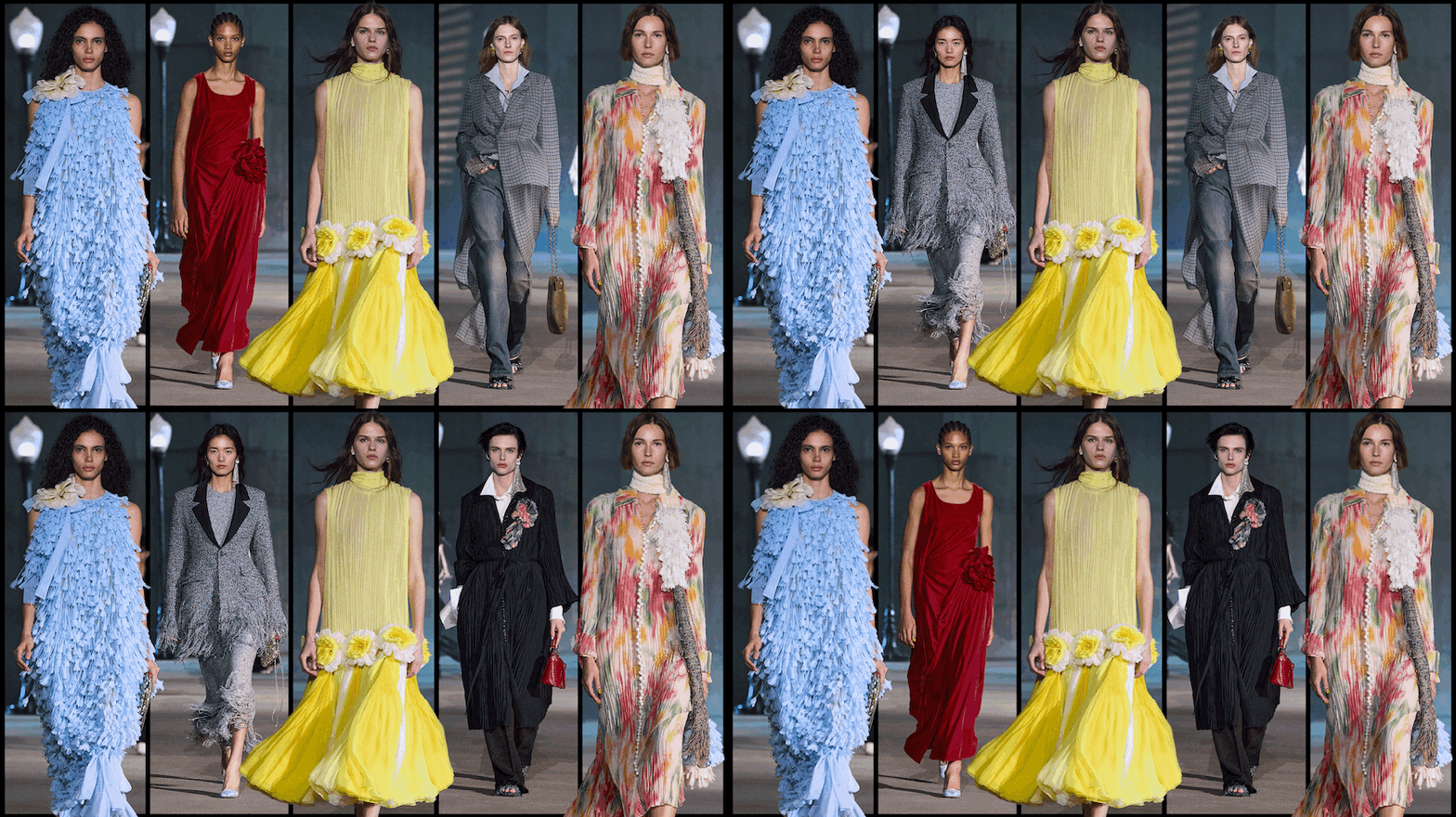
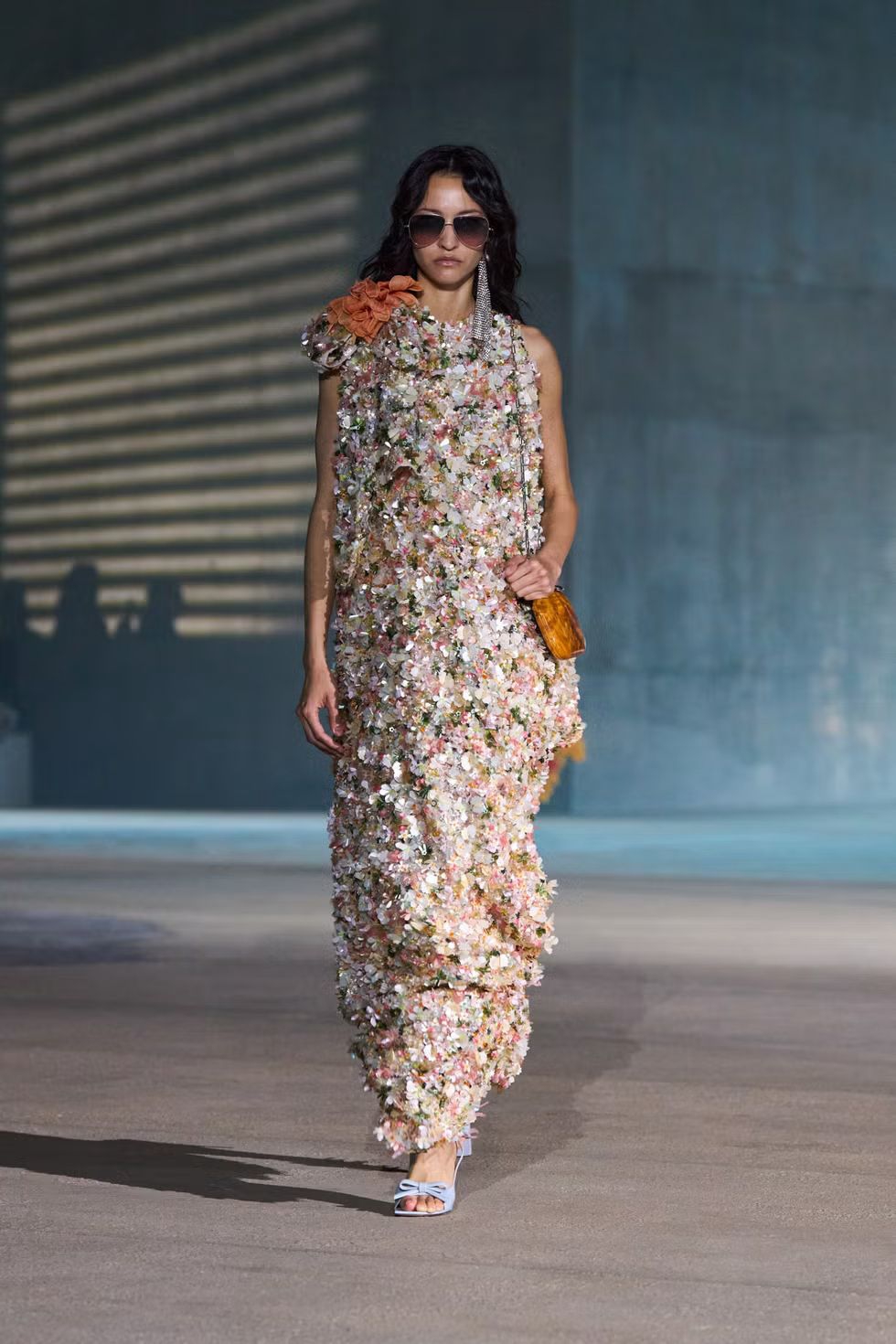
Anderson also embraced the elegant drop-waist silhouette, particularly evident in the collection’s opening looks. These ensembles were adorned with delicate poppy appliqués, rendered in a striking palette of yellow and blue, evoking a sense of vibrant optimism. A keen focus was placed on shirting, a cornerstone of many wardrobes. This manifested in impeccably tailored shirt dresses featuring sharp, straight cuts and intricate micro-pleating reminiscent of Fortuny’s craftsmanship. Asymmetrical covered buttons added a subtle yet distinctive detail. The collection also showcased a range of poplin and cotton shirts, alongside ethereal sheer fabrics, which Anderson noted conjured memories of department store offerings from the 1950s, tapping into a vein of accessible luxury.
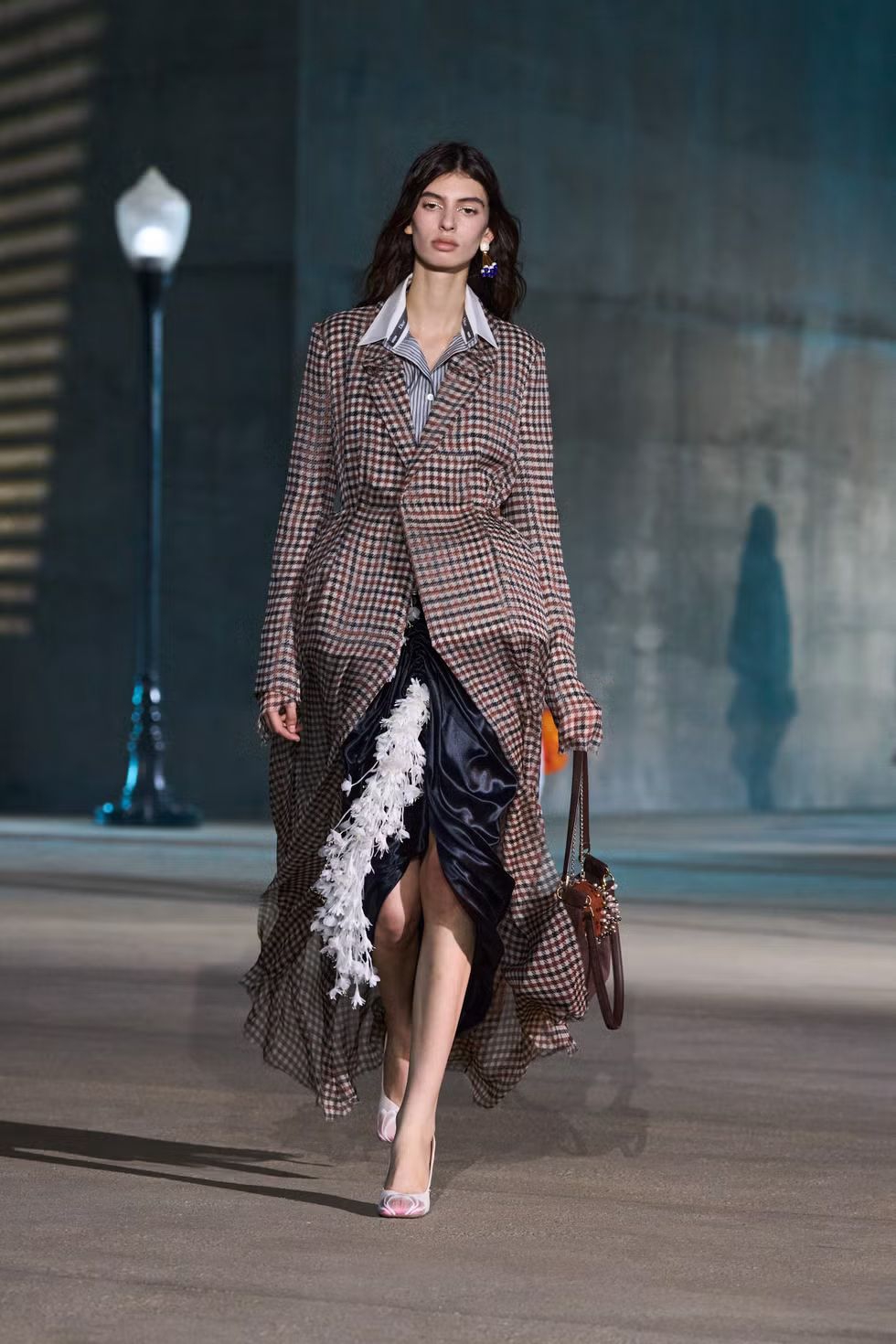
Anderson’s signature take on the "Bar Jacket" appeared with an intentionally deconstructed hem, paired with contemporary ripped jeans, bridging the gap between heritage and modern styling. Several tailored pieces were embellished with soft fringing at the waist or neckline, adding a touch of movement and textural interest. The collection also featured voluminous, balloon-like silhouettes that echoed the dynamism of Anderson’s previous spring collections. These designs, once a fantasy of Parisian strolls, were recontextualized within the American retro aesthetic of streetlights and diners, a testament to the collection’s geographical and thematic inspirations. Accessories played a crucial role in completing the looks. Single, statement chandelier earrings added a touch of opulence, while reinterpretations of John Galliano’s iconic Saddle bag were presented in various forms. These ranged from wearable suede and leather versions to more playful iterations inspired by the distinctive lines of Cadillac cars, further cementing the collection’s Los Angeles connection.
Menswear with a Pop Culture Resonance
The menswear component of the collection also offered a direct and impactful nod to pop culture. Philip Treacy’s millinery creations, emblazoned with words like "Star," "Flow," and "Buzz," immediately evoked a sense of vibrant energy and aspiration. For fashion cognoscenti, these hats were a clear homage to the iconic headwear favored by Isabella Blow, a legendary fashion editor and muse. Anderson revealed that acquiring pieces from Blow’s collection had been a long-held ambition throughout his career, underscoring the personal significance of this design element. The inclusion of these statement hats added a layer of intellectual and sartorial commentary, connecting the collection to a lineage of influential figures in fashion.
A Vision for the Future: Balancing Heritage and Market Reality
The Dior Cruise 2026 collection undeniably presented a diverse array of options designed to resonate with a broad spectrum of clientele, a crucial aspect of Jonathan Anderson’s strategic vision for the house. He acknowledged the inherent challenge of propelling Dior forward while catering to its expansive and varied customer base. This includes loyalists who cherish the house’s heritage and the enduring codes established by Christian Dior, aficionados of John Galliano’s flamboyant era, and admirers of Maria Grazia Chiuri’s romantic sensibility. In his current role, Anderson navigates the delicate balance of honoring the past while simultaneously forging his own narrative. This requires a deep understanding of how to reconcile Dior’s inherent sense of fantasy with the pragmatic realities of the global market.
Expanding Horizons: Dior and the Cinematic Universe
Driven by his ongoing fascination with the world of cinema, Anderson is increasingly focused on forging significant collaborations within the film industry. This strategic initiative aims not only to broaden Dior’s audience reach but also to preserve and amplify the brand’s inherent sense of fantasy and excitement. "This is a larger picture of what we will be doing in the next 12 months in the cinema world," Anderson stated, hinting at ambitious future projects. "There will be bigger projects with film franchises. Maybe three more costume films, one with director Luca Guadagnino, and two others will be different. For me, the question is how to do it so it’s not just product placement? How to work with studios differently?"
This forward-thinking approach signifies a departure from traditional brand partnerships, seeking a more integrated and artistic engagement with filmmaking. The aim is to create collaborations that are mutually beneficial and creatively enriching, ensuring that Dior’s presence in cinema feels authentic and impactful, rather than merely commercial. This strategic pivot reflects a growing understanding of how brands can leverage the power of storytelling and visual media to connect with consumers on a deeper level.
A New Direction for Dior
The Cruise 2026 collection represents a significant new chapter for Dior under Jonathan Anderson’s creative direction. It showcases a compelling equilibrium between a practical, product-focused approach and a strong, distinct design vision – a formula that has defined his reputation in the fashion world and promises to extend into his endeavors within the film industry. Anderson recognizes that achieving these ambitious goals requires time and patience. "The important thing is, I know where the destination is," he remarked. Now firmly in the driver’s seat at Dior, if this collection is any indication, Anderson is steering the house beyond the everyday boundaries of fashion and luxury, infusing it with a touch of cinematic magic that promises to captivate and inspire. The integration of film and fashion signifies a bold step towards creating a more immersive and engaging brand experience for a global audience.
The presentation at LACMA was more than just a fashion show; it was a carefully curated experience that spoke volumes about Anderson’s directorial prowess and his deep understanding of the cultural landscape. By drawing inspiration from art, history, and the unique spirit of Los Angeles, he has crafted a collection that is both deeply personal and universally resonant, setting a new benchmark for luxury brands seeking to connect with contemporary audiences. The future of Dior under his guidance appears poised for innovation, blending timeless elegance with a modern, cinematic sensibility that promises to define a new era of aspirational style.