Nasution Nanang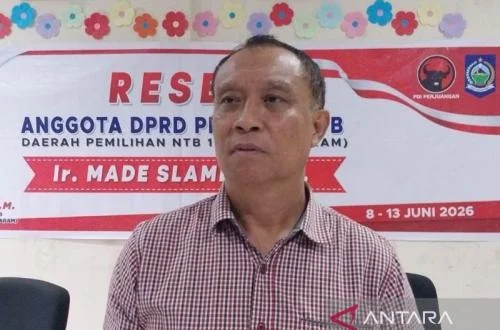
MATARAM, West Nusa Tenggara – Made Slamet, a distinguished member of Commission V of the West Nusa Tenggara (NTB) Regional House of Representatives (DPRD), has actively engaged with various segments of the community, including students, university undergraduates, and local youth, to gather critical aspirations concerning the urgent need for adequate sports facilities in Mataram City. This initiative underscores a proactive approach by regional lawmakers to address grassroots demands and foster a conducive environment for youth development and community engagement. The widespread call for improved infrastructure highlights a significant gap in the current provisions, prompting a commitment from the legislative body to leverage its resources for the betterment of public amenities.
The impetus for this focused engagement emerged directly from Made Slamet’s recent recess visit to SMA 11 Mataram. During this visit, a significant number of students articulated their pressing need for comprehensive and well-maintained sports facilities within their school environment. The direct interaction revealed a deep-seated desire among the younger generation for spaces that not only support physical activity but also nurture their talents and provide constructive outlets for their energy. This firsthand account from the students themselves serves as a powerful testament to the necessity of these facilities, transforming an abstract policy discussion into a tangible community requirement.
"During my visit to SMA 11 Mataram yesterday, there was a substantial outpouring of aspirations from students who are in dire need of complete sports facilities," Made Slamet stated during his recess activities in Mataram City on Friday. His remarks underscore the direct and unambiguous nature of the feedback received, signaling a clear mandate from the youth. This interaction is a cornerstone of the DPRD’s representative function, ensuring that the voices of constituents, particularly those of the younger demographic, are heard and considered in policy-making and resource allocation.
Made Slamet openly acknowledged the prevailing inadequacy and unsuitability of many existing sports facilities, both within residential areas and educational institutions across Mataram. He attributed this challenging situation partly to the inherent budget constraints faced by government entities. This fiscal reality often leads to a scenario where, despite the evident need, communities frequently resort to self-funding or collective efforts to initiate and complete the construction of essential sports infrastructure. This highlights a systemic challenge where community initiative often compensates for limited public resources, pointing to a need for more robust government support.
The Strategic Importance of Sports Facilities for Youth Development
Beyond mere recreational pursuits, Made Slamet emphatically articulated that the provision of robust sports facilities serves a far more profound purpose than superficial entertainment. He stressed their critical role in channeling the hobbies and creative energies of the younger generation, thereby safeguarding them from involvement in negative activities. In an era marked by increasing social complexities and the pervasive influence of digital distractions, accessible and engaging sports facilities offer a vital alternative, promoting discipline, teamwork, and healthy lifestyles.
"Naturally, we will provide assistance through the ‘pokok-pokok pikiran’ (pokir) programs available to members of the council to aid both the community and the government in constructing adequate sports facilities," affirmed the NTB DPRD member, who represents Electoral District I (Dapil I) of Mataram City. The ‘pokir’ mechanism, often translated as ‘members’ discretionary funds’ or ‘aspirational programs,’ is a crucial instrument in Indonesian regional legislative bodies. It allows individual DPRD members to propose specific projects or programs based on the direct aspirations collected from their constituents during recess periods, thereby ensuring that local needs are directly incorporated into the regional budget planning process. This commitment signals a concrete pathway for the identified needs to transition from mere aspirations to tangible development projects.
Made Slamet further reinforced his unwavering commitment to enhancing sports infrastructure across Mataram City, encompassing not only public spaces but also facilities within schools and higher education institutions. This comprehensive approach is designed to foster creativity, cultivate talent, and ultimately elevate the achievements of the younger generation in various sporting disciplines. The vision extends beyond just physical activity, aiming to instill values of perseverance, strategic thinking, and healthy competition, which are invaluable life skills.
"Our future hope is for better facilities that will increase student participation, support positive activities, and alleviate the burden on the government," he concluded. This statement encapsulates a multi-faceted objective: empowering youth, fostering community well-being, and creating a sustainable model where well-equipped facilities contribute to broader societal goals while optimizing public resource utilization.
Background and Context: The Role of DPRD and ‘Pokir’ in Regional Development
The Regional House of Representatives (DPRD) in Indonesia serves as the legislative branch at the provincial and regency/city levels, playing a pivotal role in regional governance. Its primary functions include legislating regional regulations, overseeing the executive branch (regional government), and establishing the regional budget. Members of the DPRD, like Made Slamet, are elected representatives tasked with articulating and addressing the needs of their constituents.
The ‘pokok-pokok pikiran’ (pokir) program is a unique and significant feature of Indonesian local governance. It mandates DPRD members to conduct recess visits to their electoral districts, during which they directly interact with the public to absorb aspirations and identify local development priorities. These collected ‘pokir’ then serve as input for the regional government’s planning and budgeting process. Essentially, ‘pokir’ bridges the gap between grassroots needs and top-down policy formulation, allowing for a more responsive and targeted allocation of regional funds. The commitment by Made Slamet to utilize his ‘pokir’ for sports facility development signifies a direct and accountable method for addressing the community’s demands. This mechanism ensures that the identified needs are not merely acknowledged but are actively pushed for inclusion in the annual regional budget, potentially leading to concrete projects like the construction or renovation of sports fields, multi-purpose halls, or training centers.
The Current State of Sports Infrastructure and Budgetary Challenges in Mataram
Mataram City, as the capital of NTB Province, plays a crucial role in regional development and boasts a significant youth demographic. According to recent demographic data, a substantial portion of Mataram’s population falls within the youth category (15-30 years), highlighting the imperative for robust youth-centric programs and facilities. However, like many other cities in Indonesia, Mataram faces challenges in providing adequate public infrastructure, including sports facilities, due to competing priorities for limited regional budgets.
The existing sports facilities are often characterized by insufficient maintenance, outdated equipment, and a lack of diversity to cater to a wide range of sports. Many school grounds, for instance, might have basic fields but lack proper drainage, safe surfaces, or specialized equipment for various athletic pursuits. This inadequacy not only hampers the development of young athletes but also limits general physical activity among students. The "self-funding" aspect mentioned by Made Slamet is a common phenomenon, where parent associations (Komite Sekolah) or community groups often pool resources to construct or rehabilitate facilities, underscoring the gap between public provision and actual demand. This reliance on community initiatives, while commendable, can lead to disparities in facility quality and access, often favoring more affluent areas.
Voices from the Ground: Students, Educators, and Community Leaders
The aspirations collected by Made Slamet resonate deeply within the community. Students at SMA 11 Mataram, for example, voiced desires for multi-purpose courts capable of hosting basketball, volleyball, and futsal, complete with proper lighting for evening activities and spectator seating. "We often have to share limited space, and sometimes the courts are not in good condition, which makes it hard to practice seriously," commented a student representative from SMA 11. "Having proper facilities would not only improve our skills but also make sports more enjoyable and accessible to everyone."
Educators and school principals also echo these sentiments. A principal from a local high school, who wished to remain anonymous, stated, "Sports facilities are integral to holistic education. They teach discipline, teamwork, and offer a crucial outlet for physical and mental health. When facilities are lacking, it impacts student morale and engagement, not just in sports but potentially in academics too." They often face the dilemma of limited school budgets, which prioritize academic resources, leaving sports infrastructure as a secondary concern.
Community leaders emphasize the broader social benefits. "Adequate sports facilities are community hubs," explained Pak H. Rahman, a local community figure. "They bring people together, foster a sense of belonging, and give our youth something positive to do after school hours. It’s an investment in social cohesion and crime prevention." He highlighted how well-maintained community fields often become centers for local tournaments and social gatherings, strengthening neighborhood bonds.
Broader Impact and Implications: Youth Development and Social Cohesion
The investment in quality sports facilities carries significant implications for youth development and overall societal well-being. From a health perspective, increased access to sports promotes physical activity, combating rising rates of sedentary lifestyles and associated health issues like obesity and non-communicable diseases. Mentally, sports participation has been linked to reduced stress, improved mood, and enhanced cognitive functions.
Crucially, sports instill invaluable life skills. Team sports teach collaboration, leadership, and conflict resolution. Individual sports foster discipline, perseverance, and self-reliance. These skills are transferable and highly beneficial for academic success and future professional careers. Moreover, providing structured and engaging activities like sports is a proven strategy to divert youth from negative influences such such as drug abuse, juvenile delinquency, and excessive screen time. By offering constructive alternatives, communities can nurture responsible citizens and reduce social problems.
From an educational standpoint, better facilities can enhance the school environment, making it more attractive and supportive of extracurricular activities. This can lead to higher student participation rates, improved school spirit, and even better academic performance, as physical activity has been shown to boost concentration and learning capabilities.
Official Responses and Collaborative Efforts
While specific official statements from the Mataram City government or the Youth and Sports Agency were not detailed in the original report, it is highly probable that such bodies acknowledge the need for improved sports infrastructure. Local governments are typically aware of the challenges posed by limited budgets and the growing demands from their constituents. The commitment from a DPRD member like Made Slamet to utilize ‘pokir’ funds often serves as a catalyst, encouraging the executive branch to collaborate on project implementation.
Future efforts would likely involve joint planning between the DPRD, the Mataram City Youth and Sports Agency (Dinas Pemuda dan Olahraga), and relevant educational departments. This collaboration could focus on identifying priority areas, optimizing resource allocation, and exploring alternative funding mechanisms, including potential partnerships with the private sector through Corporate Social Responsibility (CSR) programs. The goal would be to develop a comprehensive master plan for sports facility development that is sustainable and equitable.
Future Outlook and Implementation Challenges
The journey from aspiration to a fully functional sports facility involves several critical steps and potential hurdles. Once Made Slamet’s ‘pokir’ proposals are submitted, they must be integrated into the regional government’s annual work plan (RKPD) and subsequently approved during the regional budget (APBD) deliberations. This process can be lengthy and competitive, as ‘pokir’ proposals vie for funding against numerous other development priorities.
Even after budget allocation, challenges persist in project execution, including procurement processes, quality control during construction, and ensuring long-term maintenance. The sustainability of new facilities is paramount; without proper management and funding for upkeep, even state-of-the-art facilities can quickly deteriorate. This calls for community involvement in management, potential user fees (where appropriate and affordable), and dedicated budget lines for maintenance.
Moreover, equitable distribution of facilities across Mataram City is crucial. While schools like SMA 11 have voiced their needs, aspirations from other areas, including less privileged neighborhoods, must also be considered to ensure that all youth have access to these vital resources. A comprehensive strategy would involve mapping existing facilities, identifying underserved areas, and prioritizing projects based on community need and potential impact.
In conclusion, Made Slamet’s initiative to absorb aspirations for enhanced sports facilities in Mataram City is a significant step towards addressing a critical community need. His commitment to leveraging the ‘pokir’ mechanism offers a concrete pathway for these aspirations to materialize into tangible projects. This effort not only promises to boost youth development and sporting achievements but also underscores the DPRD’s responsiveness to its constituents, fostering a healthier, more engaged, and more vibrant community in Mataram. The collective endeavor of the legislative body, local government, educators, and the community will be essential in transforming these aspirations into a lasting legacy of opportunity for the younger generation.