Tata Titiana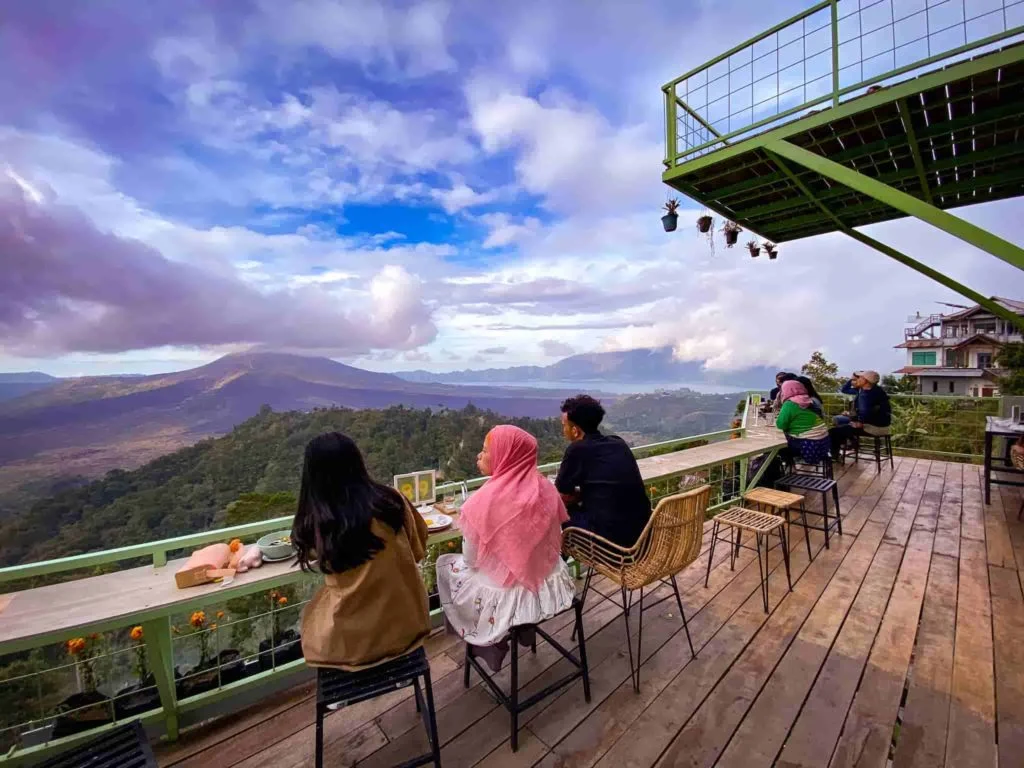
Bali has long held its reputation as Indonesia’s premier international tourism hub, drawing millions of global travelers annually with its unique blend of rich cultural heritage, pristine beaches, and diverse geographical landscapes. While coastal destinations in areas such as Seminyak, Canggu, and Uluwatu traditionally dominate mainstream tourism itineraries, the island’s interior highlands have experienced a significant surge in popularity over recent years. Specifically, the Kintamani region in Bangli Regency has transformed into a thriving epicenter for modern culinary tourism, driven by the establishment of architectural cafes that leverage the area’s dramatic natural topography.
Perched high along the crater rim of Mount Batur, these modern establishments offer visitors an alternative Bali experience characterized by crisp mountain air, panoramic vistas of active volcanoes and caldera lakes, and sophisticated interior designs tailored for the digital age. This journalistic overview examines the evolution of Kintamani’s highland cafe culture, detailing five prominent destinations that combine geographical majesty with contemporary hospitality, while analyzing the broader socio-economic and environmental implications of this tourism boom.
The Rise of Highland Tourism in Kintamani
Historically, Kintamani was primarily known for agricultural production—most notably the famous Kintamani Arabica coffee—and sightseeing day-trips centered around the Batur caldera viewpoint. Visitors would typically drive up from southern Bali, catch a brief glimpse of Mount Batur and Lake Batur, and return to the coast before nightfall. However, a strategic shift in regional tourism development began to take shape in the late 2010s, accelerating rapidly as entrepreneurs recognized the untapped potential of the area’s dramatic cliffside real estate.
By late 2019 and early 2020, a new wave of specialty coffee shops and multidisciplinary hospitality venues began opening along Jalan Raya Penelokan. Unlike traditional mountainside warungs, these modern venues were designed with intentional architectural frameworks—featuring expansive glass walls, multi-tiered outdoor decks, and minimalist aesthetics—to frame the surrounding volcanic landscape as a living artwork. This shift redefined Kintamani from a brief roadside stop into a destination-driven culinary hub, attracting both domestic travelers from Jakarta and Surabaya and international expatriates seeking respite from the tropical heat of Bali’s coastal regions.
Detailed Overview of Prominent Kintamani Cafes
- Tegu Kopi, Kintamani
Inaugurated in December 2019, Tegu Kopi stands as one of the pioneering modern establishments along the Jalan Raya Penelokan corridor in Kintamani, Bangli Regency. Situated strategically on an elevated ridge, the cafe offers a comprehensive 360-degree vantage point encompassing Mount Batur, Mount Abang, Mount Agung, and the crescent-shaped expanse of Lake Batur.
Due to its high elevation—sitting approximately 1,500 meters above sea level—temperatures at Tegu Kopi frequently hover between 17 and 18 degrees Celsius, providing a stark contrast to Bali’s tropical climate. The venue capitalizes on its western exposure, offering visitors an optimal viewing platform for golden-hour sunsets that descend behind the rugged highland horizon. The architectural layout emphasizes open-air seating, allowing patrons to immerse themselves fully in the acoustic tranquility of the mountains while enjoying locally sourced specialty coffee.
- Eco Bike Coffee, Kintamani
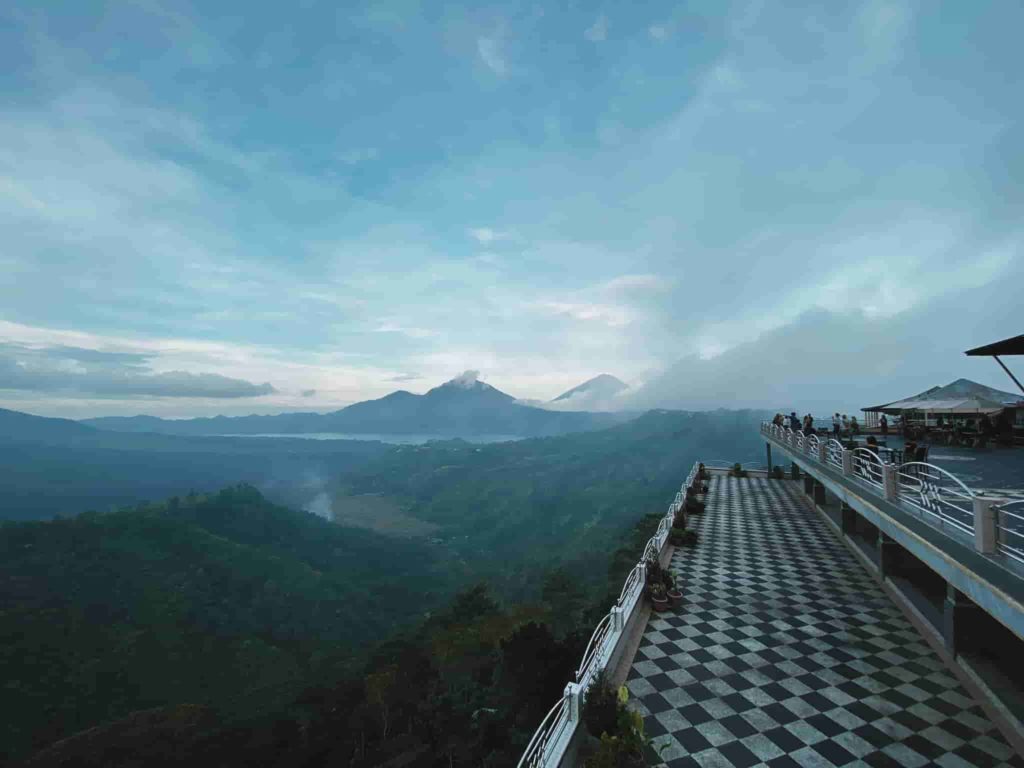
Scaling the concept of mountainside hospitality to new dimensions, Eco Bike Coffee distinguishes itself as one of the largest multi-level cafe complexes operating along the Kintamani cliffside. Spanning three distinct structural tiers, the establishment offers a vertically stratified visitor experience.
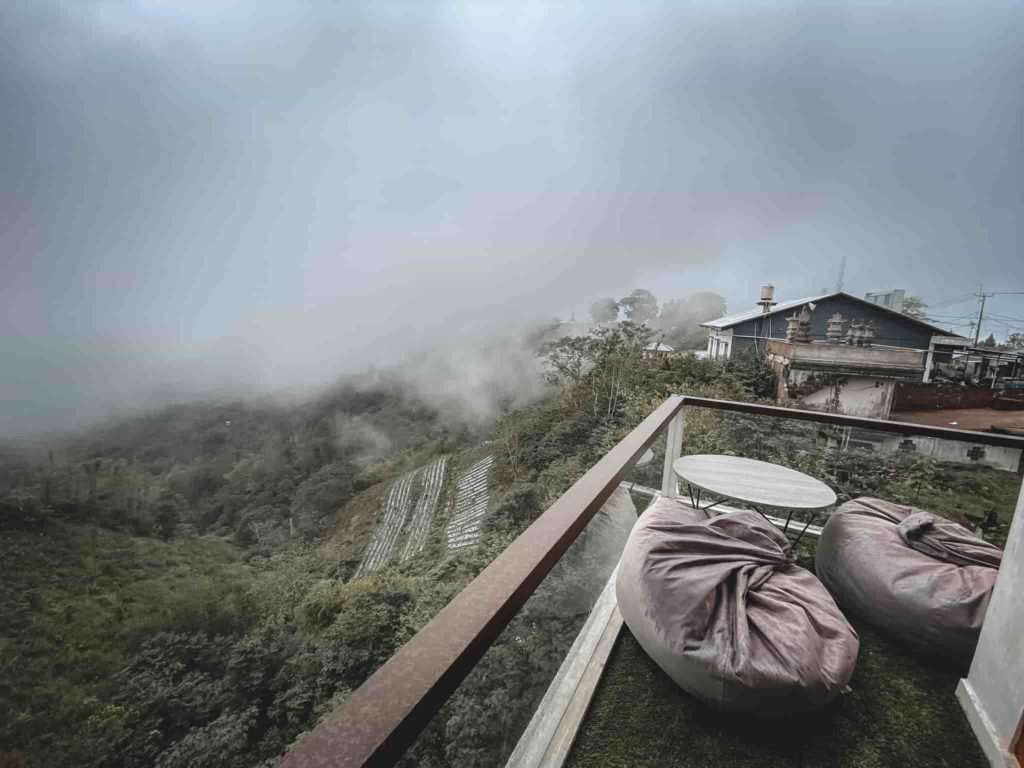
The ground level integrates functional agricultural elements, housing operational coffee plantations and boutique lodging facilities that allow guests to experience highland agrarian life firsthand. Ascending to the intermediate levels reveals indoor dining spaces, culminating in an expansive rooftop terrace on the third floor. Industry analysts and local tourism boards frequently advise patrons to monitor regional meteorological forecasts prior to visiting Eco Bike Coffee. Because of its extreme altitude, the venue is occasionally subject to heavy highland mists, which can temporarily obstruct the sweeping views of the Batur caldera, enveloping the property in a dense white fog.
- Akasa Coffee, Kintamani
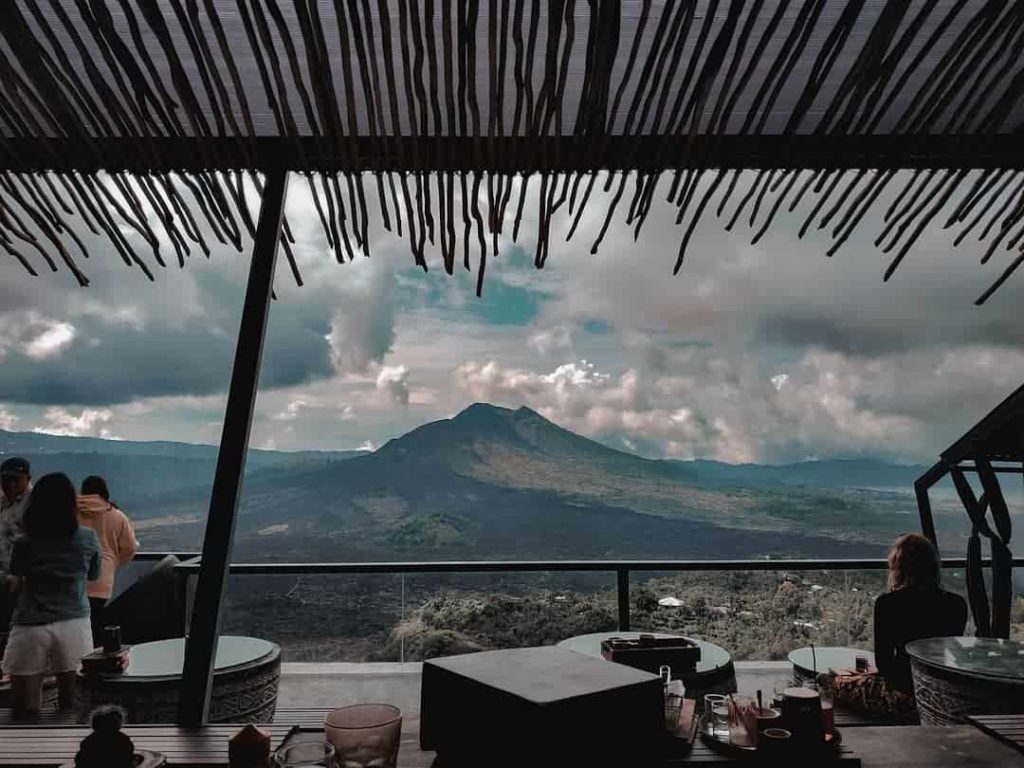
Positioned firmly within the competitive landscape of Kintamani’s coffee district, Akasa Coffee has established a reputation for premium comfort and elevated dining standards. The venue addresses the region’s characteristically low temperatures by offering a cozy indoor refuge paired with expansive outdoor seating terraces that overlook the active peak of Mount Batur.
Akasa Coffee caters to a diverse demographic by curating an extensive menu that bridges breakfast selections, artisanal teas, single-origin coffees, and select alcoholic beverages, with average per-person expenditures averaging around IDR 150,000. Given the premium pricing structure and the venue’s emphasis on visual aesthetics, management and frequent visitors alike emphasize the importance of scheduling visits during clear weather windows to maximize the value of the panoramic landscape.
- Batur 1926, Kintamani
For visitors prioritizing early morning itineraries, Batur 1926 has emerged as a premier destination for witnessing the highland sunrise. Opening its doors as early as 05:30 local time, the cafe provides a tranquil environment optimized for morning reflections as the first rays of light illuminate the caldera.
Architecturally, Batur 1926 integrates traditional Balinese design motifs into its modern framework, most notably featuring an authentic Balinese gateway (Candi Bentar) integrated into the rooftop terrace. On mornings unobstructed by cloud cover, patrons are treated to a rare simultaneous view of three major peaks: Mount Batur, Mount Abang, and the towering stratovolcano of Mount Agung. This deliberate integration of indigenous architecture with contemporary framing has made Batur 1926 a focal point for architectural photography and social media content creation.
- Kava Coffee, Kintamani
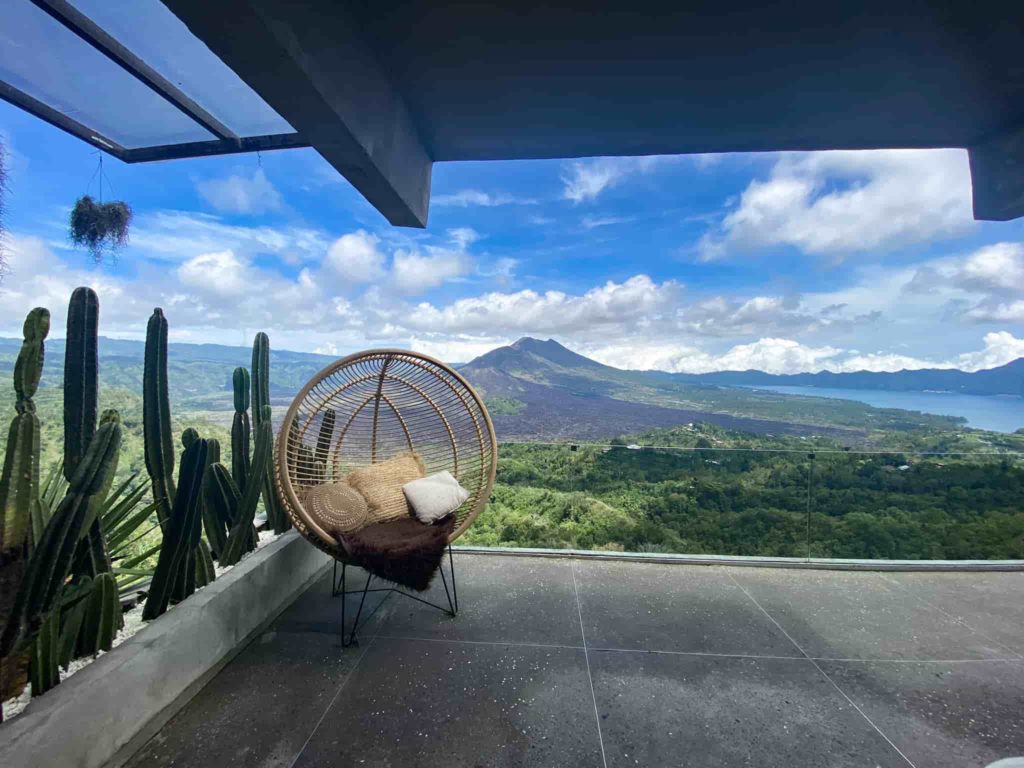
Situated along the immediate shoreline and elevated slopes overlooking the legendary Lake Batur, Kava Coffee offers a distinct perspective compared to its cliff-top counterparts. The venue frames not only the waters of Lake Batur but also the tripartite mountain alignment of Batur, Abang, and Agung.
Interior design at Kava Coffee focuses on seamless continuity between indoor comfort and outdoor wilderness. The venue utilizes floor-to-ceiling glass paneling and semi-outdoor communal long tables, ensuring that patrons seated deep within the interior maintain an unobstructed line of sight toward the volcanic horizon. This thoughtful spatial engineering protects guests from the biting highland winds while preserving the immersive nature of the landscape.
Socio-Economic and Environmental Implications
The rapid transformation of Kintamani from an agrarian enclave into a premier lifestyle tourism destination carries profound economic and environmental implications for the Bangli Regency and the wider island of Bali.
From an economic perspective, the proliferation of specialty cafes has catalyzed regional development, creating employment opportunities for local residents in hospitality, agricultural processing, and transport logistics. Furthermore, these establishments have created a lucrative secondary market for Kintamani Arabica coffee, enabling local farmers to supply beans directly to high-end cafes, thereby shortening the supply chain and increasing profit margins for agrarian communities.
However, urban planners and environmental scientists have raised valid concerns regarding the rapid commercialization of the Batur Global Geopark—a designated UNESCO site. Rapid infrastructure development along fragile crater rims necessitates rigorous zoning enforcement to prevent environmental degradation, waste management challenges, and the potential disruption of local water tables. Local government bodies, in cooperation with environmental agencies, face the ongoing challenge of balancing sustainable economic growth with the preservation of Kintamani’s delicate ecological and geological heritage.
Conclusion
The emergence of sophisticated highland cafes in Kintamani—exemplified by Tegu Kopi, Eco Bike Coffee, Akasa Coffee, Batur 1926, and Kava Coffee—signals a maturation in Bali’s tourism sector. By offering travelers an alternative to coastal saturation through cool climates, volcanic vistas, and modern architectural design, these venues have successfully redefined the geographical boundaries of the island’s tourism appeal. As this sector continues to evolve, maintaining a harmonious equilibrium between commercial expansion and environmental stewardship will remain paramount to ensuring the long-term viability of Kintamani as one of Indonesia’s premier highland destinations.