Tata Titiana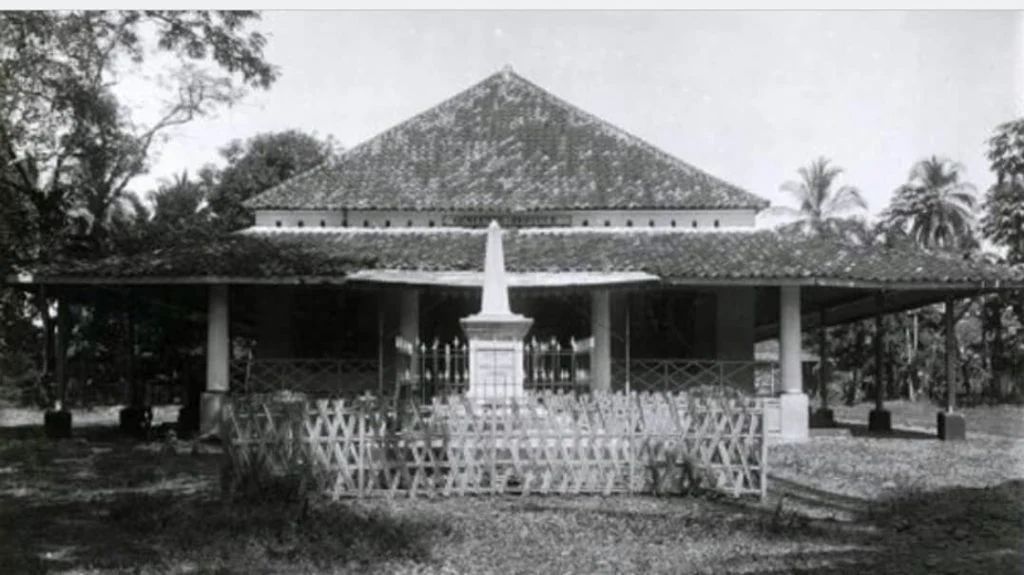
Long before it officially attained the status of an independent municipality in the province of West Java on April 27, 1999—back when it was still merely a quiet district tucked within the regency of Bogor—Depok held a status unique in the annals of the Dutch East Indies. Few contemporary residents realize that this bustling urban satellite south of Jakarta once operated as a semi-autonomous private territory, complete with its own constitution, administrative governance, and a democratically elected head of state who held the title of president. The origins of this forgotten historical anomaly trace back to the late 17th century, intertwining the ambitions of a wealthy Dutch merchant, the plight of emancipated colonial slaves, and a fascinating administrative experiment that predated the birth of the Republic of Indonesia.
The Foundation of a Private Domain: Cornelis Chastelein and the Acquisition of Depok
The history of Depok as a distinct geopolitical entity began in the closing decades of the 17th century, specifically in 1696. During this era, Cornelis Chastelein, a wealthy merchant and high-ranking official of the Dutch East India Company (VOC), purchased a vast expanse of land spanning approximately 12.44 square kilometers for the sum of 2.4 guilders. This tract of land was classified as a particuliere land (private estate), placing it outside the direct administrative jurisdiction of the central colonial government in Batavia.
At the time of purchase, the interior of Depok was largely dense, untamed wilderness. Recognizing the agricultural potential of the region, Chastelein enlisted a labor force consisting of hundreds of enslaved people he had acquired from various islands across the archipelago, including Bali, Sulawesi, Timor, and parts of Java. Under harsh colonial conditions, these laborers cleared the dense forests, transforming the wild terrain into productive agricultural plantations that cultivated cash crops such as pepper, coffee, and fruit trees.
The geographical footprint of Chastelein’s private estate was remarkably expansive, far exceeding the boundaries of the modern-day city. Historical records indicate that the estate’s dominion stretched from the contemporary borders of Depok northward to include areas such as Pasar Minggu in South Jakarta, and extended as far as Gambir in Central Jakarta. The laborers who worked these lands formed the nucleus of Depok’s original resident population.

A Pious Legacy and the Birth of a Unique Social Order
Cornelis Chastelein was known as a devout Protestant whose religious convictions significantly influenced his relationship with his labor force. Unlike many of his contemporaries who viewed enslaved populations purely as disposable commodities, Chastelein maintained a paternalistic and benevolent approach toward his workers, eventually converting many of them to Christianity.
As his life drew to a close, Chastelein drafted a comprehensive and progressive last will and testament on June 28, 1714. Anticipating his death, he took the unprecedented step of granting total emancipation to his enslaved laborers. Furthermore, he bequeathed his entire estate—including land, residential houses, livestock, and agricultural equipment—to these newly freed individuals, collectively known historically as the De Evacuees or the "Depok Dutch" (Hollandse Depokkers).
Recognizing that the sudden transition to freedom and property ownership could trigger destructive internal power struggles or attract predatory land grabbers from the colonial administration, Chastelein included explicit governance provisions in his will. He appointed a trusted former slave named Jarong van Bali to oversee the community and maintain order during the immediate post-emancipation transition.
The Rise of the "Republic of Depok": Chronology of a Unique Administration
Following the death of Jarong van Bali, the community leaders recognized the need for a formalized, sustainable system of governance to manage their private estate. Fearing both autocratic rule and external encroachment by the Dutch colonial government, the community opted for a Western-style democratic framework. In 1913, they formally established an administrative entity officially designated as Het Gemeente Bestuur van Het Particuliere Land Depok (The Municipal Government of the Private Land of Depok).
This administrative body functioned remarkably like an independent republic. The head of state held the official title of "President," a position chosen through direct, democratic elections held every three years. Intriguingly, the constitution of this micro-state did not provide for a vice president; instead, administrative duties and state correspondence were managed by an appointed secretary. The center of government was established at the historic Kilometer 0 marker, marked by the Depok Monument, situated adjacent to administrative buildings that later evolved into the Harapan Hospital.
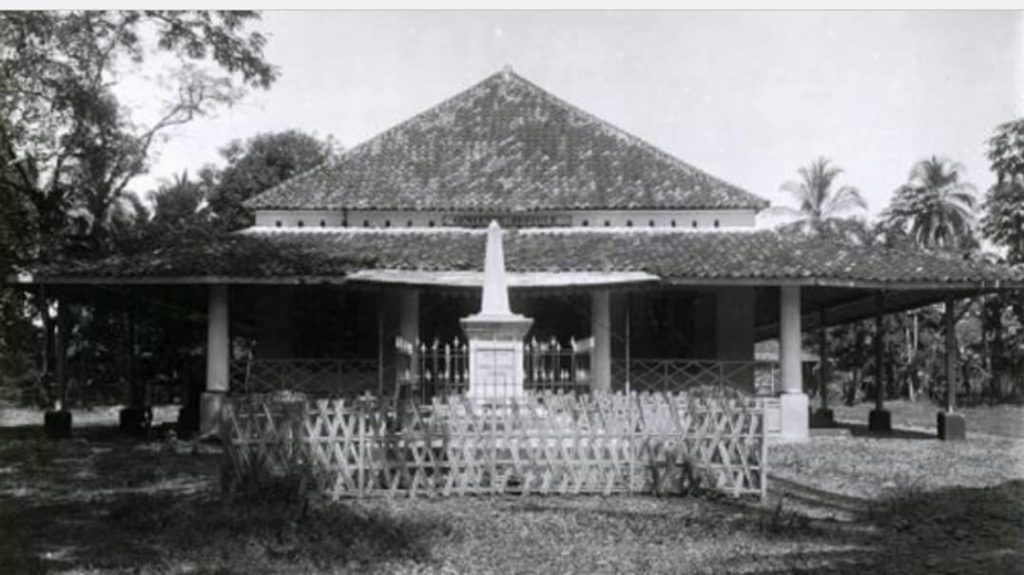
Historical archives document a succession of four presidents who led this peculiar administrative enclave over the course of nearly four decades:
- Gerrit Jonathans (1913–1921): The historic inaugural president of Depok, under whose administration the constitutional framework drafted by Batavia attorneys was formally implemented.
- Martinus Laurens (1921–1930): The second president, who navigated the community through the socioeconomic pressures of the post-World War I era.
- Leonardus Leander (1930–1952): The third president, whose long tenure spanned the turbulent years of the Great Depression and the Japanese occupation of the Dutch East Indies.
- Johannes Matjis Jonathans (1952): The fourth and final president of Depok, who oversaw the dissolution of the private estate administration.
The Waning Years and Integration into the Republic of Indonesia
The unique status of Depok as a self-governing private enclave persisted through the end of the colonial period, surviving both the Japanese military occupation (1942–1945) and the outbreak of the Indonesian National Revolution. However, the geopolitical reality of a newly independent Indonesia made the continued existence of a colonial-era private estate untenable.
As the Indonesian government consolidated its sovereignty across the archipelago, negotiations began regarding the legal status of particuliere landen. In 1952, under mounting political pressure and changing agrarian laws implemented by the central government, Johannes Matjis Jonathans—serving as the final president of Depok—officially relinquished the private estate. Through a formal deed of transfer, the administration of Depok was formally surrendered to the Republic of Indonesia, effectively ending the era of the "Depok Republic" and integrating the territory into the standard administrative hierarchy of West Java.
Historical Legacy and Modern Implications
While the modern city of Depok celebrated its 22nd anniversary as an autonomous municipality in 2021, its true historical roots extend back more than three centuries. The legacy of the Hollandse Depokkers and their unique experiment in democratic self-governance remains a fascinating footnote in the broader historiography of the Indonesian archipelago.
Historians and sociologists frequently study the Depok phenomenon as a rare early instance of institutional democratization and land reform initiated within a colonial framework. Although the original social structure—characterized by distinct cultural practices, European surnames adopted from Chastelein, and unique musical traditions such as the Kroncong Depok—has largely dissolved into the multicultural melting pot of Greater Jakarta, physical markers such as the historic churches, colonial-era homes, and archival documents continue to serve as tangible reminders of a time when a small patch of West Java functioned as an independent republic led by its own democratically elected president.