
 Nila Kartika Wati
National Farmers Day, observed annually on September 24, has become a pivotal moment for grassroots movements in Indonesia to voice opposition against industrial encroachment, land rights violations, and the environmental degradation caused by extractive industries. This year, the scale of dissent was particularly notable, as thousands of citizens from 22 districts and cities in Central Java, alongside activists in Bali, mobilized to protest projects ranging from geothermal development to large-scale mining operations and industrial power plants.
The Marathon of Dissent in Central Java
The protests in Semarang, the capital of Central Java, were marked by an act of endurance that captured public attention. Zainuddin, a mountain guide from Karanganyar, completed a grueling multi-day run covering hundreds of kilometers to reach the Governor’s Office. His journey served as a physical manifestation of the long-standing resistance against the proposed geothermal project on Mount Lawu.
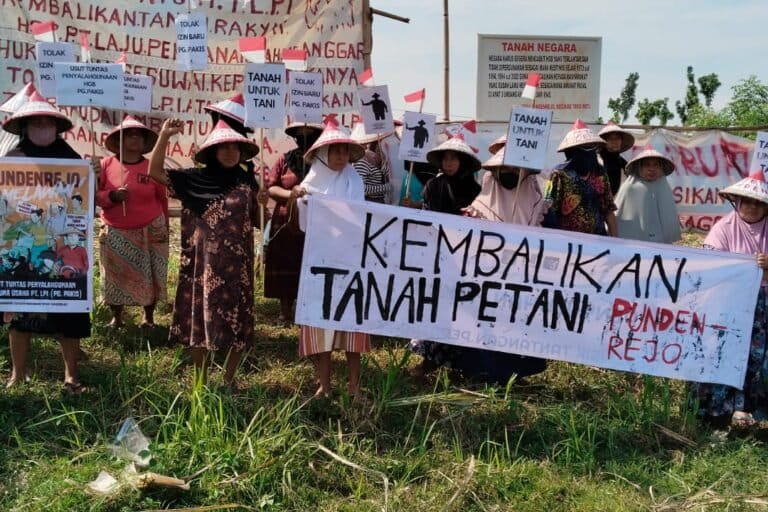
Accompanied by a contingent of residents from Solo, Boyolali, and Salatiga, Zainuddin highlighted the specific risks posed by geothermal drilling in fragile volcanic ecosystems. "If this project proceeds, the risks to Mount Lawu climbers and local residents are immense," he stated. "We have seen the dangers of toxic gas leaks in Dieng, and we are not willing to gamble with our lives or our land."
Aan Shopanudin, coordinator of the Jaga Lawu movement, noted that the route taken by the protesters included stops at Mount Ungaran, where local communities are engaged in similar battles against geothermal exploration. This solidarity tour aimed to consolidate a broader regional front against the expansion of geothermal zones, which activists claim have been imposed without adequate community consent.
The Geothermal Controversy: Economic Ambition vs. Ecological Reality
The Indonesian government has designated six regions in Central Java as Geothermal Working Areas (WKP): Dieng, Guci, Baturaden, Ungaran, Telomoyo, and Jenawi. While the central government frames these projects as essential for renewable energy development and national energy security, local communities argue that the environmental and social costs are too high.
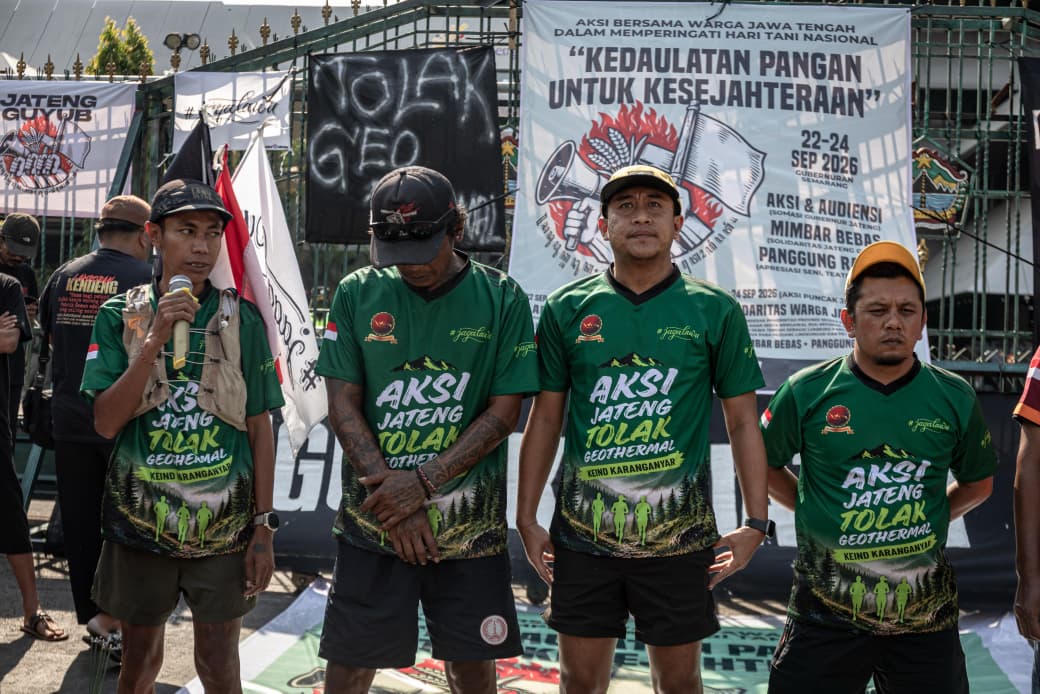
Critics, including the Indonesian Forum for the Environment (WALHI), point out that Central Java is already experiencing a surplus of approximately 2,000 megawatts of electricity. Consequently, they argue, the urgency to expand geothermal sites is questionable, especially given the potential for irreversible environmental damage.
Technical concerns raised by activists include:
- Seismic Risk: The drilling process in volcanic regions is believed by experts to increase the frequency of seismic activity.
- Hydrological Disruption: Large-scale extraction can deplete local water sources, which are critical for the agricultural sectors in the surrounding regions.
- Toxic Emissions: The risk of hydrogen sulfide (H2S) leaks—a recurring issue in existing projects like Dieng—threatens both human health and soil fertility.
"We have learned from the failures at Dieng," Shopanudin explained. "The loss of water sources, the gas leaks, and the threat of induced earthquakes are not hypothetical; they are a lived reality for the people there."
Agrarian Sovereignty and the Food Crisis
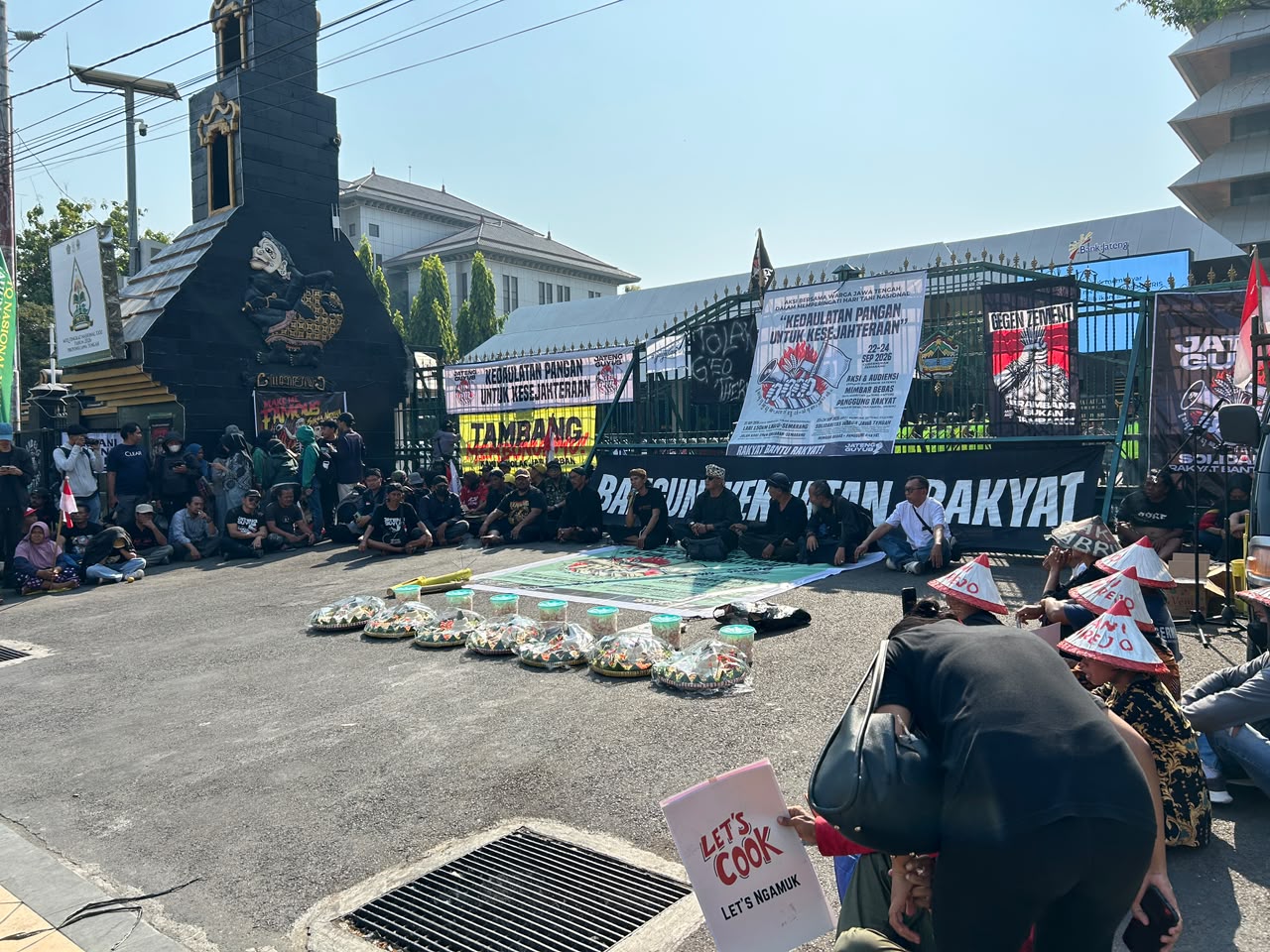
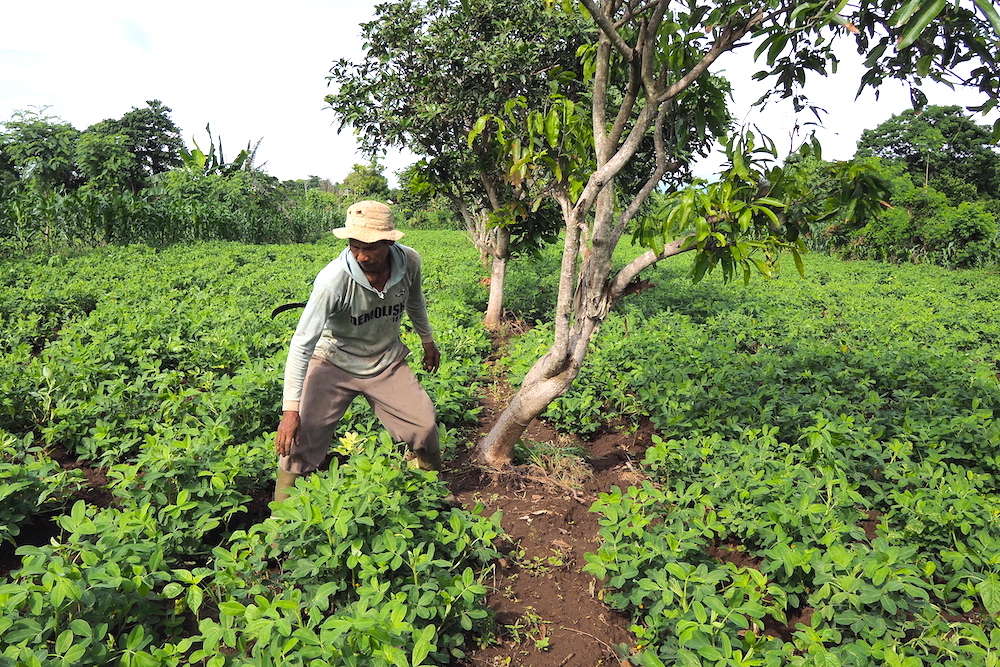
At the heart of the resistance is the fear that geothermal projects threaten the agricultural foundations of the region. The slopes of Mount Lawu are productive hubs for shallots, chili, carrots, cabbage, and coffee. Farmers fear that the industrialization of these highlands will lead to water scarcity, a phenomenon already observed in other parts of the province.
LBH Semarang, a legal aid organization, has criticized the Central Java provincial government for its passive stance. Despite having the authority to influence regional energy planning—specifically through the Regional General Energy Plan (RUED)—the provincial administration has frequently deferred to the central government in Jakarta, citing a lack of jurisdiction to cancel the WKP designations. Fajar Muhammad Andhika of LBH Semarang argued that the province has the legal levers to stop these projects, such as revoking environmental permits and spatial planning approvals, but lacks the political will to do so.
Industrial Impacts: The Case of the Cilacap PLTU
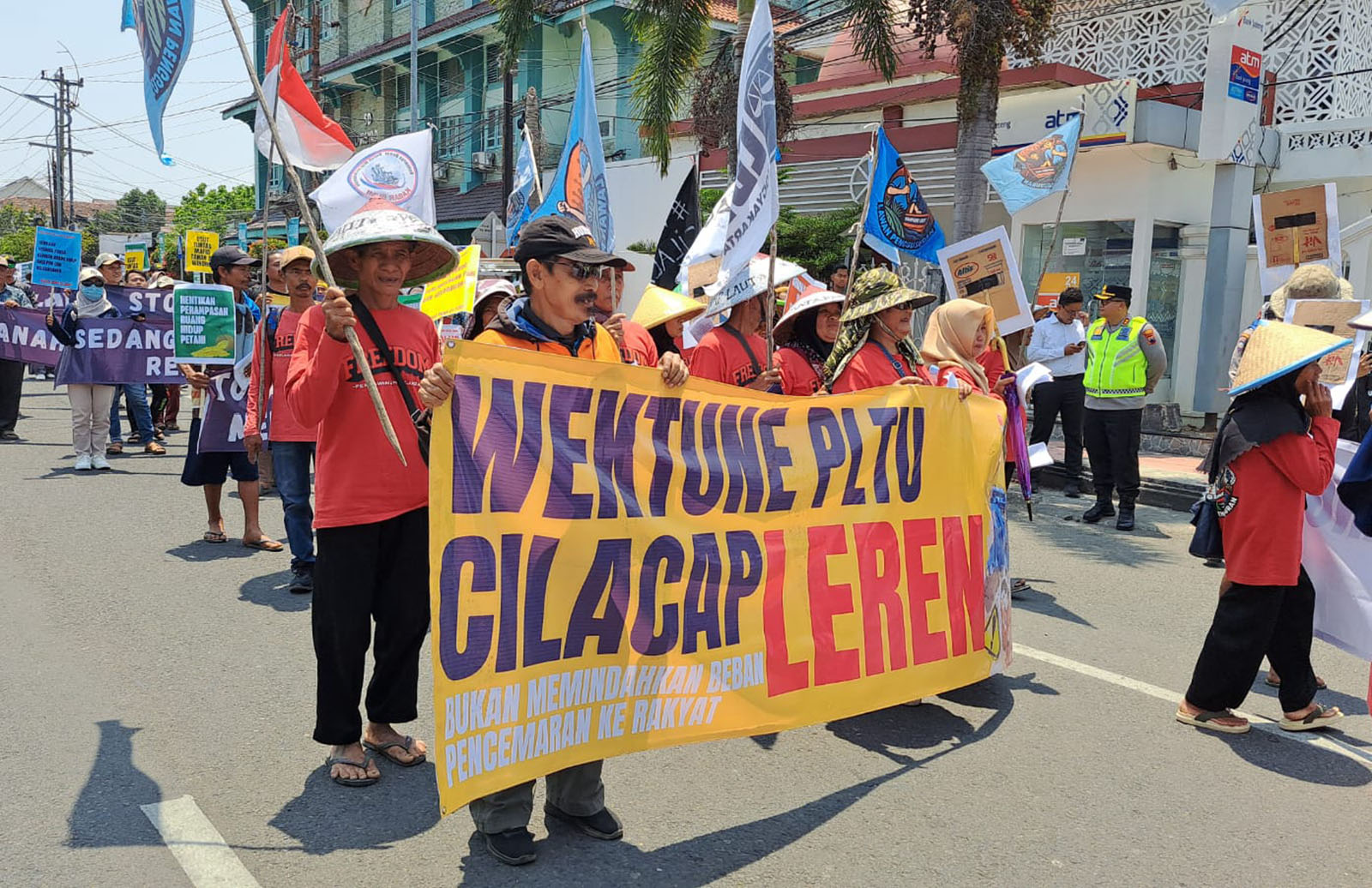
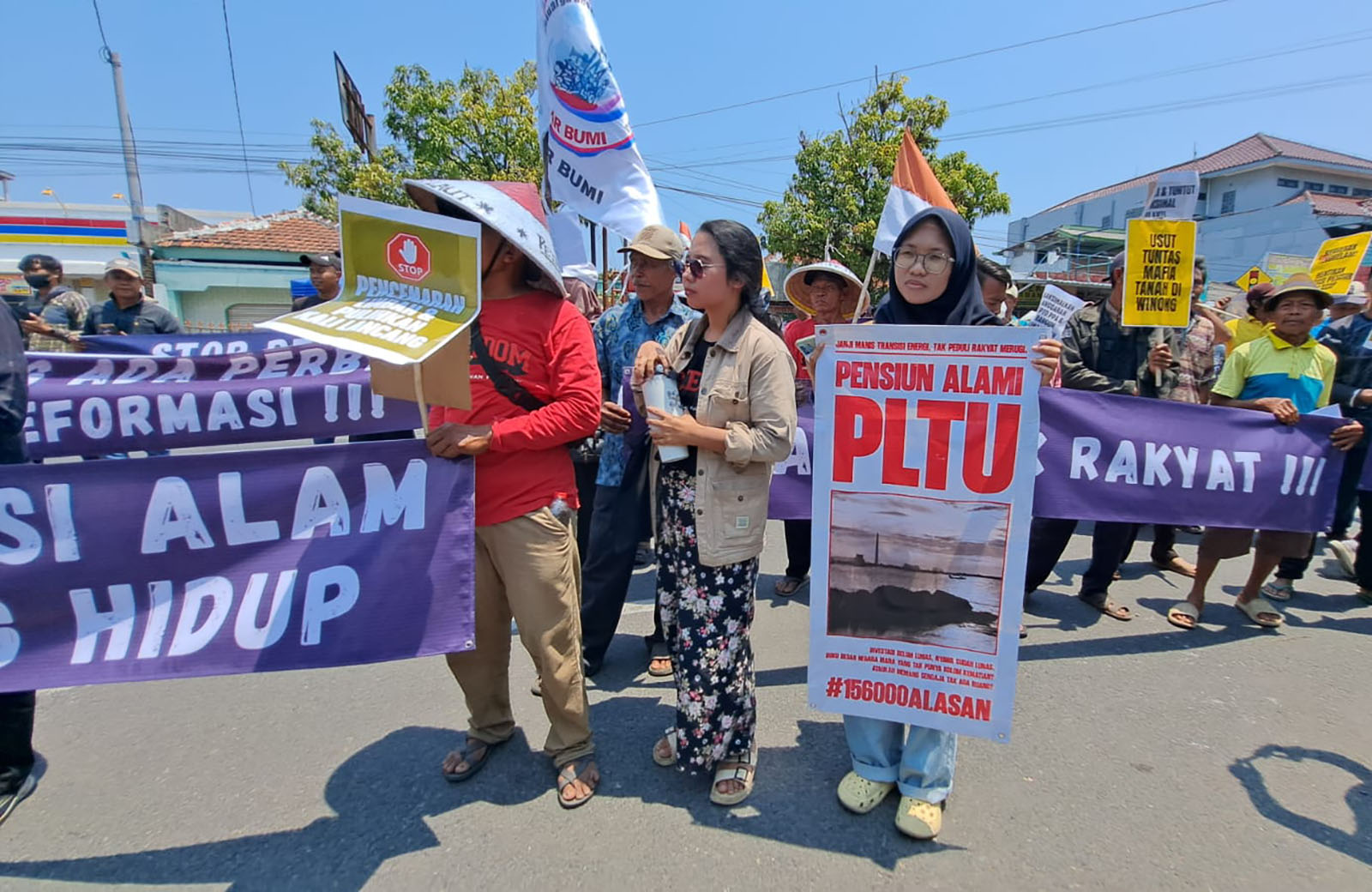
While the highlands face geothermal pressure, the coastal region of Cilacap is grappling with the consequences of heavy industrialization, specifically the Cilacap Coal-Fired Power Plant (PLTU). On September 28, the "Inyong" coalition (Ikatan Nyawiji Wong Cilacap) marched to the local legislative council (DPRD) to present 15 demands concerning land rights and pollution.
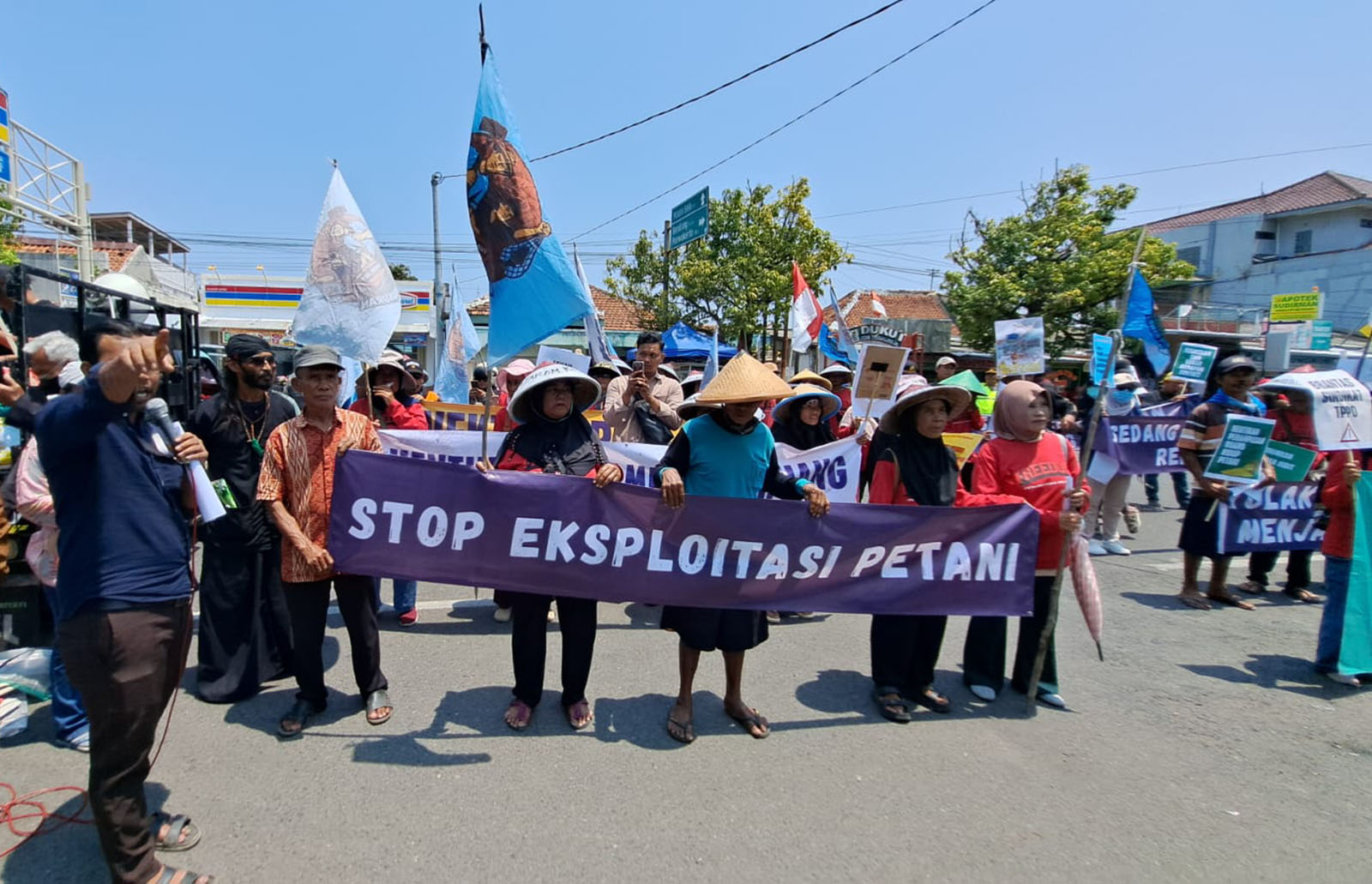
The Cilacap PLTU, with a capacity of 2,260 MW, has been identified in the "Toxic Twenty" report by Celios, CREA, and Trend Asia as one of the most polluting plants in Indonesia. Beyond air quality concerns, residents reported significant coastal erosion and the loss of traditional fishing grounds. Nearly 900 fishers have been forced to relocate their boat moorings due to changes in the shoreline attributed to industrial infrastructure.
The coalition also raised alarms about the forced relocation of schools to accommodate industrial expansion and the unresolved status of land in the Winong area, where residents allege that land clearing for industrial purposes has bypassed proper legal processes and community consultation.
Gender, Patriarchy, and Land Rights in Bali
The struggle for land is not exclusively an economic one; it is also a fight for social equity. In Bali, discussions centered on the "Darurat Agraria Yeh Mata" (Agrarian Emergency of Tears) highlighted the marginalization of women in land ownership. Despite women being at the forefront of agricultural labor and the defense of community land, legal title deeds are overwhelmingly registered in the names of men.
Ni Nengah Budawati from the LBH Bali Women’s Crisis Center emphasized that this patriarchal structure leaves women vulnerable to being dispossessed of their homes and livelihoods. Cases in Gianyar, where women have led the fight against the appropriation of banana groves, and in Buleleng, where former East Timor transmigrants continue to wait for land titles, illustrate the systemic failure to protect women’s access to land.
Made Pria Dharsana, a researcher in land law, criticized the government’s "Land Bank" policy, warning that it prioritizes capital accumulation for investors over the fundamental rights of local communities. "Land is not merely an asset; it is a space for living," Dharsana said. "If the government collects land, it must ensure that it is not at the expense of those who depend on it for their survival."
Official Responses and the Path Forward
Government representatives have generally responded by promising inter-agency coordination. In Cilacap, Wakil Ketua DPRD Suyatno promised to categorize the residents’ grievances and assign them to the appropriate legislative commissions. Similarly, the local National Land Agency (BPN) acknowledged the complexity of the agrarian conflicts and pledged to conduct field inspections to map the disputes.
However, for the protesters, these promises are often viewed with skepticism. The lack of concrete action to address the root causes of the conflicts—such as the legal recognition of customary land or the enforcement of environmental regulations against illegal mines—remains a major point of contention.
Broader Implications
The events of National Farmers Day 2026 underscore a widening chasm between national development agendas and the local reality of sustainable living. As Indonesia pushes for economic growth, the cost is increasingly being felt by rural populations whose lives are inextricably linked to the land and water they protect.
The synthesis of these movements across Central Java, Cilacap, and Bali suggests that the agrarian movement is evolving into a sophisticated, interconnected network. By linking climate concerns, human rights, and food security, these activists are forcing a national conversation on whether "development" can truly be called progress if it degrades the very resources required to sustain the population.
The future of these regions now rests on the government’s willingness to engage in genuine dialogue and shift its policy framework from one of extraction to one of stewardship. Without a significant change in how land and energy resources are managed, the cycle of protest, legal struggle, and ecological depletion is likely to continue, further testing the social contract between the state and its agrarian heartland.









