Azin Asro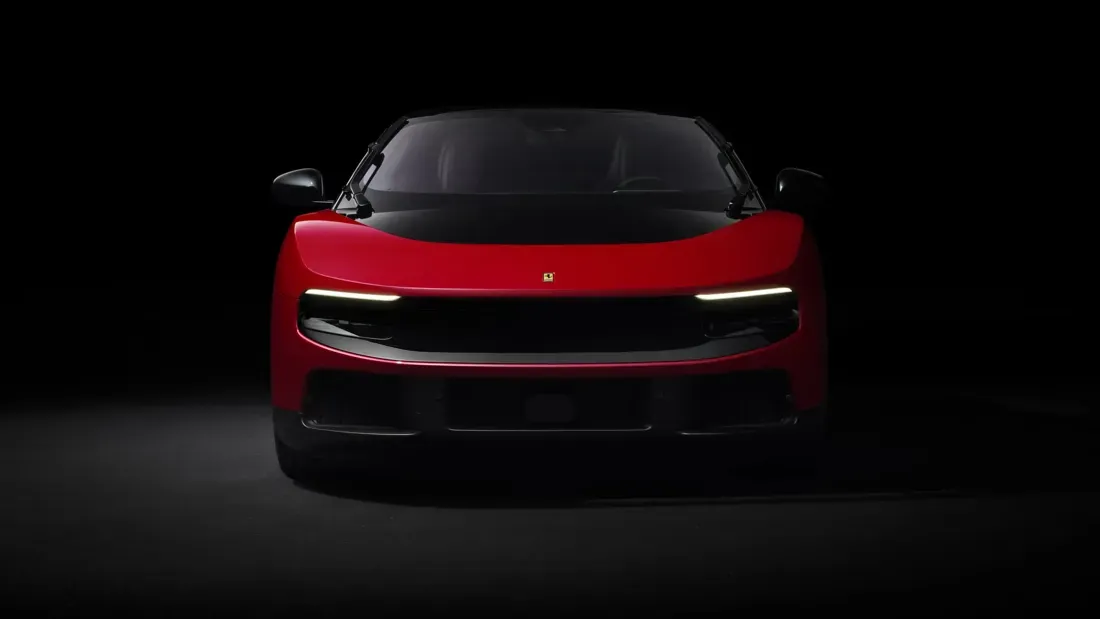
In a decisive rebuttal to critics and market skeptics, Ferrari CEO Benedetto Vigna has stepped forward to defend the company’s latest and perhaps most controversial innovation to date: the Ferrari Luce. The all-electric vehicle, which represents a radical departure from the internal combustion engines that defined the Maranello-based automaker for nearly eight decades, has faced a wave of scrutiny since its preliminary details were unveiled. Critics have targeted everything from its unconventional aesthetic to its positioning within the luxury EV market. However, Vigna remains steadfast, asserting that those who have criticized the vehicle have yet to experience its physical presence or its unprecedented performance capabilities.
The controversy surrounding the Luce reached a fever pitch following a notable fluctuation in Ferrari’s market valuation. Shares of the Italian automaker experienced a sharp decline of more than 8 percent, a volatility attributed by market analysts to investor anxiety regarding the brand’s transition into the fully electric era. Despite this financial turbulence, Vigna emphasized that the Luce is a singular creation that bears no resemblance to the current crop of electric vehicles dominating the global market, particularly those originating from the rapidly expanding Chinese automotive sector. He argued that once the public and the "Tifosi"—the brand’s loyal fanbase—witness the car in person, the skepticism will evaporate in favor of admiration for Ferrari’s engineering prowess.
A Design Revolution via LoveFrom
The aesthetic of the Ferrari Luce is perhaps its most discussed feature. Eschewing the traditional aggressive lines often associated with Ferrari’s mid-engine supercars, the Luce was developed in collaboration with LoveFrom, the creative collective founded by legendary designers Jony Ive and Marc Newson. Ive and Newson are widely recognized as the architectural minds behind the most iconic designs of the modern era, including the iPhone and the Apple Watch. Their involvement in the Luce marks a historic partnership between the worlds of high-tech consumer design and automotive excellence.
The result of this collaboration is a silhouette that challenges the established Ferrari lexicon. The Luce is the first vehicle in the company’s history to accommodate five passengers, a move that signals a strategic shift toward versatility without compromising the brand’s "driver-first" philosophy. Vigna noted that the interior and exterior designs are entirely proprietary, ensuring that the vehicle maintains a distinct identity that cannot be replicated by competitors. The focus on a five-seat configuration suggests that Ferrari is looking to capture a broader segment of the ultra-luxury market, moving beyond the traditional two-seater sports car niche while still maintaining a level of exclusivity and performance that justifies its premium price tag.
Engineering Excellence and In-House Innovation
One of the primary criticisms leveled against traditional luxury brands entering the EV space is the reliance on third-party components, which some purists argue dilutes the brand’s DNA. Ferrari has sought to eliminate this concern by developing the Luce’s powertrain entirely in-house at its Maranello headquarters. The vehicle is powered by four radial flux electric motors—one situated at each wheel. This configuration is not a generic off-the-shelf solution; rather, it is a direct technological descendant of the systems found in the Ferrari F80 hypercar and the company’s Formula 1 racing program.
By manufacturing all critical components in-house, Ferrari aims to ensure the longevity and serviceability of the Luce. Vigna highlighted that this approach is essential for protecting the vehicle’s resale value, a core tenet of the Ferrari ownership experience. Unlike many modern EVs that are often viewed as disposable technology products, the Luce is engineered to be repairable and maintainable for decades to come.
The performance figures associated with this in-house technology are staggering. The front motors contribute 282 HP (210 kW), while the rear motors provide a massive 831 HP (620 kW). When the vehicle is engaged in its "Boost Mode," the combined output reaches a monumental 1,035 hp. This power allows the Luce, despite its substantial weight of nearly 2.5 tons, to accelerate from 0 to 100 km/h in a mere 2.5 seconds. This puts the Luce in the same performance echelon as the world’s most elite supercars, proving that the transition to electric power does not necessitate a compromise in raw speed.
Dynamics and Handling: Overcoming the Weight of Electrification
A common critique of high-performance electric vehicles is their significant weight, primarily due to the density of battery packs. At 2.5 tons, the Luce is undeniably heavy by Ferrari standards. However, the company has implemented a suite of advanced technologies to ensure that the vehicle retains the agility and "flickability" expected of a car bearing the Prancing Horse badge.
The Luce utilizes Ferrari’s third-generation active suspension system, a technology also derived from the F80. This system works in tandem with an independent four-wheel steering mechanism, allowing the car to navigate tight corners with a level of precision that masks its physical mass. Furthermore, the inclusion of a sophisticated Torque Vectoring system allows the onboard computers to distribute power to each wheel independently within milliseconds. Ferrari claims that this combination of technologies gives the Luce the handling characteristics of a sports car that is 400 kg lighter. This focus on "perceived weight" versus "actual weight" is a cornerstone of Ferrari’s pitch to enthusiasts who fear that electrification will result in a "numb" driving experience.
Market Reaction and Financial Implications
The 8 percent drop in Ferrari’s stock price serves as a reminder of the high stakes involved in the luxury automotive industry’s shift toward sustainability. Investors are often wary of the massive capital expenditures required to develop EV platforms and the potential for lower margins compared to high-margin internal combustion engines. However, Vigna remains optimistic, pointing to the tangible interest from Ferrari’s existing clientele.
"We have already received bank transfers; the customers who were there want it," Vigna stated, indicating that the Luce has already begun to generate a significant order book even before its official public launch. While Ferrari has not yet disclosed the exact number of pre-orders, the company is expected to provide a detailed update in July, coinciding with the vehicle’s full commercial debut. This early financial commitment from loyal customers suggests that the market’s initial negative reaction may have been a premature response to the fear of change, rather than a reflection of the product’s actual demand.
Chronology of the Luce’s Development
The journey of the Ferrari Luce began several years ago when the company announced its commitment to carbon neutrality. The timeline of its development reflects a methodical approach to electrification:
- 2021: Ferrari announces its partnership with LoveFrom, sparking rumors of a radical new design direction.
- 2022: Construction begins on the "e-building" in Maranello, a dedicated facility for the production of electric motors, battery packs, and power inverters.
- 2023: Early prototypes of the Luce are spotted testing under heavy camouflage, leading to intense speculation regarding its five-seat layout.
- Early 2024: Ferrari begins private showings of the Luce to its top-tier "VVIP" clients, leading to the first wave of pre-orders and bank transfers.
- Current Period: CEO Benedetto Vigna enters the public arena to address criticisms and stabilize market sentiment ahead of the summer launch.
- July 2024: The official global launch and public unveiling of the Luce, including full specification disclosures and order book status.
The Broader Impact on the Luxury Automotive Sector
The Ferrari Luce is more than just a new model; it is a litmus test for the entire ultra-luxury automotive sector. As global regulations tighten and the transition to zero-emission vehicles becomes an inevitability, other heritage brands like Lamborghini, Aston Martin, and McLaren are watching Ferrari’s progress closely. If the Luce succeeds in maintaining Ferrari’s sky-high margins and brand prestige while operating on a purely electric platform, it will provide a blueprint for the survival of the supercar in the 21st century.
Vigna’s defense of the Luce also highlights a growing divide in the automotive world between "transportation appliances" and "emotional machines." By emphasizing that the Luce was developed with a focus on interior experience, exterior uniqueness, and performance that "cannot be copied," Vigna is positioning Ferrari as a bastion of soul and character in an increasingly homogenized EV market.
As the July launch approaches, the industry remains divided. Some see the Luce as a necessary evolution that secures Ferrari’s future in a green economy, while others view it as a risky departure from the heritage that made the company a global icon. What remains certain is that the Luce has already succeeded in doing what every Ferrari must: it has captured the world’s attention and sparked a conversation about the very nature of automotive excellence. Whether the car can live up to Vigna’s lofty promises will be determined on the roads and in the showrooms later this year. For now, the CEO’s message is clear: do not judge the Luce until you have stood in its presence and felt the 1,035 horsepower for yourself.