Bambang Pamungkas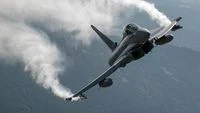
A significant incident unfolded in European skies recently when Austrian Eurofighter Typhoon jets were scrambled to intercept a United States Air Force turboprop PC-12 intelligence-gathering aircraft that had entered Austrian airspace without prior authorization. The event, which occurred on both a Monday and the preceding Sunday in early May 2024, has prompted a formal diplomatic response from Vienna, underscoring Austria’s firm commitment to its long-standing policy of perpetual neutrality and heightened vigilance over its sovereign airspace. The interception marks a critical moment in Austria’s assertion of its national sovereignty and adherence to international air traffic regulations, particularly given recent geopolitical tensions and Austria’s explicit policy decisions regarding foreign military overflights.
Chronology of Airspace Incidents
The sequence of events began on a Sunday, when the same American military aircraft, identified as a Pilatus PC-12 turboprop, was reportedly observed flying over Upper Austria, specifically in the rugged terrain of the Totes Gebirge mountain range, without the requisite permissions. While details of that initial Sunday encounter remain less publicized, it set the stage for the more direct confrontation that occurred the following day.
On the subsequent Monday, at approximately 12:31 PM local time, the unauthorized entry of the US military aircraft into Austrian airspace triggered an immediate and decisive response from the Austrian Air Force. Two Eurofighter Typhoon jets were launched from their base, tasked with the critical mission of intercepting and identifying the unknown aircraft. The sophisticated Eurofighters, forming the backbone of Austria’s air defense capabilities, swiftly located the turboprop. Upon interception by the Austrian jets, the US military aircraft reportedly altered its course, departing Austrian airspace and returning towards Munich, Germany, from where it is believed to have originated or was destined. This swift resolution, while preventing further incursion, immediately escalated the matter to diplomatic channels, as confirmed by Michael Bauer, a spokesperson for the Austrian Ministry of Defense. Bauer explicitly stated that this was not an isolated incident, directly referencing the previous day’s observation of the same aircraft.
The Significance of Austrian Neutrality
At the heart of Austria’s robust response lies its deeply enshrined policy of perpetual neutrality, a cornerstone of its foreign and defense policy since the State Treaty of 1955. This treaty, signed by Austria and the Allied powers (France, the United Kingdom, the United States, and the Soviet Union), formally ended the Allied occupation of Austria and declared the country a sovereign, independent, and democratic state. Crucially, it also committed Austria to permanent neutrality, prohibiting it from joining military alliances or allowing foreign military bases on its territory. This status is not merely a political declaration but is enshrined in the Austrian Constitution, legally binding the nation to non-alignment in any future conflicts and restricting its military to purely defensive purposes.
The principle of neutrality dictates that Austria must not participate in any war between other states and must not permit the transit of military forces or equipment through its territory or airspace for hostile purposes. This strict adherence to neutrality is a source of national pride and a defining characteristic of Austria’s international identity. It has historically positioned Austria as a bridge-builder and a host for international organizations and diplomatic negotiations, rather than an active participant in global power struggles.
In recent months, and particularly in the context of broader European and global geopolitical tensions, Austria has significantly increased its surveillance of its airspace. This heightened vigilance is a direct reflection of a proactive strategy to safeguard its sovereignty and ensure strict compliance with its neutrality laws. The European air traffic control system, while highly integrated for civilian flights, operates with clear national sovereignty zones for military aircraft, requiring explicit diplomatic clearance for overflights, especially for non-allied or neutral nations.
The Aircraft Involved and Airspace Protocols
The aircraft at the center of this incident, the Pilatus PC-12, is a versatile single-engine turboprop aircraft manufactured by Pilatus Aircraft of Switzerland. While widely used for civilian transport, executive travel, and cargo, variants of the PC-12 are also extensively operated by military and law enforcement agencies worldwide for intelligence, surveillance, and reconnaissance (ISR) missions, light transport, and special operations. Its ability to operate from short, unimproved runways and its relatively quiet profile make it suitable for clandestine or discrete operations. The presence of a "spy plane" of this nature in Austrian airspace without permission naturally raises questions about its mission and intent, even if the flight was a navigational error.
Interceptions by military aircraft are a standard procedure globally when an unknown or unauthorized aircraft enters sovereign airspace. The primary goal of an interception is to identify the aircraft, ascertain its intentions, and, if necessary, escort it out of restricted airspace or direct it to land. Austrian Eurofighter Typhoons are advanced multirole combat aircraft designed for air superiority and air-to-ground missions, making them highly capable for such interception tasks. The deployment of two such high-performance jets underscores the seriousness with which Austria treats airspace violations. Such intercepts are highly regulated by international aviation law, including conventions like the Chicago Convention on International Civil Aviation, which governs international air navigation and state aircraft operations. Military aircraft, by definition, are "state aircraft" and are subject to stricter regulations regarding overflight permissions than civilian planes.
Official Reactions and Diplomatic Ramifications
The incident has swiftly moved to diplomatic channels, as confirmed by Michael Bauer of the Austrian Ministry of Defense. Handling such matters diplomatically typically involves formal protests or inquiries exchanged between the foreign ministries and embassies of the nations involved. Austria would likely seek clarification from the United States regarding the circumstances of the unauthorized flights, the nature of the aircraft’s mission, and assurances that similar incidents will be prevented in the future. The United States, in turn, would be expected to provide an explanation, which could range from a navigational error to a communication breakdown, and reiterate its respect for Austrian sovereignty.
The political dimension of the incident was brought to the forefront by Austrian Vice Chancellor Andreas Babler, who used social media to articulate a strong stance. Babler explicitly stated that Austrians "do not want to be involved with [former US President Donald] Trump’s politics of chaos and his wars." He further emphasized, "Neutrality is a valuable asset in our country. Not for war." While Trump is no longer president, Babler’s remarks reflect a broader sentiment within segments of Austrian society and political leadership regarding perceived US foreign policy and a resolute commitment to non-participation in conflicts, particularly those deemed destabilizing. The reference to "Trump’s politics" likely serves as a shorthand for a more assertive and potentially unilateral American foreign policy that Austria seeks to distance itself from.
These statements are not isolated. Just weeks prior to these airspace incidents, the Austrian government had taken a concrete step to enforce its neutrality by explicitly banning US military aircraft involved in what it termed "the war against Iran" from using Austrian airspace. This decision, predicated on the country’s neutrality laws, was a direct response to rising tensions in the Middle East and a clear signal of Austria’s refusal to be drawn into foreign conflicts. The ban underscored Austria’s commitment to avoiding any action that could be interpreted as aiding one side in a conflict, even by proxy through allowing overflights. The interception of the US PC-12 aircraft therefore occurs against a backdrop of intensified Austrian scrutiny of foreign military activities in its vicinity and a renewed assertion of its non-aligned status.
Broader Impact and Implications
The unauthorized overflights and subsequent interception carry several significant implications. Firstly, for US-Austrian bilateral relations, while such incidents can cause diplomatic friction, they are typically managed through established protocols without leading to a major breakdown in relations. Both nations share broader Western values and have cooperative ties in many areas. However, repeated incidents could strain trust and necessitate more rigorous bilateral agreements on airspace management.
Secondly, the events reinforce Austria’s credibility as a neutral nation. By actively policing its airspace and publicly addressing violations, Austria demonstrates its commitment to upholding its neutrality not merely as a theoretical concept but as an actionable foreign policy principle. This sends a clear message to all international actors that Austrian sovereignty and neutrality are to be respected. In an increasingly complex geopolitical landscape, where traditional neutrality is sometimes questioned, Austria’s firm stance serves to solidify its unique position.
Thirdly, the incident highlights broader issues of regional air security and coordination. Even among friendly nations or partners, clear communication, adherence to flight plans, and respect for sovereign airspace are paramount to prevent misunderstandings and potential escalations. For non-NATO members like Austria, close coordination with Eurocontrol and neighboring air defense systems is crucial for maintaining seamless air traffic management and security.
Finally, the public statements by Vice Chancellor Babler resonate with a segment of the Austrian populace that values neutrality and harbors skepticism about foreign military entanglements. The government’s actions, therefore, also serve a domestic political function, reassuring citizens that their country’s core principles are being actively defended. This incident may prompt further internal discussions within Austria regarding the challenges of maintaining neutrality in a globalized world and the precise boundaries of its application in practice. Future measures could include enhanced radar surveillance, more frequent air patrols, and potentially stricter vetting processes for all military overflight requests. The events underscore that even in an interconnected world, national sovereignty and adherence to established international norms remain fundamental pillars of international relations.