Tata Titiana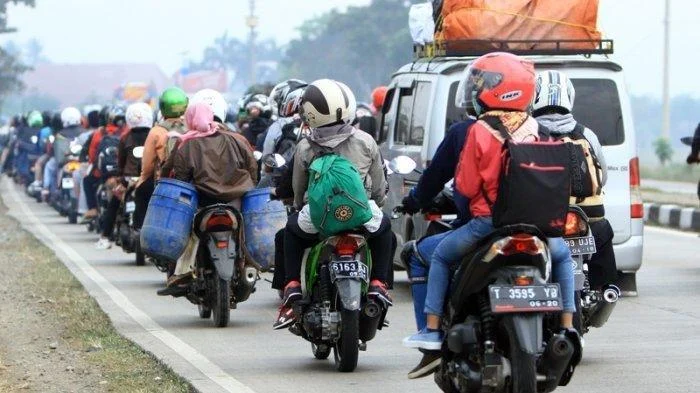
The Indonesian government officially permitted citizens to travel for the annual Eid al-Fitr exodus, commonly known as mudik, for the 1442 Hijri festive season, breaking away from the total ban implemented in 2020 at the onset of the global coronavirus pandemic. This crucial announcement was delivered by the Minister of Transportation, Budi Karya Sumadi, during a formal working session with Commission V of the House of Representatives (DPR RI) in Jakarta. The policy immediately sparked widespread public discussion, balancing the deep-rooted cultural desire for homecoming with the relentless realities of the ongoing public health crisis.
While the Ministry of Transportation granted clearance for travel, transport officials clarified that the statement did not constitute an official governmental endorsement or encouragement to travel. Rather, it served as a regulatory acknowledgment that the annual migration would proceed under carefully monitored conditions, given that the Ministry lacks the explicit mandate to compel or forbid citizens from moving domestically. To prevent the rural spread of SARS-CoV-2, transport authorities initiated comprehensive coordination frameworks with the national COVID-19 Handling Task Force, aiming to formulate watertight containment mechanisms before the peak departure weeks.
Chronology of Policy Shifts and Inter-Agency Coordination
The policy evolution surrounding the 2021 festive season began taking shape in early March, transitioning from strict containment paradigms toward a managed mobility approach. On March 16, 2021, Minister Budi Karya Sumadi formally outlined the government’s stance during the parliamentary hearing, emphasizing that a blanket prohibition similar to the previous year was not the primary strategy for the upcoming holiday. Instead, the administration opted for a regulated system backed by localized tracing and stricter pre-travel screening protocols.
Following the parliamentary announcement, the Ministry of Transportation engaged in multi-sectoral consultations with regional governments, security apparatuses, and public health agencies. These stakeholders convened to design an integrated oversight network spanning national highways, maritime routes, railway terminals, and commercial airports. The overarching goal was to establish a predictable logistical framework that would discourage spontaneous, unmonitored mass movements while accommodating travelers who met stringent health criteria.
Strict Screening Protocols and Transport Regulations
To mitigate the transmission risks associated with millions of citizens crossing provincial borders, the government instituted a multi-layered containment strategy. The regulatory framework relied on three foundational pillars: absolute compliance with health mandates, enhanced surveillance to detect passenger surges, and a significant reduction in the validity period of pre-travel medical screening tools.
Under the updated guidelines, traditional health protocols—frequently summarized as the 3M principles in Indonesia—were mandated across all phases of the journey, encompassing departure hubs, transit corridors, and final destinations. Public transportation operators were directed to enforce strict capacity limits, implement rigorous physical distancing measures, and execute routine disinfection of vehicles, terminal buildings, and passenger amenities. Furthermore, health authorities shortened the validity windows for diagnostic tests, such as rapid antigen tests and polymerase chain reaction (PCR) screenings, to ensure that negative results accurately reflected a traveler’s immediate status.
To facilitate compliance without creating massive economic or logistical bottlenecks, the government integrated rapid and innovative screening technologies, such as the homegrown GeNose C19 breathalyzer test, into major transportation hubs. These devices were deployed across key railway stations, bus terminals, and domestic airports to provide an accessible, rapid, and cost-effective alternative for commuting citizens.
Epidemiological Concerns and Public Health Warnings
Despite the implementation of rigorous logistical safeguards, the decision to greenlight the 2021 mudik drew immediate and severe criticism from epidemiological experts and academic researchers. Public health professionals argued that relaxing travel restrictions prematurely could trigger significant transmission waves, particularly in rural regions characterized by older demographic profiles and more limited healthcare infrastructure.
Dr. Riris Andono Ahmad, a prominent epidemiologist from Universitas Gadjah Mada (UGM), voiced strong reservations regarding the policy rationale. Academic assessments suggested that the government’s decision may have been partly influenced by the nascent rollout of the national vaccination campaign, which had begun prioritizing healthcare workers and elderly citizens earlier that year. However, epidemiological models indicated that the prevailing vaccination coverage rates were far too low to establish population-level herd immunity by the time Eid al-Fitr arrived.
Experts underscored that while immunizations successfully reduced the severity of clinical illness among infected individuals, they did not entirely eliminate the capacity of vaccinated persons to contract and transmit the virus in public spaces. Consequently, the primary danger lay not in the pharmacological protection offered by vaccines, but in human behavior—specifically, the potential relaxation of health disciplines during family gatherings and communal festivities.
Private Vehicles Versus Public Transit: The Transmission Dilemma
A central point of debate among policymakers and health analysts involved the preferred modes of transportation for the annual exodus. Historically, millions of Indonesians rely on motorcycles and private automobiles to navigate provincial road networks during the holiday season. Epidemiologists identified private vehicular travel as a major blind spot in national surveillance systems.
Unlike public transportation networks—where passenger manifests, thermal screenings, and institutional disinfection protocols could be rigorously enforced—private road travel largely bypassed official checkpoints. Experts warned that without continuous monitoring, families traveling in enclosed private cars or on long-distance motorcycle journeys could become asymptomatic vectors, unknowingly carrying the pathogen from urban epicenters to vulnerable rural communities.
In response to these risks, transport authorities actively encouraged citizens to utilize regulated public transit options rather than private automobiles. Public transportation systems offered centralized contact tracing capabilities, standardized health checks, and mandatory screening integration, allowing the state to maintain a higher degree of oversight over passenger movements.
Broader Socioeconomic Implications and Lessons Learned
The 2021 mudik debate highlighted the delicate equilibrium democratic governments must maintain between safeguarding public health and respecting socioeconomic and cultural imperatives. For millions of Indonesians, the annual homecoming is not merely a holiday tradition, but a profound social ritual intertwined with familial solidarity, psychological well-being, and regional economic distribution.
The decision to permit travel under controlled conditions—rather than enforcing an absolute ban—reflected an evolving regulatory maturity in managing a protracted public health crisis. It demonstrated an understanding that heavy-handed prohibitions, if sustained indefinitely, risk severe compliance fatigue and widespread informal defiance. At the same time, the intense pushback from the scientific community underscored the vital role independent research plays in holding administrative policies accountable.
Ultimately, the events surrounding the 2021 festive season served as a critical testing ground for national crisis management. The lessons learned from coordinating mass mobility during a pandemic laid the groundwork for future health-security policies, reinforcing the reality that civil cooperation, institutional transparency, and science-based adaptability remain the most effective tools in navigating unprecedented public health emergencies.