
 Nila Kartika Wati
The maritime industry, particularly the domestic commercial fishing sector in Indonesia, is once again facing intense scrutiny following the emergence of harrowing evidence detailing systemic abuse, torture, and forced labor aboard the KM Maulana 23. The vessel, which operated in the remote waters of the Aru Islands in Maluku, became the site of state-sanctioned violence and human rights violations that have shocked the public and prompted a sweeping crackdown by the Ministry of Marine Affairs and Fisheries (KKP).
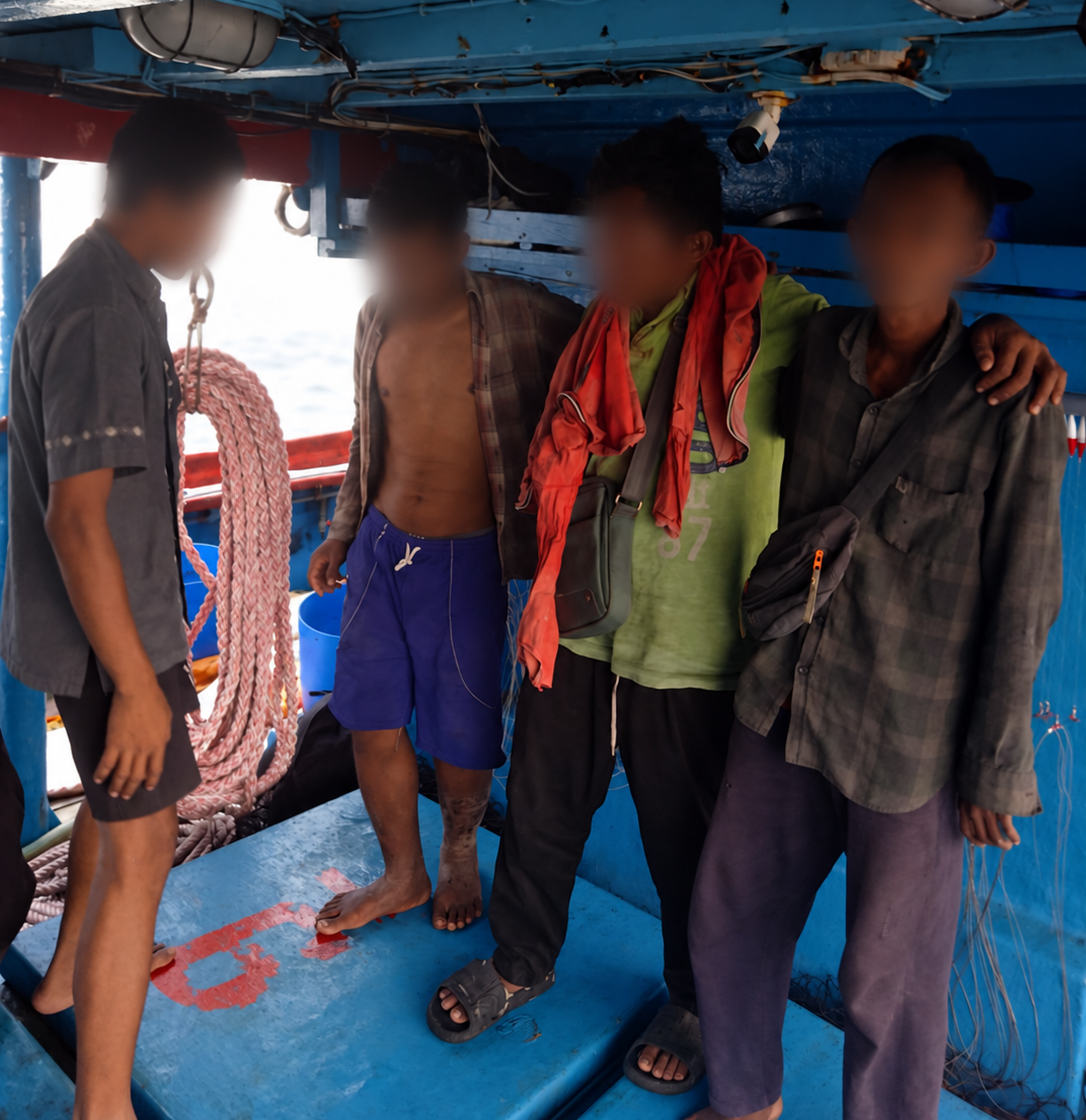
The case centers on the horrific treatment of four crew members—Ilyas Salahuddin, Oktavian Makhreza, Syawal Suswono, and Johan Saputra—who were subjected to systematic beatings, humiliation, and physical trauma. For victims like Ilyas, the ordeal has left lasting scars; his mother, Siti Nurhayati, revealed that her son sustained severe internal injuries, including abdominal trauma and damage to his left ear that has resulted in partial hearing loss. These physical injuries are merely the visible markers of a broader culture of coercion that defines the working conditions for many migrant and domestic fishers in the Indonesian archipelago.
A Chronology of Brutality
The plight of the KM Maulana 23 crew gained national attention on September 30, 2026, when a video circulating on social media captured the visceral reality of their suffering. The footage depicted perpetrators forcing the victims into a water tank, followed by repeated physical assaults. The victims appeared in the video with visible bruising, facial lacerations, and clear signs of physical distress.
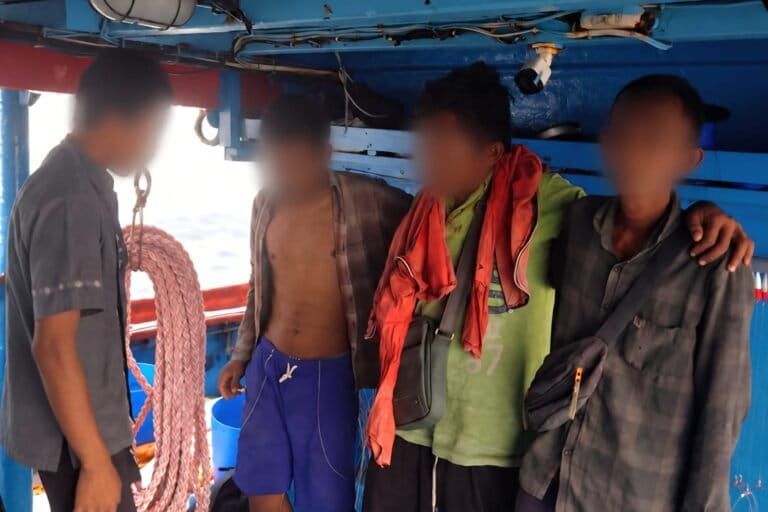
Following the viral nature of the footage, the KKP’s patrol vessel, KP Hiu 14, intercepted the KM Maulana 23 on October 2, 2026, at approximately 14:30 WIT in the waters surrounding the Aru Islands. At the time of interception, the 89-gross-ton vessel was actively engaged in squid fishing. Data from the Vessel Monitoring System (VMS) confirmed the ship’s location, allowing authorities to secure the vessel and its 28 crew members.
The victims were subsequently evacuated to the Cendrawasih Regional General Hospital in Dobo, Maluku, to receive urgent medical and psychological care. Meanwhile, the vessel was impounded, and its operational permits were revoked by the KKP as part of an ongoing criminal investigation.
The Mechanism of Modern Slavery
Initial investigations led by the PSDKP (Directorate General of Marine and Fisheries Resources Surveillance) and the Tanjung Priok Port Police have peeled back the layers of a toxic operational structure. While the ship was officially permitted to operate using falling nets, it was secretly employing illegal squid-fishing gear to maximize output.
The motivation for the violence was rooted in impossible production quotas. According to Pung Nugroho Saksono, the Director General of PSDKP, the crew was mandated to catch at least two kilograms of squid per night. Failure to meet this arbitrary quota resulted in immediate, brutal punishment. Those who performed the worst were subjected to group beatings orchestrated by the ship’s deputy captain.
Beyond the violence, the financial structure of the employment was revealed as a predatory trap. Prospective crew members were recruited with promises of a substantial "down payment" (DP) of IDR 5 million and lucrative profit-sharing schemes. In reality, these workers received only a fraction of the promised amount—often between IDR 100,000 and IDR 500,000—after months of labor. This "debt bondage" strategy ensured that workers remained trapped, unable to afford the travel costs required to abandon their posts or return home.
Official Responses and Legal Proceedings
The scale of the alleged criminal activity has necessitated a multi-agency response. The Tanjung Priok Port Police, working in coordination with the Aru Islands Police, have detained 24 crew members for questioning. Preliminary findings suggest that 19 of these individuals may face criminal charges, while the remaining five are being treated as key witnesses.
The KKP has made it clear that they intend to look beyond simple assault charges. "We are investigating this not just as a case of battery, but as a potential case of human trafficking and forced labor," stated a spokesperson for the ministry. The authorities are scrutinizing the recruitment process, the legality of the vessel’s operations, and the role of the company or owners who enabled these conditions.
The legal implications are significant. Under Indonesia’s Law No. 21/2007 on the Eradication of the Criminal Act of Trafficking in Persons, authorities must prove three elements: the recruitment/transportation process, the use of coercive means (such as violence or debt manipulation), and the ultimate goal of exploitation. Legal experts argue that the conditions aboard the KM Maulana 23 meet all three criteria, potentially setting the stage for a high-profile trafficking conviction.
Broader Implications: A Systemic Crisis
The KM Maulana 23 incident is not an isolated occurrence but rather a symptom of a deeply rooted crisis within the Indonesian fishing sector. Data from the National Fishers Center (NFC) indicates that this pattern—recruitment through social media, promises of high wages, and subsequent physical or financial abuse—has been identified in dozens of cases over the past two years.
In previous years, cases involving vessels such as the KM Sumber Rizqi-A, KM Mitra Usaha Semesta, and the Run Zeng 03 have highlighted the same vulnerabilities. The Run Zeng 03 case, in particular, remains a point of contention for labor rights advocates, as the investigation has allegedly stalled at the national police level despite reports of workers jumping overboard to escape fatal conditions.
The economic reality for these workers is bleak. According to the NFC, 43.2% of complaints received between 2024 and 2025 related to non-payment or wage theft, while 13.5% involved the illegal withholding of identity documents. These tactics effectively strip the workers of their autonomy, turning fishing vessels into floating prisons.
Path Toward Reform
The legal precedent set by the KM Awindo 2A case, which resulted in significant prison sentences for the perpetrators earlier in 2026, serves as a beacon for what is required in the current case. However, experts like Imam Trihatmadja of the Destructive Fishing Watch (DFW) Indonesia argue that punitive measures alone are insufficient.
"We need a holistic approach that includes the recovery of victims, the provision of restitution, and the systematic dismantling of the recruitment networks that feed these vessels," Trihatmadja stated. He further emphasized that legal accountability must reach the owners and the companies behind these ships, rather than stopping at the level of the ship’s officers.
The implications of failing to resolve these issues are twofold: first, the continued suffering of vulnerable workers who are drawn to the industry by poverty; and second, the potential for international sanctions or reputational damage to Indonesia’s seafood exports. As global markets become increasingly sensitive to "seafood slavery," the Indonesian government is under immense pressure to demonstrate that it can regulate its own waters and protect its citizens.
Conclusion
The ordeal of Ilyas Salahuddin and his colleagues is a clarion call for reform in the maritime industry. While the capture of the KM Maulana 23 and the arrest of its crew represent a victory for law enforcement, the true measure of progress will be the ability of the state to prevent these atrocities from recurring. By focusing on the intersection of labor rights, human trafficking, and corporate accountability, the ongoing investigation offers a critical opportunity to shift the culture of the fishing industry from one of exploitation to one of dignity and safety. As the case moves through the court system, the nation will be watching to see if the law is finally applied with the severity necessary to end the era of modern slavery at sea.









