Azin Asro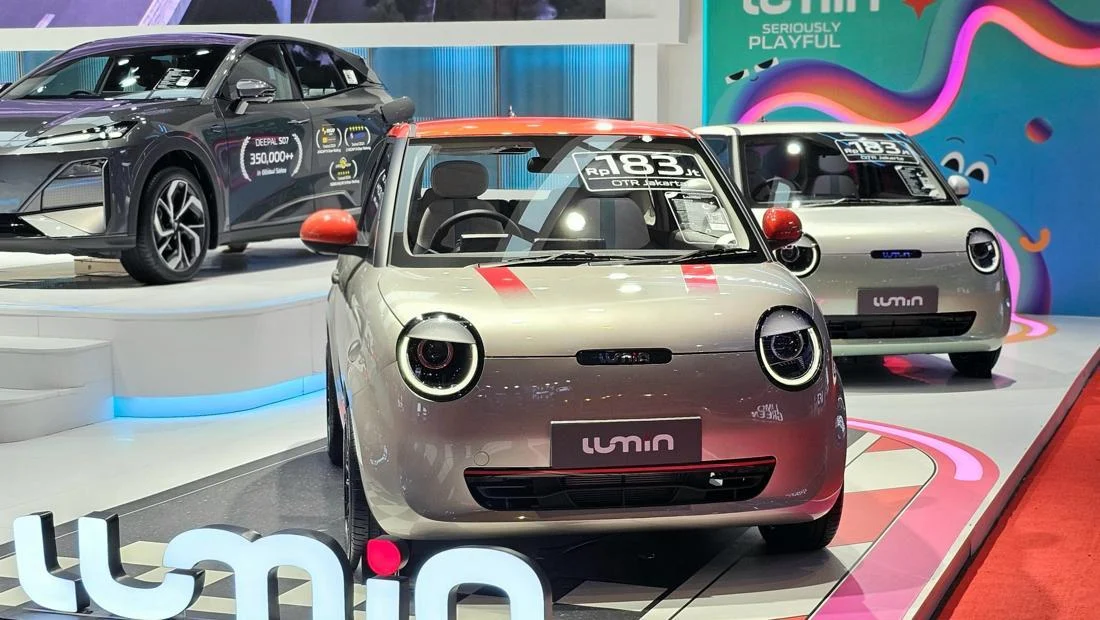
The Indonesian automotive landscape is poised for a significant shift as the Indomobil Group, one of the country’s largest automotive distributors and manufacturers, officially expressed its support for the Ministry of Finance’s plan to reintroduce fiscal incentives for electric vehicles (EVs). This development comes at a critical juncture for the domestic industry, which has been seeking regulatory certainty to bolster the transition from internal combustion engines to cleaner, more sustainable energy sources. Tan Kim Piauw, Chief Executive Officer of PT Indomobil National Motor, voiced his appreciation for the government’s commitment to maintaining a consistent policy framework that aligns with global environmental goals.
The announcement, which was first signaled by officials within the Ministry of Finance, suggests a renewed push to stimulate consumer demand and industrial investment. According to Tan, the potential reactivation of these incentives—many of which had seen their initial terms expire or reach capacity at the end of the previous fiscal year—is essential for accelerating the public’s transition toward eco-friendly transportation. He emphasized that such policies do more than just lower the barrier to entry for consumers; they provide the necessary signals to the private sector to invest in the long-term infrastructure and supply chains required for a robust EV ecosystem.
Indomobil’s Strategic Alignment with National EV Goals
Speaking at an industry event in Senayan, Central Jakarta, Tan Kim Piauw noted that the Indomobil Group views the government’s plan as a testament to Indonesia’s consistency in its long-term roadmap. The group, which manages a diverse portfolio of brands including Nissan, Kia, Citroën, and Volkswagen, has been increasingly focusing on bringing electrified models to the Indonesian market. The CEO highlighted that the push toward electrification is a shared responsibility between the state and the private sector to ensure a cleaner, greener environment for future generations.
"We highly appreciate this government plan; it shows they are consistent with the original roadmap," Tan stated. "Beyond supporting the global community in achieving a cleaner environment, one of our primary goals is the transformation of the national fleet into electric vehicles. The government’s program has been clear from the outset, and this continuation is a vital part of that journey."
Tan further elaborated on the necessity of policy longevity. While the industry welcomes any immediate stimulus, the Indomobil Group is advocating for a framework that spans several years rather than months. A long-term policy provides the stability required for manufacturers to commit to local assembly plants and for financial institutions to offer better credit terms for EV purchases. "If possible, this should be valid for a long period," Tan added. "This will allow the industry to grow steadily and ensure the ecosystem is built on a healthy, sustainable foundation."
The Ministry of Finance’s Proposed Incentive Scheme
The push for renewed incentives was recently corroborated by remarks from Purbaya Yudhi Sadewa, a key figure in the financial regulatory space and the Chairman of the Indonesia Deposit Insurance Corporation (LPS), who has been vocal about the Ministry of Finance’s direction regarding the EV sector. As reported by various national financial outlets, the government is preparing a scheme that initially targets the purchase of 100,000 electric vehicle units.
In a move that surprised some industry observers due to its scale, Purbaya indicated that the 100,000-unit figure is merely a starting point. He suggested that the government is prepared to be flexible and expansive with its support. "For electric cars, we will provide [incentives] for 100,000 units. If those are exhausted, we will provide more. If those are exhausted again, we will continue to provide them," Purbaya stated during a press briefing at his office in Jakarta.
This "open-ended" approach is intended to remove the "fear of missing out" or the "wait-and-see" attitude that often plagues consumer behavior when subsidies are limited by strict timeframes or small quotas. By promising a continuous supply of incentives, the government aims to create a predictable market environment where both buyers and sellers can plan their transactions without the threat of sudden price hikes due to expiring tax breaks.
While the specific financial details—such as the exact percentage of Value Added Tax (VAT) reductions or luxury tax exemptions—are still being finalized, the Ministry of Industry, led by Minister Agus Gumiwang Kartasasmita, is reportedly drafting the technical implementation guidelines. This collaborative effort between the Ministry of Finance and the Ministry of Industry mirrors the successful subsidy program previously implemented for electric motorcycles, which sought to bridge the price gap between traditional bikes and their electric counterparts.
Chronology of Indonesia’s EV Policy Evolution
To understand the significance of the current proposal, it is necessary to look at the timeline of Indonesia’s EV journey. The foundation was laid with Presidential Regulation No. 55 of 2019, which outlined the acceleration of the battery electric vehicle program for road transportation. This was followed by a series of fiscal and non-fiscal incentives designed to attract global manufacturers like Hyundai and Wuling to establish local production bases.
In 2023, the government implemented a significant VAT discount, reducing the tax from 11% to just 1% for electric cars that met a minimum Local Content Requirement (TKDN) of 40%. This policy led to a noticeable surge in sales, particularly for models like the Hyundai Ioniq 5 and the Wuling Air EV. However, as the 2023 fiscal year concluded, there was uncertainty regarding the extension of these benefits into 2024 and beyond.

The current announcement by the Ministry of Finance serves as a bridge to resolve that uncertainty. The government’s realization that the EV transition requires sustained momentum has led to this renewed commitment. The transition is not merely about environmentalism; it is a core component of Indonesia’s "Golden Indonesia 2045" vision, which seeks to position the country as a global hub for the EV supply chain, leveraging its massive nickel reserves—the largest in the world—for battery production.
Data and Market Analysis: The Case for Continued Support
The Indonesian automotive market is the largest in Southeast Asia, with annual sales typically hovering around the one-million-unit mark for internal combustion engine (ICE) vehicles. However, the penetration of EVs remains in its early stages. In 2023, the total sales of battery electric vehicles (BEVs) reached approximately 17,000 units, a significant jump from previous years but still representing less than 2% of total automotive sales.
Industry experts argue that without continued government intervention, the growth curve might plateau. The primary hurdle remains the price parity between EVs and ICE vehicles. Currently, the cost of an electric car in Indonesia is often 30% to 50% higher than a comparable gasoline-powered car, primarily due to the high cost of batteries and the lack of economies of scale in local production.
Supporting data from the Association of Indonesia Automotive Industries (Gaikindo) suggests that consumer interest is high, but price sensitivity remains the deciding factor. By reintroducing the 100,000-unit incentive scheme, the government is effectively targeting a critical mass of early adopters. Once the market reaches a certain threshold of adoption, the cost of infrastructure per unit drops, and the secondary market for used EVs begins to stabilize, further encouraging new buyers.
Implications for the Industrial Ecosystem and Infrastructure
The Indomobil Group’s call for a "healthy ecosystem" refers to more than just sales figures. A healthy ecosystem includes a widespread network of Public Electric Vehicle Charging Stations (SPKLU), specialized maintenance facilities, and a trained workforce. Tan Kim Piauw noted that as people become more comfortable with the technology and see more EVs on the road, "range anxiety"—the fear that a battery will run out of power before reaching a destination—begins to diminish.
"We hope for the long term because the EV ecosystem is already beginning to take shape well," Tan explained. "The public is starting to like electric cars; they feel comfortable, and sales performance has shown improvement. We need to maintain this momentum to ensure that the infrastructure investment made by the private sector and the state utility company, PLN, remains viable."
Furthermore, the expansion of incentives is expected to drive more foreign direct investment (FDI). Global giants such as BYD from China and VinFast from Vietnam have recently announced or commenced operations in Indonesia. These companies look for policy consistency before committing billions of dollars toward manufacturing facilities. A revolving door of incentives could deter such investments, whereas the "continuous" model proposed by Purbaya Yudhi Sadewa provides the "green light" these corporations need.
Challenges and the Path Forward
Despite the optimism from the Indomobil Group and the proactive stance of the Ministry of Finance, challenges remain. The Ministry of Industry must ensure that the incentives are tied to local value creation. The TKDN (Local Content) requirements are a double-edged sword; they encourage local manufacturing but can also limit the variety of vehicles eligible for subsidies if the local supply chain cannot keep up with demand.
There is also the question of the "middle-class" consumer. Most current EV offerings in Indonesia are either premium luxury vehicles or very small city cars. There is a "missing middle" of family-sized SUVs and MPVs—the most popular vehicle segments in Indonesia—that are priced affordably. The Indomobil Group, with its wide range of brands, is uniquely positioned to fill this gap if the incentive structure allows for a broader range of vehicle types to qualify.
As the Ministry of Industry finalizes the technicalities of the new 100,000-unit scheme, the automotive sector remains watchful. The success of this policy will likely be measured not just by how quickly the 100,000 units are sold, but by how many new manufacturing plants are broken ground upon and how much the national carbon footprint is reduced in the coming years.
In conclusion, the Indomobil Group’s endorsement of the Ministry of Finance’s plan highlights a rare alignment of interests between the state’s fiscal policy, environmental goals, and private sector industrial strategy. By moving toward a more permanent and scalable incentive model, Indonesia is signaling to the world that it is serious about its role in the global green energy revolution. As Tan Kim Piauw summarized, the industry is ready to trust the government’s judgment, believing that they "know what is best for the industry and the country" in the pursuit of a sustainable future.