Bambang Pamungkas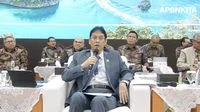
JAKARTA – Indonesia’s Finance Minister, Purbaya Yudhi Sadewa, has expressed strong optimism that the nation’s economic growth could reach an ambitious 6% by the close of 2026. This confident projection follows the impressive performance recorded in the first quarter of 2026, where the economy expanded by a robust 5.61% year-on-year (yoy). This figure aligns perfectly with Minister Purbaya’s internal projections, which had placed Q1 growth in the range of 5.5% to 5.7%, underscoring the efficacy of current economic strategies. The target of 6% stands notably higher than the 5.4% growth assumption enshrined in the 2026 State Budget (APBN), signalling the government’s determination to push beyond initial conservative estimates.
"We will push the target… The APBN is 5.4%, but we will push it towards 6% by the end of the year," Minister Purbaya told reporters on Wednesday, May 6, 2026. "Looking at the current results, it seems the strategy has yielded results. It seems the strategy is quite fitting and accurate." This declaration highlights a proactive stance from the government, keen to capitalize on current momentum and accelerate development. The minister’s confidence is rooted in the early successes of various strategic initiatives and the anticipated impact of forthcoming programs designed to stimulate domestic demand, foster inclusive growth, and accelerate the green transition.
Indonesia’s Economic Resilience and Outlook
Indonesia, Southeast Asia’s largest economy and a prominent member of the G20, has demonstrated remarkable resilience in recent years, navigating global economic headwinds with a steady hand. Following the unprecedented challenges posed by the COVID-19 pandemic, the archipelago embarked on a robust recovery path, supported by strong domestic consumption, strategic infrastructure investments, and a diversified export base. In 2023, Indonesia’s economy grew by approximately 5.05%, maintaining its growth trajectory above the 5% mark. This consistent performance has cemented its reputation as a stable and attractive investment destination within a volatile global landscape.
The government’s long-term vision, encapsulated in the "Golden Indonesia 2045" roadmap, aims to transform the nation into one of the world’s top economies by its centennial independence. Achieving sustained high growth rates, such as the projected 6% for 2026, is critical for realizing this ambition, particularly in addressing persistent challenges like poverty reduction, job creation for a rapidly expanding young workforce, and narrowing regional disparities. The current global economic environment, while still fraught with uncertainties stemming from geopolitical tensions, inflation, and varying recovery paces among major economies, presents both opportunities and challenges for Indonesia. The nation’s abundant natural resources, particularly its critical minerals for the burgeoning electric vehicle (EV) industry, position it uniquely to leverage global shifts towards sustainability and green technology.
Detailed Q1-2026 Performance Analysis
The 5.61% economic growth recorded in the first quarter of 2026 exceeded many market expectations and underscored the underlying strength of the Indonesian economy. This performance was largely driven by robust household consumption, which typically accounts for over half of Indonesia’s Gross Domestic Product (GDP). Continued consumer confidence, bolstered by stable inflation and government social assistance programs, played a pivotal role. Investment, both foreign direct investment (FDI) and domestic capital formation, also showed healthy expansion, indicating renewed business confidence and the impact of eased regulatory environments.
Exports continued to contribute positively, albeit with some moderation compared to the commodity boom-driven peaks of previous years. Key export commodities, including palm oil, coal, and increasingly, processed mineral products, found strong demand in international markets. Government spending, particularly on infrastructure projects and social programs, provided a crucial stimulus, ensuring that fiscal policy remained counter-cyclical and supportive of growth. Sector-wise, manufacturing, trade, and financial services were likely significant contributors, reflecting the diversified nature of Indonesia’s economic engine. The strong Q1 showing provides a solid foundation for the remainder of the year and lends credibility to the government’s more ambitious growth targets.
The Ambitious 6% Target: Strategy and Drivers
Minister Purbaya’s assertion that the government’s strategy is "quite fitting and accurate" points to a multi-pronged approach designed to sustain and accelerate economic expansion. This strategy likely involves a combination of fiscal stimulus, structural reforms, and targeted sectoral development. The government aims to maintain strong domestic demand by ensuring purchasing power through stable inflation and employment growth. Investment promotion remains a cornerstone, with efforts to streamline licensing, provide incentives, and develop industrial estates to attract both domestic and international capital.
Furthermore, leveraging Indonesia’s demographic dividend by investing in human capital development, promoting digital transformation, and fostering innovation are long-term strategies expected to bear fruit in the coming years. The government is also acutely aware of the need to diversify the economy away from reliance on raw commodity exports towards higher-value manufacturing and services. The 6% target is not merely an aspiration but a reflection of a concerted effort to unlock latent economic potential through strategic interventions and policy coordination across various ministries and institutions, including close collaboration with Bank Indonesia to ensure macroeconomic stability.
Key Government Programs for Economic Momentum
To achieve the ambitious 6% growth target, the government is rolling out several key programs, with a particular focus on empowering local economies and driving the adoption of green technology.
Empowering Rural Economies: Koperasi Desa Merah Putih and Nelayan
One of the flagship initiatives highlighted by Minister Purbaya is the "Koperasi Desa Merah Putih" (Red and White Village Cooperatives) and "Koperasi Desa Nelayan" (Fishermen Village Cooperatives). These programs, though still in their nascent stages, are anticipated to deliver rapid economic impacts. The focus on cooperatives at the village level underscores the government’s commitment to inclusive growth and strengthening the grassroots economy. Micro, Small, and Medium Enterprises (MSMEs) and cooperatives are the backbone of Indonesia’s economy, contributing significantly to GDP and employing a vast majority of the workforce. By empowering these entities, the government aims to:
- Boost Local Production and Value Addition: Provide capital, training, and market access to village communities, enabling them to process raw materials, improve product quality, and reach wider markets. This can include agricultural products, handicrafts, and fisheries.
- Create Employment Opportunities: Strengthen local economies to generate jobs within villages, reducing the need for rural-urban migration and fostering sustainable livelihoods.
- Enhance Financial Inclusion: Facilitate access to financing and financial literacy for underserved communities, allowing them to expand their businesses and improve their economic well-being.
- Reduce Regional Disparities: Direct investment and support to rural and remote areas, helping to bridge the economic gap between urban centers and the periphery.
The "Merah Putih" (Red and White) nomenclature evokes a sense of national unity and shared prosperity, aligning these programs with broader national development objectives. The minister’s optimism stems from the direct and tangible benefits these cooperatives are expected to bring to the local populace, thereby stimulating consumption and economic activity from the ground up. As these programs mature, their effectiveness is projected to increase, becoming significant drivers of sustained growth.
Accelerating Green Transition: Electric Vehicle Incentives
Another crucial component of the government’s growth strategy and commitment to sustainability is the introduction of significant incentives for the purchase of electric vehicles (EVs). These incentives, specifically in the form of Value Added Tax (VAT) borne by the government (PPN DTP), are slated to be launched in June 2026. The program targets the promotion of 100,000 electric motorcycles and 100,000 electric cars, signaling a serious push towards electrifying the transportation sector.
The PPN DTP scheme is still under discussion regarding the exact percentage, with options ranging from 100% to 40% of the VAT being covered by the government. Minister Purbaya clarified that these incentives are exclusively for pure EVs, not hybrid vehicles, underscoring a clear focus on fully electric mobility. The goals behind this aggressive push are multi-faceted:
- Reduce Carbon Emissions: Accelerating EV adoption is a key strategy for Indonesia to meet its climate change commitments and reduce air pollution in urban areas.
- Boost Domestic EV Industry: Indonesia possesses vast reserves of nickel, a critical component in EV battery production. By stimulating domestic demand for EVs, the government aims to attract investment in the entire EV ecosystem, from mining and battery manufacturing to vehicle assembly. This strategy seeks to position Indonesia as a global hub for EV production and exports.
- Enhance Energy Security: Reducing reliance on fossil fuel imports for transportation can improve Indonesia’s energy security and balance of payments.
- Technological Advancement: Encouraging the adoption of advanced automotive technology can foster innovation and skill development within the country.
The targeted launch of these incentives in June 2026 is timely, aiming to inject fresh momentum into the automotive sector and contribute to economic growth in the second half of the year. The government’s clear preference for pure EVs over hybrids indicates a strategic long-term vision for a fully electrified transportation future.
Fiscal Policy and Macroeconomic Stability
While the government aims for an ambitious 6% growth, the 2026 State Budget (APBN) initially projects a more conservative 5.4%. This differential reflects prudent fiscal planning, allowing for flexibility and a buffer against unforeseen economic shocks. The APBN 2026 is built on assumptions that also consider factors such as inflation rates, exchange rates, and commodity prices, all crucial for maintaining macroeconomic stability. The government’s strategy involves careful management of fiscal resources to ensure that stimulus programs are effective without jeopardizing the nation’s fiscal health.
Coordination between fiscal policy (Ministry of Finance) and monetary policy (Bank Indonesia) is paramount. Bank Indonesia’s role in managing inflation and maintaining currency stability is critical for providing a conducive environment for sustained economic growth. Analysts suggest that Bank Indonesia will closely monitor the impact of increased domestic demand and government spending on inflationary pressures, ready to adjust its policy rates if necessary to anchor expectations and safeguard purchasing power. The synergy between these two institutions will be key to navigating potential challenges and ensuring that the growth trajectory is sustainable.
Expert Perspectives and Market Reactions
Economists and market analysts have largely welcomed the government’s optimistic outlook, recognizing Indonesia’s strong fundamentals. However, many also caution that achieving a sustained 6% growth rate will require diligent execution of policies and resilience against external shocks. "The 5.61% Q1 growth is a strong indicator of underlying economic health, but pushing to 6% for the full year 2026 will demand consistent performance across all sectors," noted a Jakarta-based economic analyst. "The success of the cooperative programs and EV incentives will be crucial, alongside continued investment in infrastructure and human capital."
The private sector is generally optimistic about the potential for increased domestic demand and the benefits of government incentives. Industry associations, particularly in the automotive and MSME sectors, have expressed readiness to collaborate with the government to maximize the impact of these programs. International investors will likely view a 6% growth target as a positive signal, potentially leading to increased foreign direct investment, especially in sectors targeted by government incentives like the EV industry.
Potential Headwinds and Future Challenges
Despite the robust outlook, Indonesia’s economic trajectory is not without potential headwinds. Global economic slowdowns, persistent inflationary pressures in major economies, and geopolitical instability could dampen export demand and affect investor confidence. Volatility in global commodity prices, while sometimes beneficial, can also introduce uncertainty. Domestically, effective implementation of the ambitious government programs, particularly the widespread rollout and management of village cooperatives and the EV incentive scheme, will be critical. Bureaucratic hurdles, logistical challenges, and ensuring equitable distribution of benefits will require sustained effort and oversight.
Furthermore, the transition to a greener economy, while promising, demands significant investment in renewable energy infrastructure and reskilling of the workforce. Balancing the immediate economic growth objectives with long-term sustainability goals will be an ongoing challenge that requires careful policy calibration.
Conclusion
Minister Purbaya Yudhi Sadewa’s declaration of an ambitious 6% economic growth target for Indonesia in 2026, building on a strong Q1 performance, underscores the government’s confidence in its strategic economic roadmap. Through a combination of empowering grassroots economies via village cooperatives and accelerating the green transition with aggressive EV incentives, Indonesia aims not only to surpass its State Budget projections but also to solidify its position as a dynamic and resilient economic powerhouse. While challenges remain, the clear articulation of strategy and the demonstrated commitment to implementation provide a strong foundation for the nation to achieve its elevated economic aspirations. The coming months will be crucial in observing the execution and impact of these key initiatives, shaping Indonesia’s economic narrative for the remainder of the decade.