Nila Kartika Wati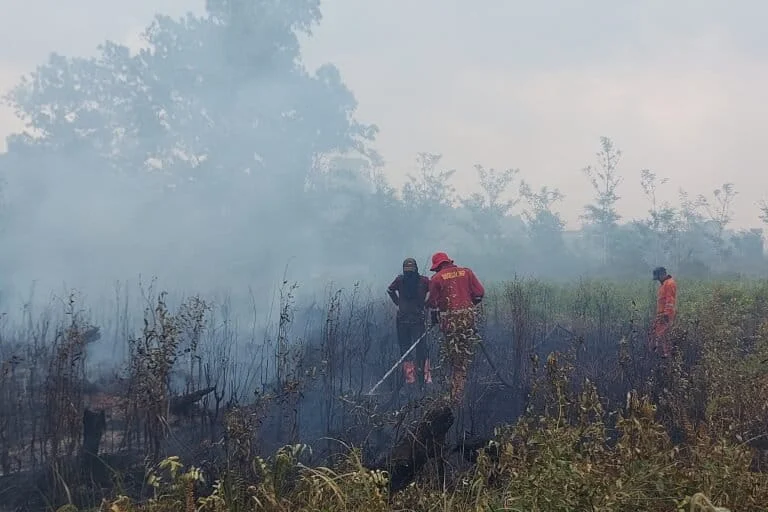
The Indonesian archipelago, a region defined by its precarious balance between equatorial rains and periods of intense aridity, finds itself once again at a critical crossroads of climate vulnerability. For decades, the nation has grappled with a repetitive cycle of environmental disasters that seem to follow the rhythm of the seasons with harrowing predictability. During the monsoon months, torrential rains frequently trigger widespread flooding and devastating landslides. Conversely, as the calendar shifts toward the dry season, the specter of drought and the subsequent outbreak of forest and land fires (locally known as karhutla) becomes an annual recurrence that threatens not only the nation’s ecological integrity but also the health and economic stability of the Southeast Asian region.
The historical precedent for these fires is grim. Indonesia has weathered several catastrophic fire seasons that remain etched in the global environmental record. In 1997, a year marked by one of the strongest El Niño events of the 20th century, more than 9 million hectares of forest and land were consumed by flames, releasing a massive volume of carbon dioxide into the atmosphere and creating a haze crisis that blanketed neighboring countries. Nearly two decades later, in 2015, approximately 2.6 million hectares were razed, resulting in economic losses estimated by the World Bank at over $16 billion. More recently, in 2019, another severe season saw 1.6 million hectares burned. Despite various mitigation efforts and policy shifts, the fundamental threat of fire remains a persistent shadow over the Indonesian landscape.
As the current year progresses, meteorological projections have sounded an alarm of unprecedented urgency. The Meteorology, Climatology, and Geophysical Agency (BMKG) has warned of the emergence of a "Godzilla" El Niño—a term used by climatologists to describe an exceptionally strong warming of the central and eastern Pacific Ocean. This phenomenon is expected to drive significant temperature increases across Indonesia and much of the globe in the coming months. The situation is further complicated by projections from the National Research and Innovation Agency (BRIN), which indicate that this extreme El Niño will likely coincide with a positive phase of the Indian Ocean Dipole (IOD). This rare convergence of two major climate drivers creates a "double whammy" effect, potentially extending the dry season and reducing rainfall to critical lows, thereby creating the perfect conditions for a catastrophic fire season.
The Historical Chronology of Indonesia’s Fire Crisis
Understanding the current threat requires a look back at the timeline of Indonesia’s struggle with forest fires. The 1997-1998 crisis was a watershed moment, largely driven by the drainage of peatlands for agricultural projects, such as the ill-fated Mega Rice Project in Central Kalimantan. When the El Niño-induced drought hit, the dried-out peat became a tinderbox. Unlike surface fires, peat fires burn underground and are notoriously difficult to extinguish, often smoldering for months and producing thick, toxic smoke.
The 2015 crisis served as another wake-up call. Following years of relative calm, a strong El Niño returned, catching many off guard. The resulting haze led to tens of thousands of respiratory infections across Indonesia, Malaysia, and Singapore, and forced the closure of schools and airports for weeks. This event prompted President Joko Widodo to establish the Peatland Restoration Agency (BRG) and implement a permanent moratorium on new licenses for clearing primary forests and peatlands.
By 2019, though the fires were less extensive than in 2015, the impact was still severe. The fires that year proved that even with better monitoring and faster response times, the sheer force of a prolonged dry season could overwhelm local resources. The 2019 fires reinforced the reality that Indonesian forest fires are no longer just a local issue but a recurring international climate emergency.
The Science Behind the Threat: El Niño Godzilla and Positive IOD
The term "El Niño Godzilla" is not merely hyperbole; it refers to the intensity of Sea Surface Temperature (SST) anomalies. When SSTs in the Pacific rise significantly above the long-term average, it disrupts global wind patterns, specifically the Walker Circulation. For Indonesia, this means the moisture-laden air that usually brings rain to the archipelago is pushed eastward, leaving the region parched.
The Indian Ocean Dipole (IOD) is often described as the "El Niño of the Indian Ocean." A "positive" phase occurs when the western Indian Ocean (near Africa) is warmer than usual, while the eastern Indian Ocean (near Sumatra and Java) is cooler. This temperature gradient inhibits cloud formation over western Indonesia. When a positive IOD aligns with a strong El Niño, the two phenomena reinforce each other. The result is a precipitous drop in humidity and an extension of the dry season well beyond its usual October conclusion, potentially stretching into the following year.
BRIN researchers have noted that this combination is particularly dangerous for the "fire belt" provinces: Riau, Jambi, South Sumatra, West Kalimantan, Central Kalimantan, and South Kalimantan. These areas contain vast tracts of peatland which, once dried out, become susceptible to even the smallest spark—whether from lightning or, more commonly, human activity related to land clearing.
Supporting Data and Socio-Economic Implications
The implications of a severe fire season are multifaceted, touching upon economics, public health, and biodiversity. Data from the World Bank suggests that the economic impact of forest fires goes far beyond the loss of timber. In the 2015 and 2019 seasons, the costs included:
- Healthcare Costs: Direct medical expenses for treating Acute Respiratory Respiratory Infection (ISPA) and long-term health complications. In 2015, over 500,000 people reported respiratory ailments.
- Transport and Tourism: Thousands of flights were canceled due to low visibility, and the tourism industry in Sumatra and Kalimantan suffered significant losses.
- Agriculture: Beyond the burning of crops, the drought associated with El Niño reduces yields for palm oil, rubber, and food staples like rice, leading to food price inflation.
- Carbon Emissions: Indonesia is one of the world’s largest emitters of greenhouse gases when forest fires occur. The 2015 fires released more carbon daily than the entire US economy on several peak days.
Biodiversity is another silent victim. Indonesia’s tropical forests are home to endangered species such as the orangutan, the Sumatran tiger, and the rhinoceros. Fires destroy their habitats and fragment the corridors they use for migration and breeding. The loss of these "lungs of the world" also impacts the global fight against climate change, as tropical peatlands are among the world’s most efficient carbon sinks.
Official Responses and Strategic Mitigation
In response to the looming threat, the Indonesian government has moved into a state of high alert. The Ministry of Environment and Forestry (KLHK), in collaboration with the National Disaster Management Agency (BNPB) and the military (TNI) and police (Polri), has begun pre-positioning resources in fire-prone provinces.
"We cannot wait for the first plume of smoke to appear," stated a senior official from the Ministry of Environment. "Prevention is our primary directive. This involves everything from weather modification to ground-level community engagement."
Key strategies currently being deployed include:
- Weather Modification Technology (TMC): Cloud seeding operations are being conducted to induce rain over peatland areas before the dry season reaches its peak. This is intended to keep the "water table" in the peat at a safe level.
- Peatland Rewetting: The Peatland and Mangrove Restoration Agency (BRGM) is working to repair canal blocks and drill wells to ensure that drained peatlands remain moist.
- Sipongi Monitoring System: Indonesia’s satellite-based early warning system, Sipongi, provides real-time data on hotspots. This allows rapid response teams (Manggala Agni) to reach fires before they spread.
- Legal Enforcement: Authorities have reiterated a "zero-tolerance" policy for illegal land clearing. Companies found to have fires on their concessions face stiff administrative and criminal penalties, including the revocation of licenses.
The Role of Stakeholders and the Private Sector
While the government plays a central role, the responsibility for preventing a 2023 catastrophe falls on all sectors of society. Large plantation companies, particularly in the palm oil and pulp-and-paper sectors, are under intense international scrutiny. Many have adopted "No Deforestation, No Peat, No Exploitation" (NDPE) policies, but the challenge often lies in managing the behavior of smallholders and third-party suppliers who may still use fire as a low-cost tool for land clearing.
Community-based fire prevention is also vital. The "Masyarakat Peduli Api" (Fire-Aware Community) groups are local volunteers trained to monitor their villages and provide the first line of defense. Analysts argue that providing these communities with economic incentives to avoid fire—such as support for mechanized land clearing—is more effective than punitive measures alone.
Analysis of Global and Regional Implications
The return of severe forest fires in Indonesia would have significant diplomatic repercussions. The ASEAN Agreement on Transboundary Haze Pollution, signed by all member states, mandates that nations prevent haze from crossing borders. Recurring haze often strains relations between Jakarta, Kuala Lumpur, and Singapore.
Furthermore, as the world prepares for future COP (Conference of the Parties) climate summits, Indonesia’s ability to manage its forest fires is seen as a litmus test for its commitment to its Nationally Determined Contributions (NDCs) under the Paris Agreement. If the "Godzilla" El Niño leads to a massive carbon spike, it could undermine Indonesia’s progress in reducing its carbon footprint.
The convergence of El Niño and a positive IOD represents a formidable challenge to Indonesia’s resilience. It is a test of the systems put in place since 2015 and a reminder that climate change is not a distant threat but a present reality that amplifies existing vulnerabilities. The coming months will determine whether the lessons of 1997, 2015, and 2019 have been truly learned, or if the archipelago is destined to remain in a state of perpetual seasonal anxiety. Vigilance, scientific integration, and swift ground-level action remain the only viable defenses against the impending heat.