Nila Kartika Wati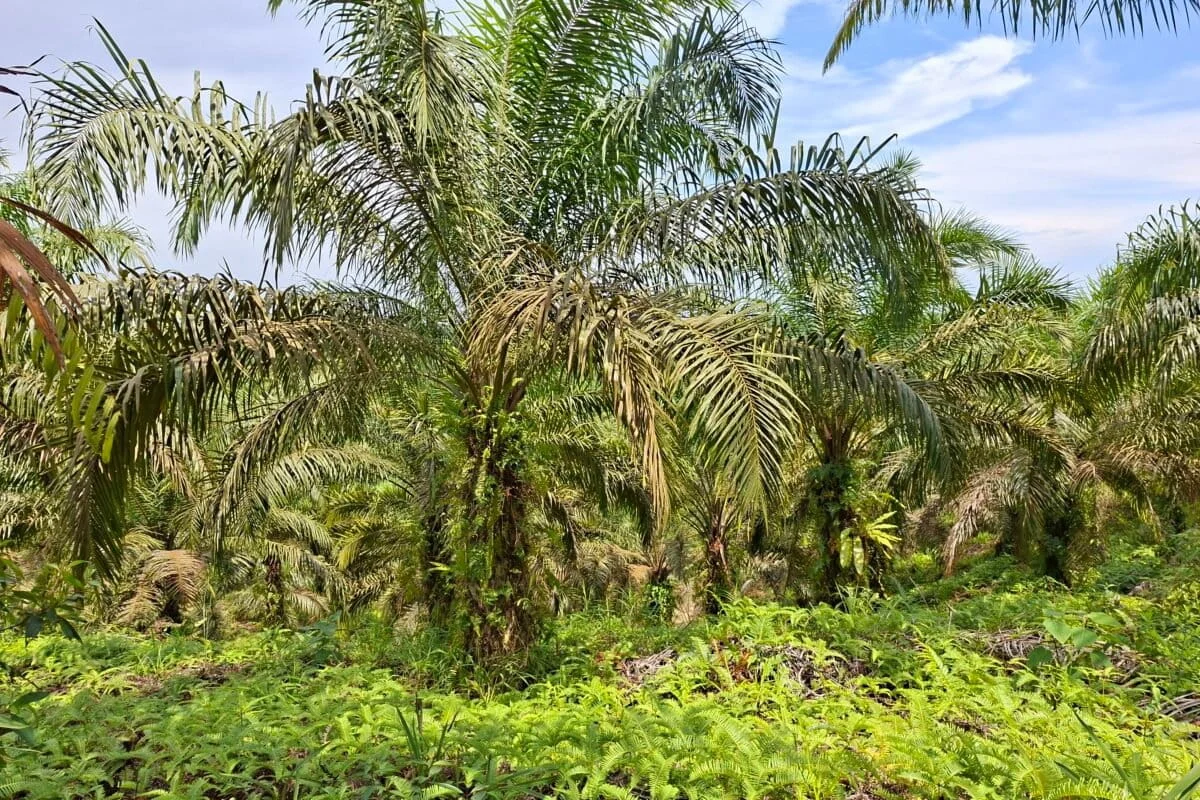
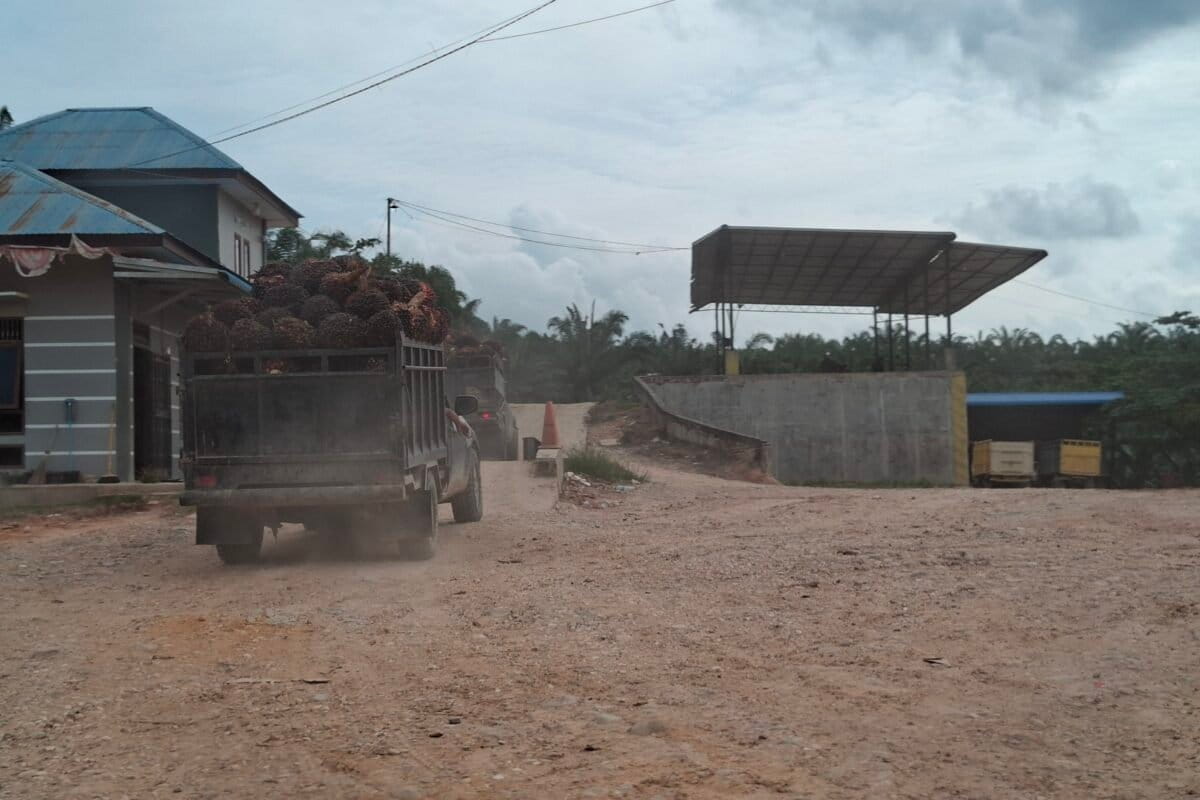
The atmosphere around the exit gate of Dusun IV Toro Jaya remained eerily quiet on August 7, 2025, save for two heavy trucks laden with fresh fruit bunches (FFB) of oil palm parked on the yellow dirt shoulder. These vehicles were prepared to transport a harvest that, by law, should not exist. The fruit originated from Toro, a settlement deep within the heart of Tesso Nilo National Park (TNTN), a vital conservation area in Riau, Indonesia, that has seen its forest cover decimated to less than 20% of its original 81,000-hectare expanse. Despite the formation of a high-level government task force and a presidential decree aimed at reclaiming these lands, the flow of "tainted" palm oil from protected forests to global supply chains continues largely unabated.
The encroachment of Tesso Nilo has been a slow-motion catastrophe spanning decades. Once a primary sanctuary for the critically endangered Sumatran elephant and Sumatran tiger, the park has been systematically converted into a patchwork of illegal palm oil plantations. By early 2025, the Indonesian government signaled a shift in policy with the issuance of Presidential Regulation (Perpres) Number 5/2025 concerning the Normalization of Forest Areas. This led to the creation of the Forest Area Normalization Task Force (Satgas PKH), a multi-agency body tasked with sealing illegal plantations and restoring state assets. However, an on-the-ground investigation reveals that while the land may be legally "sealed," the economic machinery behind the illegal harvest remains fully operational.
The Journey of Tainted Fruit: From Forest to Mill
The logistics of illegal palm oil are built on a network of "peron" or informal collection points. Roben Surbakti, a collector operating in Toro, explains that the destination of the fruit is determined by market fluctuations rather than legal boundaries. "We enter almost all palm oil mills (PKS). Whichever offers the highest price, we go there," Surbakti noted, highlighting that different mills have varying criteria for fruit quality and price deductions. For the operators in Toro, the presence of a national park boundary is an administrative abstraction that does not interfere with the daily commerce of palm oil.
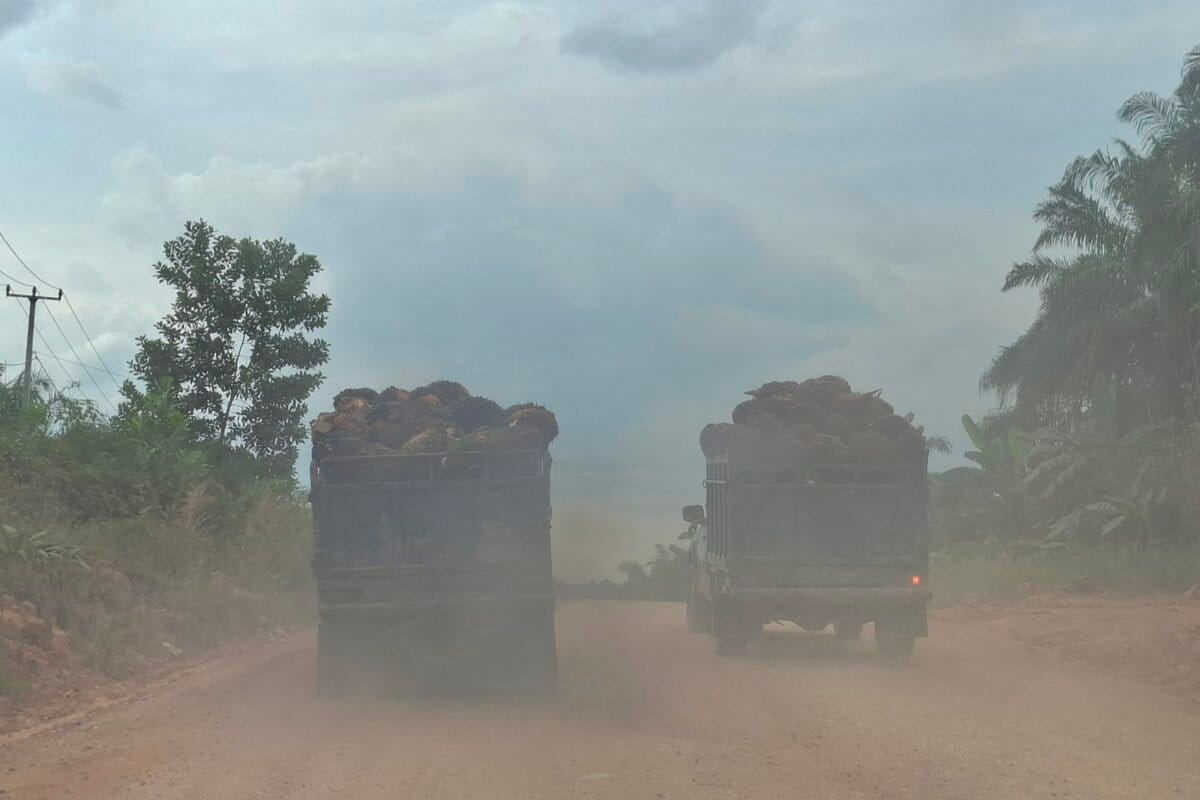
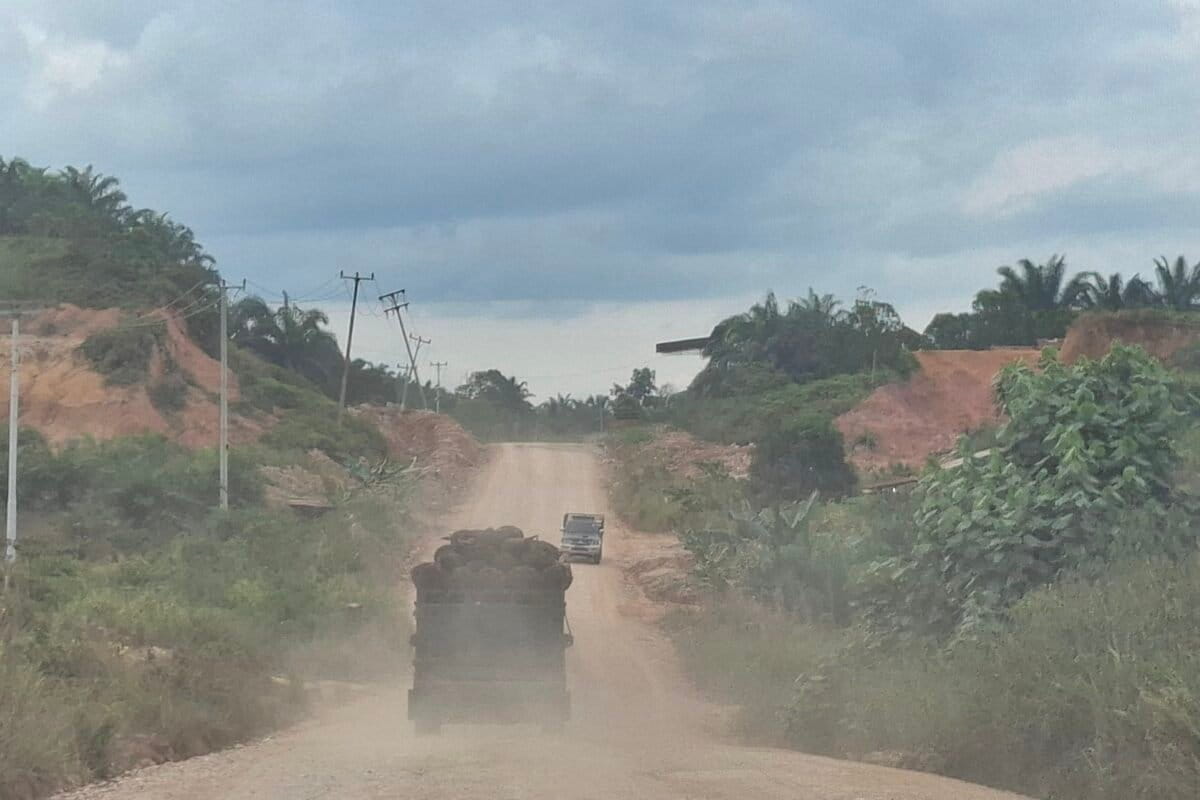
To trace the movement of this illegal fruit, investigators followed trucks departing from Toro. One specific vehicle, a truck bearing the moniker "+18 Ruangan Putri" on its window, departed at approximately 7:00 PM, navigating the "Baserah Corridor"—a route flanked by acacia and eucalyptus concessions belonging to PT Riau Andalan Pulp and Paper (RAPP), a subsidiary of the Asia Pacific Resources International Holdings Ltd (APRIL) group. The movement of these trucks is erratic; they depart whenever they reach full capacity, whether at dawn, noon, or in the dead of night.
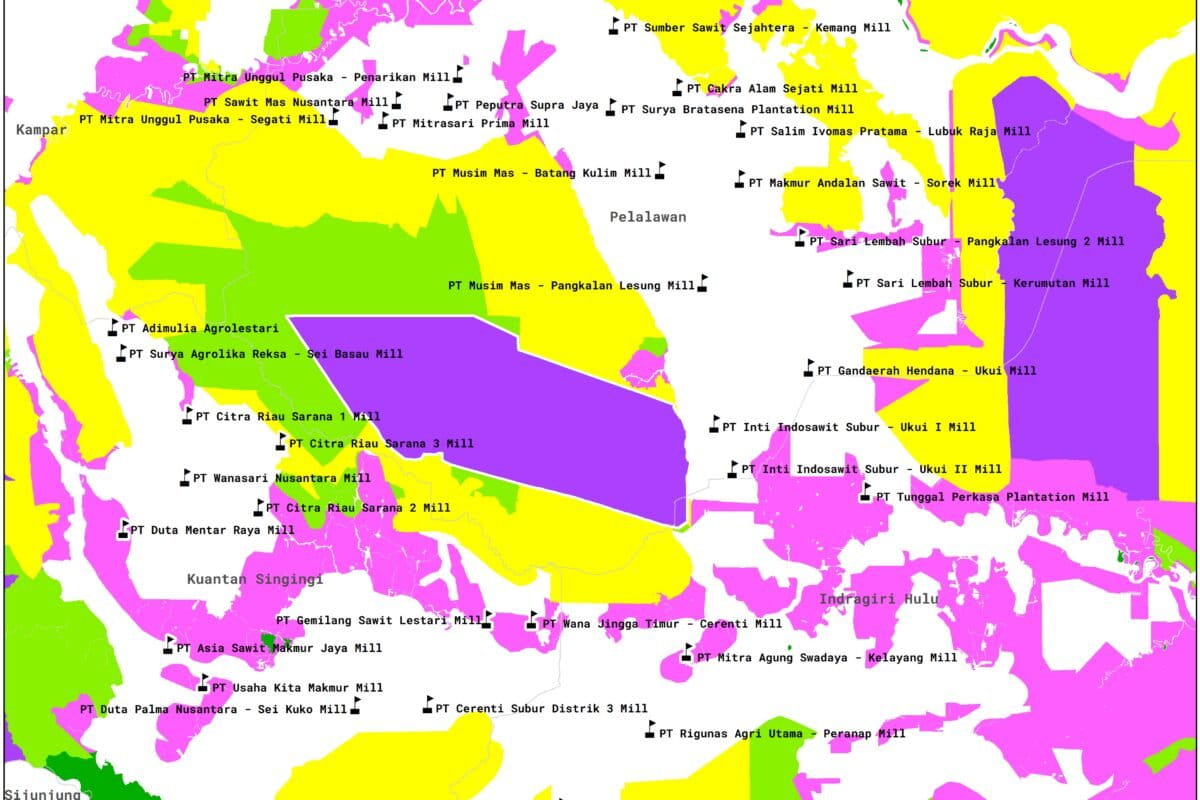
The trail led to Simpang Sako, a village in the Kuantan Singingi Regency, where dozens of trucks congregate at roadside diners to wait for mill gates to open at sunrise. By following these leads, investigators confirmed that fruit from the illegal Toro plantations was being delivered to PT Gemilang Sawit Lestari (GSL), a mill located within a 50-kilometer radius of the national park. On August 8, 2025, a yellow truck previously monitored in the protected area was documented entering the GSL facility, confirming the direct link between illegal encroachment and industrial processing.
Global Supply Chain Affiliations: The Role of Refineries
The investigation did not stop at the mill gates. Once the illegal FFB is processed into Crude Palm Oil (CPO), it is loaded into tankers for transport to refineries. After a 16-hour journey from the GSL mill, tanker trucks were tracked to PT Sari Dumai Sejati (SDS) in the Lubuk Gaung area of Dumai. PT SDS is a subsidiary of the Apical Group, which is part of the Royal Golden Eagle (RGE) conglomerate. Apical is a major player in the global palm oil trade, processing oil for both domestic consumption and international export.
When confronted with these findings in January 2026, Apical did not deny the presence of tainted oil in their supply chain. In a written statement, a spokesperson for Apical claimed that they had sought clarification from GSL. The mill reportedly admitted that a specific delivery order (DO) holder had violated company policy by sourcing fruit from prohibited areas. Apical asserted that GSL had terminated its relationship with the offending supplier before the investigative findings were even presented, citing the effectiveness of their internal "No Deforestation, No Peat, and No Exploitation" (NDPE) monitoring systems.
However, environmental groups remain skeptical. The Koalisi Eyes on the Forest (EoF), which includes WWF Indonesia, Jikalahari, and Walhi Riau, has documented similar violations involving GSL as far back as 2015 and 2017. Nursamsu, the coordinator for EoF, questioned the validity of corporate sustainability commitments when the same mills are repeatedly caught processing fruit from high-conservation-value forests. "The findings show that palm oil grown in forest areas is still being accepted by mills affiliated with major groups. This raises serious questions about the integrity of their sustainability pledges," Nursamsu stated.
The Second Route: Mamahan Jaya and PT UKM
The illegal trade is not limited to a single route. A secondary investigation in March 2026 focused on Dusun Mamahan Jaya in the Langgam District. Here, large "tronton" trucks were observed loading fruit at a collection point labeled "RAM JSA Group." These vehicles followed a similar path through the Baserah Corridor, eventually arriving at PT Usaha Kita Makmur (UKM), a mill in Teluk Kuantan owned by local businessman Syamsuir (known locally as Sensui).
PT UKM, which has a processing capacity of 900 tons of FFB per day, also denied knowingly accepting illegal fruit. Himanto, a spokesperson for UKM, stated that all suppliers sign contracts prohibiting the sale of fruit from protected forests. Despite photographic evidence of trucks from the national park entering the facility, the company maintained that it would only take action if specific "delivery orders" were proven to be linked to illegal sources. This highlights a systemic loophole: as long as illegal fruit is mixed with legal harvests at third-party collection points (RAMs), mills can claim "plausible deniability" regarding the origin of their supply.
A Legacy of Deforestation: Data and Context
The scale of the destruction in Tesso Nilo is staggering. According to data from MapBiomas Indonesia, the park possessed 62,875 hectares of forest cover in 2003, a year before its official designation as a national park. By 2024, that cover had shriveled to just 12,010 hectares. In contrast, the area covered by palm oil plantations within the park boundaries exploded from 2,248 hectares in 2004 to nearly 25,000 hectares two decades later.
The proliferation of palm oil mills in the vicinity has acted as a catalyst for this deforestation. PT GSL was established in 2008, and PT UKM in 2014—both appearing well after Tesso Nilo was designated for protection. Environmental advocates argue that these mills provide the economic incentive for illegal encroachment. Without a buyer for the fruit, the motivation to clear protected forest would evaporate.
Governance Failures and the Path Forward
The persistence of the illegal palm oil trade despite the formation of the Satgas PKH points to a fundamental failure in governance. Refki Saputra, a forest campaigner for Greenpeace Indonesia, argued that corporate commitments are often "mere paper promises" because of a lack of government oversight. "The government seems to lack the authority or the will to hold these companies accountable. As a result, the public’s findings are met with empty promises from corporations without any real change in practice," Saputra said.
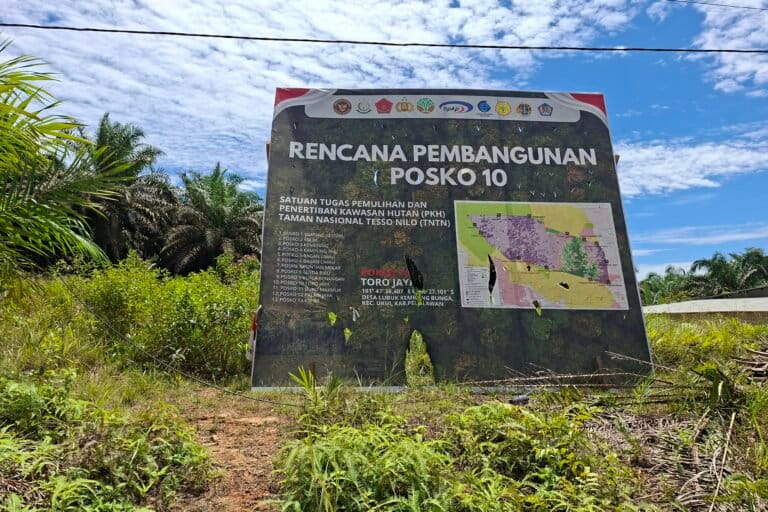
Roni Saputra, Director of Law Enforcement at Auriga Nusantara, echoed these sentiments. He identified two primary issues: the government’s prioritization of investment over conservation and the lack of supervision over licensing agencies. He noted that existing laws, such as Law No. 18/2013 on the Prevention and Eradication of Forest Destruction (P3H), provide ample power to prosecute mills that receive illegal forest products. However, these laws are rarely applied to the "demand side" of the industry.
"The Satgas PKH should not just be about marking boundaries and collecting data," Roni Saputra emphasized. "They must ensure that law enforcement processes are initiated against the mills. If the mills are not penalized, the demand for illegal palm oil will remain high, and the destruction of Tesso Nilo will never stop."
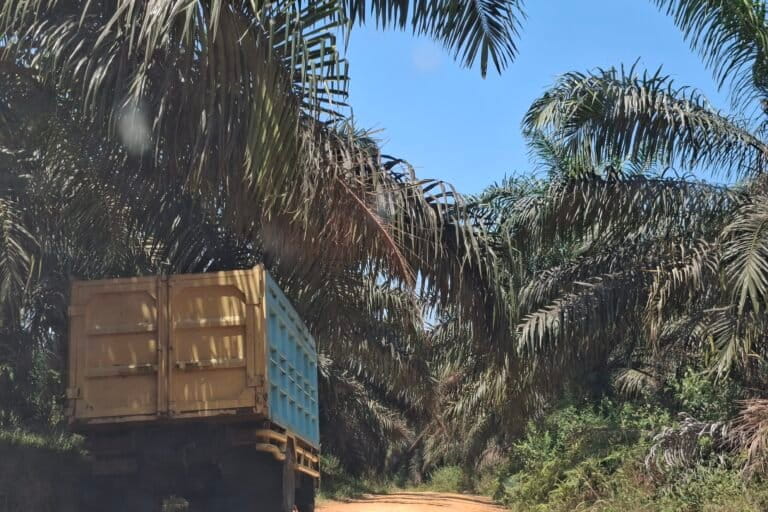
As of early 2026, the Satgas PKH has focused primarily on administrative fines and the physical seizure of land. However, the investigation shows that as long as the mills continue to operate with impunity, the "laundering" of illegal palm oil into global markets will continue. For the Sumatran elephants and tigers that once called Tesso Nilo home, the window for survival is closing as their habitat is transformed, one truckload at a time, into a global commodity.