Nasution Nanang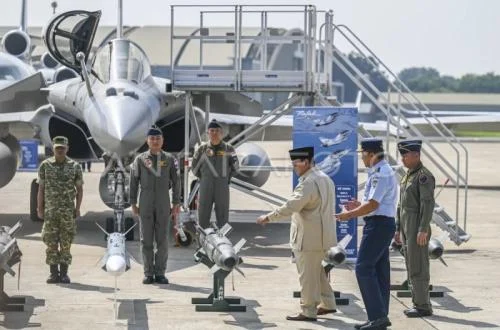
JAKARTA – In a landmark ceremony held at Halim Perdanakusuma Air Force Base (Lanud Halim Perdanakusuma) on May 18, 2026, the Indonesian Air Force (TNI AU) officially inducted the formidable Rafale multi-role fighter jet into its operational fleet. Presiding over the handover was President Prabowo Subianto, whose presence underscored the strategic significance of this acquisition for Indonesia’s national defense capabilities. While the initial units of the advanced French-made aircraft had commenced arrival in January, the formal transfer to Commander of the Indonesian National Armed Forces (Panglima TNI) General Agus Subiyanto and Chief of Staff of the Air Force (KSAU) Air Marshal Mohamad Tonny Harjono marked a pivotal moment in the nation’s ongoing military modernization program.
During the ceremony, President Prabowo Subianto reiterated Indonesia’s unwavering commitment to bolstering its defense infrastructure. "We must continuously enhance our defense capabilities. As a deterrent, we have no other interest than to safeguard our own territory," he asserted, emphasizing the purely defensive posture of the nation’s military buildup. His statement resonated with Air Marshal Mohamad Tonny Harjono, who expressed profound appreciation for the President’s steadfast dedication and significant attention to the modernization of TNI AU’s primary weapons systems (Alutsista). This official handover not only signifies a substantial upgrade in air power but also heralds a new chapter in Indonesia’s strategic partnerships and its aspiration for regional security stability.
The Strategic Imperative: Modernizing Indonesia’s Air Power
Indonesia, an archipelagic nation comprising over 17,500 islands and vast maritime territories, faces unique and complex security challenges. Its strategic location, bridging the Indian and Pacific Oceans, makes robust air and naval capabilities essential for territorial integrity, resource protection, and maintaining regional influence. For decades, the TNI AU has operated a diverse fleet, including aging F-5E Tiger IIs, F-16 Fighting Falcons, and Su-27/30 Flankers. The decision to acquire the Rafale jets is a direct response to the urgent need to replace obsolete platforms and elevate the country’s air defense posture to meet contemporary threats.
The Rafale procurement forms a critical component of Indonesia’s Minimum Essential Force (MEF) strategy, a long-term plan initiated in 2010 to achieve a credible and modern defense capability by 2024, now extended in certain aspects. The MEF program aims to ensure that the TNI possesses sufficient strength to deter aggression and protect national interests. The previous reliance on a mix of Western and Eastern bloc aircraft, while providing operational flexibility, also presented logistical and maintenance complexities. The Rafale, with its advanced multi-role capabilities, is expected to streamline operational readiness and provide a significant qualitative leap for the TNI AU. This acquisition comes amidst increasing geopolitical tensions in the Indo-Pacific region, including disputes in the South China Sea, which necessitate a stronger and more agile air force capable of projecting power and ensuring air superiority across Indonesia’s extensive sovereign airspace.
Chronology of the Rafale Acquisition Program
The journey to officially integrate the Rafale jets has been a meticulous and multi-phased process, reflecting the complexity of high-value defense procurements:
- 2020-2021: Initial Engagement and Interest: Discussions between Indonesia and France regarding defense cooperation and potential acquisition of French military equipment, including the Rafale, gained momentum. Then-Minister of Defense Prabowo Subianto played a crucial role in these early negotiations, visiting France multiple times to explore options.
- June 2021: Letter of Intent: Indonesia signed a Letter of Intent (LoI) for the acquisition of 36 Rafale fighter jets, signaling serious commitment to the French platform. This was a significant step, moving beyond preliminary discussions.
- February 10, 2022: Formal Contract Signing (Tranche 1): During a visit by French Minister of the Armed Forces Florence Parly to Jakarta, Indonesia officially signed a contract with Dassault Aviation for the acquisition of 42 Rafale aircraft. The initial agreement covered the first six units, with options for subsequent tranches. This signing solidified the strategic partnership between the two nations. The total value of the deal was estimated at around USD 8.1 billion (approximately IDR 120 trillion).
- August 2023: First Pilot Training Commences: A contingent of Indonesian pilots and technicians began their specialized training program in France, conducted by the French Air and Space Force and Dassault Aviation. This intensive training covers advanced flight maneuvers, weapon systems operation, and maintenance protocols essential for operating the Rafale. Eight Indonesian pilots were reported to have completed this rigorous education by the time of the official handover.
- January 2026: First Rafale Units Arrive in Indonesia: The initial batch of Rafale aircraft was delivered to Indonesia. These units underwent assembly, testing, and acclimatization procedures in preparation for their official operational deployment.
- May 18, 2026: Official Handover Ceremony: President Prabowo Subianto formally handed over the Rafale fighter jets to the TNI AU leadership at Lanud Halim Perdanakusuma, signifying their readiness for active service. This event marked the culmination of years of negotiation, planning, and preparation.
The remaining 36 aircraft are expected to be delivered in phases, with the entire fleet of 42 units anticipated to be fully operational by the early 2030s, contingent on manufacturing schedules and training progress.
Rafale: A Multi-Role Marvel and Its Advanced Capabilities
The Dassault Rafale, a French twin-engine, canard delta wing, multi-role fighter aircraft, represents a pinnacle of modern aviation technology. Manufactured by Dassault Aviation, it is designed to perform a wide range of short and long-range missions, including air superiority, ground attack, reconnaissance, deep strike, anti-ship strike, and nuclear deterrence. For Indonesia, its primary role will be air defense, interdiction, and maritime surveillance.
Key specifications and capabilities of the Rafale include:
- Dimensions: Length of 15.30 meters, wingspan of 10.90 meters, and a height of 5.30 meters. These dimensions contribute to its agility and operational flexibility.
- Performance: Powered by two Snecma M88 turbofan engines, the Rafale can achieve speeds up to Mach 1.8 (approximately 2,200 km/h) at high altitude. Its operational ceiling is 50,000 feet (15,240 meters), allowing it to dominate the airspace.
- Payload Capacity: With 14 hardpoints (13 for the naval version), the Rafale can carry an impressive external load of up to 9,500 kilograms. This substantial capacity enables it to carry a diverse array of weaponry and external fuel tanks for extended missions.
- Advanced Avionics:
- RBE2 AA Active Electronically Scanned Array (AESA) Radar: This state-of-the-art radar provides superior situational awareness, enabling long-range detection and tracking of multiple targets simultaneously, even in complex electronic warfare environments. Its ground mapping capabilities are also crucial for precision strike missions.
- SPECTRA Electronic Warfare System: An integrated electronic warfare suite providing multi-spectral threat detection, jamming, and deception capabilities. SPECTRA enhances survivability by detecting and countering radar, infrared, and laser threats.
- Front Sector Optronics (FSO): A passive, long-range infrared search and track (IRST) system and TV sensor, allowing for covert detection and identification of targets without emitting radar signals.
- Weaponry: The Indonesian Rafales are confirmed to be equipped with a formidable arsenal:
- MBDA Meteor Beyond Visual Range Air-to-Air Missile (BVRAAM): A ramjet-powered missile with a no-escape zone significantly larger than any other air-to-air missile, making it highly effective against advanced aerial threats.
- Sagem AASM Hammer (Armement Air-Sol Modulaire) Precision-Guided Munition: A modular air-to-surface weapon that converts unguided bombs into precision-guided munitions using GPS/inertial navigation and optional infrared or laser seekers, offering all-weather, standoff strike capability.
- MICA (Missile Interception, Combat and Self-defence Air-to-air): A versatile air-to-air missile available in both electromagnetic (RF) and infrared (IR) versions, providing excellent short and medium-range engagement capabilities.
- SCALP-EG (Système de Croisière Autonome à Longue Portée – Emploi Général) / Storm Shadow Cruise Missile: A long-range, stealthy air-launched cruise missile designed for precision strikes against high-value fixed targets. While not explicitly confirmed for Indonesian acquisition, its compatibility with Rafale highlights the platform’s potential for deep strike missions.
- Interoperability: The Rafale’s open architecture design allows for seamless integration of future upgrades and diverse weaponry, ensuring its relevance for decades to come. Its ability to perform ‘buddy-buddy’ refueling also enhances operational range and flexibility.
The combination of these advanced features makes the Rafale a truly fifth-generation equivalent aircraft in terms of capabilities, offering the TNI AU an unparalleled advantage in air combat and precision strike operations.
Diplomatic Alignment and Industrial Collaboration: Deepening Indonesia-France Ties
The procurement of the Rafale jets is more than just a military transaction; it underscores a deepening strategic partnership between Indonesia and France. Defense analyst Hanif Rahadian highlighted that the relationship between the two nations has grown significantly since Prabowo Subianto assumed the role of Minister of Defense, fostering broader opportunities for cooperation in defense and beyond. This enhanced diplomatic alignment is rooted in shared interests in regional stability, multilateralism, and the development of independent defense capabilities.
France has historically been a significant defense partner for several Asian nations, known for its willingness to engage in technology transfer and industrial cooperation, which is often a key criterion for Indonesia’s defense procurements. This willingness has been a crucial factor in the Rafale deal, opening avenues for Indonesia to develop its own defense industrial capabilities. The transfer of technology (ToT) is a cornerstone of this agreement, aimed at boosting Indonesia’s indigenous defense industry. This includes potential for local maintenance, repair, and overhaul (MRO) facilities, co-production of components, and knowledge transfer related to avionics, systems integration, and advanced manufacturing processes.
For Indonesia, ToT is vital for reducing reliance on foreign suppliers, fostering self-sufficiency, and creating high-skilled jobs within its defense sector. Companies like PT Dirgantara Indonesia (PT DI) and PT Len Industri could play pivotal roles in absorbing and applying this transferred technology, potentially paving the way for future indigenous defense projects or further collaboration on advanced systems. This long-term vision aligns with Indonesia’s goal of becoming a significant player in the global defense industry.
Human Capital Development and Infrastructure Readiness
The integration of such sophisticated aircraft as the Rafale necessitates a parallel and comprehensive investment in human capital development and infrastructure. The success of the Rafale program hinges not only on the aircraft’s capabilities but also on the proficiency of the personnel operating and maintaining it.
- Pilot Training: The rigorous training program undertaken by eight Indonesian pilots in France is a testament to this commitment. These pilots undergo extensive flight instruction, simulation exercises, and tactical training to master the Rafale’s advanced systems and multi-role functionalities. The curriculum typically covers air-to-air combat, air-to-ground attack, navigation, electronic warfare, and emergency procedures. Further batches of pilots will continue their training as more aircraft are delivered.
- Technician and Ground Crew Training: Equally critical is the training of ground crews and maintenance technicians. These specialists are responsible for the complex upkeep, troubleshooting, and repair of the Rafale’s engines, avionics, weapon systems, and airframe. Their expertise ensures the aircraft’s operational readiness and longevity. Specialized training programs, often conducted by Dassault Aviation and Snecma (engine manufacturer) experts, equip Indonesian technicians with the necessary skills and certifications.
- Infrastructure Upgrades: Operating a modern fighter fleet like the Rafale demands significant upgrades to airbase infrastructure. This includes constructing specialized hangars, maintenance facilities with advanced diagnostic equipment, secure weapon storage facilities, upgraded runways capable of handling the aircraft’s weight and operational tempo, and advanced simulation centers for continued pilot training. Lanud Halim Perdanakusuma and other strategic airbases are undergoing such enhancements to accommodate the new fleet. The establishment of secure communication networks and command-and-control systems compatible with the Rafale’s advanced data links is also paramount.
Hanif Rahadian further underscored the importance of robust infrastructure and an independent defense industry for the sustainable operation of the Rafale fleet. Without adequate local support capabilities, Indonesia risks long-term dependency on foreign logistical chains, which can be costly and strategically vulnerable.
Broader Implications and Regional Dynamics
The official integration of the Rafale jets into the TNI AU carries significant implications for Indonesia’s national security, its standing in regional geopolitics, and its long-term economic development.
- Enhanced Deterrence and Sovereignty: The Rafale’s advanced capabilities provide Indonesia with a powerful deterrent against potential aggressors and significantly enhance its ability to project power and defend its vast airspace and maritime territories. This acquisition reinforces Indonesia’s commitment to its "free and active" foreign policy, ensuring it can protect its interests independently.
- Regional Power Balance: While Indonesia maintains a non-aggressive stance, the acquisition of 42 Rafales will undoubtedly alter the regional military balance. It signals Indonesia’s intent to remain a significant military power in Southeast Asia, influencing dynamics in the ASEAN region and beyond. Other regional powers, many of whom are also engaged in their own military modernizations, will observe Indonesia’s enhanced capabilities with keen interest. The Rafale’s presence could encourage greater defense cooperation or, conversely, stimulate further arms acquisitions in the region.
- Economic Impact and Industrial Growth: The multi-billion dollar Rafale deal represents a substantial investment. While a significant portion goes to France, the ToT components and local infrastructure development will stimulate Indonesia’s defense industry, create high-skilled jobs, and foster technological advancement. This long-term industrial growth has the potential to transform Indonesia into a regional hub for MRO and potentially, for component manufacturing.
- Future of TNI AU: The Rafale acquisition is part of a broader strategy for the TNI AU. Indonesia is also pursuing the acquisition of F-15EX Eagle II fighter jets from the United States and has participated in the KF-21 Boramae joint development program with South Korea. This multi-vendor approach aims to diversify sources, leverage different technological strengths, and avoid over-reliance on a single supplier. The Rafale will likely form the spearhead of Indonesia’s air superiority and multi-role strike capabilities, complementing other platforms.
The official induction of the Rafale fighter jets into the Indonesian Air Force is a watershed moment, marking a significant stride in the nation’s journey towards a modern, robust, and self-reliant defense posture. It is a testament to Indonesia’s strategic foresight, its commitment to national security, and its deepening international partnerships, particularly with France. As these formidable aircraft take to the skies, they embody Indonesia’s renewed determination to safeguard its sovereignty and contribute to stability in a complex and evolving global landscape.